Heterociclos com Nitrogénio (N)
Subcategorias de "Heterociclos com Nitrogénio (N)"
- Azepano(436 produtos)
- Benzotriazóis(438 produtos)
- Diazepinas(335 produtos)
- Imidazóis(4.031 produtos)
- Imidazolinas(385 produtos)
- Isoxazol(1.088 produtos)
- Piperazinas(3.758 produtos)
- Piperidinas(8.443 produtos)
- Pirazinas(1.304 produtos)
- Pirazol(5.960 produtos)
- Pirazolidina(21 produtos)
- Pirazolina(143 produtos)
- Piridazina(860 produtos)
- Piridinas(22.006 produtos)
- Pirimidina(6.084 produtos)
- Pirróis(2.450 produtos)
- Pirrolidinas(5.840 produtos)
- Pirrolina(48 produtos)
- Pirrolo[1,2-b]piridazina(10 produtos)
- Tetrazola(531 produtos)
- Triazinas(466 produtos)
- Triazolas(1.689 produtos)
Foram encontrados 17863 produtos de "Heterociclos com Nitrogénio (N)"
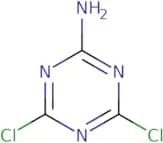
2-Amino-4,6-dichloro-s-triazine
CAS:2-Amino-4,6-dichloro-s-triazine is a chemical compound that is used as an antimicrobial agent in wastewater treatment. It inhibits the growth of bacteria by binding to cell walls and disrupting the formation of crosslinks between peptidoglycan strands, thereby inhibiting the synthesis of proteins necessary for bacterial growth and reproduction. 2-Amino-4,6-dichloro-s-triazine has been shown to be effective against group p2 bacteria in cell culture experiments. This drug also displays antiinflammatory properties and has been shown to inhibit HIV infection in vitro.
Fórmula:C3H2Cl2N4Pureza:Min. 95%Cor e Forma:White To Light (Or Pale) Yellow SolidPeso molecular:163.96565Ref: 3D-FA17553
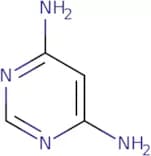
Produto descontinuado4,6-Diaminopyrimidine
CAS:4,6-Diaminopyrimidine is a potent inhibitor of epidermal growth factor receptor. It has been shown to inhibit the production of soluble guanylate cyclase and cGMP in vitro and in vivo. This drug has also been shown to inhibit cancer cell growth in vitro and in vivo. 4,6-Diaminopyrimidine has potential clinical relevance as an anticancer agent due to its ability to inhibit the kinases necessary for cancer proliferation. This drug also has pharmacokinetic properties that are favorable for anticancer drugs, including low plasma protein binding, high clearance rate, and short half-life. The activity of this drug was tested on hepg2 cells (human hepatoma) with an inhibitory effect on growth factor receptors such as EGFR and PDGFRs
Fórmula:C4H6N4Pureza:Min. 95%Peso molecular:110.12 g/mol2,4-Diamino-6-hydroxypyrimidine
CAS:2,4-Diamino-6-hydroxypyrimidine is a potent antitumor agent that has been shown to have potent cytotoxicity against tubule cells in the kidney. It binds to DNA and inhibits transcription by interfering with polymerase chain reaction. This drug also inhibits protein synthesis and has been shown to be effective in treating diabetic patients. 2,4-Diamino-6-hydroxypyrimidine has been found to be useful in detecting high levels of c-reactive protein (CRP) in serum, which can help diagnose inflammation or myocardial infarct. 2,4-Diamino-6-hydroxypyrimidine is also used as a fluorescent probe for determining low levels of hydrogen bonds between polymers or proteins.
Fórmula:C4H6N4OPureza:Min. 95%Cor e Forma:White PowderPeso molecular:126.12 g/molRef: 3D-FD21472
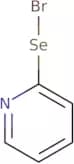
Produto descontinuado2-Pyridine selenyl bromide
CAS:2-Pyridine selenyl bromide is a co-precursor for the synthesis of 2-selenides. It can be prepared by reacting 2-pyridinesulfonyl chloride with sodium periodate in acetonitrile. This compound can then be converted to a 2-selenide by treatment with methanol and periodic acid. The analytical and preparative methods are shown below:
Analytical: Dissolve the sample in dichloromethane, add triethylamine, and extract into diethyl ether. Add a small amount of potassium bromide to the organic layer and evaporate to dryness under vacuum. Recrystallize from acetonitrile.
Methanolysis: Dissolve the sample in methanol, add a catalytic amount of hydrochloric acid, and heat at reflux for 12 hours. Cool the solution, filter off any insoluble material, evaporate to drynessFórmula:C5H4BrNSePureza:Min. 95%Peso molecular:236.96 g/molRef: 3D-FP11022
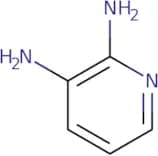
Produto descontinuado2,3-Diaminopyridine
CAS:2,3-Diaminopyridine is a synthetic compound that is used in the treatment of liver disease. It is an effective agent for the elimination of toxic substances from the body. 2,3-Diaminopyridine has been shown to be a potent inhibitor of oxidative stress and lipid peroxidation. This drug also shows high resistance to hydrolysis by rat liver microsomes. The pharmacokinetic properties of 2,3-diaminopyridine have been studied in rats and humans.
2,3-Diaminopyridine has been shown to be stable when complexed with human serum albumin or polyethylene glycol in solution and can be used as a reference standard for quantifying human serum albumin concentration by measuring the optical density at 280 nm.Fórmula:C5H7N3Pureza:Min. 98 Area-%Cor e Forma:PowderPeso molecular:109.13 g/molRef: 3D-FD07097
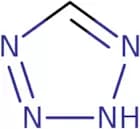
Produto descontinuado1H-Tetrazole - ~0.45M solution in acetonitrile
CAS:Catalyst; intermediate in organic synthesesFórmula:CH2N4Pureza:Min. 98.0%Cor e Forma:Colorless Clear LiquidPeso molecular:70.05 g/mol(2R)-1-(Phenylmethyl)-N-[3-(spiro[isobenzofuran-1(3H),4'-piperidin]-1-yl)propyl-2-pyrrolidinecarboxamide HCl
CAS:(2R)-1-(Phenylmethyl)-N-[3-(spiro[isobenzofuran-1(3H),4'-piperidin]-1-yl)propyl-2-pyrrolidinecarboxamide HCl is an endogenous opioid that has been shown to have antidepressant-like effects. It can bind to γ-aminobutyric acid (GABA) receptors, catecholamine receptors, and nociceptin receptors. This drug also has anti-cancer properties and may be used for the treatment of autoimmune diseases. The interaction of this drug with other drugs is not well understood, but it has been shown to modulate the effects of opioids and increase the aversive nature of some substances.Fórmula:C27H35N3O2Pureza:Min. 95%Cor e Forma:PowderPeso molecular:433.59 g/mol3-Cyano-5-bromopyridine
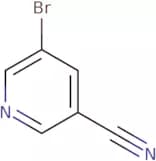
CAS:3-Cyano-5-bromopyridine is an enantiopure organic compound that belongs to the group of halides. It is a functional group that is a reagent in organic synthesis, and it can be used as a precursor to dyestuffs. 3-Cyano-5-bromopyridine has been shown to have antimicrobial activity against bacteria and fungi. It also has a metabotropic glutamate receptor subtype selective affinity, which may be due to its ability to bind with glutamate in complex molecules.
Fórmula:C6H3BrN2Pureza:Min. 95%Cor e Forma:White To Beige To Light (Or Pale) Yellow SolidPeso molecular:183.01 g/molRef: 3D-FC03449
Produto descontinuadoHypoxanthine
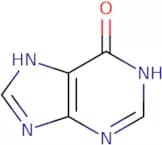
CAS:Hypoxanthine is a nucleoside that is found in human cells. It is synthesized from guanine by the enzyme, xanthine oxidoreductase. Hypoxanthine is also produced from xanthine by adenosine deaminase and converted back to xanthine, which can then be reused for DNA synthesis. Hypoxanthine has been shown to inhibit the growth of photosynthetic bacteria, such as Rhodopseudomonas viridis and Rhodobacter sphaeroides. This inhibition may be due to an equilibrative nucleotide effect on the folate receptor. The x-ray diffraction data collected from the chrysanthemum flower (a source of hypoxanthine) showed that hypoxanthine has a calcium salt structure.
Fórmula:C5H4N4OPureza:Min. 95%Cor e Forma:White PowderPeso molecular:136.11 g/molAdenine
CAS:Purine nucleobase; component of nucleic acids and coenzymes
Fórmula:C5H5N5Pureza:Min. 98 Area-%Cor e Forma:White PowderPeso molecular:135.13 g/molIndole-4-carboxaldehyde
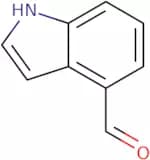
CAS:Indole-4-carboxaldehyde is a natural compound that can be found in the acetate extract of the roots of Scopolia japonica. It has been shown to have an inhibitory effect on locomotor activity and may also have an inhibitory effect on protein synthesis. The mechanism of this inhibition is not yet known, but it may be due to an intramolecular hydrogen bond or other interactions with proteins. Indole-4-carboxaldehyde has also been shown to induce apoptotic cell death in 3T3-L1 preadipocytes by inducing mitochondrial dysfunction and oxidative stress.
Fórmula:C9H7NOCor e Forma:Off-White PowderPeso molecular:145.16 g/molRef: 3D-FI40250
Produto descontinuado2-Methoxy-1-((2-(trimethylsilyl)ethoxy)methyl)-1H-imidazole-5-carbaldehyde
Please enquire for more information about 2-Methoxy-1-((2-(trimethylsilyl)ethoxy)methyl)-1H-imidazole-5-carbaldehyde including the price, delivery time and more detailed product information at the technical inquiry form on this page
Fórmula:C11H20N2O3SiPureza:Min. 95%Cor e Forma:PowderPeso molecular:256.37 g/molPyridinoline
CAS:Please enquire for more information about Pyridinoline including the price, delivery time and more detailed product information at the technical inquiry form on this page
Fórmula:C18H28N4O8Pureza:Min. 95%Cor e Forma:PowderPeso molecular:428.44 g/molRef: 3D-FP182741
Produto descontinuado2,4-Dichloropyrimidine
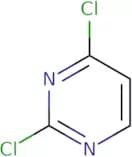
CAS:2,4-Dichloropyrimidine is a compound with an antiproliferation activity that has been shown to inhibit replication of viruses such as HIV. It inhibits the activity of enzymes involved in the replication of viral DNA, including the enzyme human telomerase reverse transcriptase (hTERT), which is essential for viral replication. The effects of 2,4-dichloropyrimidine on wild-type HIV are not clear because it does not have a significant effect on HIV-1 strains that have acquired resistance to erythromycin and tetracycline. However, this drug may be effective against other viruses that have not yet developed resistance. 2,4-Dichloropyrimidine also has antiinflammatory properties due to its ability to inhibit the production of epidermal growth factor and nitrogenous compounds from inflammatory cells.
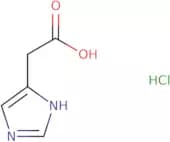
Fórmula:C4H2N2CI2Pureza:Min. 95%Cor e Forma:Off-White PowderPeso molecular:148.98 g/mol4-Imidazoleacetic acid HCl
CAS:4-Imidazoleacetic acid HCl is a fluorescent probe that binds to the α1 subunit of the dinucleotide phosphate (NADH) oxidoreductase. It has been shown to inhibit mitochondrial functions, which may be due to its ability to inhibit the pentose phosphate pathway and reduce reactive oxygen species levels. 4-Imidazoleacetic acid HCl has also shown inhibitory properties against congestive heart failure by acting on the mitochondria and inhibiting energy metabolism. It can also be used as a chemical biology tool for studying protein interactions with NADH dehydrogenase. The x-ray crystal structures have revealed that 4-imidazoleacetic acid HCl binds to the active site of NADH oxidoreductase with an orientation that mimics a substrate molecule. This allows it to bind tightly and disrupt enzyme activity.
Fórmula:C5H6N2O2·HClPureza:Min. 95%Cor e Forma:PowderPeso molecular:162.57 g/mol4-Bromo-2-fluoropyridine
CAS:4-Bromo-2-fluoropyridine is a heterocyclic amine that belongs to the class of cannabinoid type. It has been shown to be stereoselective, and can be used as a sulfamidate in biomolecular studies. 4-Bromo-2-fluoropyridine is activated by chloride and nucleophilic, which are properties that make it useful for functional groups. The fluorine atom on this molecule also makes it reactive, making it possible to use the substance as an enantiopure catalyst for organic reactions.
Fórmula:C5H3BrFNPureza:Min. 98 Area-%Cor e Forma:Colorless Clear LiquidPeso molecular:175.99 g/molRef: 3D-FB08153
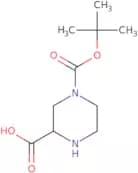
Produto descontinuadoN-4-Boc-2-piperazine carboxylic acid
CAS:N-4-Boc-2-piperazine carboxylic acid is an organic acid that functions in the metabolism of purine and bile acids. It is also involved in the metabolic pathway of the kidney, which is important for the elimination of waste products from the body. N-4-Boc-2-piperazine carboxylic acid has been shown to be useful as a marker for distinguishing between different types of kidney disease. It is a metabolite found in urine and can be used as an analytical tool for detecting renal function. This compound has also been shown to have long term effects on bile acid metabolism.
Fórmula:C10H18N2O4Pureza:Min. 95%Cor e Forma:White PowderPeso molecular:230.26 g/molRef: 3D-FP30338
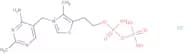
Produto descontinuadoThiamine pyrophosphate
CAS:Thiamine derivative; coenzyme of transketolase
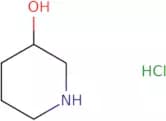
Fórmula:C12H19ClN4O7P2SPureza:Min. 93%Cor e Forma:White PowderPeso molecular:460.77 g/mol3-Hydroxypiperidine hydrochloride
CAS:3-Hydroxypiperidine hydrochloride is a synthetic compound that inhibits the enzyme acetylcholinesterase, which breaks down the neurotransmitter acetylcholine. The specificity of this inhibitor has been shown to be high in human urine samples. 3-Hydroxypiperidine hydrochloride can be used as a tethering agent in exploratory assays. This drug also has an effect on chemokine production and citric acid levels in the urine.
Fórmula:C5H11NO•HClPureza:Min. 95%Cor e Forma:PowderPeso molecular:137.61 g/molRef: 3D-FH29361
Produto descontinuado7-Bromo-5-methoxyindole-3-carboxylic acid
CAS:Please enquire for more information about 7-Bromo-5-methoxyindole-3-carboxylic acid including the price, delivery time and more detailed product information at the technical inquiry form on this page
Fórmula:C10H8BrNO3Pureza:Min. 95%Cor e Forma:PowderPeso molecular:270.09 g/molRef: 3D-FB98993
Produto descontinuado


![(2R)-1-(Phenylmethyl)-N-[3-(spiro[isobenzofuran-1(3H),4'-piperidin]-1-yl)propyl-2-pyrrolidinecarbo…](/_next/image/?url=https%3A%2Fstatic.cymitquimica.com%2Fproducts%2F3D%2Fthumb-webp%2FFP73252.webp&w=3840&q=75)