


Heterociclos com Nitrogénio (N)
Subcategorias de "Heterociclos com Nitrogénio (N)"
- Azepano(436 produtos)
- Benzotriazóis(438 produtos)
- Diazepinas(335 produtos)
- Imidazóis(4.031 produtos)
- Imidazolinas(385 produtos)
- Isoxazol(1.088 produtos)
- Piperazinas(3.758 produtos)
- Piperidinas(8.443 produtos)
- Pirazinas(1.304 produtos)
- Pirazol(5.960 produtos)
- Pirazolidina(21 produtos)
- Pirazolina(143 produtos)
- Piridazina(860 produtos)
- Piridinas(22.007 produtos)
- Pirimidina(6.084 produtos)
- Pirróis(2.450 produtos)
- Pirrolidinas(5.840 produtos)
- Pirrolina(48 produtos)
- Pirrolo[1,2-b]piridazina(10 produtos)
- Tetrazola(531 produtos)
- Triazinas(466 produtos)
- Triazolas(1.689 produtos)
Foram encontrados 17863 produtos de "Heterociclos com Nitrogénio (N)"
11-Piperazinyldibenzo[b,e][1,4]diazepine
CAS:Piperazine diazepines are a class of synthetic compounds that have been used as anticonvulsants, anxiolytics and muscle relaxants. The compound 11-piperazinyldibenzo[b,e][1,4]diazepine (PBD) belongs to this class of drugs. PBD is an analog of the amino acid phenylalanine and has been shown to be a potent acetylcholine receptor antagonist. It also has high penetrability into brain cells and can activate these cells in vivo studies.
Fórmula:C17H18N4Pureza:Min. 95%Cor e Forma:PowderPeso molecular:278.35 g/molRef: 3D-FP76915
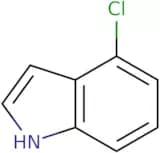
Produto descontinuado4-Chloroindole
CAS:4-Chloroindole is an indole compound that is a derivative of salicylic acid. It is used in the production of ethylene and casein, as well as being a major metabolite of anthranilic acid. 4-Chloroindole is also found in environmental pollutants and has been shown to be active against plant pathogens such as Pseudomonas syringae. It has been shown to inhibit the growth of Bacillus cereus by binding to its ribosomal RNA and inhibiting protein synthesis. In addition, it inhibits the biosynthesis of methylindole, which may be due to its ability to inhibit the enzyme tryptophan synthase.
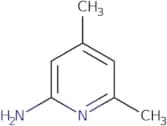
Fórmula:C8H6ClNPureza:Min. 98 Area-%Cor e Forma:Clear LiquidPeso molecular:151.59 g/mol2-Amino-4,6-dimethylpyridine
CAS:2-Amino-4,6-dimethylpyridine is a nonsteroidal anti-inflammatory drug that inhibits the production of prostaglandins and leukotrienes. 2-Amino-4,6-dimethylpyridine binds to the cyclooxygenase enzyme and blocks its conversion of arachidonic acid to prostaglandin H2. This compound has been shown to have potent inhibitory effects against Leishmania, with high values in reactive compounds. The molecular modeling of this compound shows that it has an unpaired amino function and an amide.
Fórmula:C7H10N2Pureza:Min. 97%Cor e Forma:PowderPeso molecular:122.17 g/molRef: 3D-FA07058
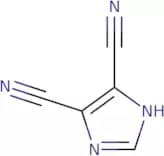
Produto descontinuado4,5-Dicyanoimidazole
CAS:Please enquire for more information about 4,5-Dicyanoimidazole including the price, delivery time and more detailed product information at the technical inquiry form on this page
Fórmula:C5H2N4Pureza:Min. 98 Area-%Cor e Forma:White Off-White PowderPeso molecular:118.1 g/mol2,4-Diamino-6-hydroxypyrimidine
CAS:2,4-Diamino-6-hydroxypyrimidine is a potent antitumor agent that has been shown to have potent cytotoxicity against tubule cells in the kidney. It binds to DNA and inhibits transcription by interfering with polymerase chain reaction. This drug also inhibits protein synthesis and has been shown to be effective in treating diabetic patients. 2,4-Diamino-6-hydroxypyrimidine has been found to be useful in detecting high levels of c-reactive protein (CRP) in serum, which can help diagnose inflammation or myocardial infarct. 2,4-Diamino-6-hydroxypyrimidine is also used as a fluorescent probe for determining low levels of hydrogen bonds between polymers or proteins.
Fórmula:C4H6N4OPureza:Min. 95%Cor e Forma:White PowderPeso molecular:126.12 g/molRef: 3D-FD21472
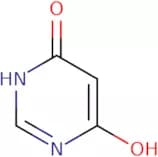
Produto descontinuado4,6-Dihydroxypyrimidine
CAS:4,6-Dihydroxypyrimidine is a competitive inhibitor of the bacterial enzyme DNA gyrase. It binds to the ATP-binding site and blocks the conversion of ATP to ADP. This leads to inhibition of the DNA replication process. 4,6-Dihydroxypyrimidine has shown inhibition constants against various bacterial strains. The kinetic data indicate that this compound is a noncompetitive inhibitor for DNA gyrase. 4,6-Dihydroxypyrimidine also binds to sodium hydroxide solution and forms a Langmuir adsorption isotherm that can be described by an equation with a single binding site. The chemical structure of 4,6-dihydroxypyrimidine consists of three atoms: two hydrogen atoms and one oxygen atom. This molecule has been found in electrochemical impedance spectroscopy experiments using methanol solvent as an electrolyte and monosodium salt as a supporting electrolyte.
Fórmula:C4H4N2O2Pureza:Min. 95%Cor e Forma:Yellow PowderPeso molecular:112.09 g/molRef: 3D-FD11328
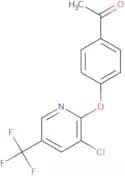
Produto descontinuado2-(4-Acetophenoxy)-3-chloro-5-trifluoromethyl pyridine
CAS:Please enquire for more information about 2-(4-Acetophenoxy)-3-chloro-5-trifluoromethyl pyridine including the price, delivery time and more detailed product information at the technical inquiry form on this pageFórmula:C14H9ClF3NO2Pureza:Min. 95%Cor e Forma:PowderPeso molecular:315.67 g/molRef: 3D-FA168837
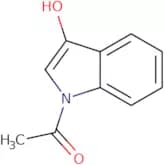
Produto descontinuadoN-Acetyl-3-hydroxyindole
CAS:N-Acetyl-3-hydroxyindole is a colorless liquid that inhibits the activity of enzymes such as butyric acid, active methylene, and acyl halides. It is also used to inhibit the enzyme eosinophil peroxidase in clinical tests. N-Acetyl-3-hydroxyindole has been shown to be an efficient method for high-throughput analysis of enzymatic reactions. This chemical can be immobilized on porous supports and used to measure enzyme activities. N-Acetyl-3-hydroxyindole has been shown to have therapeutic effects in clinical data with a potent inhibitor of eosinophil peroxidase.
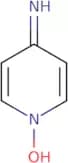
Fórmula:C10H9NO2Pureza:Min. 95%Cor e Forma:Orange PowderPeso molecular:175.18 g/mol4-Aminopyridine N-oxide
CAS:4-Aminopyridine N-oxide is a white, crystalline solid that is soluble in water and alcohol. It has a molecular weight of 128.2 and formula weight of 135.2. 4-Aminopyridine N-oxide reacts with acid solutions to produce nitrous acid and ammonia gas. The rate of the reaction depends on the concentration of aminopyridine and aniline, as well as the pH of the solution. The acetylation, diazotisation, and kinetics have also been studied extensively for this compound. Nitrous acid can react with amides to form azulene, which can then react with amines to form a molecule containing nitrogen, oxygen, carbon, hydrogen and one other element or compound from each group (e.g., NHCOCH). This reaction is reversible when solvents are present.br> 4-Aminopyridine N-oxide may be used as a precursor for other organic
Fórmula:C5H6N2OPureza:Min. 95%Cor e Forma:Slightly Yellow PowderPeso molecular:110.11 g/molRef: 3D-FA17842
Produto descontinuadoFmoc-D-7-Aza-Trp-OH
CAS:Please enquire for more information about Fmoc-D-7-Aza-Trp-OH including the price, delivery time and more detailed product information at the technical inquiry form on this page
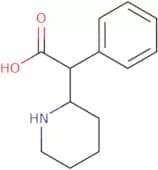
Fórmula:C25H21N3O4Pureza:Min. 95%Peso molecular:427.45 g/mol2-Phenyl-2-(2-piperidy)acetic acid
CAS:Produto ControladoMethylphenidate is a psychostimulant drug used to treat attention deficit hyperactivity disorder (ADHD) and narcolepsy. It is a prodrug of the active compound, 2-phenyl-2-(2-piperidin)acetic acid (Ritalinic acid), which inhibits the reuptake of dopamine and norepinephrine into the presynaptic neuron. Methylphenidate can be detected by LC-MS/MS in wastewater, providing an analytical method for predicting the presence of this substance in wastewater treatment plants. This drug has minimal toxicity in model organisms and can be metabolized by methylation to form a glucuronide conjugate. Methylphenidate has been shown to increase locomotor activity when administered at low doses, but not at high doses. At high doses, it increases locomotor activity up to 3 hours after administration and decreases locomotor activity 1 hour after administration.
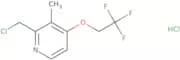
Fórmula:C13H17NO2Pureza:Min 98%Cor e Forma:White PowderPeso molecular:219.28 g/mol2-Chloromethyl-3-methyl-4-(2,2,2-trifluoroethoxy)pyridine, hydrochloride
CAS:Please enquire for more information about 2-Chloromethyl-3-methyl-4-(2,2,2-trifluoroethoxy)pyridine, hydrochloride including the price, delivery time and more detailed product information at the technical inquiry form on this page
Fórmula:C9H10Cl2F3NOPureza:Min. 95%Peso molecular:276.08 g/molRef: 3D-FC20275
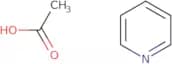
Produto descontinuadoPyridinium acetate
CAS:Produto ControladoPyridinium acetate is a chemical compound with the molecular formula of C6H5N3O2. It is a white solid with a melting point of 61 °C. This compound belongs to the class of organic compounds called heterocycles, which contain atoms other than carbon in their ring structures. Pyridinium acetate has been shown to have an inhibitory effect on collagen synthesis and can be used for the treatment of high blood pressure. The synthesis of pyridinium acetate is done by a synthetase enzyme that requires ATP, citric acid, and sodium citrate as substrates. This pathway creates pyridinium acetate from two molecules of aspartic acid and one molecule of acetic acid. The final product contains a carbonyl group, which gives it its acidic properties. Pyridinium acetate also has an acidic pH optimum at 3-4 and is resistant to mutants such as E. coli K-12 that
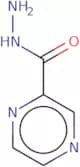
Fórmula:C5H5N·C2H4O2Pureza:Min. 95%Cor e Forma:PowderPeso molecular:139.15 g/molPyrazine-2-carbohydrazide
CAS:Pyrazine-2-carbohydrazide is a chemical compound with significant cytotoxicity. It has been used as an antimicrobial agent, but is not effective against all types of human pathogens. Pyrazine-2-carbohydrazide forms stable complexes with metal ions, such as carbon disulphide and pyrazine-2-carboxylic acid. Magnetic resonance spectroscopy has shown that the active analogs of pyrazine-2-carbohydrazide are pyrazinoic acid and other compounds containing this functional group. Pyrazinoic acid is synthesized from pyrazine-2-carboxylic acid by oxidation with hydrogen peroxide or a strong oxidizing agent. The antimicrobial resistance of bacteria to these compounds can be attributed to the hydrogen bond between the hydroxyl group of pyrazinoic acid and the amino group of bacterial peptidoglycan (a component of bacterial cell walls).
Fórmula:C5H6N4OPureza:Min. 95%Cor e Forma:PowderPeso molecular:138.13 g/molRef: 3D-FP02880
Produto descontinuado4-Bromo-2-fluoropyridine
CAS:4-Bromo-2-fluoropyridine is a heterocyclic amine that belongs to the class of cannabinoid type. It has been shown to be stereoselective, and can be used as a sulfamidate in biomolecular studies. 4-Bromo-2-fluoropyridine is activated by chloride and nucleophilic, which are properties that make it useful for functional groups. The fluorine atom on this molecule also makes it reactive, making it possible to use the substance as an enantiopure catalyst for organic reactions.
Fórmula:C5H3BrFNPureza:Min. 98 Area-%Cor e Forma:Colorless Clear LiquidPeso molecular:175.99 g/molRef: 3D-FB08153
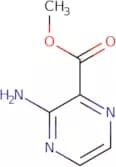
Produto descontinuado3-Amino-2-pyrazinecarboxylic acid methyl ester
CAS:3-Amino-2-pyrazinecarboxylic acid methyl ester (3APCME) is a potent anti-mycobacterial agent that inhibits the growth of Mycobacterium tuberculosis by inhibiting the synthesis of amines, which are necessary for its survival. 3APCME has also been shown to have an inhibitory effect on other bacteria that require amines for their survival, such as Escherichia coli. This agent binds to the receptor and inhibits the enzyme pyrazinase in the reaction of phenoxy with dimethylformamide. The molecular modeling studies show that 3APCME is able to bind to a hydrophobic region on the enzyme's surface and form a covalent bond through nucleophilic attack. The asymmetric synthesis results in the production of one enantiomer of 3APCME and allows for greater efficacy against mycobacteria than other agents.Fórmula:C6H7N3O2Pureza:Min. 95%Cor e Forma:PowderPeso molecular:153.14 g/molRef: 3D-FA17474
Produto descontinuado3,4-Dimethoxy-2-hydroxymethylpyridine
CAS:Pantoprazole is a proton pump inhibitor (PPI) that blocks the production of stomach acid by inhibiting the H+/K+-ATPase enzyme in gastric parietal cells. The chemical compound 3,4-Dimethoxy-2-hydroxymethylpyridine is a sodium salt of pantoprazole. It is commercially available as the anhydrous form, which is a white crystalline powder. This chemical has been used to regulate the amount of water in industrial processes and to salify materials such as lead oxide. Pantoprazole sodium chloride can be prepared by evaporating and drying with anhydrous sodium chloride or by heating an aqueous solution of pantoprazole sulfate.
Fórmula:C8H11NO3Pureza:Min. 95%Cor e Forma:PowderPeso molecular:169.18 g/molRef: 3D-FD70794
Produto descontinuadoIndole-6-carboxylic acid methyl ester
CAS:Please enquire for more information about Indole-6-carboxylic acid methyl ester including the price, delivery time and more detailed product information at the technical inquiry form on this page
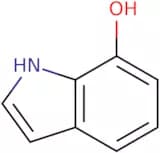
Fórmula:C10H9NO2Pureza:Min. 95%Cor e Forma:PowderPeso molecular:175.19 g/mol7-Hydroxyindole
CAS:7-Hydroxyindole is a biochemical that is produced by wild-type strains of Escherichia coli. It has been shown to inhibit the action of an efflux pump, which is a protein that pumps drugs and other foreign substances out of the cell. The alkoxy radical reacts with 7-hydroxyindole to form a hydroperoxide intermediate. This intermediate then reacts with molecular oxygen to form hydrogen peroxide, which may be responsible for the antimicrobial activity of 7-hydoxyindole. Studies have shown that this compound can also inhibit multidrug efflux pumps in Pseudomonas aeruginosa cells, which may lead to an increase in antibiotic uptake.
Fórmula:C8H7NOPureza:Min. 98 Area-%Cor e Forma:Off-White PowderPeso molecular:133.15 g/molRef: 3D-FH24368
Produto descontinuado(2R)-1-(Phenylmethyl)-N-[3-(spiro[isobenzofuran-1(3H),4'-piperidin]-1-yl)propyl-2-pyrrolidinecarboxamide HCl
CAS:(2R)-1-(Phenylmethyl)-N-[3-(spiro[isobenzofuran-1(3H),4'-piperidin]-1-yl)propyl-2-pyrrolidinecarboxamide HCl is an endogenous opioid that has been shown to have antidepressant-like effects. It can bind to γ-aminobutyric acid (GABA) receptors, catecholamine receptors, and nociceptin receptors. This drug also has anti-cancer properties and may be used for the treatment of autoimmune diseases. The interaction of this drug with other drugs is not well understood, but it has been shown to modulate the effects of opioids and increase the aversive nature of some substances.Fórmula:C27H35N3O2Pureza:Min. 95%Cor e Forma:PowderPeso molecular:433.59 g/mol
![11-Piperazinyldibenzo[b,e][1,4]diazepine](/_next/image/?url=https%3A%2Fstatic.cymitquimica.com%2Fproducts%2F3D%2Fthumb-webp%2FFP76915.webp&w=3840&q=75)






![(2R)-1-(Phenylmethyl)-N-[3-(spiro[isobenzofuran-1(3H),4'-piperidin]-1-yl)propyl-2-pyrrolidinecarbo…](/_next/image/?url=https%3A%2Fstatic.cymitquimica.com%2Fproducts%2F3D%2Fthumb-webp%2FFP73252.webp&w=3840&q=75)