Heterociclos com Nitrogénio (N)
Subcategorias de "Heterociclos com Nitrogénio (N)"
- Azepano(436 produtos)
- Benzotriazóis(438 produtos)
- Diazepinas(335 produtos)
- Imidazóis(4.031 produtos)
- Imidazolinas(385 produtos)
- Isoxazol(1.088 produtos)
- Piperazinas(3.758 produtos)
- Piperidinas(8.442 produtos)
- Pirazinas(1.304 produtos)
- Pirazol(5.960 produtos)
- Pirazolidina(21 produtos)
- Pirazolina(143 produtos)
- Piridazina(860 produtos)
- Piridinas(22.007 produtos)
- Pirimidina(6.084 produtos)
- Pirróis(2.450 produtos)
- Pirrolidinas(5.840 produtos)
- Pirrolina(48 produtos)
- Pirrolo[1,2-b]piridazina(10 produtos)
- Tetrazola(531 produtos)
- Triazinas(466 produtos)
- Triazolas(1.689 produtos)
Foram encontrados 17863 produtos de "Heterociclos com Nitrogénio (N)"
6-Nitroquinoline
CAS:6-Nitroquinoline is a nucleophilic compound that reacts with nitroalkanes to form alkyl nitrites. It undergoes a bioreductive reaction, in which it is reduced to the corresponding amine by hydrogen peroxide and ammonia. 6-Nitroquinoline contains functional groups that can act as either electron donors or electron acceptors and is therefore reactive towards other compounds. The reaction mechanism involves nucleophilic attack at the carbon atom in the ring of the 6-nitroquinoline molecule, resulting in an addition product. 6-Nitroquinoline has been shown to react with fluorophores such as fluorescein, forming a fluorescent product that can be detected by spectroscopy. This chemical can also form hydrogen bonds with other molecules, which are important for its reactivity. The reaction products of this compound are nitrite and quinolines where one or more of the nitrogens have been oxidized to nitro groups.
ENDFórmula:C9H6N2O2Pureza:Min. 95%Cor e Forma:White PowderPeso molecular:174.16 g/molRef: 3D-FN31115
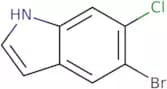
Produto descontinuado5-Bromo-6-chloro-1H-indole
CAS:5-Bromo-6-chloro-1H-indole is a fine chemical that is used as a building block for research chemicals, reagents, and speciality chemicals. It is soluble in chloroform and benzene, but insoluble in water. This product can be used as a reaction component or a useful intermediate in the production of complex compounds. 5-Bromo-6-chloro-1H-indole has been reported to be an effective scaffold for the synthesis of many novel compounds with potential applications such as pharmaceuticals, agrochemicals, and dyes.
Fórmula:C8H5BrClNPureza:Min. 95%Cor e Forma:PowderPeso molecular:230.49 g/molRef: 3D-FB29903
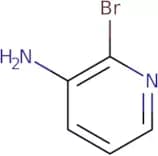
Produto descontinuado3-Amino-2-bromopyridine
CAS:3-Amino-2-bromopyridine is a synthetic compound that has been found to be a potential antitumor agent. It undergoes a palladium-catalyzed coupling reaction with 3-phenylpropene, forming an amide. The reaction yield is dependent on the temperature of the reaction, which must be low enough for the desired product to form. 3-Amino-2-bromopyridine has been shown to possess pharmacokinetic properties and can be transported by amide, hydroxyl, and carboxyl groups. This compound also undergoes acid formation reactions at elevated temperatures.
Fórmula:C5H5BrN2Pureza:Min. 95%Cor e Forma:White PowderPeso molecular:173.01 g/molRef: 3D-FA50747
Produto descontinuado3-Cyano-2-hydroxypyridine
CAS:3-Cyano-2-hydroxypyridine is an inhibitor of the noradrenaline transporter, which is a type of l-type calcium channel. 3-Cyano-2-hydroxypyridine has been shown to be a potent inhibitor of the noradrenaline transporter. It inhibits the binding of neurotransmitters to their receptors by blocking active methylene sites on the transporter molecule. This drug also has a cavity that can accommodate bulky inhibitor molecules, making it more difficult for these inhibitors to bind to the active site and compete with neurotransmitters for uptake. 3Cyano-2-hydroxypyridine also inhibits nitric oxide synthase, which may provide anti-tumor activity as well as inhibit tumor cell growth. The inhibitory effect of this drug is due to structural studies that have revealed hydrogen bonding interactions with the drug's nitrogen and oxygen atoms.
Fórmula:C6H4N2OPureza:Min. 95%Cor e Forma:Yellow To Brown SolidPeso molecular:120.11 g/molRef: 3D-FC09747
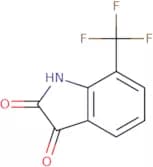
Produto descontinuado7-(Trifluoromethyl)1H-indole-2,3-dione
CAS:Trifluoromethyl-substituted 7-(trifluoromethyl)1H-indole-2,3-dione is a trifluoromethyl analogue of indole-2,3-dione that has been shown to have antimalarial activity. It has been shown to be active against plasmodium and cancer cells in vitro. Trifluoromethyl group can be replaced by other substituents such as methoxy, ethoxy, or nitro groups. The compound has centrosymmetric structures and an elemental composition of C8H4F3N.
Fórmula:C9H4F3NO2Pureza:Min. 95%Cor e Forma:PowderPeso molecular:215.13 g/molRef: 3D-FT28468
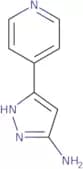
Produto descontinuado5-Pyridin-4-yl-2H-pyrazol-3-ylamine
CAS:5-Pyridin-4-yl-2H-pyrazol-3-ylamine is a potent inhibitor of b-raf, a protein kinase that is involved in the regulation of cell proliferation and differentiation. It is used as a research tool for studying the role of b-raf in cancer. 5-Pyridin-4-yl-2H-pyrazol-3-ylamine has been shown to have similar activity to other inhibitors of bRaf. It binds to the ATP binding site on bRaf and prevents phosphorylation of serine residues in the activation loop by ATP. This inhibition prevents activation of the kinase and reduces tumor growth in cancer models.
Fórmula:C8H8N4Pureza:Min. 95%Cor e Forma:White/Off-White SolidPeso molecular:160.18 g/molRef: 3D-FP51268
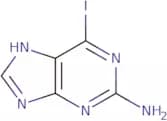
Produto descontinuado2-Amino-6-iodopurine
CAS:2-Amino-6-iodopurine is an analog of the purine nucleoside guanine, which has been used to synthesize a variety of boronic acids. The most common use for 2-amino-6-iodopurine is in the synthesis of benzylboronic acid, which can be used as an organometallic reagent in organic synthesis. This compound also has dehydrogenase activity and has been shown to catalyze the conversion of benzoic acid to benzaldehyde, mediated by NADH. 2-Amino-6-iodopurine is found in the biosynthesis of ribonucleotides and deoxyribonucleotides, where it reacts with chloride ions and phosphate groups to form adenylate and xanthosine monophosphates.
Fórmula:C5H4IN5Pureza:Min. 95%Cor e Forma:PowderPeso molecular:261.02 g/molRef: 3D-FA08193
Produto descontinuado4-Chloro-6-hydroxypyrimidine
CAS:4-Chloro-6-hydroxypyrimidine is an organic compound that is used as a precursor to other chemical compounds. It can be prepared by the reaction of ethylene with chlorine in the presence of carbon disulphide. 4-Chloro-6-hydroxypyrimidine has been shown to react with halides, amidines, and ethylene to form tritiated pyrimidines. It also reacts with disulphides, chlorinates and uracil. 4-Chloro-6-hydroxypyrimidine is reactive and can undergo desulfurization reactions with aluminium and malonate to form chloride or sulphoxide. The halides, amidines, and ethylene are all reactive substances that can react with each other or undergo other reactions to form new substances.
Fórmula:C4H3ClN2OPureza:Min. 95%Cor e Forma:White To Light (Or Pale) Yellow SolidPeso molecular:130.53 g/molRef: 3D-FC10266
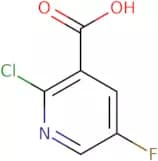
Produto descontinuado2-Chloro-5-fluoropyridine-3-carboxylic acid
CAS:2-Chloro-5-fluoropyridine-3-carboxylic acid is an intermediate in the synthesis of fluorine compounds used in the industrial process. It can be synthesized by chlorinating 5-fluoropyridine with chlorine gas and a catalyst such as platinum, or by hydrogenating 2-chloro-5-pyridinecarboxylic acid. This chemical is used to manufacture other chemicals such as ethylene oxide, tetrafluoroethylene, and hexafluoroethane.
Fórmula:C6H3ClFNO2Pureza:Min. 95%Peso molecular:175.54 g/molRef: 3D-FC57301
Produto descontinuado5-Nitro-7-azaindole
CAS:5-Nitro-7-azaindole is a heterocyclic compound that is structurally related to the furoquinolines. It has been shown to act as an inhibitor of benzene and pyridine oxidases, which are enzymes that catalyze the conversion of these compounds into reactive intermediates. The reaction mechanism of 5-Nitro-7-azaindole with benzene and pyridine oxidases involves the formation of covalent bonds with reactive sulfur atoms in the enzyme active site. 5-Nitro-7-azaindole also inhibits bacterial growth by inhibiting DNA synthesis. This compound has been found to be scalable and can be produced at large scales without loss in quality. 5-Nitro-7-azaindole is not stereoselective and it is not an aromatic system, meaning that it does not have a benzene ring.
Fórmula:C7H5N3O2Pureza:Min. 95%Cor e Forma:PowderPeso molecular:163.13 g/molRef: 3D-FN15227
Produto descontinuado3-Piperazin-1-yl-benzo[d]isothiazole hydrochloride
CAS:3-Piperazin-1-yl-benzo[d]isothiazole hydrochloride is an atypical antipsychotic that belongs to the group of inorganic compounds. It has been shown to have a high affinity for acidic surfaces and can be used in industrial applications such as the removal of metal ions from water by filtration. 3-Piperazin-1-yl-benzo[d]isothiazole hydrochloride is synthesized by reacting an inorganic base with a piperazine compound, followed by hydrolysis of the piperazine ring using acid. Impurities are often found during synthesis, which may contain traces of other compounds such as pyridine or methylamine.Fórmula:C11H13N3SPureza:Min. 95%Cor e Forma:PowderPeso molecular:219.31 g/molRef: 3D-FP50755
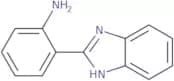
Produto descontinuado2-(2-Aminophenyl)benzimidazole
CAS:2-(2-Aminophenyl)benzimidazole is a synthetic compound with the chemical formula C8H6N2. It has an intramolecular hydrogen bond and reacts with salicylaldehyde to form 2-aminobenzimidazole, which is a reaction product. 2-(2-Aminophenyl)benzimidazole may be used as an antimicrobial agent, but it also has other uses such as a reagent in organic synthesis. It is soluble in water and can be obtained through liquid chromatography.
Fórmula:C13H11N3Pureza:Min. 95%Cor e Forma:Off-White PowderPeso molecular:209.25 g/molRef: 3D-FA10624
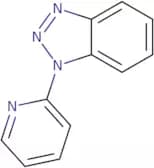
Produto descontinuado1-(2-Pyridinyl)benzotriazole
CAS:1-(2-Pyridinyl)benzotriazole is a reagent that is used as an intermediate for the preparation of complex compound. It also has other uses such as a building block and scaffold in the synthesis of fine chemicals, research chemicals, and versatile building blocks. 1-(2-Pyridinyl)benzotriazole can be used in reactions with other chemical compounds to form useful intermediates.
Fórmula:C11H8N4Pureza:Min. 95%Cor e Forma:Brown PowderPeso molecular:196.21 g/molRef: 3D-FP27312
Produto descontinuado4-Chloro-1H-pyrazolo[3,4-d]pyrimidine
CAS:4-Chloro-1H-pyrazolo[3,4-d]pyrimidine is an amine that inhibits corrosion in aqueous solutions. It is used as an inhibitor of corrosion in the manufacture of steel. 4-Chloro-1H-pyrazolo[3,4-d]pyrimidine is added to the steel surface before it enters the electrolytic pickling bath. 4-Chloro-1H-pyrazolo[3,4-d]pyrimidine has been shown to be thermodynamically stable and can be formulated into a variety of organic solvents with different boiling points. It can also be used as a coupling agent for palladium catalyzed reactions. This compound class has optimum concentration at about 0.5 M and reacts via dipole mechanism with eucalyptol or piperazine as a solvent. The major heterocycle in this compound is pyrazole (C5).
Fórmula:C5H3ClN4Pureza:Min. 95%Cor e Forma:PowderPeso molecular:154.56 g/molRef: 3D-FC16225
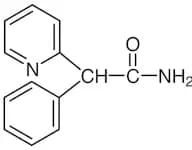
Produto descontinuado2-Phenyl-2-(2-pyridyl)acetamide
CAS:Fórmula:C13H12N2OPureza:>98.0%(T)(HPLC)Cor e Forma:White to Almost white powder to crystalPeso molecular:212.252,6-Pyridinedicarboxylic acid dimethyl ester
CAS:2,6-Pyridinedicarboxylic acid dimethyl ester is a drug that has shown anticancer activity in animal models. It binds to DNA, forming a ternary complex with the DNA and the enzyme topoisomerase I. The binding of this drug to the enzyme prevents it from breaking the DNA strands during replication, causing the cell to die. It has been shown that 2,6-pyridinedicarboxylic acid dimethyl ester can be used as a non-competitive inhibitor of topoisomerase I. Furthermore, it has been demonstrated that 2,6-pyridinedicarboxylic acid dimethyl ester is able to bind to human endometrial cancer cells with high affinity. Finally, 2,6-pyridinedicarboxylic acid dimethyl ester was found in x-ray crystal structures of complexes with hydrogen bonds and low activation enthalpy and entropy.
Fórmula:C9H9NO4Pureza:Min. 95%Cor e Forma:White PowderPeso molecular:195.17 g/molRef: 3D-FP44227
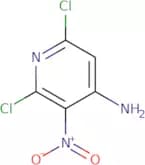
Produto descontinuado4-Amino-2,6-dichloro-3-nitropyridine
CAS:4-Amino-2,6-dichloro-3-nitropyridine is a synthetic compound that inhibits tyrosine kinases. It is an isomer of 2,6-Dichloropyridine and has been shown to inhibit the growth of lymphoma cells in vitro. 4-Amino-2,6-dichloro-3-nitropyridine has three substitutions on the pyridine ring as compared to 2,6-Dichloropyridine. The substitutions are thought to be responsible for the increased hydrophilic properties of this compound. This may lead to increased cellular uptake and better bioavailability.
Fórmula:C5H3Cl2N3O2Pureza:Min. 95%Cor e Forma:Slightly Yellow PowderPeso molecular:208 g/molRef: 3D-FA14524
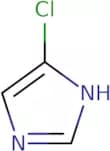
Produto descontinuado4-Chloro-1H-imidazole
CAS:4-Chloro-1H-imidazole is an organic chemical compound that contains a heterocyclic ring with one nitrogen and three carbons. It is classified as a weak acid. 4-Chloro-1H-imidazole can be found in hydrochloric acid, methyl ketones, and the acid conjugates of pyrazole rings. It has minimal toxicity. 4-Chloro-1H-imidazole binds to receptors in the body, which may account for its effects on blood pressure and heart rate. This drug also reacts with diazonium salts to form an intermediate that is then oxidized by chloride ions to form a reactive intermediate that can react with histidine or flavin (a type of vitamin B2) to form a fluorescent product that can be detected by light absorption or fluorescence emission spectroscopy.
Fórmula:C3H3ClN2Pureza:Min. 95%Cor e Forma:White PowderPeso molecular:102.52 g/molRef: 3D-FC19980
Produto descontinuado5-Methyl-2-nitropyridine
CAS:Please enquire for more information about 5-Methyl-2-nitropyridine including the price, delivery time and more detailed product information at the technical inquiry form on this page
Fórmula:C6H6N2O2Pureza:Min. 95%Cor e Forma:PowderPeso molecular:138.12 g/molRef: 3D-FM32781
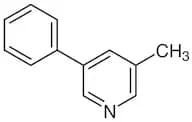
Produto descontinuado3-Methyl-5-phenylpyridine
CAS:Fórmula:C12H11NPureza:>95.0%(GC)Cor e Forma:Light yellow to Brown to Dark green clear liquidPeso molecular:169.23





![3-Piperazin-1-yl-benzo[d]isothiazole hydrochloride](/_next/image/?url=https%3A%2Fstatic.cymitquimica.com%2Fproducts%2F3D%2Fthumb-webp%2FFP50755.webp&w=3840&q=75)
![4-Chloro-1H-pyrazolo[3,4-d]pyrimidine](/_next/image/?url=https%3A%2Fstatic.cymitquimica.com%2Fproducts%2F3D%2Fthumb-webp%2FFC16225.webp&w=3840&q=75)