Heterociclos com Nitrogénio (N)
Subcategorias de "Heterociclos com Nitrogénio (N)"
- Azepano(436 produtos)
- Benzotriazóis(438 produtos)
- Diazepinas(335 produtos)
- Imidazóis(4.031 produtos)
- Imidazolinas(385 produtos)
- Isoxazol(1.088 produtos)
- Piperazinas(3.758 produtos)
- Piperidinas(8.442 produtos)
- Pirazinas(1.304 produtos)
- Pirazol(5.960 produtos)
- Pirazolidina(21 produtos)
- Pirazolina(143 produtos)
- Piridazina(860 produtos)
- Piridinas(22.007 produtos)
- Pirimidina(6.084 produtos)
- Pirróis(2.450 produtos)
- Pirrolidinas(5.840 produtos)
- Pirrolina(48 produtos)
- Pirrolo[1,2-b]piridazina(10 produtos)
- Tetrazola(531 produtos)
- Triazinas(466 produtos)
- Triazolas(1.689 produtos)
Foram encontrados 17863 produtos de "Heterociclos com Nitrogénio (N)"
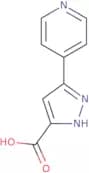
5-Pyridin-4-yl-1H-pyrazole-3-carboxylic acid
CAS:5-Pyridin-4-yl-1H-pyrazole-3-carboxylic acid is a white crystalline solid. It is soluble in water, methanol and ethanol. The molecular weight of 5-Pyridin-4-yl-1H-pyrazole-3 carboxylic acid is 177.17 g/mol. This compound has been found to have an elemental composition of C, H, N and O with a calculated density of 1.62 g/cm3 in the form of a single crystal x ray diffraction pattern. 5-Pyridin 4 yl 1H pyrazole 3 carboxylic acid has synergistic effects with other drugs used for chemotherapy such as cisplatin and doxorubicin against cancer cells.Fórmula:C9H7N3O2Pureza:Min. 95%Cor e Forma:PowderPeso molecular:189.17 g/molRef: 3D-FP56364
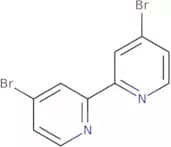
Produto descontinuado4,4'-Dibromo-2,2'-bipyridine
CAS:4,4'-Dibromo-2,2'-bipyridine is a nucleophilic compound that can react with a wide range of electrophiles. It has been used in medications as a thermally stable and non-toxic ligand for metal ions. 4,4'-Dibromo-2,2'-bipyridine is an efficient ligand for the coordination of many transition metals. This compound also has high values in light emission and is used in crystallography to study protein binding sites. The n-oxide form of 4,4'-dibromo-2,2'-bipyridine has biological properties that have not yet been studied.
Fórmula:C10H6Br2N2Pureza:Min. 97 Area-%Cor e Forma:PowderPeso molecular:313.98 g/molRef: 3D-FD06223
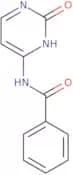
Produto descontinuadoN4-Benzoylcytosine
CAS:Building block in the synthesis of nucleoside antiviral agents
Fórmula:C11H9N3O2Pureza:Min. 95%Cor e Forma:White PowderPeso molecular:215.21 g/molRef: 3D-FB03691
Produto descontinuado1H-Pyrrolo[3,2-b]pyridine-7-carboxylic acid
CAS:1H-Pyrrolo[3,2-b]pyridine-7-carboxylic acid is a chemical compound that belongs to the group of organic compounds. The spatial property of 1H-pyrrolo[3,2-b]pyridine-7-carboxylic acid is protrusion. It has a molecular weight of 293.1 g/mol and optical properties of module and positioning. The actuator module position can be used as an on/off switch for the molecule's optical properties.
Fórmula:C8H6N2O2Pureza:Min. 95 Area-%Cor e Forma:PowderPeso molecular:162.15 g/molRef: 3D-FP167590
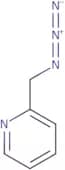
Produto descontinuado2-(Azidomethyl)pyridine
CAS:2-(Azidomethyl)pyridine (2-AP) is an organopalladium complex with a molecular weight of 206.2 g/mol. It has been used in magnetic resonance spectroscopy and has been shown to bind to all-trans retinoic acid, which is an active metabolite of vitamin A. 2-AP has also been shown to inhibit the growth of cancer cells by binding to the glycan on cell surfaces. The copper complex has been shown to have anti-inflammatory properties and can inhibit the activity of enzymes such as cyclooxygenase and lipoxygenase, which are involved in inflammatory responses. 2-AP is a second-order rate constant for the exothermic reaction between hydrogen peroxide and azide ion, which produces nitrous oxide ((NO)) and water molecules.
Fórmula:C6H6N4Pureza:Min. 95%Cor e Forma:Brown PowderPeso molecular:134.14 g/molRef: 3D-FA121941
Produto descontinuado4-Amino-2-methoxypyridine
CAS:4-Amino-2-methoxypyridine is an antiviral agent that inhibits the activity of the NS5B polymerase, a key enzyme in the replication of the hepatitis C virus. It is a potent inhibitor with a wide range of activity and can be used for treatment and prevention of infection. 4-Amino-2-methoxypyridine has been shown to inhibit replication of hepatitis C virus in cell culture. This compound is stable in vivo and can be administered orally, making it an attractive candidate for oral prophylaxis against hepatitis C. 4-Amino-2-methoxypyridine also exhibits good pharmacokinetic properties, including a low clearance rate and high volume of distribution, which makes it suitable for chronic administration.
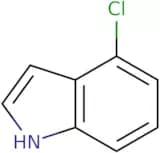
Fórmula:C6H8N2OPureza:Min. 95%Cor e Forma:White To Light (Or Pale) Orange SolidPeso molecular:124.14 g/mol4-Chloroindole
CAS:4-Chloroindole is an indole compound that is a derivative of salicylic acid. It is used in the production of ethylene and casein, as well as being a major metabolite of anthranilic acid. 4-Chloroindole is also found in environmental pollutants and has been shown to be active against plant pathogens such as Pseudomonas syringae. It has been shown to inhibit the growth of Bacillus cereus by binding to its ribosomal RNA and inhibiting protein synthesis. In addition, it inhibits the biosynthesis of methylindole, which may be due to its ability to inhibit the enzyme tryptophan synthase.
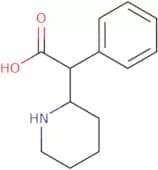
Fórmula:C8H6ClNPureza:Min. 98 Area-%Cor e Forma:Clear LiquidPeso molecular:151.59 g/mol2-Phenyl-2-(2-piperidy)acetic acid
CAS:Produto ControladoMethylphenidate is a psychostimulant drug used to treat attention deficit hyperactivity disorder (ADHD) and narcolepsy. It is a prodrug of the active compound, 2-phenyl-2-(2-piperidin)acetic acid (Ritalinic acid), which inhibits the reuptake of dopamine and norepinephrine into the presynaptic neuron. Methylphenidate can be detected by LC-MS/MS in wastewater, providing an analytical method for predicting the presence of this substance in wastewater treatment plants. This drug has minimal toxicity in model organisms and can be metabolized by methylation to form a glucuronide conjugate. Methylphenidate has been shown to increase locomotor activity when administered at low doses, but not at high doses. At high doses, it increases locomotor activity up to 3 hours after administration and decreases locomotor activity 1 hour after administration.
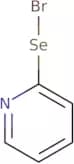
Fórmula:C13H17NO2Pureza:Min 98%Cor e Forma:White PowderPeso molecular:219.28 g/mol2-Pyridine selenyl bromide
CAS:2-Pyridine selenyl bromide is a co-precursor for the synthesis of 2-selenides. It can be prepared by reacting 2-pyridinesulfonyl chloride with sodium periodate in acetonitrile. This compound can then be converted to a 2-selenide by treatment with methanol and periodic acid. The analytical and preparative methods are shown below:
Analytical: Dissolve the sample in dichloromethane, add triethylamine, and extract into diethyl ether. Add a small amount of potassium bromide to the organic layer and evaporate to dryness under vacuum. Recrystallize from acetonitrile.
Methanolysis: Dissolve the sample in methanol, add a catalytic amount of hydrochloric acid, and heat at reflux for 12 hours. Cool the solution, filter off any insoluble material, evaporate to drynessFórmula:C5H4BrNSePureza:Min. 95%Peso molecular:236.96 g/molRef: 3D-FP11022
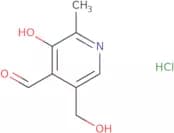
Produto descontinuadoPyridoxal hydrochloride
CAS:Pyridoxal hydrochloride is a vitamin B6 metabolite. It is involved in many biochemical reactions, including trans-sulfuration, amino acid synthesis, and neurotransmitter synthesis. Pyridoxal hydrochloride has been shown to have antimicrobial activity against some bacteria species by inhibiting their enzyme activities. This compound also inhibits the growth of various fungi. The redox potentials of pyridoxal hydrochloride can be determined by titration calorimetry, which can be used to study its structural properties. In vitro experiments with cells have shown that pyridoxal hydrochloride may increase the efficiency of protein production when used during cell transfection. Toxicity studies have shown that pyridoxal hydrochloride is not toxic to humans at doses up to 2000 mg/kg body weight per day for up to 14 days.
Fórmula:C8H9NO3·HClPureza:Min. 98 Area-%Cor e Forma:White PowderPeso molecular:203.62 g/mol4-Vinylpyridine, stabilized with 100ppm Hydroquinone
CAS:4-Vinylpyridine, stabilized with 100ppm Hydroquinone is a chemical compound that belongs to the class of pyridines. It has been shown to be stable in aqueous solution and to have a high water permeability. The reaction mechanism is not known, but it is thought that the quaternization of the vinyl group may be involved. 4-Vinylpyridine has been used as a component for the synthesis of polymers and can also be used in palladium-catalyzed coupling reactions.
Fórmula:C7H7NPureza:Min. 97 Area-%Cor e Forma:Colorless Clear LiquidPeso molecular:105.14 g/mol4-[(2,3,4Trimethoxyphenyl)methyl]piperazine-1-carbaldehyde
CAS:Please enquire for more information about 4-[(2,3,4Trimethoxyphenyl)methyl]piperazine-1-carbaldehyde including the price, delivery time and more detailed product information at the technical inquiry form on this page
Fórmula:C15H22N2O4Pureza:Min. 95%Cor e Forma:PowderPeso molecular:294.35 g/mol1-Propylpiperidin-4-amine 2HCl
CAS:1-Propylpiperidin-4-amine 2HCl is a cyclic amine. It is an organic compound that has a high absorption rate and can be used as an absorbent. 1-Propylpiperidin-4-amine 2HCl is used in experiments to study the speciation of different compounds, such as carbonates and desorption. The experiment was performed using various solvents with different densities, such as water, ethanol, and acetone, to determine the absorption rate of 1-Propylpiperidin-4-amine 2HCl. The experiment also studied viscosity changes over time while in contact with 1-Propylpiperidin-4-amine 2HCl. This chemical has a molecular structure consisting of one propyl group and four amines.
Fórmula:C8H20Cl2N2Pureza:Min. 95%Cor e Forma:SolidPeso molecular:215.16 g/molRef: 3D-FP113242
Produto descontinuado4-Methylpyrimidine
CAS:4-Methylpyrimidine is a molecule used in the treatment of cancer. It is an inhibitor of the enzyme topoisomerase II, which is involved in DNA replication and repair. 4-Methylpyrimidine binds to the active site of topoisomerase II and blocks its activity. 4-Methylpyrimidine has been shown to be effective against Covid-19 pandemic, which was responsible for a severe outbreak of pneumonia in 2009. The reaction mechanism of 4-methylpyrimidine involves methylpyrazine, a chloride ligand, and molybdenum as the metal center. FT-IR spectroscopy has been used to identify the structural analysis of this molecule.
Fórmula:C5H6N2Pureza:Min. 95%Cor e Forma:Clear LiquidPeso molecular:94.12 g/mol2,6-Pyridinedicarboxylic acid dimethyl ester
CAS:2,6-Pyridinedicarboxylic acid dimethyl ester is a drug that has shown anticancer activity in animal models. It binds to DNA, forming a ternary complex with the DNA and the enzyme topoisomerase I. The binding of this drug to the enzyme prevents it from breaking the DNA strands during replication, causing the cell to die. It has been shown that 2,6-pyridinedicarboxylic acid dimethyl ester can be used as a non-competitive inhibitor of topoisomerase I. Furthermore, it has been demonstrated that 2,6-pyridinedicarboxylic acid dimethyl ester is able to bind to human endometrial cancer cells with high affinity. Finally, 2,6-pyridinedicarboxylic acid dimethyl ester was found in x-ray crystal structures of complexes with hydrogen bonds and low activation enthalpy and entropy.
Fórmula:C9H9NO4Pureza:Min. 95%Cor e Forma:White PowderPeso molecular:195.17 g/molRef: 3D-FP44227
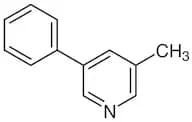
Produto descontinuado3-Methyl-5-phenylpyridine
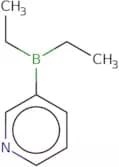
CAS:Fórmula:C12H11NPureza:>95.0%(GC)Cor e Forma:Light yellow to Brown to Dark green clear liquidPeso molecular:169.233-(Diethylboryl) pyridine
CAS:3-(Diethylboryl) pyridine is a halogenated biphenyl. It is used in the synthesis of 3-aryl substituted pyridines by cross-coupling reactions with aryl iodides, bromides and chlorides. Cross-coupling reactions are usually carried out at low temperatures (0 to 20°C) in order to minimize side reactions. The reaction is usually conducted in a biphasic system containing an organic solvent and water, which facilitates the extraction of the product from the mixture. 3-(Diethylboryl) pyridine reacts with halide ions via an electrophilic substitution reaction to form a reactive intermediate, which reacts with palladium catalyst to produce the desired product. This process is also called catalytic hydrogenation. 3-(Diethylboryl) pyridine has been shown to inhibit human cytochrome P450 enzymes, which are involved in drug metabolism and break down drugs
Fórmula:C9H14BNPureza:Min. 95%Cor e Forma:PowderPeso molecular:147.03 g/molRef: 3D-FD29987
Produto descontinuado3-Cyano-2-hydroxypyridine
CAS:3-Cyano-2-hydroxypyridine is an inhibitor of the noradrenaline transporter, which is a type of l-type calcium channel. 3-Cyano-2-hydroxypyridine has been shown to be a potent inhibitor of the noradrenaline transporter. It inhibits the binding of neurotransmitters to their receptors by blocking active methylene sites on the transporter molecule. This drug also has a cavity that can accommodate bulky inhibitor molecules, making it more difficult for these inhibitors to bind to the active site and compete with neurotransmitters for uptake. 3Cyano-2-hydroxypyridine also inhibits nitric oxide synthase, which may provide anti-tumor activity as well as inhibit tumor cell growth. The inhibitory effect of this drug is due to structural studies that have revealed hydrogen bonding interactions with the drug's nitrogen and oxygen atoms.
Fórmula:C6H4N2OPureza:Min. 95%Cor e Forma:Yellow To Brown SolidPeso molecular:120.11 g/molRef: 3D-FC09747
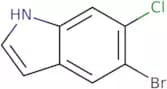
Produto descontinuado5-Bromo-6-chloro-1H-indole
CAS:5-Bromo-6-chloro-1H-indole is a fine chemical that is used as a building block for research chemicals, reagents, and speciality chemicals. It is soluble in chloroform and benzene, but insoluble in water. This product can be used as a reaction component or a useful intermediate in the production of complex compounds. 5-Bromo-6-chloro-1H-indole has been reported to be an effective scaffold for the synthesis of many novel compounds with potential applications such as pharmaceuticals, agrochemicals, and dyes.
Fórmula:C8H5BrClNPureza:Min. 95%Cor e Forma:PowderPeso molecular:230.49 g/molRef: 3D-FB29903
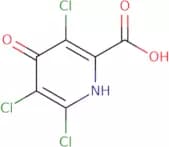
Produto descontinuado3,5,6-Trichloro-4-hydroxy-2-picolinic acid
CAS:3,5,6-Trichloro-4-hydroxy-2-picolinic acid is a high quality reagent that is used as a building block for the synthesis of complex compounds with potential pharmaceutical applications. It can be used as an intermediate in the production of fine chemicals and speciality chemicals. This compound is also useful for research purposes and as a versatile building block for reactions.
Fórmula:C6H2Cl3NO3Pureza:Min. 95%Cor e Forma:White to off-white solid.Peso molecular:242.44 g/mol

![1H-Pyrrolo[3,2-b]pyridine-7-carboxylic acid](/_next/image/?url=https%3A%2Fstatic.cymitquimica.com%2Fproducts%2F3D%2Fthumb-webp%2FFP167590.webp&w=3840&q=75)


![4-[(2,3,4Trimethoxyphenyl)methyl]piperazine-1-carbaldehyde](/_next/image/?url=https%3A%2Fstatic.cymitquimica.com%2Fproducts%2F3D%2Fthumb-webp%2FFT46258.webp&w=3840&q=75)