Compostos alifáticos e derivados
Os compostos alifáticos e seus derivados são compostos orgânicos caracterizados por estruturas de cadeia reta ou ramificada, ao contrário das estruturas em anel encontradas nos compostos aromáticos. Esses compostos incluem alcanos, alcenos, alcinos e seus derivados funcionalizados, desempenhando um papel vital em vários processos químicos e aplicações industriais. Na CymitQuimica, oferecemos uma seleção diversificada de compostos alifáticos de alta pureza e seus derivados, meticulosamente selecionados e testados para atender aos rigorosos requisitos de pesquisa e necessidades industriais. Nosso catálogo abrange uma ampla gama de compostos, incluindo hidrocarbonetos, álcoois, aldeídos, cetonas e ácidos, cada um conhecido por sua reatividade e versatilidade na síntese orgânica, farmacêutica e ciência dos materiais. Ao fornecer compostos alifáticos e derivados de alta qualidade, apoiamos pesquisadores e profissionais na realização de transformações químicas precisas e eficientes, promovendo a inovação e os avanços em vários campos científicos e tecnológicos.
Foram encontrados 8718 produtos de "Compostos alifáticos e derivados"
Ordenar por
Pureza (%)
0
100
|
0
|
50
|
90
|
95
|
100
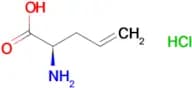
(R)-2-Aminopent-4-enoic acid hydrochloride
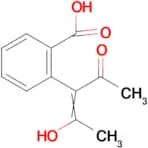
CAS:Fórmula:C5H10ClNO2Pureza:95.0%Cor e Forma:SolidPeso molecular:151.593-(2-Carboxyphenyl)pentane-2,4-dione
CAS:Fórmula:C12H12O4Pureza:98%Cor e Forma:SolidPeso molecular:220.224[(3-phenoxyphenyl)methyl](prop-2-en-1-yl)amine hydrochloride
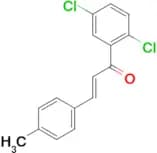
CAS:Fórmula:C16H18ClNOPureza:95.0%Peso molecular:275.78(2E)-1-(2,5-dichlorophenyl)-3-(4-methylphenyl)prop-2-en-1-one
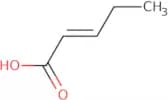
CAS:Fórmula:C16H12Cl2OPureza:95.0%Peso molecular:291.172-Pentenoic acid
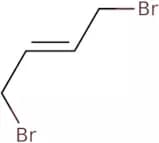
CAS:<p>2-Pentenoic acid is a fatty acid that belongs to the group of sodium salts. It is often used as a catalyst in organic synthesis. 2-Pentenoic acid has been shown to reduce the incidence of bowel disease and improve mitochondrial function. This compound is not toxic at doses up to 1 g/kg in mice, although it may cause acute toxicity at higher doses. 2-Pentenoic acid has also been shown to have anti-inflammatory properties that may be due to its ability to inhibit prostaglandin synthesis.</p>Fórmula:C5H8O2Pureza:Min. 95%Cor e Forma:Colorless Clear LiquidPeso molecular:100.12 g/moltrans-1,4-Dibromo-2-butene
CAS:<p>Trans-1,4-Dibromo-2-butene is a chemical compound with the molecular formula of C4H8Br2. It is an organic halide and a member of the class of compounds known as dibromides. The molecule has two bromine atoms, one on each carbon atom in the chain. Trans-1,4-Dibromo-2-butene is used as a monomer to create polymers such as cationic polymerization or benzalkonium chloride. In addition, trans-1,4-Dibromo-2-butene can be used in the synthesis of amides by reacting with ammonia. This chemical compound also has antimicrobial properties and has been shown to inhibit the activity of bacteria by disrupting protein synthesis and cell division.</p>Fórmula:C4H6Br2Pureza:Min. 95%Cor e Forma:White PowderPeso molecular:213.9 g/molα-Bromostyrene (~90%, ~1% Hydroquinone as stabilizer)
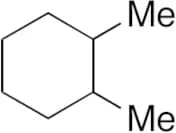
CAS:Produto Controlado<p>Applications (1-Bromoethenyl)-benzene is a useful synthetic intermediate. It is a reactant used to synthesize Potassium (1-Phenylcyclopropyl)trifluoroborate (P698400). It can also be used in the synthesis of substituted cyclopentenones.<br>References Zhang, L., et al.: J. Am. Chem. Soc., 128, 1442 (2006)<br></p>Fórmula:C8H7BrCor e Forma:NeatPeso molecular:183.051,2-Dimethylcyclohexane
CAS:Produto Controlado<p>Applications 1,2-Dimethylcyclohexane is used in the preparation of rhodium nanoparticles as recyclable catalysts.<br> Not a dangerous good if item is equal to or less than 1g/ml and there is less than 100g/ml in the package<br>References Stratton, S.A., et. al.: Catalysis Today, 183, 96 (2012)<br></p>Fórmula:C8H16Cor e Forma:NeatPeso molecular:112.211-tert-Butyl-3-ethylbenzene
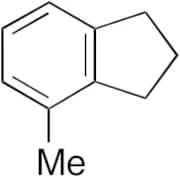
CAS:Produto Controlado<p>Applications 1-TERT-BUTYL-3-ETHYLBENZENE (cas# 14411-56-4) is a useful research chemical.<br> Not a dangerous good if item is equal to or less than 1g/ml and there is less than 100g/ml in the package<br></p>Fórmula:C12H18Cor e Forma:NeatPeso molecular:162.274-Methylindan
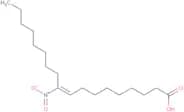
CAS:Produto Controlado<p>Applications 4-Methylindan is a shoyu flavouring that is used in soy sauce.<br>References Nunomura, N., et al.: Agri. Biol. Chem., 48, 1753 (1984);<br></p>Fórmula:C10H12Cor e Forma:NeatPeso molecular:132.210-Nitro oleic acid
CAS:<p>10-Nitro oleic acid is a nitro compound that has been shown to have a low binding affinity for DNA. It has been shown to induce reactive oxygen species (ROS) in cells, which may be caused by its ability to bind to the response element of the promoter region of an interferon-induced gene. In addition, 10-Nitro oleic acid also binds to single-stranded RNA and induces protein thiols. The polymerase chain reaction (PCR) technique has been used to detect 10-Nitro oleic acid in rat urine and human erythrocytes. 10-Nitro oleic acid is not active against human polymorphonuclear leukocytes or human mdr1 cells; however, it is active against kidney injury cells and chronic liver diseases cells.</p>Fórmula:C18H33NO4Pureza:Min. 95%Cor e Forma:PowderPeso molecular:327.46 g/molParaffin oil
CAS:<p>Paraffin oil is a mixture of hydrocarbons that is liquid at room temperature and pressure. It has been shown to inhibit the growth of human osteosarcoma cells in vitro, with a potency corresponding to that of delphinidin, a natural compound found in plants. Paraffin oil also has an inhibitory effect on the mitochondrial membrane potential and on the release of pro-inflammatory cytokines such as TNF-α and IL-6 by HL-60 cells. This inhibition may be due to the ability of paraffin oil to bind to Toll-like receptors (TLRs). The molecular mechanism underlying this inhibition remains unknown. Paraffin oil can be used as a model system for epigenetic modulators because it induces histone acetylation, which alters gene expression.</p>Pureza:Min. 95%2-(2-Phenoxyethoxy)ethanol
CAS:<p>2-(2-Phenoxyethoxy)ethanol is a fine chemical and a useful building block. It is an important intermediate in the synthesis of other chemicals, such as pharmaceuticals, herbicides, and pesticides. 2-(2-Phenoxyethoxy)ethanol can be used as a research chemical or reagent. It can also be used to prepare complex compounds and versatile scaffolds. CAS No. 104-68-7</p>Fórmula:C10H14O3Pureza:Min. 95.0 Area-%Peso molecular:182.24 g/mol



amine hydrochloride](/_next/image/?url=https%3A%2Fstatic.cymitquimica.com%2Fproducts%2F10%2Fthumb-webp%2FF523180.webp&w=3840&q=75)