Building Blocks
Subcategorias de "Building Blocks"
- Ácidos Borónicos e Derivados de Ácido Borónico(5.778 produtos)
- Building Blocks Quirais(1.243 produtos)
- Building Blocks Hidrocarbonetos(6.098 produtos)
- Building Blocks orgânicos(61.042 produtos)
Foram encontrados 204339 produtos de "Building Blocks"
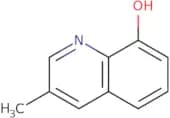
3-Methyl-8-hydroxyquinoline
CAS:3-Methyl-8-hydroxyquinoline (3MQ) is a chemical compound that has been shown to be an inhibitor of the enzyme cyclen. 3MQ binds to the active site of cyclen and blocks the binding of calcium ions, preventing the formation of calcium complexes with cyclen. This inhibition leads to a decrease in cyclen activity and an increase in the synthesis of protein. 3MQ has also been shown to be potent inhibitor against chloride ion currents through voltammetry experiments. It was found that its redox potential is very low, which suggests that it can be used as a probe for electron transfer reactions in cells. The photophysical properties of 3MQ have also been studied and it was found that this molecule absorbs light at wavelengths between 400–600 nm, which may lead to its use as a photosensitizer or photoantagonist for photodynamic therapy.
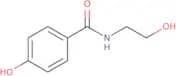
Fórmula:C10H9NOPureza:Min. 95%Peso molecular:159.18 g/mol4-Hydroxy-N-(2-hydroxyethyl)benzamide
CAS:4-Hydroxy-N-(2-hydroxyethyl)benzamide (4OHEBA) is a natural product that belongs to the class of phenolic compounds. It is found in macroalgae and has been shown to have anti-inflammatory properties, which may be due to its ability to inhibit prostaglandin synthesis. 4OHEBA has also been shown to have chemical diversity and studies show that it can be used in preservative systems.
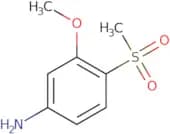
Fórmula:C9H11NO3Pureza:Min. 95%Peso molecular:181.19 g/mol4-Methanesulfonyl-3-methoxyaniline
CAS:Versatile small molecule scaffold
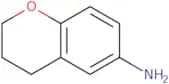
Fórmula:C8H11NO3SPureza:Min. 95%Peso molecular:201.25 g/mol3,4-dihydro-2H-1-benzopyran-6-amine
CAS:3,4-dihydro-2H-1-benzopyran-6-amine is an olefinic, reactive chemical that is used as an excipient in the preparation of polyenes. It can be used as a reactant to form heterocycles and unsaturated fatty acids. 3,4-dihydro-2H-1-benzopyran-6-amine has been shown to inhibit platelet aggregation and has been used as a ligand for the study of chemical reactions. This drug also has a wittig reaction with amido compounds to form hydrocarbon groups.
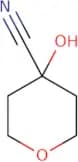
Fórmula:C9H11NOPureza:Min. 95%Peso molecular:149.19 g/mol4-Hydroxytetrahydro-2H-pyran-4-carbonitrile
CAS:Versatile small molecule scaffold
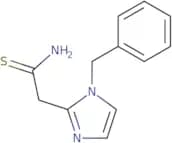
Fórmula:C6H9NO2Pureza:Min. 95%Peso molecular:127.14 g/mol2-(1-Benzyl-1H-imidazol-2-yl)ethanethioamide
CAS:Versatile small molecule scaffold
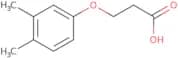
Fórmula:C12H13N3SPureza:Min. 95%Peso molecular:231.32 g/mol3-(3,4-Dimethylphenoxy)propanoic acid
CAS:Versatile small molecule scaffold
Fórmula:C11H14O3Pureza:Min. 95%Peso molecular:194.23 g/molrac-(1R,5R,7S)-7-Methylbicyclo[3.2.0]hept-2-en-6-one
CAS:Versatile small molecule scaffold
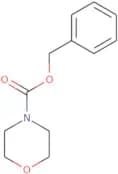
Fórmula:C8H10OPureza:Min. 95%Peso molecular:122.2 g/molBenzyl morpholine-4-carboxylate
CAS:Benzyl morpholine-4-carboxylate is an ester of morpholine and benzoic acid. It is a good solvent for amines, alcohols, and sulfonamides. Benzyl morpholine-4-carboxylate can be used as a catalyst in the synthesis of aliphatic amines. The catalytic activity of this compound was found to be higher than that of either DBU or DBN in the reaction with ethylamine. The reaction yield was high when benzyl morpholine-4-carboxylate was used, which made it a good candidate for use in the synthesis of aliphatic amines with high yields.
Fórmula:C12H15NO3Pureza:Min. 95%Peso molecular:221.26 g/mol3-[(Carbamoylamino)sulfonyl]benzoic acid
CAS:Versatile small molecule scaffold
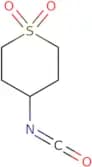
Fórmula:C8H8N2O5SPureza:Min. 95%Peso molecular:244.2 g/molTetrahydro-4-isocyanato-2H-thiopyran 1,1-dioxide
CAS:Versatile small molecule scaffold
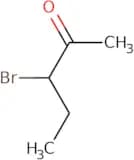
Fórmula:C6H9NO3SPureza:Min. 95%Peso molecular:175.21 g/mol3-Bromopentan-2-one
CAS:3-Bromopentan-2-one is a furanone that has significant activity in biological screening. It is bicyclic and has an unsaturated five member ring. 3-Bromopentan-2-one is biologically active and can be used in the synthesis of both natural products and pharmaceuticals. The compound has been found to have significant activity against a variety of bacteria, fungi, and parasites. This drug also has anti-inflammatory activities and is being investigated for use in the treatment of psoriasis.
Fórmula:C5H9BrOPureza:Min. 95%Peso molecular:165.03 g/mol2-Benzyl-2-methyl-1,3-thiazolidine
CAS:Versatile small molecule scaffold
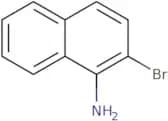
Fórmula:C11H12N2O4Pureza:Min. 95%Peso molecular:236.22 g/mol1-Amino-2-bromonaphthalene
CAS:1-Amino-2-bromonaphthalene is a synthetic compound that is used as a recyclable reagent. It has been shown to have an inhibitory effect on cancer cells and tissue, stabilizing the DNA molecule and preventing it from being broken down. 1-Amino-2-bromonaphthalene also has affinity for cancer cells and stabilizes the cell membrane by inhibiting phosphonate degradation. The drug has been envisaged as a potential candidate for cancer therapy due to its ability to stabilize the cell membrane and inhibit phosphonates, which are involved in cell division.
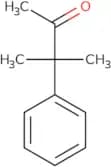
Fórmula:C10H8BrNPureza:Min. 95%Peso molecular:222.09 g/mol3-Methyl-3-phenylbutan-2-one
CAS:3-Methyl-3-phenylbutan-2-one is a ketone that is damaging to benzene and horticultural olefinic methoxy. It has been shown to be an antidopaminergic agent and has been used in the kinetic scheme as a competitive inhibitor of dopamine. 3-Methyl-3-phenylbutan-2-one is reactive with chloride, alcohols, and aluminium. This chemical has also been shown to have dehydrating effects on organic substances.
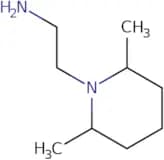
Fórmula:C11H14OPureza:Min. 95%Peso molecular:162.23 g/mol2-(2,6-Dimethylpiperidin-1-yl)ethan-1-amine
CAS:Versatile small molecule scaffold
Fórmula:C9H20N2Pureza:Min. 95%Peso molecular:156.27 g/mol2-(Cyclopent-3-en-1-yl)acetic acid
CAS:Versatile small molecule scaffold
Fórmula:C7H10O2Pureza:Min. 95%Peso molecular:126.15 g/molRef: 3D-AAA76703
Produto descontinuado2-Cyclopentylethanol
CAS:2-Cyclopentylethanol is a type of organic compound that belongs to the class of ethyl esters. It has been shown to have receptor activity, which may be related to its ability to reduce plasma glucose levels in type 2 diabetes patients. The mechanism by which 2-cyclopentylethanol affects glucose metabolism is not clear, but it has been found to inhibit serine protease and sulfonic acid-induced platelet aggregation. It has also been found to have anti-inflammatory effects and can inhibit the production of inflammatory mediators such as prostaglandin E2 (PGE2). 2-Cyclopentylethanol also inhibits the activity of certain types of enzymes, including pyrimidine hydroxylases and acylureas.
Fórmula:C7H14OPureza:Min. 95%Peso molecular:114.19 g/mol6,6,6-Trifluorohexanoic acid
CAS:Versatile small molecule scaffold
Fórmula:C6H9F3O2Pureza:Min. 95%Peso molecular:170.13 g/mol2-(2,2,3,3,3-Pentafluoropropoxy)ethan-1-ol
CAS:Versatile small molecule scaffold
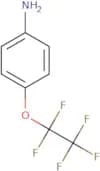
Fórmula:C5H7F5O2Pureza:Min. 95%Peso molecular:194.1 g/mol4-(Perfluoroethoxy)aniline
CAS:Versatile small molecule scaffold
Fórmula:C8H6F5NOPureza:Min. 95%Peso molecular:227.13 g/molEthyl Levulinate
CAS:Ethyl Levulinate is a chemical catalyst that can be used to produce levulinate. The reactivity of this catalyst has been evaluated in the presence of hydrogen tartrate and 5-hydroxymethylfurfural. The reaction mechanism includes the formation of an intermediate, which reacts with the metal hydroxide to form ethyl levulinate. This catalyst is stable under acidic conditions and can be used for reactions that require a pH range from 4-8.
Fórmula:C7H12O3Pureza:Min. 95%Peso molecular:144.17 g/mol5-Amino-1,3-thiazole-2-carbothioamide
CAS:5-Amino-1,3-thiazole-2-carbothioamide (5ATC) is a liquid that is soluble in organic solvents. It has been used as a starting material for the synthesis of other compounds. 5ATC can be prepared by the reaction of ethyl acetoacetate with an acid chloride and a base such as pyridine. The reaction is heated to reflux for about 2 hours in an organic solvent, such as chloroform or benzene, followed by cooling to room temperature. It can also be prepared from an amide and hydrogen chloride gas in the presence of pyridine. This synthesis requires manual stirring at room temperature for 12 hours. 5ATC can be purified by recrystallization from water or ether.
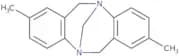
Fórmula:C4H5N3S2Pureza:Min. 95%Peso molecular:159.2 g/molTroger’S
CAS:Troger’s is a fluorescent probe that can be used to measure the hydrogen bond in amines. It is synthesized by reacting trifluoroacetic acid with coumarin derivatives and an amine. Troger’s has been shown to have high fluorescence intensity and a wide spectral range (250-400 nm). The fluorescence intensity of Troger’s was found to be proportional to the concentration of amines. This probe has also been used as a skeleton for polymeric matrices, which are activated by nitrogen atoms. Activation energies for these polymer matrices have been found to be between 1-3 kcal/mol.
Fórmula:C17H18N2Pureza:Min. 95%Peso molecular:250.34 g/molD(-)-Tartaric acid
CAS:2,3-Dihydroxybutanedioic acid is a metabolite of pantothenic acid and is produced by the action of β-alanine dioxygenase on 2,3-dihydroxybutyric acid. It has been suggested that 2,3-dihydroxybutanedioic acid may be an important link in the biochemical pathway for calcium uptake and metabolism. This compound is structurally similar to tartrate, which is also used as a pH buffer and may be involved in the regulation of energy metabolism. There are no known inhibitors or activators of 2,3-dihydroxybutanedioic acid.
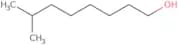
Fórmula:C4H6O6Pureza:Min. 95%Peso molecular:150.09 g/molIsononyl alcohol
CAS:Isononyl alcohol is a polycarboxylic acid that has been used in the treatment of skin conditions, such as atopic dermatitis and psoriasis. It has been shown to penetrate the skin and stimulate the production of sebum. Isononyl alcohol is also used as a plasticizer for polyvinyl chloride (PVC) and other plastics, which increases their flexibility. This chemical also has a hydrophobic effect, which may be due to its hydroxyl group. The unsaturated alkyl chain on this chemical also makes it susceptible to oxidation by ozone in air and water vapor in air. Isononyl alcohol is metabolized by humans through conjugation with glucuronic acid or sulfate esters.
Fórmula:C9H20OPureza:Min. 95%Cor e Forma:Clear LiquidPeso molecular:144.25 g/molRef: 3D-FI146181
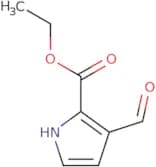
Produto descontinuadoethyl 3-formyl-1H-pyrrole-2-carboxylate
CAS:Ethyl 3-formyl-1H-pyrrole-2-carboxylate is a formyl compound with the molecular formula C8H8O3. It is a colorless liquid that has a strong odor. The compound can be obtained by the reaction of ethyl acetoacetate and pyrrole in the presence of aluminum chloride. The compound has been studied for its nuclear magnetic resonance (NMR) properties. It has two conformers, which are distinguished by their different chemical shifts, and this difference can be used to study coupling between the carbonyl group and other groups in the molecule.
Fórmula:C8H9NO3Pureza:Min. 95%Peso molecular:167.2 g/mol4-(Methylamino)benzene-1-sulfonamide
CAS:Versatile small molecule scaffold
Fórmula:C7H10N2O2SPureza:Min. 95%Peso molecular:186.23 g/mol3-Bromo-6,7-dihydro-4H-pyrazolo[1,5-a]pyrazine-5-carboxylic acid tert-butyl ester
CAS:Versatile small molecule scaffold
Fórmula:C11H16BrN3O2Pureza:Min. 95%Peso molecular:302.17 g/moltrans-1,2-Dichloroethylene
CAS:Trans-1,2-Dichloroethylene is a chlorinated hydrocarbon that is used in the production of polyvinyl chloride plastics. When ingested at dietary concentrations, trans-1,2-Dichloroethylene may cause liver damage and death in CD-1 mice. Trans-1,2-Dichloroethylene has been shown to react with nucleophilic substitutions and produce toxic reaction products. This chemical also causes polymerase chain reactions that can lead to cell death. The effective dose for this chemical is unknown because it has not been tested in clinical trials.
Fórmula:C2H2Cl2Pureza:Min. 95%Peso molecular:96.94 g/mol3-(Methoxycarbonyl)pyridine-4-carboxylic acid
CAS:Versatile small molecule scaffold
Fórmula:C8H7NO4Pureza:Min. 95%Peso molecular:181.15 g/moltert-Butyl 5-bromo-3,4-dihydro-2,7-naphthyridine-2(1H)-carboxylate
CAS:Versatile small molecule scaffold
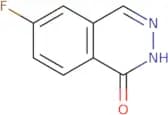
Fórmula:C13H17BrN2O2Pureza:Min. 95%Peso molecular:313.19 g/mol6-fluoro-1,2-dihydrophthalazin-1-one
CAS:Versatile small molecule scaffold
Fórmula:C8H5FN2OPureza:Min. 95%Peso molecular:164.14 g/moltert-Butyl 3-(trifluoromethyl)piperazine-1-carboxylate
CAS:Versatile small molecule scaffold
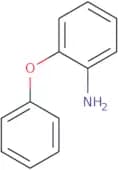
Fórmula:C10H17F3N2O2Pureza:Min. 95%Peso molecular:254.25 g/mol2-Phenoxyaniline
CAS:2-Phenoxyaniline is a nitro compound that can be converted to the corresponding palladium complexes. It is an inhibitor of the acylation reaction, which is a type of chemical reaction in which an organic molecule reacts with an acid. The inhibition of this reaction has been shown to have an effect on heart disease, specifically by lowering cholesterol levels and reducing atherosclerosis. 2-Phenoxyaniline has also been shown to inhibit the activation energy for electron transfer reactions, making it useful as a catalyst in analytical methods. 2-Phenoxyaniline also undergoes vibrational spectroscopy when exposed to liquid chromatography and other analytical methods.
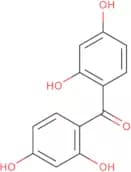
Fórmula:C12H11NOPureza:Min. 95%Cor e Forma:Brown PowderPeso molecular:185.22 g/mol2,2',4,4'-tetrahydroxybenzophenone
CAS:2,2',4,4'-tetrahydroxybenzophenone is a hydroxylated benzophenone that has immunomodulatory effects. It binds to the receptor in the immune system and can cause an increase in cytokine production. 2,2',4,4'-tetrahydroxybenzophenone is cytotoxic and has significant toxicity in vitro. The molecule has been shown to disrupt mitochondrial membrane potential. This may be due to its ability to form hydrogen bonds with molecules on the mitochondrial membrane. 2,2',4,4'-tetrahydroxybenzophenone also modulates transcriptional regulation of genes involved in cell proliferation and apoptosis. The drug is detectable at low levels by mass spectrometry and is not known to have any toxicological effects.END>>
Fórmula:C13H10O5Pureza:Min. 95%Cor e Forma:Green PowderPeso molecular:246.22 g/molRef: 3D-FT55663
Produto descontinuado2-Acetylbenzoic acid
CAS:2-Acetylbenzoic acid is a functional molecule that contains an acetyl group. It can form hydrogen bonds with other molecules and has been shown to induce apoptosis in cells. The reaction products of 2-acetylbenzoic acid are malonic acid, acetylsalicylic acid, and 2-benzoylbenzoic acid. These three compounds are made by the addition of hydrogen or hydroxide to the molecule 2-acetylbenzoic acid. The molecule has two functional groups: a carbonyl group and an acetyl group. The chemical structure of this molecule can be seen in the figure below.
2-Acetylbenzoic AcidFórmula:C9H8O3Pureza:Min. 95%Cor e Forma:PowderPeso molecular:164.16 g/molRef: 3D-FA05086
Produto descontinuado2-Bromo-3,3,3-trifluoro-1-propene
CAS:Produto Controlado2-Bromo-3,3,3-trifluoro-1-propene is a chemical compound that has been synthesized in an asymmetric reaction. The reactant is bromopropane and the product is 2,2,2-trifluoropropene. The methylene group on the propene molecule is activated by the nucleophilic attack of a fluoride ion from hydrogen fluoride to form a cavity with a highly strained bond. The kinetic study of this reaction revealed that the activation energy for the reaction is 42 kJ/mol. Palladium-catalyzed coupling reactions are catalyzed by palladium and require nonpolar solvents such as toluene or dichloromethane. This type of reaction has been shown to be exothermic with an isolated yield of 1%.
Fórmula:C3H2BrF3Pureza:Min. 95%Cor e Forma:Colorless PowderPeso molecular:174.95 g/molH-Ser-Ala-Glu-Glu-Tyr-Glu-Tyr-Pro-Ser OH trifluoroacetate
CAS:Please enquire for more information about H-Ser-Ala-Glu-Glu-Tyr-Glu-Tyr-Pro-Ser OH trifluoroacetate including the price, delivery time and more detailed product information at the technical inquiry form on this page
Fórmula:C47H63N9O20•(C2HF3O2)xPureza:Min. 95%Ref: 3D-FS183525
Produto descontinuado

![rac-(1R,5R,7S)-7-Methylbicyclo[3.2.0]hept-2-en-6-one](/_next/image/?url=https%3A%2Fstatic.cymitquimica.com%2Fproducts%2F3D%2Fthumb-webp%2FABA16969.webp&w=3840&q=75)
![3-[(Carbamoylamino)sulfonyl]benzoic acid](/_next/image/?url=https%3A%2Fstatic.cymitquimica.com%2Fproducts%2F3D%2Fthumb-webp%2FAAD64213.webp&w=3840&q=75)






![3-Bromo-6,7-dihydro-4H-pyrazolo[1,5-a]pyrazine-5-carboxylic acid tert-butyl ester](/_next/image/?url=https%3A%2Fstatic.cymitquimica.com%2Fproducts%2F3D%2Fthumb-webp%2FWXB15425.webp&w=3840&q=75)