Building Blocks
Esta seção contém produtos fundamentais para a síntese de compostos orgânicos e biológicos. Building blocks são os materiais de partida essenciais usados para construir moléculas complexas através de várias reações químicas. Eles desempenham um papel crítico na descoberta de medicamentos, ciência dos materiais e pesquisa química. Na CymitQuimica, oferecemos uma ampla gama de building blocks de alta qualidade para apoiar suas pesquisas inovadoras e projetos industriais, garantindo que você tenha os componentes essenciais para uma síntese bem-sucedida.
Subcategorias de "Building Blocks"
- Ácidos Borónicos e Derivados de Ácido Borónico(5.756 produtos)
- Building Blocks Quirais(1.242 produtos)
- Building Blocks Hidrocarbonetos(6.093 produtos)
- Building Blocks orgânicos(60.529 produtos)
Foram encontrados 195536 produtos de "Building Blocks"
Ordenar por
Pureza (%)
0
100
|
0
|
50
|
90
|
95
|
100
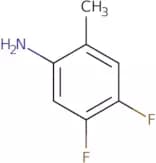
4,5-Difluoro-2-methylaniline
CAS:<p>4,5-Difluoro-2-methylaniline is a chemical intermediate that is used as a reaction component in the synthesis of organic compounds. It is a fine chemical with CAS No. 875664-57-6, and it can be used as a building block for the synthesis of complex organic molecules. This reagent is useful for the production of pharmaceuticals, agrochemicals, and other specialty chemicals. 4,5-Difluoro-2-methylaniline has been shown to act as an intermediate for the synthesis of many different types of compounds, including complex compounds such as imidazole derivatives and N-(4-fluorophenyl)benzo[d]oxazole derivatives.</p>Fórmula:C7H7F2NPureza:Min. 95%Cor e Forma:Off-White PowderPeso molecular:143.13 g/mol3-Quinolinecarboxylic acid
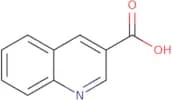
CAS:<p>3-Quinolinecarboxylic acid is a water-soluble drug that is soluble in both organic solvents and water. It is reactive, which limits its therapeutic use. 3-Quinolinecarboxylic acid is used to treat inflammatory disease by inhibiting the production of prostaglandins and leukotrienes in the body. 3-Quinolinecarboxylic acid has been shown to have genotoxic effects on primary cells, as well as an antiinflammatory effect. It also has been shown to be effective for treating rheumatoid arthritis in animal models, but not humans.</p>Fórmula:C10H7NO2Pureza:Min. 95%Cor e Forma:PowderPeso molecular:173.17 g/mol2-Ethoxy-1,3-thiazole-5-carbaldehyde
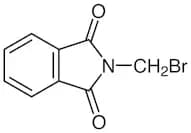
CAS:<p>2-Ethoxy-1,3-thiazole-5-carbaldehyde is a fine chemical that is a versatile building block for the synthesis of complex molecules. It can be used as a reagent in organic chemistry, and it is also an intermediate in the synthesis of drugs and other compounds. This compound has been shown to be useful as a scaffold in the development of novel drug candidates.</p>Fórmula:C6H7NO2SPureza:Min. 95%Cor e Forma:PowderPeso molecular:157.19 g/molN-(Bromomethyl)phthalimide
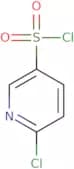
CAS:Fórmula:C9H6BrNO2Pureza:>96.0%(T)Cor e Forma:White to Almost white powder to crystalPeso molecular:240.066-Chloropyridine-3-sulfonyl chloride
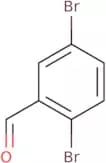
CAS:<p>6-Chloropyridine-3-sulfonyl chloride is a synthetic compound that has been shown to be an inhibitor of the enzyme anhydrase, which is involved in the production of carbonic acid. This inhibition leads to a decrease in the pH of tissues and may inhibit the proliferation of malignant cancer cells. 6-Chloropyridine-3-sulfonyl chloride has also been shown to have anticancer activity against eukaryotes.</p>Fórmula:C5H3Cl2NO2SPureza:Min. 95%Cor e Forma:PowderPeso molecular:212.05 g/mol2,5-Dibromobenzaldehyde
CAS:<p>2,5-Dibromobenzaldehyde is a synthetic compound that has been shown to have a red fluorescent emission. It is also thermally stable and can be used in the synthesis of quinoline derivatives. 2,5-Dibromobenzaldehyde may be used as a potential fluorescent label for viologen or amines. This compound can undergo an intermolecular Diels-Alder reaction with diacetate to form a bicyclic system, which is important to the understanding of its interactions with other compounds.</p>Fórmula:C7H4Br2OPureza:Min. 95%Cor e Forma:PowderPeso molecular:263.91 g/molBenzophenone ethylendiamine acrylate
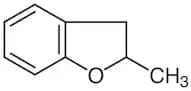
CAS:<p>Please enquire for more information about Benzophenone ethylendiamine acrylate including the price, delivery time and more detailed product information at the technical inquiry form on this page</p>Fórmula:C19H18N2O3Pureza:Min. 95 Area-%Peso molecular:322.36 g/mol2,3-Dihydro-2-methylbenzofuran
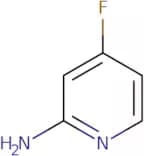
CAS:Fórmula:C9H10OPureza:>98.0%(GC)Cor e Forma:Colorless to Almost colorless clear liquidPeso molecular:134.182-Amino-4-fluoropyridine
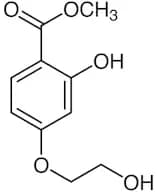
CAS:<p>2-Amino-4-fluoropyridine is an acylation reaction product of 2-amino-4-chloropyridine and a fatty acid. The diaminopyridine moiety is responsible for the inhibition of copper enzymes. In addition, fluorine substitution provides a higher operational stability. The synthesis of this compound is accomplished through the use of thionyl chloride in an operational procedure that includes heating at 180 °C for 4 hours. 2-Amino-4-fluoropyridine has been shown to be effective against some bacteria such as Mycobacterium tuberculosis and Legionella pneumophila, which are resistant to other agents. This drug also has antiplasmodial properties and can be used to treat malaria. The structure based design of this molecule was optimized by replacing chlorine with fluorine as well as introducing a n oxide group to provide a sterically more favorable conformation.</p>Fórmula:C5H5FN2Pureza:Min. 95%Cor e Forma:White To Yellow SolidPeso molecular:112.11 g/molMethyl 4-(2-Hydroxyethoxy)salicylate
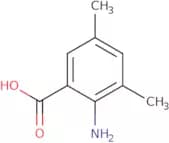
Fórmula:C10H12O5Pureza:>98.0%(GC)Cor e Forma:White to Light yellow to Light orange powder to crystalPeso molecular:212.203,5-Dimethylanthranilic acid
CAS:<p>3,5-Dimethylanthranilic acid is an acridone that has significant effects on the topoisomerase enzymes. It is a reactive compound and can cause sensitivity to light and heat, as well as irritation in the respiratory tract. 3,5-Dimethylanthranilic acid has been shown to have antitumour activity in mice. 3,5-Dimethylanthranilic acid also has cytotoxic potency against cancer cells and can be used to evaluate the sensitivity of tumours to anticancer drugs. This compound may also have mutagenic properties. The dehalogenation of 3,5-dimethylanthranilic acid is not yet fully understood.</p>Fórmula:C9H11NO2Pureza:Min. 95%Cor e Forma:Off-White PowderPeso molecular:165.19 g/mol1-Bromo-4-iodonaphthalene
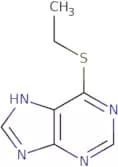
CAS:<p>1-Bromo-4-iodonaphthalene is an organic compound that can be synthesized in a number of steps. The first step involves the reaction of 4-bromobenzonitrile with sulfur. This is followed by the acetylation of the product to give 2-(acetyloxy)benzonitrile. An intermediate product is then obtained by reacting this with sodium azide in water and heating to 90°C for 12 hours. Finally, the intermediate product is reacted with phenylmagnesium bromide in ether and hydrolyzed with an alkali to give 1-bromo-4-iodonaphthalene. This compound has been used in the industrial synthesis of biphenyls and dyes such as methyl violet.</p>Fórmula:C10H6BrIPureza:Min. 95%Cor e Forma:Off-White PowderPeso molecular:332.96 g/mol6-Ethylmercaptopurine
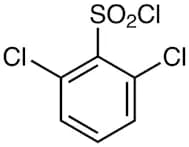
CAS:<p>6-Ethylmercaptopurine is a purine analogue that inhibits the synthesis of DNA. It is used as an inhibitor of protein synthesis and in the treatment of inflammatory bowel disease. 6-Ethylmercaptopurine has been shown to inhibit the activity of ATPase, which may be responsible for its ability to suppress the proliferation of cells. This drug can also act as an analog to adenosine, which can be used to determine ATP levels in a cell or tissue sample by measuring the amount of p-nitrophenyl phosphate produced. 6-Ethylmercaptopurine has been shown to block phosphatase activity, which may lead to inflammation in some cases.<br>6-Ethylmercaptopurine has a molecular weight of 194.2 g/mol and an optimum pH of 4.5</p>Fórmula:C7H8N4SPureza:Min. 95%Cor e Forma:Off-White PowderPeso molecular:180.23 g/mol2,6-Dichlorobenzenesulfonyl Chloride
CAS:Fórmula:C6H3Cl3O2SPureza:>97.0%(GC)(T)Cor e Forma:White to Light yellow powder to crystalPeso molecular:245.50Ethyl 4,4,4-Trifluoroacetoacetate
CAS:Fórmula:C6H7F3O3Pureza:>98.0%(GC)Cor e Forma:Colorless to Almost colorless clear liquidPeso molecular:184.11Ethylenedithiobis(trimethylsilane) [Protecting Reagent for Aldehydes and Ketones]
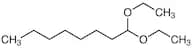
CAS:Fórmula:C8H22S2Si2Pureza:>97.0%(GC)Cor e Forma:Colorless to Almost colorless clear liquidPeso molecular:238.55n-Octanal Diethyl Acetal
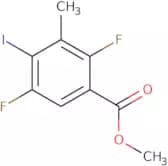
CAS:Fórmula:C12H26O2Pureza:>97.0%(GC)Cor e Forma:Colorless to Almost colorless clear liquidPeso molecular:202.342,5-Difluoro-4-methylbenzoic acid methyl ester
CAS:<p>2,5-Difluoro-4-methylbenzoic acid methyl ester is used as a reactive chemical in synthesis of pharmaceuticals and other chemicals. 2,5-Difluoro-4-methylbenzoic acid methyl ester reacts with amines to form the corresponding amides. It can also react with alcohols to form the corresponding ethers or it can be used as an intermediate for preparing other chemicals such as 4-(2,5-dichloro-4-methylphenyl)morpholine.</p>Fórmula:C9H8F2O2Pureza:Min. 95%Peso molecular:186.16 g/mol2-(2,6-Dichlorophenyl)ethylamine
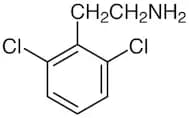
CAS:Fórmula:C8H9Cl2NPureza:>98.0%(GC)(T)Cor e Forma:Colorless to Light orange to Yellow clear liquidPeso molecular:190.072,6-Dibromopyridine
CAS:<p>2,6-Dibromopyridine (2,6-DBP) is a chemical compound that has been used in the synthesis of other organic compounds. It is an aromatic heterocycle with nitrogen atoms at the 2 and 6 positions. 2,6-DBP is a monosubstituted pyridine derivative that undergoes a palladium-catalyzed coupling reaction with an aryl halide to form pyrazoles. This process can be done unsymmetrically by protonating the 2 position of the dibromopyridine molecule. The presence of serine protease has been shown to promote this reaction by increasing the surface area of the substrate.</p>Fórmula:C5H3Br2NPureza:Min. 98 Area-%Cor e Forma:Off-White Yellow PowderPeso molecular:236.89 g/mol





![Ethylenedithiobis(trimethylsilane) [Protecting Reagent for Aldehydes and Ketones]](/_next/image/?url=https%3A%2Fstatic.cymitquimica.com%2Fproducts%2F3B%2Fthumb-webp%2FE0479.webp&w=3840&q=75)