Building Blocks
Subcategorias de "Building Blocks"
- Ácidos Borónicos e Derivados de Ácido Borónico(5.778 produtos)
- Building Blocks Quirais(1.243 produtos)
- Building Blocks Hidrocarbonetos(6.099 produtos)
- Building Blocks orgânicos(61.038 produtos)
Foram encontrados 205376 produtos de "Building Blocks"
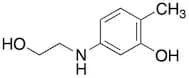
5-((2-Hydroxyethyl)amino)-2-methylphenol
CAS:Produto ControladoApplications 5-((2-Hydroxyethyl)amino)-2-methylphenol (cas# 55302-96-0) is a useful research chemical.
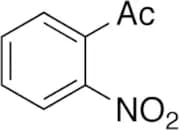
Fórmula:C9H13NO2Cor e Forma:NeatPeso molecular:167.22'-Nitroacetophenone
CAS:Produto ControladoApplications 2'-Nitroacetophenone (cas# 577-59-3) is a compound useful in organic synthesis.
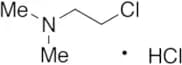
Fórmula:C8H7NO3Cor e Forma:NeatPeso molecular:165.152-Chloro-N,N-dimethylethylamine Hydrochloride
CAS:Produto ControladoStability Hygroscopic
Applications 2-Chloro-N,N-dimethylethylamine is a widely used as an intermediate and starting reagent for organic synthesis.
Not a dangerous good if item is equal to or less than 1g/ml and there is less than 100g/ml in the package
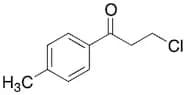
References Spulak, M., et al.: Tetrahedron., 69, 1705 (2013); Vaid, R.K., et al.: Synthesis., 44, 2231 (2012);Fórmula:C4H11Cl2NCor e Forma:BeigePeso molecular:144.043-Chloro-1-(4-methylphenyl)propan-1-one
CAS:Produto ControladoApplications 3-chloro-1-(4-methylphenyl)propan-1-one is a reagent used in the synthesis of Mannich base-type derivatives which can be used in the treatment of chagas disease.
References Martin-Escolano, R. et al.: J. Med. Chem., 61, 5843 (2018);Fórmula:C10H11ClOCor e Forma:White To Off-WhitePeso molecular:182.6475-Chloronaphthalene-2-sulfonyl Chloride
CAS:Produto ControladoApplications 5-Chloronaphthalene-2-sulfonyl Chloride (cas# 89108-45-2) is a compound useful in organic synthesis.
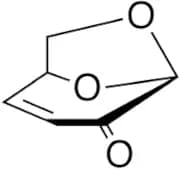
Fórmula:C10H6Cl2O2SCor e Forma:NeatPeso molecular:261.12Levoglucosenone
CAS:Produto ControladoApplications (-)-Form is a pyrolysis product of cellulose and cellulose-containing materials including pulp and paper waste products.Known as a pyrolytic product of cellulose, its very useful as a chiral source for synthesizing natural products because of its highly functionalized structure, which contains one chiral center. Used as chiral building block in organic synthesis.
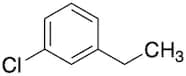
References Essig, M.G., et al.: Carbohydr. Res., 156, 225 (1986), Taniguchi, T., et al.: Synlett, 971 (1996),Fórmula:C6H6O3Cor e Forma:NeatPeso molecular:126.111-Chloro-3-ethylbenzene
CAS:Produto ControladoApplications 1-CHLORO-3-ETHYLBENZENE (cas# 620-16-6) is a useful research chemical.
Not a dangerous good if item is equal to or less than 1g/ml and there is less than 100g/ml in the packageFórmula:C8H9ClCor e Forma:NeatPeso molecular:140.612-Amino-5-chloro-N-methoxy-N-methylbenzamide
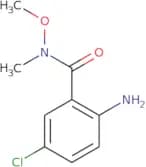
CAS:Versatile small molecule scaffoldFórmula:C9H11ClN2O2Pureza:Min. 95%Cor e Forma:PowderPeso molecular:214.65 g/mol2,3-Diaminobenzoic acid methyl ester
CAS:2,3-Diaminobenzoic acid methyl ester is a redox potential catalyst that has been shown to have anticancer activity in vitro and in vivo. It is a 5-ht4 receptor agonist, which causes an increase in the intracellular concentration of cAMP. The anticancer effect of this compound may be due to its ability to inhibit the growth of cancer cells by blocking DNA synthesis and cell division. The biological properties of this drug are not well understood, but it has been shown to have antioxidant effects, as well as proton-reducing and electron-accepting properties. This compound has also been studied electrochemically.Fórmula:C8H10N2O2Pureza:95%NmrCor e Forma:PowderPeso molecular:166.18 g/mol3-Azidopropanoate-N-hydroxysuccinimide ester
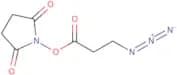
CAS:3-Azidopropanoate-N-hydroxysuccinimide ester is a fluorescent probe that can be activated by the addition of an azide donor. The fluorescence of 3-azidopropanoate-N-hydroxysuccinimide ester is dependent on the presence of serum albumin and can be used as a model system for studying albumin uptake and metabolism. This probe has been shown to have good uptake in lung cancer cells, which may be due to its ability to bind with the receptor on the cell surface. 3-Azidopropanoate-N-hydroxysuccinimide ester binds to proteolytic enzymes such as plasmin, cathepsins, and elastase, which are found in high concentrations in lung cancer cells.Fórmula:C7H8N4O4Pureza:Min. 95%Cor e Forma:PowderPeso molecular:212.16 g/molEthyl (E)-cinnamate
CAS:Ethyl (E)-cinnamate is a cinnamic acid derivative that belongs to the class of phenylpropenoids. It has been shown to have biological properties, such as enzyme activities and antioxidative properties. Ethyl (E)-cinnamate has also been shown to be a potent photosynthetic activator in vitro. This compound can be used as a precursor for the synthesis of cinnamic acid, which is important in the metabolism of energy production and locomotor activity.
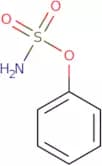
Fórmula:C11H12O2Pureza:Min. 95%Cor e Forma:Clear LiquidPeso molecular:176.21 g/molPhenyl sulfamate
CAS:Phenyl sulfamate is a monosodium salt that has been shown to inhibit the growth of cancer cells in vitro. It has been used as an antimicrobial agent to treat chronic arthritis and atherosclerotic lesions. Phenyl sulfamate inhibits the activity of enzymes that are involved in the synthesis of proteins, such as collagenase, elastase, and proteases. The irreversible inhibition by phenyl sulfamate is due to its ability to react with sulfamoyl chloride (SOC). This reaction leads to the formation of a covalent bond between the enzyme and phenyl sulfamate, which cannot be reversed by any known chemical or enzymatic process.Fórmula:C6H7NO3SPureza:Min. 95%Cor e Forma:PowderPeso molecular:173.19 g/mol6-Formylpicolinic acid
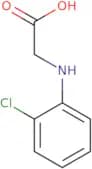
CAS:Versatile small molecule scaffoldFórmula:C7H5NO3Pureza:Min. 95%Cor e Forma:PowderPeso molecular:151.12 g/molN-(2-Chlorophenyl)glycine
CAS:N-(2-Chlorophenyl)glycine is an optical isomer of glycine that was synthesized by the photocyclization of 2-chlorobenzaldehyde using KI as a catalyst. It has been shown to be an active inhibitor of platelet aggregation and activation, with a potency comparable to clopidogrel. N-(2-Chlorophenyl)glycine may be used in pharmaceuticals for the prevention of thrombosis and stroke, particularly in patients who are at high risk for these complications. The synthesis of this compound requires the use of an organic solvent and chiral reagents.
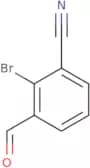
Fórmula:C8H8ClNO2Pureza:Min. 95%Cor e Forma:PowderPeso molecular:185.61 g/mol2-Bromo-3-formylbenzonitrile
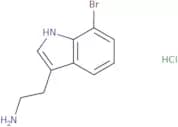
CAS:2-Bromo-3-formylbenzonitrile is a high quality chemical that is used as a reagent, a complex compound, and an intermediate in the synthesis of other fine chemicals. It can be used as a useful building block to form other compounds with speciality chemicals. 2-Bromo-3-formylbenzonitrile is versatile and can be used as a reaction component for many different reactions. 2-Bromo-3-formylbenzonitrile has been classified by the Chemical Abstracts Service (CAS) number 446864-55-7 and is also known by its synonyms: 2-(bromomethyl)-benzonitrile; 3-(cyanomethyl)-benzonitrile; bromobenzonitrile; bromobenzene nitrile; 3-(cyanomethyl)benzonitrile.Fórmula:C8H4BrNOPureza:Min. 95%Cor e Forma:PowderPeso molecular:210.03 g/mol2-(7-Bromo-1H-indol-3-yl)ethanamine hydrochloride
CAS:Produto Controlado2-(7-Bromo-1H-indol-3-yl)ethanamine hydrochloride is an organic chemical compound that belongs to the group of versatile building blocks. It is a colorless solid and has a melting point of 160°C. 2-(7-Bromo-1H-indol-3-yl)ethanamine hydrochloride can be used as a research chemical, reagent, or specialty chemical. This compound is a useful building block for the synthesis of complex compounds and can be used as a reaction component in the synthesis of useful scaffolds.Fórmula:C10H12BrClN2Pureza:Min. 95%Cor e Forma:PowderPeso molecular:275.57 g/mol2-[(2-{2-[(Oxiran-2-yl)methoxy]ethoxy}ethoxy)methyl]oxirane
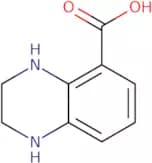
CAS:2-[(2-{2-[(Oxiran-2-yl)methoxy]ethoxy}ethoxy)methyl]oxirane is an ether that is used as a polymerizable monomer in the form of diglycidyl ether. It is biocompatible and has been shown to have antibacterial efficacy against Gram-positive bacteria. 2-[(2-{2-[(Oxiran-2-yl)methoxy]ethoxy}ethoxy)methyl]oxirane is also used to produce polymers with high molecular weight and low water solubility, which are used for various biomedical applications such as human immunoglobulin production or polymerase chain reactions.Fórmula:C10H18O5Peso molecular:218.25 g/mol1,2,3,4-Tetrahydroquinoxaline-5-carboxylic acid
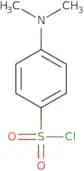
CAS:1,2,3,4-Tetrahydroquinoxaline-5-carboxylic acid is a versatile building block that can be used in the synthesis of complex compounds with a wide range of applications. It has been shown to be useful as a reagent in research chemicals and as a speciality chemical. 1,2,3,4-Tetrahydroquinoxaline-5-carboxylic acid is also used in the preparation of high quality pharmaceuticals and is an important intermediate for the synthesis of drugs. The compound can also be used as a scaffold for drug design.Fórmula:C9H10N2O2Pureza:Min. 95%Cor e Forma:PowderPeso molecular:178.19 g/mol4-(Dimethylamino)benzene-1-sulfonyl chloride
CAS:Versatile small molecule scaffoldFórmula:C8H10ClNO2SPureza:Min. 95%Cor e Forma:PowderPeso molecular:219.69 g/mol




![2-[(2-{2-[(Oxiran-2-yl)methoxy]ethoxy}ethoxy)methyl]oxirane](/_next/image/?url=https%3A%2Fstatic.cymitquimica.com%2Fproducts%2F3D%2Fthumb-webp%2FEAA20661.webp&w=3840&q=75)