Building Blocks
Subcategorias de "Building Blocks"
- Ácidos Borónicos e Derivados de Ácido Borónico(5.784 produtos)
- Building Blocks Quirais(1.242 produtos)
- Building Blocks Hidrocarbonetos(6.105 produtos)
- Building Blocks orgânicos(61.061 produtos)
Foram encontrados 205399 produtos de "Building Blocks"
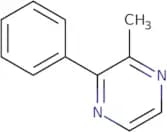
2-Methyl-3-phenylpyrazine
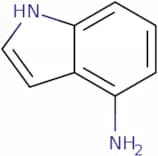
CAS:2-Methyl-3-phenylpyrazine is an organic compound that is a yellow crystalline solid. Its electronic structures are determined by the molecular orbitals, which determine the probability of finding electrons in different regions of space. Excitons are pairs of photons that have been emitted due to the interaction between two molecules, and can be measured with devices such as spectroscopes or photomultipliers. 2-Methyl-3-phenylpyrazine has been used to synthesize carbenes, which are ligands for organometallic compounds. It has also been used in singlet catalysis, where it coordinates with a metal atom to activate another molecule and form a new chemical bond.Fórmula:C11H10N2Pureza:Min. 95%Cor e Forma:PowderPeso molecular:170.21 g/mol4-Aminoindole
CAS:4-Aminoindole is a heterocycle with a carboxy group and four nitrogen atoms. It can be synthesized by reacting hydrochloric acid with nitrobenzene. 4-Aminoindole has shown potential as a drug target, which may be due to its ability to inhibit the enzyme carboxamidase. The compound is also acidic in water, making it an ideal candidate for use as an acid catalyst. Electropolymerization of 4-aminoindole has been achieved using Pt electrodes in the presence of an acidic environment. This reaction results in the formation of functional groups on the metal surface that are not found in most other electropolymerization reactions.
Fórmula:C8H8N2Cor e Forma:PowderPeso molecular:132.16 g/molN-Acetyl-L-tyrosine
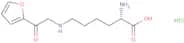
CAS:N-Acetyl-L-tyrosine is a tyrosine derivative with a chemical structure similar to that of an amino acid. It is used as a model system in biochemistry and molecular biology to study the transfer reactions of tyrosine, which are important for energy metabolism, protein synthesis, and metal chelation. N-Acetyl-L-tyrosine is also an effective substrate molecule for many analytical methods, such as thin layer chromatography or liquid chromatography.Fórmula:C11H13NO4Pureza:Min. 95%Cor e Forma:White PowderPeso molecular:223.23 g/molFurosine hydrochloride
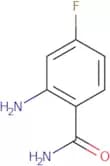
CAS:Furosine hydrochloride is a white crystalline chemical with a molecular formula of C6H7N3O4S. It is soluble in water and has a melting point of about 140 degrees Celsius. Furosine hydrochloride is a useful building block for the synthesis of polymers, pharmaceuticals, organic semiconductors and other organic compounds. Furosine hydrochloride is used as an intermediate to produce fine chemicals such as polyurethanes, polyamides and amino acids. It can also be used as a reaction component in the synthesis of complex compounds such as 2-amino-5-nitrothiophene or 2,2'-dithiobis(benzothiazole). Furosine hydrochloride can be used as a scaffold for the production of various drugs such as antihypertensives or antidepressants.Fórmula:C12H18N2O4·xHClPureza:Min. 98 Area-%Cor e Forma:PowderPeso molecular:254.28 g/mol2-Amino-4-fluorobenzamide
CAS:2-Amino-4-fluorobenzamide is a catalyst that reacts with alcohols and cyclizes them to form quinazolinones. It has been shown to oxidize various alcohols including those with an electron-donating group, such as esters and nitro groups. 2-Amino-4-fluorobenzamide also reacts with electron-deficient alcohols, such as oximes and hydrazines. The mechanism of the oxidative cyclizations is not well understood but it is likely that they are initiated by a nucleophilic attack on the carbonyl carbon atom followed by a concerted or stepwise oxidation of the C=O double bond. The oxidative cyclization reactions are mechanistically similar to those of other catalytic oxidations, such as those used in the industrial production of acetic acid from methanol.Fórmula:C7H7FN2OPureza:Min. 95%Cor e Forma:PowderPeso molecular:154.14 g/mol2-Amino-6-methoxybenzonitrile
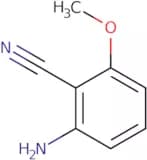
CAS:2-Amino-6-methoxybenzonitrile is an organic compound that belongs to a group of monosubstituted hydroxylamines. It has been used in the synthesis of various analogues, such as caprolactam and methoxyanthranilic acid. Hydrochloric acid reacts with 2-amino-6-methoxybenzonitrile to form 2-amino-6-hydroxybenzonitrile, which can be oxidized to 2-amino-6-(hydroxymethyl)benzonitrile. This reaction is catalyzed by copper or zinc metal.Fórmula:C8H8N2OPureza:Min. 95%Cor e Forma:PowderPeso molecular:148.16 g/molN-Acetyl-L-alanine
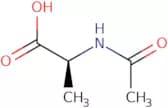
CAS:N-Acetyl-L-alanine is the N-acetylated form of L-alanine and is a nonessential amino acid. It is an amide containing one nitrogen atom and two carbonyl groups. The nitrogen can be found in either the alpha or beta position on the amide. The biological properties of N-acetyl-L-alanine are similar to those of L-alanine, as it is used as a substrate for protein synthesis and has been shown to inhibit p21 and epidermal growth factor. The conformational properties of N-acetyl-L-alanine are different from that of L-alanine due to its changed shape, which may affect its biological activity.
Fórmula:C5H9NO3Pureza:Min. 95%Cor e Forma:White PowderPeso molecular:131.13 g/molFmoc-Lys(5-TAMRA)-OH
CAS:Please enquire for more information about Fmoc-Lys(5-TAMRA)-OH including the price, delivery time and more detailed product information at the technical inquiry form on this pageFórmula:C46H44N4O8Pureza:Min. 95%Peso molecular:780.9 g/mol5-Fluoro-dUMP sodium
CAS:Please enquire for more information about 5-Fluoro-dUMP sodium including the price, delivery time and more detailed product information at the technical inquiry form on this page
Fórmula:C9H12FN2O8P•NaxPureza:Min. 95%1,2-Phenylenedimethanamine dihydrochloride
CAS:1,2-Phenylenedimethanamine dihydrochloride is a colorless to white crystalline solid that is soluble in diethyl ether, ethyl acetate and methanol. It is insoluble in water and most organic solvents. 1,2-Phenylenedimethanamine dihydrochloride is used as a reagent for the preparation of primary amines from alkyl halides. This chemical has been shown to be stable in air and remains unchanged when heated at 100°C. Synonyms include: 2-Amino-1,2-phenylene dichloride; 2-Amino-1,2-diphenylethane dichloride; 2-[(1,2)-Phenylenebis(amino)]dichloroethene; 2-[(1,2)-Phenylenebis(amino)]dichloroethene; and PhenFórmula:C8H14Cl2N2Pureza:Min. 95%Cor e Forma:PowderPeso molecular:209.12 g/molFmoc-L-Asn-OH
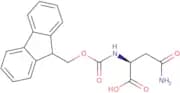
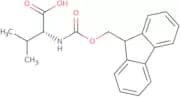
CAS:Fmoc-L-Asn-OH is an organic compound that belongs to the group of amides. It reacts with a reactive site in the molecule and is able to form an amide bond. Fmoc-L-Asn-OH has been shown to be effective in the treatment of Alzheimer's disease by inhibiting the formation of beta-amyloid plaques. This compound has also been shown to have a role in cancer prevention, as it can inhibit tumor growth and reduce tumor size. Fmoc-L-Asn-OH can be used as a potential antiinflammatory agent because its mechanism studies have revealed that it inhibits prostaglandin synthesis.Fórmula:C19H18N2O5Pureza:Min. 95%Cor e Forma:PowderPeso molecular:354.36 g/molFmoc-D-Val-OH
CAS:Fmoc-D-Val-OH is a synthetic acetal that is used as a substrate for protein modification. It has been shown to bind to the active site of enzymes such as butyrylcholinesterase and esterases, which are involved in the metabolism of fatty acids. Fmoc-D-Val-OH also binds to mammalian cells and can be conjugated with other molecules, such as nanoribbons, to improve their solubility in water.
Fórmula:C20H21NO4Pureza:Min. 98 Area-%Cor e Forma:PowderPeso molecular:339.39 g/molFmoc-D-glu-OtBu
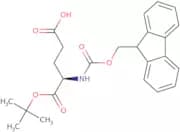
CAS:Fmoc-D-glu-OtBu is an amide that can be used as a screening reagent for the detection of carbohydrate and periplasmic compounds. It has been shown to inhibit hepatitis in humans, which may be due to its ability to bind with muramyl dipeptide. Fmoc-D-glu-OtBu has also been shown to synergize with other vaccines, such as tetanus and escherichia coli surface antigen.
Fórmula:C24H27NO6Pureza:Min. 95%Cor e Forma:White PowderPeso molecular:425.47 g/mol3-Fluoro-4-hydroxybenzaldehyde
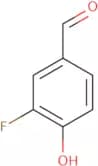
CAS:3-Fluoro-4-hydroxybenzaldehyde is a hydroxyl group with an activation energy of 87.7 kJ/mol. The molecule can be synthesized by the reaction of salicylaldehyde and 3,4-dihydroxybenzaldehyde in the presence of an organic solvent such as chloroform or methylene chloride. This compound has been shown to cause cell death in ht-29 cells and cancer cell lines, as well as human ovarian carcinoma cells. It causes apoptosis by inhibiting mitochondrial membrane potential, which leads to decreased intracellular ATP levels. 3-Fluoro-4-hydroxybenzaldehyde is most commonly used in molecular modeling studies to represent the hydroxyl group due to its simplicity in comparison to other hydroxyl groups like methanol or ethanol.Fórmula:C7H5FO2Pureza:90%Cor e Forma:White PowderPeso molecular:140.11 g/mol2-Methyl-3-morpholin-4-yl-propionic acid hydrochloride
CAS:2-Methyl-3-morpholin-4-yl-propionic acid hydrochloride is a reagent that can be used in the synthesis of various compounds. It is also a building block for the preparation of complex compounds and fine chemicals. The CAS number for this chemical is 1052522-32-3.Fórmula:C8H16ClNO3Pureza:Min. 95%Cor e Forma:PowderPeso molecular:209.67 g/molGallic acid anhydrous
CAS:Gallic acid anhydrous is a compound that is found in plants and has antioxidant properties. Gallic acid anhydrous can be used as a model system for the study of electrochemical impedance spectroscopy. It has shown to have anti-cancer activity in vitro, but not in vivo, against squamous carcinoma cells. In addition, gallic acid anhydrous has been shown to inhibit oral pathogens and to scavenge anion radicals. Gallic acid anhydrous may have structural similarities to procyanidin B4, which is important for its antioxidant activity.Fórmula:C7H6O5Pureza:Min. 99 Area-%Cor e Forma:White PowderPeso molecular:170.12 g/molGlycine ethyl ester hydrochloride
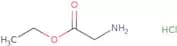
CAS:Used with EDC for carboxyl-foot printing studies of proteins
Fórmula:C4H9NO2•HClPureza:Min. 95%Cor e Forma:PowderPeso molecular:139.58 g/molGuaiazulene
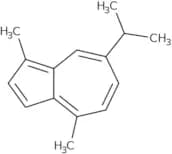
CAS:Guaiazulene is a natural compound with antimicrobial and antiinflammatory activity. It has been shown to inhibit the growth of bacteria and fungi, including Staphylococcus aureus, Candida albicans, Aspergillus niger, Escherichia coli, Pseudomonas aeruginosa, and Klebsiella pneumoniae. Guaiazulene also inhibits the production of growth factor-β1 in human lung fibroblast cells (HL-60) at an optimum concentration of 10 μM. Additionally, guaiazulene has been shown to reduce the expression of inflammatory cytokines in vitro. Guaiazulene is structurally similar to azulene, but lacks a double bond between carbons 5 and 6.Fórmula:C15H18Pureza:(Gc) Min. 99.00%Cor e Forma:PowderPeso molecular:198.3 g/molGallaldehyde hemihydrate
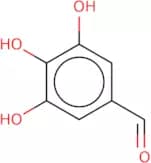
CAS:Gallaldehyde hemihydrate is a bioactive phenolic compound that inhibits the tyrosine kinase domain of the epidermal growth factor receptor (EGFR). It has been shown to inhibit tumor cell growth and induce apoptosis in cancer tissues. Gallaldehyde hemihydrate has also been found in lentils, which might be used as a potential biomarker for this compound. The optimum pH for gallaldehyde hemihydrate is between 2.0-4.0, and it can bind to cation channels and act as a potential biomarker for skin cancer cells.Fórmula:C7H6O4Pureza:Min. 95%Cor e Forma:PowderPeso molecular:154.12 g/molGlyceryl-4-aminobenzoate monomer
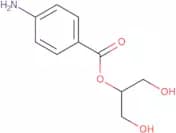
CAS:Glyceryl-4-aminobenzoate monomer is a fine chemical that is an important building block in the synthesis of a variety of complex compounds. It has been used as a reagent and intermediate in research and development of pharmaceuticals and agrochemicals. Glyceryl-4-aminobenzoate monomer is a versatile building block, which can be used to form polymers, coatings, adhesives, elastomers, polyurethanes, and more. The compound also has been shown to have anticancer activity against human breast cancer cells.
Fórmula:C10H13NO4Pureza:Min. 75 Area-%Cor e Forma:Off-white to beige solid.Peso molecular:211.21 g/mol