CAS 149-91-7
:Ácido gálico
Descrição:
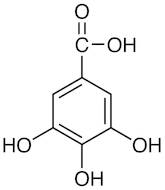
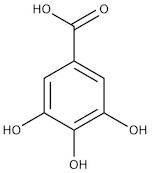
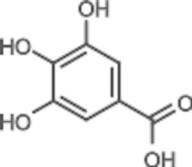
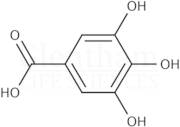
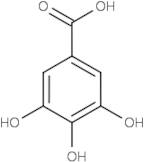
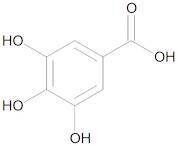
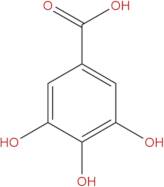
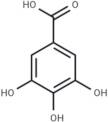
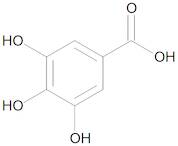
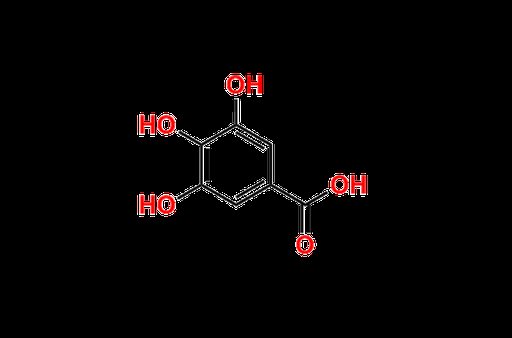
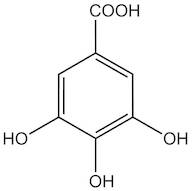
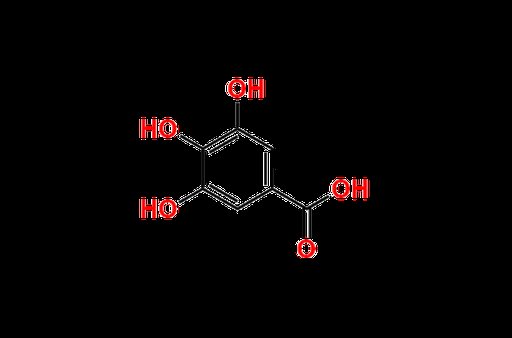
Ácido gálico, com o número CAS 149-91-7, é um composto fenólico que ocorre naturalmente e que está amplamente distribuído em várias plantas, particularmente em galhas, folhas de chá e certas frutas. Aparece como um pó cristalino branco a amarelo pálido e é solúvel em água, álcool e éter. Ácido gálico é conhecido por suas propriedades antioxidantes, que lhe permitem eliminar radicais livres e proteger as células do estresse oxidativo. Possui uma fórmula molecular de C7H6O5 e apresenta três grupos hidroxila, contribuindo para sua acidez e reatividade. Além de seu papel na medicina tradicional e em remédios à base de plantas, Ácido gálico é utilizado na indústria alimentícia como conservante e na produção de tintas e corantes devido à sua capacidade de formar complexos com íons metálicos. Além disso, tem aplicações potenciais em farmacêuticos, particularmente no desenvolvimento de agentes anti-inflamatórios e antimicrobianos. No geral, Ácido gálico é um composto versátil com relevância biológica e industrial significativa.
Fórmula:C7H6O5
InChI:InChI=1S/C7H6O5/c8-4-1-3(7(11)12)2-5(9)6(4)10/h1-2,8-10H,(H,11,12)
Chave InChI:InChIKey=LNTHITQWFMADLM-UHFFFAOYSA-N
SMILES:C(O)(=O)C1=CC(O)=C(O)C(O)=C1
Sinónimos:- 3,4,5-Hydroxybenzoic acid
- 3,4,5-Trihydroxybenzoesaure
- 3,4,5-Trihydroxybenzoic acid
- A 1925-04
- Acide 3,4,5-trihydroxybenzoique
- Acido 3,4,5-Trihidroxibenzoico
- Benzoic acid, 3,4,5-trihydroxy-
- Gallic Acid Anhydrous
- Gallussaeure
- Nsc 20103
- Nsc 674319
- Pyrogallol-5-carboxylic acid
- Ver mais sinónimos
Filtrar por
Percentagem de pureza
0
100
|
0
|
50
|
90
|
95
|
100
- Preços em ordem crescente
- Preços em ordem decrescente
- Menor grau de pureza
- Maior grau de pureza
- Estimativa de entrega mais rápida
Gallic Acid
CAS:Fórmula:C7H6O5Pureza:>98.0%(HPLC)(T)Cor e Forma:White to Light yellow powder to crystalPeso molecular:170.123,4,5-Trihydroxybenzoic acid, 98%
CAS:Organic acid is used as a standard for determining phenols in the Folin-Ciocalteau assay3,4,5-Trihydroxybenzoic acid is used as a cyclooxygease inhibitor substance, which is found in plants. In analytical chemistry, it is used as a standard to determine phenol content in various analytes. It acts aFórmula:C7H6O5Pureza:98%Cor e Forma:White to cream or pale yellow, PowderPeso molecular:170.12Gallic acid
CAS:Gallic acid (Benzoic acid) is found in almost all plants. Plants known for their high gallic acid content include gallnuts,grapes,tea,hops and oak bark.Fórmula:C7H6O5Pureza:99.38% - 99.99%Cor e Forma:SolidPeso molecular:170.1195Gallic acid, anhydrous, ACS grade
CAS:Fórmula:C7H6O5Pureza:(Titration) ≥ 98.0%Cor e Forma:White, off-white or beige powderPeso molecular:170.12Gallic acid, anhydrous
CAS:Fórmula:C7H6O5Pureza:≥ 99.0%Cor e Forma:White to off-white powderPeso molecular:170.123,4,5-Trihydroxybenzoic acid, anhydrous
CAS:3,4,5-Trihydroxybenzoic acid, anhydrousFórmula:C7H6O5Pureza:99%Cor e Forma:White Solid-PowderPeso molecular:170.119543,4,5-Trihydroxybenzoic-2,6-d2Acid
CAS:Fórmula:(HO)3C6D2COOHPureza:98 atom % DCor e Forma:White SolidPeso molecular:172.03408Gallic acid
CAS:Gallic acid analytical standard provided with w/w absolute assay, to be used for quantitative titration.Fórmula:C7H6O5Pureza:(HPLC) ≥99%Cor e Forma:PowderPeso molecular:170.13Gallic acid
CAS:Gallic acid and curcumin are natural phenolic compounds, both have cytotoxic activity in relation to their radical modulating activity, induce apoptosis by different mechanisms, and gallic acid produces higher amounts of radicals and more efficiently scavenged the superoxide anion radical.Fórmula:C7H6O5Pureza:95%~99%Cor e Forma:PowderPeso molecular:170.12Gallic acid (Standard)
CAS:Gallic acid (Standard) is a reference standard; gallic acid has antioxidant and anti-inflammatory activity.Fórmula:C7H6O5Cor e Forma:SolidPeso molecular:170.1195Gallic Acid
CAS:Produto ControladoApplications Gallic Acid exhibits a number of cellular effects including apoptosis and inhibits the growth of calf pulmonary arterial endothelial cell (CPAEC);Also, it is a polyphenol widely found in numerous fruits and vegetables that has been reported to exert anticancer effects, including apoptosis, against cancer cell lines.
References Park, W. H.: Mol. Med. Rep., 16, 7805-7812 (2017); Yang, C., et al.: RSC Adv., 8, 12449-12458 (2018)Fórmula:C7H6O5Cor e Forma:NeatPeso molecular:170.12Gallic acid
CAS:Carboxylic acid with phenol functionFórmula:C7H6O5Pureza:≥ 98.0 % (HPLC)Cor e Forma:PowderPeso molecular:170.12Gallic acid anhydrous
CAS:Gallic acid anhydrous is a compound that is found in plants and has antioxidant properties. Gallic acid anhydrous can be used as a model system for the study of electrochemical impedance spectroscopy. It has shown to have anti-cancer activity in vitro, but not in vivo, against squamous carcinoma cells. In addition, gallic acid anhydrous has been shown to inhibit oral pathogens and to scavenge anion radicals. Gallic acid anhydrous may have structural similarities to procyanidin B4, which is important for its antioxidant activity.Fórmula:C7H6O5Pureza:Min. 99 Area-%Cor e Forma:White PowderPeso molecular:170.12 g/mol