Building Blocks
Esta seção contém produtos fundamentais para a síntese de compostos orgânicos e biológicos. Building blocks são os materiais de partida essenciais usados para construir moléculas complexas através de várias reações químicas. Eles desempenham um papel crítico na descoberta de medicamentos, ciência dos materiais e pesquisa química. Na CymitQuimica, oferecemos uma ampla gama de building blocks de alta qualidade para apoiar suas pesquisas inovadoras e projetos industriais, garantindo que você tenha os componentes essenciais para uma síntese bem-sucedida.
Subcategorias de "Building Blocks"
- Ácidos Borónicos e Derivados de Ácido Borónico(5.756 produtos)
- Building Blocks Quirais(1.242 produtos)
- Building Blocks Hidrocarbonetos(6.095 produtos)
- Building Blocks orgânicos(61.038 produtos)
Foram encontrados 196817 produtos de "Building Blocks"
Ordenar por
Pureza (%)
0
100
|
0
|
50
|
90
|
95
|
100
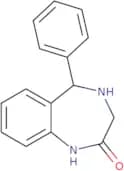
5-Phenyl-2,3,4,5-tetrahydro-1H-1,4-benzodiazepin-2-one
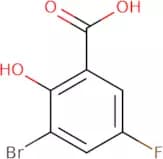
CAS:Produto Controlado<p>5-Phenyl-2,3,4,5-tetrahydro-1H-1,4-benzodiazepin-2-one is an optically active compound that is used in the synthesis of other drugs. It can be synthesized by reacting carbamoyl chloride with hydrogen and hydroxide. This compound has a nitro group at position 5 and a trifluoromethyl group at position 2. The asymmetry of this molecule is due to the c1-6 alkyl group on the left and the c1-4 alkyl group on the right.</p>Fórmula:C15H14N2OPureza:Min. 95%Peso molecular:238.28 g/mol3-Bromo-5-fluoro-2-hydroxybenzoic acid
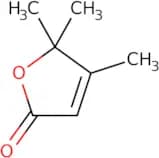
CAS:<p>Versatile small molecule scaffold</p>Fórmula:C7H4BrFO3Pureza:Min. 95%Peso molecular:235.01 g/mol4,5,5-Trimethyl-2,5-dihydrofuran-2-one
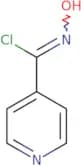
CAS:<p>Versatile small molecule scaffold</p>Fórmula:C7H10O2Pureza:Min. 95%Peso molecular:126.15 g/molN-Hydroxypyridine-4-carbonimidoyl chloride
CAS:<p>Versatile small molecule scaffold</p>Fórmula:C6H5ClN2OPureza:Min. 95%Peso molecular:156.57 g/molPent-1-yn-3-ol
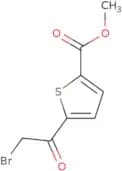
CAS:<p>Pent-1-yn-3-ol is a low molecular weight compound that is classified as an amide. It is an intermediate in the biosynthesis of fatty acids and primary alcohols from acetyl-CoA. Pent-1-yn-3-ol also alkylates amides in proteins, and can be used for the synthesis of magnetic nanoparticles. In order to determine the effects of mononuclear alkali metal ions on organisms, methyl ethyl was added to a mixture of 10 mM potassium hydroxide (KOH) and water. The pH was then adjusted to 4 with hydrochloric acid (HCl). A magnetic stir bar was placed in the flask, and the solution was mixed magnetically at room temperature. The growth rate of Drosophila melanogaster was monitored over time by measuring its wet weight.</p>Fórmula:C5H8OPureza:Min. 95%Peso molecular:84.12 g/molMethyl 5-(2-bromoacetyl)thiophene-2-carboxylate
CAS:<p>Versatile small molecule scaffold</p>Fórmula:C8H7BrO3SPureza:Min. 95%Peso molecular:263.11 g/molEthyl (E)-cinnamate
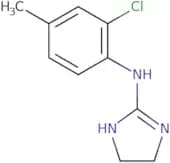
CAS:<p>Ethyl (E)-cinnamate is a cinnamic acid derivative that belongs to the class of phenylpropenoids. It has been shown to have biological properties, such as enzyme activities and antioxidative properties. Ethyl (E)-cinnamate has also been shown to be a potent photosynthetic activator in vitro. This compound can be used as a precursor for the synthesis of cinnamic acid, which is important in the metabolism of energy production and locomotor activity.</p>Fórmula:C11H12O2Pureza:Min. 95%Cor e Forma:Clear LiquidPeso molecular:176.21 g/molN-(2-Chloro-4-methylphenyl)-4,5-dihydro-1H-imidazol-2-amine
CAS:<p>2-Chloro-4-methylphenyl-N-(2-chloro-4-methylphenyl)-4,5-dihydroimidazol-2amine is a potent immunosuppressive drug. It has been shown to be effective in the treatment of autoimmune diseases such as rheumatoid arthritis and systemic lupus erythematosus. The drug has been found to be safe and effective in animal models of cardiac disease. 2C4MPI is an analog of azathioprine, which is used for the treatment of inflammatory and autoimmune diseases. In addition, this drug has been shown to have antihyperglycemic properties by inhibiting glucose production in the liver and increasing insulin sensitivity in muscle tissue. 2C4MPI also reduces collagen synthesis, which may be useful in treating inflammatory diseases that are caused by excess collagen deposition such as skin conditions like psoriasis or acne vulgaris.</p>Fórmula:C10H12ClN3Pureza:Min. 95%Peso molecular:209.67 g/mol4,6-Dichloroquinoline
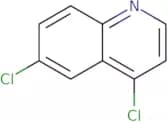
CAS:<p>4,6-Dichloroquinoline is a macrocyclic compound that has been found by accident. It inhibits the growth of malaria parasites by binding to the enzyme heme oxygenase. The inhibition of this enzyme leads to an accumulation of toxic products derived from the heme molecule and causes cell death. 4,6-Dichloroquinoline is also fluorescent and can be used as a reagent for cross-coupling reactions or as an antimalarial drug. The compound fluoresces when it binds to metal cations such as chloride and ligands such as chloride ions. This property can be used in the detection of these species in solution or in solid samples.</p>Fórmula:C9H5Cl2NPureza:Min. 95%Peso molecular:198.05 g/mol2-(Prop-2-en-1-yl)oxane
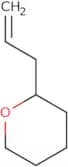
CAS:<p>2-(Prop-2-en-1-yl)oxane is a tetrahydrofuranyl compound that is used in organic synthesis as an allylation agent. It is also used in the functionalization of ethers, multicomponent reactions, derivatization reactions, and many other chemical syntheses. 2-(Prop-2-en-1-yl)oxane is typically used as an anhydride or ester catalyst. It has been shown to catalyze the reaction between ethyl acetate and propylene oxide.</p>Fórmula:C8H14OPureza:Min. 95%Peso molecular:126.2 g/mol1-(2-Hydroxypropyl)pyrrolidin-2-one
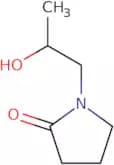
CAS:<p>Versatile small molecule scaffold</p>Fórmula:C7H13NO2Pureza:Min. 95%Peso molecular:143.18 g/mol5-Chloro-2,2-dimethylpentanenitrile
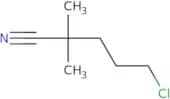
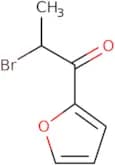
CAS:<p>5-Chloro-2,2-dimethylpentanenitrile is a nonpolar solvent that can be used as a phase transfer catalyst and reagent for the synthesis of cyclopentanone derivatives. It is also used as a hydrolyzing agent for the synthesis of 1-bromo-3-chloropropane. 5-Chloro-2,2-dimethylpentanenitrile can be used to synthesize cyclic ketones from alkyl halides and 1,1'-oxydiacetonitrile with an acetone or isobutyronitrile as a catalyst.</p>Fórmula:C7H12ClNPureza:Min. 95%Peso molecular:145.63 g/mol2-Bromo-1-(furan-2-yl)propan-1-one
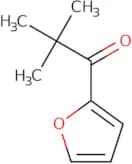
CAS:<p>Versatile small molecule scaffold</p>Fórmula:C7H7BrO2Pureza:Min. 95%Peso molecular:203.03 g/mol1-(Furan-2-yl)-2,2-dimethylpropan-1-one
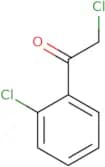
CAS:<p>1-(Furan-2-yl)-2,2-dimethylpropan-1-one is a catalytic reagent that is used in the synthesis of furan derivatives. 1-(Furan-2-yl)-2,2-dimethylpropan-1-one can be produced from 2,5-dihydrofuran with carbon tetrachloride and PCl5 or by reacting 2,5-dihydrofuran with CCl4. This product reacts as a dipole and has been shown to have some experimental and theoretical uses in catalysis. It is also a reactant in the production of acetophenone and pyridine. The abundances of this product are determined by the constants A = 3.14159 × 10⁻⁸ m²/s², B = 4π × 10−7 m³/s¹, C = 1.6180 × 10⁻³ m/s and D</p>Fórmula:C9H12O2Pureza:Min. 95%Peso molecular:152.19 g/mol2-Chloro-1-(2-chlorophenyl)ethanone
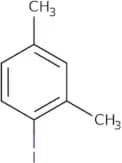
CAS:<p>2-Chloro-1-(2-chlorophenyl)ethanone is an antiarrhythmic drug that belongs to the group of methyl ketones. It is used to treat asthma and bronchitis. 2-Chloro-1-(2-chlorophenyl)ethanone is a chiral compound with two possible enantiomers. The rotation of the molecule can be altered by changing the solvent. The dihedral angle between two hydrogen bonds in this molecule can also be changed, which affects the way that it interacts with bronchial receptors. This compound has been shown to have antiarrhythmic properties, as well as being able to inhibit transfer hydrogenation reactions in cyclohexane.</p>Fórmula:C8H6Cl2OPureza:Min. 95%Peso molecular:189.04 g/mol4-Iodo-m-xylene
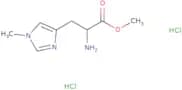
CAS:<p>4-Iodo-m-xylene is an organic solvent that is used as a precursor in the synthesis of medicines. It is a member of the methyl group with hydrogen, chlorine and other elements. 4-Iodo-m-xylene has been shown to be activated by both hydrochloric acid and hydrogen peroxide, which leads to the formation of methylbenzenes. The chlorides are then added to form enolate anions, which can be protonated by hydrogen chloride to form ligands. These ligands can react with peroxide to produce biomolecules such as proteins or nucleic acids.</p>Fórmula:C8H9IPureza:Min. 95%Peso molecular:232.06 g/molMethyl (2S)-2-amino-3-(1-methyl-1H-imidazol-4-yl)propanoate dihydrochloride
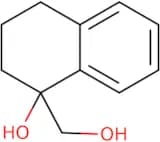
CAS:<p>Versatile small molecule scaffold</p>Fórmula:C8H15Cl2N3O2Pureza:Min. 95%Peso molecular:256.13 g/mol1-(Hydroxymethyl)-1,2,3,4-tetrahydronaphthalen-1-ol
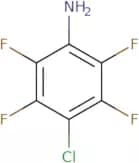
CAS:<p>Versatile small molecule scaffold</p>Fórmula:C11H14O2Pureza:Min. 95%Peso molecular:178.23 g/mol4-Chloro-2,3,5,6-tetrafluoroaniline
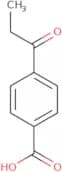
CAS:<p>Versatile small molecule scaffold</p>Fórmula:C6H2ClF4NPureza:Min. 95%Peso molecular:199.53 g/mol4-Propionylbenzoic acid
CAS:<p>4-Propionylbenzoic acid (4PB) is a racemic mixture of the two enantiomers, 4-propionyloxybenzoic acid and 4-hydroxybenzoic acid. It is an ester formed from terephthalic or isophthalic acids and a propionic acid. The ester group in 4PB reacts with alcohols to form esters, diesters, and condensation products. This compound acts as a muscle relaxant by blocking the action of calcium ions in nerve cells. Its active form can be formed by enzymatic oxidation from its inactive form, 4-hydroxybenzoic acid.</p>Fórmula:C10H10O3Pureza:Min. 95%Peso molecular:178.18 g/mol