Building Blocks
Subcategorias de "Building Blocks"
- Ácidos Borónicos e Derivados de Ácido Borónico(5.780 produtos)
- Building Blocks Quirais(1.241 produtos)
- Building Blocks Hidrocarbonetos(6.100 produtos)
- Building Blocks orgânicos(61.010 produtos)
Foram encontrados 205258 produtos de "Building Blocks"
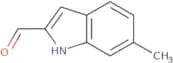
6-Methyl-1H-indole-2-carbaldehyde
CAS:Versatile small molecule scaffoldFórmula:C10H9NOPureza:Min. 95%Peso molecular:159.18 g/mol7-chloroimidazo[1,2-c]pyrimidin-5(6h)-one
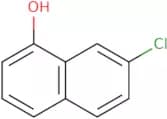
CAS:Versatile small molecule scaffoldFórmula:C6H4ClN3OPureza:Min. 95%Peso molecular:169.57 g/mol7-Chloro-1-hydroxynaphthalene
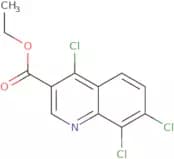
CAS:7-Chloro-1-hydroxynaphthalene is a polycyclic aromatic hydrocarbon. It has been used to synthesize triazenes and solid phase polymers. 7-Chloro-1-hydroxynaphthalene is insoluble in the solvents used for most chemical reactions, but can be dissolved with tosyl chloride or arynes. It has been shown that substituents on the benzene ring have an effect on reactivity and lifetime. The substitution pattern of 7-chloro-1-hydroxynaphthalene affects its reactivity as well as other properties such as solubility, melting point, boiling point, density, and viscosity.Fórmula:C10H7ClOPureza:Min. 95%Peso molecular:178.62 g/molEthyl 4,7,8-trichloroquinoline-3-carboxylate
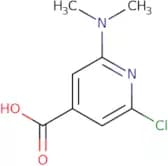
CAS:Versatile small molecule scaffoldFórmula:C12H8Cl3NO2Pureza:Min. 95%Peso molecular:304.6 g/mol2-Chloro-6-(dimethylamino)pyridine-4-carboxylic acid
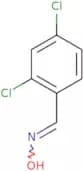
CAS:Versatile small molecule scaffoldFórmula:C8H9ClN2O2Pureza:Min. 95%Peso molecular:200.62 g/mol2,4-Dichlorobenzaldoxime
CAS:2,4-Dichlorobenzaldoxime is a molecule that contains two oxime groups, one of which has been stabilized by the formation of a hydrogen bond. The 2,4-dichlorobenzaldoxime isomer is centrosymmetric and can be stabilized in the solid state by dimerization.
Fórmula:C7H5Cl2NOPureza:Min. 95%Peso molecular:190.02 g/mol4-Chloro-2-ethylthieno[2,3-d]pyrimidine
CAS:Versatile small molecule scaffoldFórmula:C8H7ClN2SPureza:Min. 95%Peso molecular:198.67 g/mol4-Chloro-6-nitrothieno[2,3-d]pyrimidine
CAS:Versatile small molecule scaffoldFórmula:C6H2ClN3O2SPureza:Min. 95%Peso molecular:215.62 g/mol2-Ethyl-3H,4H-thieno[2,3-d]pyrimidin-4-one
CAS:Versatile small molecule scaffoldFórmula:C8H8N2OSPureza:Min. 95%Peso molecular:180.23 g/mol6-Bromothieno[2,3-d]pyrimidin-4(3h)-one
CAS:Versatile small molecule scaffold
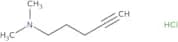
Fórmula:C6H3BrN2OSPureza:Min. 95%Peso molecular:231.07 g/molDimethyl(pent-4-yn-1-yl)amine hydrochloride
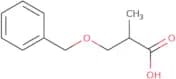
CAS:Versatile small molecule scaffoldFórmula:C7H14ClNPureza:Min. 95%Peso molecular:147.64 g/mol3-(Benzyloxy)-2-methylpropanoic acid
CAS:3-(Benzyloxy)-2-methylpropanoic acid is a benzyloxymethyl derivative that reacts with formic acid to produce a hydroxypropionitrile. It is used in the industrial production of formic acid and as an intermediate in the synthesis of other organic compounds. 3-(Benzyloxy)-2-methylpropanoic acid can be reduced by sodium borohydride to give cyclopropane carboxylic acid, which can then be oxidized to cyclohexanone. The reduction reaction also results in debenzylation of the molecule, with subsequent preparation methods involving esterification or hydrolysis.Fórmula:C11H14O3Pureza:Min. 95%Peso molecular:194.23 g/molMethyl 4-(2-bromoethoxy)benzenecarboxylate
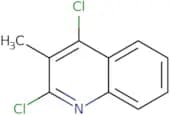
CAS:Methyl 4-(2-bromoethoxy)benzenecarboxylate is a histamine receptor antagonist that has been shown to be active at the histamine H3 receptor. Methyl 4-(2-bromoethoxy)benzenecarboxylate can be used to treat depression and other disorders related to histamine, such as allergic reactions. This drug has also been shown to inhibit serotonin reuptake by acting on the serotonin transporter, thereby increasing serotonin levels in the brain. Methyl 4-(2-bromoethoxy)benzenecarboxylate is an effective drug for the treatment of depression with few side effects.Fórmula:C10H11BrO3Pureza:Min. 95%Peso molecular:259.1 g/mol2,4-dichloro-3-methylquinoline
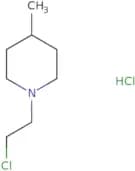
CAS:Versatile small molecule scaffoldFórmula:C10H7Cl2NPureza:Min. 95%Peso molecular:212.08 g/mol1-(2-Chloroethyl)-4-methylpiperidine hydrochloride
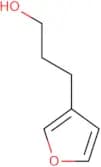
CAS:Versatile small molecule scaffoldFórmula:C8H17Cl2NPureza:Min. 95%Peso molecular:198.13 g/mol3-(Furan-3-yl)propan-1-ol
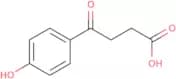
CAS:Versatile small molecule scaffoldFórmula:C7H10O2Pureza:Min. 95%Peso molecular:126.15 g/mol4-(4-hydroxyphenyl)-4-oxobutanoic acid
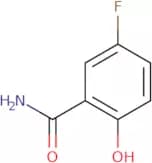
CAS:Versatile small molecule scaffoldFórmula:C10H10O4Pureza:Min. 95%Peso molecular:194.18 g/mol5-Fluoro-2-hydroxybenzamide
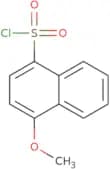
CAS:Versatile small molecule scaffoldFórmula:C7H6FNO2Pureza:Min. 95%Peso molecular:155.13 g/mol4-Methoxynaphthalene-1-Sulfonyl Chloride
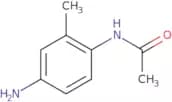
CAS:Versatile small molecule scaffoldFórmula:C11H9ClO3SPureza:Min. 95%Peso molecular:256.71 g/molN-(4-Amino-2-methylphenyl)acetamide
CAS:4-Amino-2-methylphenylacetic acid (AMPA) is a chemical compound that has been used in the treatment of skin disorders. AMPA is not active when applied to the skin, but it can be converted to 4-amino-2-methylphenylacetamide (AMPAA), which is an effective treatment for psoriasis. This conversion can be achieved with keratinocyte cells, which are found in the outer layer of skin. The optimal conditions for this conversion include coculturing keratinocytes and thp-1 cells over a period of 48 hours. This process was demonstrated using a human keratinocyte cell line and thp-1 cells. The sensitivity of these cells to AMPA was tested by exposing them to increasing concentrations of AMPA until they were killed. The results showed that AMPA had no effect on keratinocyte cells, but at higher concentrations it had an adverse effect on thp-1 cells. It was alsoFórmula:C9H12N2OPureza:Min. 95%Peso molecular:164.21 g/molBenzyl[2-(methylamino)ethyl]amine
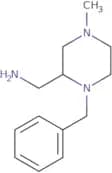
CAS:Benzyl[2-(methylamino)ethyl]amine is a dopaminergic drug that has been shown to have cytotoxic effects. It has been shown to inhibit the proliferation of tumor xenografts in mice and is also known to have antitumor properties. Benzyl[2-(methylamino)ethyl]amine has also been shown to be an inhibitor of topoisomerase II, which can lead to DNA damage. The cytotoxicity of this drug may be due to its ability to inhibit bromopride-sensitive dopamine receptors in human tumor xenografts and domperidone-sensitive dopamine receptors in human tumor xenografts. This drug also inhibits the hydrolysis of metoclopramide by esterases, leading to increased levels of metoclopramide in the blood.Fórmula:C10H16N2Pureza:Min. 95%Peso molecular:164.25 g/mol(1-Benzyl-4-methylpiperazin-2-yl)methanamine
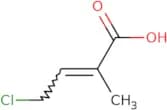
CAS:Versatile small molecule scaffoldFórmula:C13H21N3Pureza:Min. 95%Peso molecular:219.33 g/mol(2E)-4-Chloro-2-methylbut-2-enoic acid
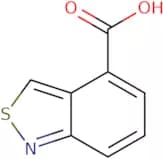
CAS:2-Methylbutanoic acid is a chemical substance belonging to the group of organic compounds called carboxylic acids. It is an oxidized compound that reacts with hydrogen peroxide and ethylene in the presence of pyridine to produce 4-chloro-2-methylbut-2-enoic acid ethyl ester, which can then be hydrolyzed to produce 4-chloro-2-methylbutanoic acid ethyl ester. This reaction is catalyzed by lansoprazole. The industrial synthesis of 2-methylbutanoic acid ethyl ester from 2-methylbutanol and acetic acid has been successfully achieved on a large scale by reacting the former with chloromethyl peroxide.Fórmula:C5H7ClO2Pureza:Min. 95%Peso molecular:134.56 g/mol4-carboxy-2,1-benzisothiazol
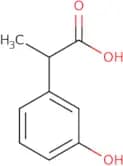
CAS:Versatile small molecule scaffoldFórmula:C8H5NO2SPureza:Min. 95%Peso molecular:179.19 g/mol2-(3-Hydroxyphenyl)propanoic acid
CAS:2-(3-Hydroxyphenyl)propanoic acid (HPPA) is a phenolic compound that is synthesized by colonic microflora from the hydrolysis of dietary polyphenols, such as 4-hydroxycinnamic acid. HPPA has been shown to have immunomodulatory effects, which may be due to its ability to reduce proinflammatory cytokines, and it may be useful in the treatment of inflammatory bowel disease. HPPA also inhibits microbial metabolism through the inhibition of dehydrogenase deficiency, which is a potential mechanism for its anti-bacterial effects. HPPA has low bioavailability due to its poor solubility and low absorption rate through the gut wall.Fórmula:C9H10O3Pureza:Min. 95%Peso molecular:166.17 g/mol2-Bromo-5-methylbenzene-1-sulfonamide
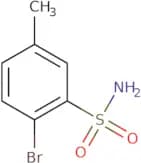
CAS:Versatile small molecule scaffold
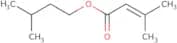
Fórmula:C7H8BrNO2SPureza:Min. 95%Peso molecular:250.12 g/mol3-Methylbutyl 3-methylbut-2-enoate
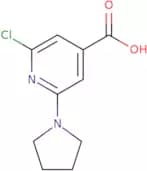
CAS:3-Methylbutyl 3-methylbutanoate is a fungus that belongs to the order Talaromycetales. It is considered to be a microorganism and has been used in the study of biology. 3-Methylbutyl 3-methylbutanoate functions as an acid ester of fatty acids and can also act as an ester of fatty acid. It can act as a substrate for the synthesis of substances such as isoamyl, isobutyl, and isopentyl. This fungus has been isolated from plants belonging to the genus Senecio and can be found in soil rich in organic matter.Fórmula:C10H18O2Pureza:Min. 95%Peso molecular:170.25 g/mol2-Chloro-6-(pyrrolidin-1-yl)pyridine-4-carboxylic acid
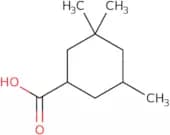
CAS:Versatile small molecule scaffoldFórmula:C10H11ClN2O2Pureza:Min. 95%Peso molecular:226.66 g/molrac-(1R,5S)-3,3,5-Trimethylcyclohexane-1-carboxylic acid
CAS:Versatile small molecule scaffold
Fórmula:C10H18O2Pureza:Min. 95%Peso molecular:170.25 g/mol9-(Bromomethyl)-9H-fluorene
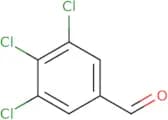
CAS:Versatile small molecule scaffoldFórmula:C14H11BrPureza:Min. 95%Peso molecular:259.14 g/mol3,4,5-Trichlorobenzaldehyde
CAS:3,4,5-Trichlorobenzaldehyde is an aldehyde that is used as a reagent for the detection of isomers. It is also used to determine the efficiency and selectivity of gas chromatography. In addition, 3,4,5-trichlorobenzaldehyde has been shown to be a useful reagent for the identification of alcohols. This compound has also been found to be useful in determining the structure of various compounds by gas chromatography. 3,4,5-trichlorobenzaldehyde is often used as a reference standard in analytical chemistry due to its structural simplicity and ease of purification.Fórmula:C7H3Cl3OPureza:Min. 95%Peso molecular:209.46 g/molN-(3-Methylbutyl)-1H-pyrazolo[3,4-d]pyrimidin-4-amine
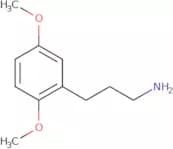
CAS:Versatile small molecule scaffoldFórmula:C10H15N5Pureza:Min. 95%Peso molecular:205.26 g/mol3-(2,5-Dimethoxyphenyl)propan-1-amine
CAS:Versatile small molecule scaffold
Fórmula:C11H17NO2Pureza:Min. 95%Peso molecular:195.26 g/mol2-(2-Chlorophenoxy)aniline
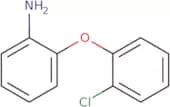
CAS:Versatile small molecule scaffold
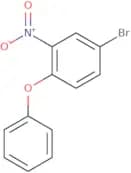
Fórmula:C12H10ClNOPureza:Min. 95%Peso molecular:219.67 g/mol4-Bromo-2-nitro-1-phenoxybenzene
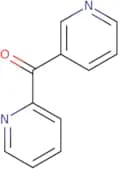
CAS:Versatile small molecule scaffoldFórmula:C12H8BrNO3Pureza:Min. 95%Peso molecular:294.1 g/mol3-(Pyridine-2-carbonyl)pyridine
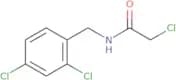
CAS:3-(Pyridine-2-carbonyl)pyridine is a ligand that binds to metal cations and anions. This ligand has been shown to have a helical structure, which allows it to interact with the metal cations. 3-(Pyridine-2-carbonyl)pyridine forms an anion in solution, which can be stabilized by interaction with a metal cation. The interactions between these ligands and metal cations are highly dependent on their conformations, as well as their bonding and geometry. 3-(Pyridine-2-carbonyl)pyridine has been shown to be stable in the solid state when interacting with perchlorate ions. These interactions are also reversible and can be used for docking studies of various compounds.Fórmula:C11H8N2OPureza:Min. 95%Peso molecular:184.19 g/mol2-Chloro-N-(2,4-dichloro-benzyl)-acetamide
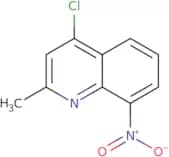
CAS:Versatile small molecule scaffoldFórmula:C9H8Cl3NOPureza:Min. 95%Peso molecular:252.5 g/mol4-Chloro-2-methyl-8-nitroquinoline
CAS:4-Chloro-2-methyl-8-nitroquinoline is a quinoline analog that is protonated to form a proton sponge. This proton sponge is able to bind to protons and remove them from the solution through protonation, which results in a decrease in pH. The structural similarity of 4-chloro-2-methyl-8-nitroquinoline to the natural amino acid histidine allows it to act as an analog for this amino acid. In addition, the nitrogen atom on 4-chloro-2-methyl-8 nitroquinoline has a heteroatom that can bind with protons. As a result, this compound can be used as a proton sponge for its ability to remove protons from solutions.Fórmula:C10H7ClN2O2Pureza:Min. 95%Peso molecular:222.63 g/mol4-Methyl-6-phenyl-1H,6H-[1,2]diazolo[3,4-c]pyrazol-3-amine
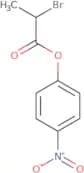
CAS:Versatile small molecule scaffoldFórmula:C11H11N5Pureza:Min. 95%Peso molecular:213.24 g/mol4-Nitrophenyl 2-bromopropanoate
CAS:4-Nitrophenyl 2-bromopropanoate (4NPB) is a prosthetic group that is used to label peptides for imaging purposes. It has been shown to be a high specific activity radiolabel, and can be synthesized by the radiosynthesis of 4-nitrophenol with bromopropane. The 4-nitrophenyl group is also a specific prosthetic group, which can be incorporated into peptides for use in imaging studies.Fórmula:C9H8BrNO4Pureza:Min. 95%Peso molecular:274.07 g/mol3,3-Dibromo-azepan-2-one
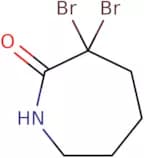
CAS:3,3-Dibromo-azepan-2-one is a molecule that has been shown to inhibit cancer cell growth in the nanomolar range. It acts by binding to a specific site on the enzyme protein which prevents the synthesis of new proteins and causes cellular apoptosis. This molecule has shown high specificity for prostate cancer cells, but it may also be effective against other cancers. 3,3-Dibromo-azepan-2-one has been modified to improve its pharmacological properties and it is being screened for anti-cancer activity in animals.
Fórmula:C6H9Br2NOPureza:Min. 95%Peso molecular:270.95 g/mol1,1'-Oxybis[2,2-diethoxyethane]
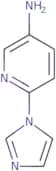
CAS:Versatile small molecule scaffoldFórmula:C12H26O5Pureza:Min. 95%Peso molecular:250.33 g/mol6-(1H-Imidazol-1-yl)pyridin-3-amine
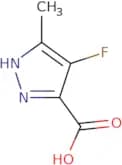
CAS:Versatile small molecule scaffoldFórmula:C8H8N4Pureza:Min. 95%Peso molecular:160.18 g/mol4-Fluoro-5-methyl-1H-pyrazole-3-carboxylic acid
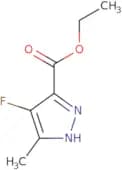
CAS:Versatile small molecule scaffoldFórmula:C5H5FN2O2Pureza:Min. 95%Peso molecular:144.1 g/molEthyl 4-fluoro-5-methyl-1H-pyrazole-3-carboxylate
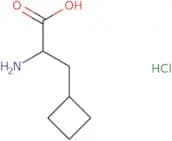
CAS:Versatile small molecule scaffoldFórmula:C7H9FN2O2Pureza:90%Peso molecular:172.16 g/mol2-Amino-3-cyclobutylpropanoic acid hydrochloride
CAS:Versatile small molecule scaffold
Fórmula:C7H14ClNO2Pureza:Min. 95%Peso molecular:179.64 g/molCBR-5884
CAS:CBR-5884 is a synthetic molecule that inhibits the synthesis of fatty acids in cells. It binds to the mitochondrial membrane potential and prevents ATP production. This compound has been shown to be effective in inhibiting cancers and is a noncompetitive inhibitor of fatty acid synthase. The proapoptotic activity of CBR-5884 may result from its ability to induce apoptosis, as well as covalent inhibitors that inhibit cancer cell proliferation.Fórmula:C14H12N2O4S2Pureza:Min. 95%Peso molecular:336.39 g/mol3-Cyclopropyl-2,2-difluoro-3-hydroxypropanoic acid
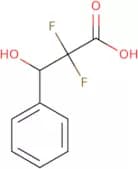
CAS:Versatile small molecule scaffoldFórmula:C6H8F2O3Pureza:Min. 95%Peso molecular:166.12 g/mol2,2-Difluoro-3-hydroxy-3-phenylpropanoic acid
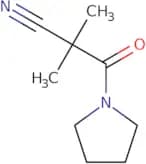
CAS:Versatile small molecule scaffoldFórmula:C9H8F2O3Pureza:Min. 95%Peso molecular:202.15 g/mol2,2-Dimethyl-3-oxo-3-(pyrrolidin-1-yl)propanenitrile
CAS:Versatile small molecule scaffoldFórmula:C9H14N2OPureza:Min. 95%Peso molecular:166.22 g/mol

![7-chloroimidazo[1,2-c]pyrimidin-5(6h)-one](/_next/image/?url=https%3A%2Fstatic.cymitquimica.com%2Fproducts%2F3D%2Fthumb-webp%2FGCA81709.webp&w=3840&q=75)
![4-Chloro-2-ethylthieno[2,3-d]pyrimidine](/_next/image/?url=https%3A%2Fstatic.cymitquimica.com%2Fproducts%2F3D%2Fthumb-webp%2FGCA84411.webp&w=3840&q=75)
![4-Chloro-6-nitrothieno[2,3-d]pyrimidine](/_next/image/?url=https%3A%2Fstatic.cymitquimica.com%2Fproducts%2F3D%2Fthumb-webp%2FGCA84413.webp&w=3840&q=75)
![2-Ethyl-3H,4H-thieno[2,3-d]pyrimidin-4-one](/_next/image/?url=https%3A%2Fstatic.cymitquimica.com%2Fproducts%2F3D%2Fthumb-webp%2FGCA84439.webp&w=3840&q=75)
![6-Bromothieno[2,3-d]pyrimidin-4(3h)-one](/_next/image/?url=https%3A%2Fstatic.cymitquimica.com%2Fproducts%2F3D%2Fthumb-webp%2FGCA84440.webp&w=3840&q=75)

![Benzyl[2-(methylamino)ethyl]amine](/_next/image/?url=https%3A%2Fstatic.cymitquimica.com%2Fproducts%2F3D%2Fthumb-webp%2FGCA90409.webp&w=3840&q=75)

![N-(3-Methylbutyl)-1H-pyrazolo[3,4-d]pyrimidin-4-amine](/_next/image/?url=https%3A%2Fstatic.cymitquimica.com%2Fproducts%2F3D%2Fthumb-webp%2FGCA96492.webp&w=3840&q=75)
![4-Methyl-6-phenyl-1H,6H-[1,2]diazolo[3,4-c]pyrazol-3-amine](/_next/image/?url=https%3A%2Fstatic.cymitquimica.com%2Fproducts%2F3D%2Fthumb-webp%2FGCA98455.webp&w=3840&q=75)
![1,1'-Oxybis[2,2-diethoxyethane]](/_next/image/?url=https%3A%2Fstatic.cymitquimica.com%2Fproducts%2F3D%2Fthumb-webp%2FGCA99916.webp&w=3840&q=75)