Building Blocks
Subcategorias de "Building Blocks"
- Ácidos Borónicos e Derivados de Ácido Borónico(5.778 produtos)
- Building Blocks Quirais(1.243 produtos)
- Building Blocks Hidrocarbonetos(6.098 produtos)
- Building Blocks orgânicos(61.036 produtos)
Foram encontrados 205240 produtos de "Building Blocks"
3,4-Dichloroisothiazole-5-carbonitrile
CAS:3,4-Dichloroisothiazole-5-carbonitrile is a chemical compound that is structurally similar to morpholine and has a chlorine atom in its backbone. It is used as a solvent for the synthesis of amides and esters. 3,4-Dichloroisothiazole-5-carbonitrile can be synthesized from dibromoethane and chloroacetone with an efficient method involving ethyl esters. This chemical compound has been shown to be highly toxic to plants and animals due to its chlorine atom.Fórmula:C4Cl2N2SPureza:Min. 95%Peso molecular:179.02 g/mol5-Benzyl-1,2,3,4-tetrahydropyrimidine-2,4-dione
CAS:5-Benzyl-1,2,3,4-tetrahydropyrimidine-2,4-dione is a potent HIV replication inhibitor. It inhibits viral DNA synthesis by binding to the polymerase chain reaction (PCR) enzyme as well as to the cellular polymerase β and DNA dependent RNA polymerase. 5-Benzyl-1,2,3,4-tetrahydropyrimidine-2,4-dione has been shown to be effective in animal models of hepatitis B and C by inhibiting reverse transcription. 5BPD also has anti cancer activity against both cultured cells and animals. In vitro studies have shown that 5BPD is active against human liver cancer cell lines in addition to breast cancer cell lines. 5BPD is metabolized by hydrogen chloride and malonic acid into an intermediate which reacts with uridine monophosphate (UMP) to form a pyrimidine nucleotide analogue (NMP). This NMPFórmula:C11H10N2O2Pureza:Min. 95%Peso molecular:202.21 g/molBenzo[b]thiophene-3-sulfonyl Chloride
CAS:Versatile small molecule scaffoldFórmula:C8H5ClO2S2Pureza:Min. 95%Peso molecular:232.7 g/mol1-(Morpholin-4-yl)-2-phenoxyethan-1-one
CAS:Versatile small molecule scaffold
Fórmula:C12H15NO3Pureza:Min. 95%Peso molecular:221.25 g/mol3-Hydroxy-4-nitrobenzonitrile
CAS:Versatile small molecule scaffold
Fórmula:C7H4N2O3Pureza:Min. 95%Peso molecular:164.12 g/mol2H,3H,4H-Pyrido[4,3-b][1,4]thiazin-3-one
CAS:Versatile small molecule scaffold
Fórmula:C7H6N2OSPureza:Min. 95%Peso molecular:166.2 g/mol2-(2,3-dihydro-1,4-benzodioxin-2-yl)acetic acid
CAS:Versatile small molecule scaffold
Fórmula:C10H10O4Pureza:Min. 95%Peso molecular:194.19 g/mol4-Oxo-1,4-dihydrocinnoline-3-carboxylic acid
CAS:4-Oxo-1,4-dihydrocinnoline-3-carboxylic acid is a synthetic chemical that is used as an agrochemical. It is a white solid that has a melting point of about 110°C, and it has a molecular weight of 218.5 g/mol. 4-Oxo-1,4-dihydrocinnoline-3-carboxylic acid can be used to produce phenylhydrazones and benzodiazines by catalytic reduction. It also reacts with chlorine at high temperatures to produce aluminium chloride. This chemical can hydrolyse amides and chlorides to produce hydrogen chloride gas or hydrochloric acid (HCl) respectively. The chloride ion (Cl-) can react with phosphorus pentachloride (PCl) to form phosphorus oxychloride (POCl). 4-Oxo-1,4-dihydrocinnoline-3-carboxylic acidFórmula:C9H6N2O3Pureza:Min. 95%Peso molecular:190.16 g/mol1-Methoxynaphthalen-2-ol
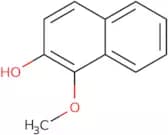
CAS:1-Methoxynaphthalen-2-ol is a chiral molecule that can be prepared by the oxidation of naphthalene to yield 1-methoxynaphthalene. The oxidation of 1-methoxynaphthalene with oxone in acetonitrile yields 1-methoxynaphthalen-2-ol and 2,4,6-trimethylbenzoyl peroxide. The oxidised product is then reduced with hydroxyl group to form an alcohol. This reaction can be carried out in high yield and with a good degree of stereoselectivity.
Fórmula:C11H10O2Pureza:Min. 95%Peso molecular:174.2 g/mol2,2-Dimethyl-3-[(4-methylbenzenesulfonyl)oxy]propanal
CAS:Versatile small molecule scaffoldFórmula:C12H16O4SPureza:Min. 95%Peso molecular:256.32 g/molEthyl 2-(Methylamino)-2-oxoacetate
CAS:Ethyl 2-(methylamino)-2-oxoacetate (EMAA) is a phenyl compound that is used as an active substance in pharmaceuticals. It is a colorless liquid with a boiling point of 200 degrees Celsius and a melting point of -10 degrees Celsius. EMAA has been used to treat bacterial infections and influenza. It also has antioxidant properties that help to prevent damage from free radicals.
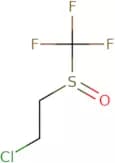
Fórmula:C5H9NO3Pureza:Min. 95%Peso molecular:131.13 g/mol1-Chloro-2-trifluoromethanesulfinylethane
CAS:Versatile small molecule scaffoldFórmula:C3H4ClF3OSPureza:Min. 95%Peso molecular:180.58 g/mol2-[(4-Bromophenyl)sulfanyl]-2-methylpropanoic acid
CAS:Versatile small molecule scaffold
Fórmula:C10H11BrO2SPureza:Min. 95%Peso molecular:275.16 g/mol5-{[(4-Chlorophenyl)sulfanyl]methyl}-1H-1,2,3,4-tetrazole
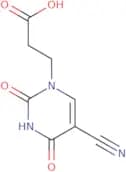
CAS:Versatile small molecule scaffoldFórmula:C8H7ClN4SPureza:Min. 95%Peso molecular:226.69 g/mol3-(5-Cyano-2,4-dioxo-1,2,3,4-tetrahydropyrimidin-1-yl)propanoic acid
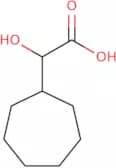
CAS:Versatile small molecule scaffoldFórmula:C8H7N3O4Pureza:Min. 95%Peso molecular:209.16 g/mol2-Cycloheptyl-2-hydroxyacetic acid
CAS:Versatile small molecule scaffoldFórmula:C9H16O3Pureza:Min. 95%Peso molecular:172.22 g/molSpiro[1,3-dioxolane-2,1'-[1H]inden]-3'(2'H)-one
CAS:Versatile small molecule scaffold
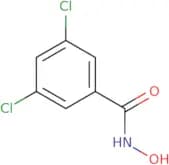
Fórmula:C11H10O3Pureza:Min. 95%Peso molecular:190.19 g/mol3,5-Dichloro-N-hydroxybenzamide
CAS:3,5-Dichloro-N-hydroxybenzamide is a drug that belongs to the group of diuretics and has been used as an ophthalmic and pharmacological agent. It has been shown to be effective in the treatment of infantile spasms and as an adjuvant therapy for chronic glaucoma. 3,5-Dichloro-N-hydroxybenzamide is also used in various formulations with other drugs such as trichlormethiazide, which acts by potentiating the effect of 3,5-dichloro-N-hydroxybenzamide on potassium excretion. The physicochemical properties of this drug are studied using gel formulations, which have a greater affinity for proteins than water. This drug may also be able to bind to plasma proteins and thus have a longer half life. 3,5-Dichloro-N-hydroxybenzamide is metabolized through methylation reactionsFórmula:C7H5Cl2NO2Pureza:Min. 95%Peso molecular:206.02 g/mol2-Chloro-6-iodo-9H-purine
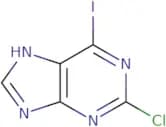
CAS:2-Chloro-6-iodo-9H-purine is an antiviral agent that inhibits the activity of a viral enzyme, thymidine kinase. This drug binds to the active site of this enzyme, preventing it from phosphorylating and thereby inactivating dTTP (a nucleotide precursor) to dTMP (a nucleotide product). 2-Chloro-6-iodo-9H-purine is not used clinically because it has toxic side effects such as hepatotoxicity and myelosuppression. However, this drug has been used in the past for research purposes and in animal studies.
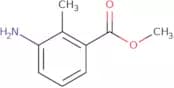
Fórmula:C5H2ClIN4Pureza:Min. 95%Peso molecular:280.45 g/molMethyl 3-amino-2-methylbenzoate
CAS:Methyl 3-amino-2-methylbenzoate is a chloroformate that can participate in coordination reactions. It has shown potent antitumor activity and is an efficient method for the synthesis of pyridinecarboxylic acids. This compound has been shown to be an inhibitor of tumor cell lines and to have a skeleton with potential antitumor activity. It also has potent antibacterial activity against gram-positive bacteria and methoxy groups that are known to be important for DNA binding. Methyl 3-amino-2-methylbenzoate also possesses a phenyl ring and diterpenes that make it a potential anticancer drug candidate.Fórmula:C9H11NO2Pureza:Min. 95%Peso molecular:165.19 g/mol


![Benzo[b]thiophene-3-sulfonyl Chloride](/_next/image/?url=https%3A%2Fstatic.cymitquimica.com%2Fproducts%2F3D%2Fthumb-webp%2FTAA49487.webp&w=3840&q=75)


![2H,3H,4H-Pyrido[4,3-b][1,4]thiazin-3-one](/_next/image/?url=https%3A%2Fstatic.cymitquimica.com%2Fproducts%2F3D%2Fthumb-webp%2FTAA50486.webp&w=3840&q=75)

![2,2-Dimethyl-3-[(4-methylbenzenesulfonyl)oxy]propanal](/_next/image/?url=https%3A%2Fstatic.cymitquimica.com%2Fproducts%2F3D%2Fthumb-webp%2FTAA51619.webp&w=3840&q=75)

![2-[(4-Bromophenyl)sulfanyl]-2-methylpropanoic acid](/_next/image/?url=https%3A%2Fstatic.cymitquimica.com%2Fproducts%2F3D%2Fthumb-webp%2FTAA52716.webp&w=3840&q=75)
![5-{[(4-Chlorophenyl)sulfanyl]methyl}-1H-1,2,3,4-tetrazole](/_next/image/?url=https%3A%2Fstatic.cymitquimica.com%2Fproducts%2F3D%2Fthumb-webp%2FTAA52731.webp&w=3840&q=75)
![Spiro[1,3-dioxolane-2,1'-[1H]inden]-3'(2'H)-one](/_next/image/?url=https%3A%2Fstatic.cymitquimica.com%2Fproducts%2F3D%2Fthumb-webp%2FTAA53993.webp&w=3840&q=75)