Building Blocks
Subcategorias de "Building Blocks"
- Ácidos Borónicos e Derivados de Ácido Borónico(5.778 produtos)
- Building Blocks Quirais(1.243 produtos)
- Building Blocks Hidrocarbonetos(6.098 produtos)
- Building Blocks orgânicos(61.042 produtos)
Foram encontrados 204339 produtos de "Building Blocks"
N-(4-Aminophenyl)-N-methyl-2-(4-methylpiperazin-1-yl)acetamide
CAS:N-(4-Aminophenyl)-N-methyl-2-(4-methylpiperazin-1-yl)acetamide is an environmental and industrial chemical that is used as a formate, benzoate, and methyl benzoate intermediate. It reacts with nitric acid to form N-(4-aminophenyl)-N-methyl-2-(4-nitrophenoxy)acetamide (NPA). NPA has been shown to have antiangiogenic properties. NPA inhibits the proliferation of endothelial cells by interfering with the cell cycle and inducing apoptosis.Fórmula:C14H22N4OPureza:Min. 95%Peso molecular:262.35 g/mol3-Methoxy-benzenesulfonic acid
CAS:Versatile small molecule scaffold
Fórmula:C7H8O4SPureza:Min. 95%Peso molecular:188.2 g/molSpiro[3.3]heptane-2,6-dicarboxylic acid, 2,6-dimethyl ester
CAS:Versatile small molecule scaffoldFórmula:C11H16O4Pureza:Min. 95%Peso molecular:212.25 g/mol2-Azaspiro[3.3]heptane-2,6-dicarboxylic acid 2-tert-butyl ester
CAS:Versatile small molecule scaffoldFórmula:C12H19NO4Pureza:Min. 95%Peso molecular:241.28 g/mol8-chloro-3H,4H-pyrido[3,4-d]pyrimidin-4-one
CAS:Versatile small molecule scaffold
Fórmula:C7H4N3OClPureza:Min. 95%Peso molecular:181.57 g/mol4-Bromo-2-cyclopropylpyridine
CAS:Versatile small molecule scaffold
Fórmula:C8H8NBrPureza:Min. 95%Peso molecular:198.05 g/molTert-Butyl 2-(Trifluoromethyl)Piperazine-1-Carboxylate
CAS:Versatile small molecule scaffoldFórmula:C10H17N2O2F3Pureza:Min. 95%Peso molecular:254.24 g/moltert-Butyl 3-(trifluoromethyl)piperazine-1-carboxylate
CAS:Versatile small molecule scaffold
Fórmula:C10H17F3N2O2Pureza:Min. 95%Peso molecular:254.25 g/mol8-Chloroisoquinolin-5-amine
CAS:Versatile small molecule scaffold
Fórmula:C9H7ClN2Pureza:Min. 95%Peso molecular:178.62 g/mol1-Bromo-4-isobutylbenzene
CAS:1-Bromo-4-isobutylbenzene is a ketone that can be synthesized by the reaction of benzene with acetonitrile in the presence of a catalytic amount of oxone. The synthesis is an example of an arylation, which is the addition of an aromatic group to another molecule. It has been shown experimentally that 1-bromo-4-isobutylbenzene undergoes a transition from the x-ray structure analysis to the crystal x-ray structure when dissolved in acetonitrile and heated to 100°C. The final product is then purified by recrystallization with ethylene as a solvent.Fórmula:C10H13BrPureza:Min. 95%Peso molecular:213.11 g/mol2,2-Dipropylpentanoic acid
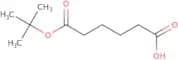
CAS:2,2-Dipropylpentanoic acid is a white crystalline solid with a melting point of -51°C. It has a hydroxyl group and an ester linkage. The chemical formula is CH3(CH2)3COOC3H7. It has a molecular weight of 182.27 g/mol and a density of 1.071 g/cm3. It is soluble in organic solvents such as chloroform, ether, benzene, acetone, and carbon tetrachloride but insoluble in water. 2,2-Dipropylpentanoic acid can be used as a catalyst for the synthesis of polymers from monocarboxylic acids and chloride or magnesium halides. This compound also has antidepressant activity by inhibiting the reuptake of serotonin from the synapse into the presynaptic neuron.Fórmula:C11H22O2Pureza:Min. 95%Peso molecular:186.29 g/mol6-(tert-butoxy)-6-oxohexanoic acid
CAS:Versatile small molecule scaffold
Fórmula:C10H18O4Pureza:Min. 95%Peso molecular:202.2 g/mol5-bromo-6-methoxy-1h-indole
CAS:5-bromo-6-methoxy-1H-indole is a synthetic, nonsteroidal compound that is structurally related to prednisolone. It has been shown to induce the synthesis of collagen by stimulating fibroblasts in culture. This drug also has anti-inflammatory and modulating effects on s1p receptors, which may be due to its ability to inhibit the production of proinflammatory cytokines such as tumor necrosis factor alpha (TNFα). 5-bromo-6-methoxy-1H-indole is a potent inhibitor of acid methyl esters, which are involved in inflammation and tissue destruction. 5-bromo-6-methoxy-1H--indole also has an effect on dermal cells, which may be due to its ability to inhibit the production of matrix metalloproteinase enzymes. This drug can also cause atrophy in granuloma cells and prevent the development of inflammatory
Fórmula:C9H8BrNOPureza:Min. 95%Peso molecular:226.07 g/molMethyl 2-(chloromethyl)nicotinate
CAS:Methyl 2-(chloromethyl)nicotinate is an organic compound that belongs to the class of esters. It is a reaction product of methyl 3-hydroxybenzoate and nitrous acid. This compound has antimicrobial activity and can be used to treat bacterial infections. Methyl 2-(chloromethyl)nicotinate has been shown to inhibit the growth of various bacteria, including methicillin-resistant Staphylococcus aureus (MRSA), Escherichia coli, Klebsiella pneumoniae, Pseudomonas aeruginosa, Salmonella typhi, and Salmonella typhimurium. The cyano group in this molecule may be responsible for its antibacterial activity.
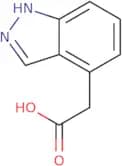
The efficiency of methyl 2-(chloromethyl)nicotinate varies with different types of bacteria. For example, it was more effective against MRSA than against Escherichia coli or Klebsiella pneumoniaeFórmula:C8H8ClNO2Pureza:Min. 95%Peso molecular:185.61 g/mol(1H-Indazol-4-yl)acetic acid
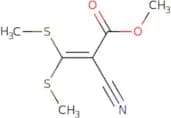
CAS:(1H-Indazol-4-yl)acetic acid is a cation that has been shown to have pharmacological activity. It is hydrolyzable and is used as an anti-inflammatory agent. This compound also decarboxylates and hydrolyzes, which are processes that produce carboxyl and fluoro groups. (1H-Indazol-4-yl)acetic acid has been shown to be an anti-inflammatory agent, with effects against inflammation in the central nervous system. This drug also inhibits the production of inflammatory cytokines, including tumor necrosis factor alpha (TNFα), interleukin 1β (IL1β), and IL6.Fórmula:C9H8N2O2Pureza:Min. 95%Peso molecular:176.17 g/molMethyl 3,3-bis(methylthio)-2-cyanoacrylate
CAS:Methyl 3,3-bis(methylthio)-2-cyanoacrylate is a diphenyl ether that is used as a bactericide. It has been shown to be effective against both Gram-positive and Gram-negative bacteria. Methyl 3,3-bis(methylthio)-2-cyanoacrylate is synthesized by the reaction of malonate with dimethylamine chloride in the presence of hydrochloric acid salt in order to produce chloride ions. The reaction is then heated, which causes the methyl 3,3-bis(methylthio)-2-cyanoacrylate to form. This compound is soluble in organic solvents such as formic acid and can be purified by recrystallization or by distillation.Fórmula:C7H9NO2S2Pureza:Min. 95%Peso molecular:203.28 g/molTimonacic
CAS:Timonacic is an analog of nicotinamide that has been shown to be an effective inhibitor of energy metabolism in the mitochondria. It has antioxidative properties and can protect against the development of heart disease by inhibiting the production of reactive oxygen species. Timonacic's anti-inflammatory properties may be due to its ability to inhibit prostaglandin synthesis. It also has a high affinity for fatty acids, which may contribute to its inhibitory effects on lipid peroxidation. This drug has a carboxy terminal and is used as a sodium salt, which may play a role in its enzyme inhibition activity. Timonacic inhibits the activities of enzymes such as carnitine acetyltransferase and pyruvate dehydrogenase kinase, which are involved in the biosynthesis of fatty acids. The intramolecular hydrogen bonds formed with timonacic may contribute to its inhibitory effect on these enzymes.
Fórmula:C4H7NO2SPureza:Min. 95%Peso molecular:133.17 g/moltert-butyl 2,5-diazabicyclo[4.1.0]heptane-2-carboxylate
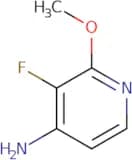
CAS:Versatile small molecule scaffoldFórmula:C10H18N2O2Pureza:Min. 95%Peso molecular:198.3 g/mol3-Fluoro-2-methoxypyridin-4-amine
CAS:Versatile small molecule scaffoldFórmula:C6H7FN2OPureza:Min. 95%Peso molecular:142.13 g/mol6-Hydroxyquinoline-4-carboxylic acid
CAS:Versatile small molecule scaffoldFórmula:C10H7NO3Pureza:Min. 95%Peso molecular:189.17 g/mol


![Spiro[3.3]heptane-2,6-dicarboxylic acid, 2,6-dimethyl ester](/_next/image/?url=https%3A%2Fstatic.cymitquimica.com%2Fproducts%2F3D%2Fthumb-webp%2FMBA94279.webp&w=3840&q=75)
![2-Azaspiro[3.3]heptane-2,6-dicarboxylic acid 2-tert-butyl ester](/_next/image/?url=https%3A%2Fstatic.cymitquimica.com%2Fproducts%2F3D%2Fthumb-webp%2FLYB52653.webp&w=3840&q=75)
![8-chloro-3H,4H-pyrido[3,4-d]pyrimidin-4-one](/_next/image/?url=https%3A%2Fstatic.cymitquimica.com%2Fproducts%2F3D%2Fthumb-webp%2FJDA34113.webp&w=3840&q=75)





![tert-butyl 2,5-diazabicyclo[4.1.0]heptane-2-carboxylate](/_next/image/?url=https%3A%2Fstatic.cymitquimica.com%2Fproducts%2F3D%2Fthumb-webp%2FDZB67518.webp&w=3840&q=75)