Building Blocks
Subcategorias de "Building Blocks"
- Ácidos Borónicos e Derivados de Ácido Borónico(5.781 produtos)
- Building Blocks Quirais(1.242 produtos)
- Building Blocks Hidrocarbonetos(6.101 produtos)
- Building Blocks orgânicos(61.033 produtos)
Foram encontrados 205320 produtos de "Building Blocks"
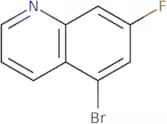
5-bromo-7-fluoroquinoline
CAS:Versatile small molecule scaffold
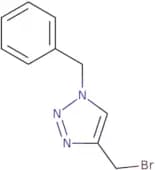
Fórmula:C9H5BrFNPureza:Min. 95%Peso molecular:226.05 g/mol1-Benzyl-4-(bromomethyl)-1H-1,2,3-triazole
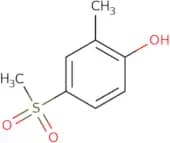
CAS:Versatile small molecule scaffoldFórmula:C10H10BrN3Pureza:Min. 95%Peso molecular:252.11 g/mol4-Methanesulfonyl-2-methylphenol
CAS:Versatile small molecule scaffold
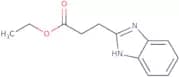
Fórmula:C8H10O3SPureza:Min. 95%Peso molecular:186.23 g/molEthyl 3-(1H-benzimidazol-2-yl)propanoate
CAS:Versatile small molecule scaffold
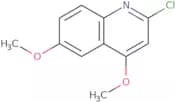
Fórmula:C12H14N2O2Pureza:Min. 95%Peso molecular:218.25 g/mol2-Chloro-4,6-dimethoxyquinoline
CAS:Versatile small molecule scaffold
Fórmula:C11H10ClNO2Pureza:Min. 95%Peso molecular:223.65 g/mol1-Methyl-3,4-dihydroquinoxalin-2(1H)-one
CAS:1-Methyl-3,4-dihydroquinoxalin-2(1H)-one (1MQ) is a stereoisomer of the azomethine compound. It is a cycloaddition product of 1,3-dipolar cycloadditions that can be used as a precursor for other compounds. It has been shown to react with aldehydes and form couplings or multicomponent coupling products. 1MQ has been shown to have oxidized properties and exhibit x-ray crystal analysis. This molecule was synthesized in the course of research on stereochemical properties of 2,5-disubstituted quinoxalines.
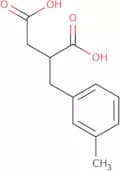
Fórmula:C9H10N2OPureza:Min. 95%Peso molecular:162.19 g/mol2-(3-Methylbenzyl)succinic acid
CAS:2-(3-Methylbenzyl)succinic acid is a sulfate metabolite that has been shown to regulate the activity of sulfate-reducing bacteria. It was first identified as a major metabolite in incubations with benzylsuccinic acid and xylene. The isomers of 2-(3-methylbenzyl)succinic acid are benzoate and hydroxyphthalide. The geochemical significance of this compound is not yet known, but it may signify the presence of microbial metabolism in the environment. The compound can be found at nanomolar concentrations in natural environments and has been shown to inhibit microbial growth by mechanisms that remain unclear.
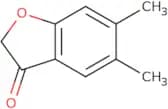
Fórmula:C12H14O4Pureza:Min. 95%Peso molecular:222.24 g/mol5,6-Dimethyl-2,3-dihydro-1-benzofuran-3-one
CAS:Versatile small molecule scaffold
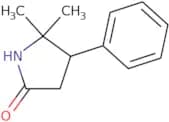
Fórmula:C10H10O2Pureza:Min. 95%Peso molecular:162.18 g/mol5,5-Dimethyl-4-phenylpyrrolidin-2-one
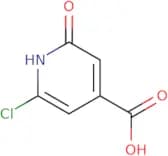
CAS:Versatile small molecule scaffoldFórmula:C12H15NOPureza:Min. 95%Peso molecular:189.25 g/mol6-chloro-2-oxo-1,2-dihydropyridine-4-carboxylic acid
CAS:6-Chloro-2-oxo-1,2-dihydropyridine-4-carboxylic acid (6CODPC) is a carboxylic acid that is an active ingredient in some fungicides. It has been shown to inhibit the growth of certain plant pathogens such as viruses and bacteria. 6CODPC binds to the enzyme ribonucleotide reductase, which is involved in DNA synthesis and replication, leading to the inhibition of RNA synthesis and protein synthesis. This leads to cell death by apoptosis. 6CODPC also inhibits the production of proteins in plants that are necessary for photosynthesis.
Fórmula:C6H4ClNO3Pureza:Min. 95%Peso molecular:173.6 g/mol1-Cyclopropyl-2,2-dimethylpropan-1-one
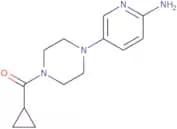
CAS:Versatile small molecule scaffoldFórmula:C8H14OPureza:Min. 95%Peso molecular:126.2 g/mol5-(4-Cyclopropanecarbonylpiperazin-1-yl)pyridin-2-amine
CAS:Versatile small molecule scaffoldFórmula:C13H18N4OPureza:Min. 95%Peso molecular:246.31 g/mol2-[(3,5-Dichlorophenoxy)methyl]oxirane
CAS:Versatile small molecule scaffold
Fórmula:C9H8Cl2O2Pureza:Min. 95%Peso molecular:219.06 g/mol3-Methyl-3H-[1,2,3]triazolo[4,5-d]pyrimidin-7-amine
CAS:3-Methyl-3H-[1,2,3]triazolo[4,5-d]pyrimidin-7-amine is a purine ligand that can be protonated at the N7 nitrogen. It has been shown to have biological properties such as anion binding and also shows strong dichroism spectra. The structure of 3-methyl-3H-[1,2,3]triazolo[4,5-d]pyrimidin-7-amine has been determined by X-ray crystallography and magnetic resonance spectroscopy. This ligand is not easily protonated in aqueous solution due to its high basicity. The protonation state of this ligand is sensitive to pH changes in the environment.
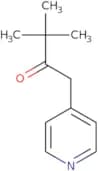
Fórmula:C5H6N6Pureza:Min. 95%Peso molecular:150.14 g/mol3,3-Dimethyl-1-(pyridin-4-yl)butan-2-one
CAS:Versatile small molecule scaffoldFórmula:C11H15NOPureza:Min. 95%Peso molecular:177.24 g/molN-(Azetidin-3-yl)methanesulphonamide hydrochloride
CAS:Versatile small molecule scaffold
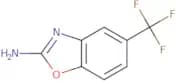
Fórmula:C4H11ClN2O2SPureza:Min. 95%Peso molecular:186.66 g/mol5-(Trifluoromethyl)-1,3-benzoxazol-2-amine
CAS:Versatile small molecule scaffold
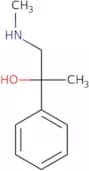
Fórmula:C8H5F3N2OPureza:Min. 95%Peso molecular:202.13 g/mol1-(Methylamino)-2-phenylpropan-2-ol
CAS:Versatile small molecule scaffold
Fórmula:C10H15NOPureza:Min. 95%Peso molecular:165.23 g/mol4-chloropyridine-2,6-diamine
CAS:4-Chloropyridine-2,6-diamine is a compound that contains nitrogen and carbon. It has been synthesized experimentally and the crystal structure has been determined by X-ray crystallography. This substance belongs to the class of heterocycles and it is a hydrogen bond acceptor. The crystal structure of 4-chloropyridine-2,6-diamine has been rationalized using experimental data. The electron density maps show that there are six moles of naphthalene for every mole of 4-chloropyridine-2,6-diamine in the crystal lattice.
4-Chloropyridine-2,6-diamine is an enthalpy donor because it donates its electrons to other substances. It also accepts hydrogen bonds from other substances. This substance can form supramolecular frameworks with pyridine and benzene molecules, which stabilizes the molecule's structure through covalFórmula:C5H6N3ClPureza:Min. 95%Peso molecular:143.57 g/molRef: 3D-GAA30900
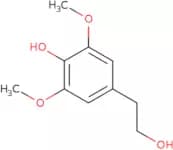
Produto descontinuado4-(2-Hydroxyethyl)-2,6-dimethoxyphenol
CAS:Produto Controlado4-(2-Hydroxyethyl)-2,6-dimethoxyphenol is a phenolic compound that can be extracted from the bark of the Indian tree Terminalia arjuna. The extract has been used in traditional medicine for centuries to treat diabetes and cancer. In vitro studies have shown that this extract inhibits the activity of viruses, including HIV, with a mechanism of action similar to that of indinavir. 4-(2-Hydroxyethyl)-2,6-dimethoxyphenol also has an antioxidant effect and stimulates the production of glutathione reductase and superoxide dismutase by cells in culture. 4-(2-Hydroxyethyl)-2,6-dimethoxyphenol is used as an herbal drug in India and research has found it to be hepatoprotective when administered orally to rats.
Fórmula:C10H14O4Pureza:Min. 95%Cor e Forma:PowderPeso molecular:198.22 g/mol



![2-[(3,5-Dichlorophenoxy)methyl]oxirane](/_next/image/?url=https%3A%2Fstatic.cymitquimica.com%2Fproducts%2F3D%2Fthumb-webp%2FKCA63337.webp&w=3840&q=75)
![3-Methyl-3H-[1,2,3]triazolo[4,5-d]pyrimidin-7-amine](/_next/image/?url=https%3A%2Fstatic.cymitquimica.com%2Fproducts%2F3D%2Fthumb-webp%2FGAA31255.webp&w=3840&q=75)