Building Blocks
Subcategorias de "Building Blocks"
- Ácidos Borónicos e Derivados de Ácido Borónico(5.780 produtos)
- Building Blocks Quirais(1.241 produtos)
- Building Blocks Hidrocarbonetos(6.100 produtos)
- Building Blocks orgânicos(61.023 produtos)
Foram encontrados 205289 produtos de "Building Blocks"
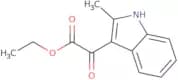
Ethyl 2-(2-methyl-1H-indol-3-yl)-2-oxoacetate
CAS:Versatile small molecule scaffold
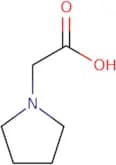
Fórmula:C13H13NO3Pureza:Min. 95%Peso molecular:231.25 g/molPyrrolidin-1-yl-acetic acid hydrochloride
CAS:Pyrrolidin-1-yl-acetic acid hydrochloride is a drug that inhibits the enzyme protease, which is involved in the replication of HIV. It also inhibits the enzyme piperazine, an essential cofactor for retroviral replication. Pyrrolidin-1-yl-acetic acid hydrochloride has been shown to inhibit insulin resistance and increase glucose uptake in animal models. This drug may be a potential treatment for diabetes mellitus type 2. The structural formula of this drug is shown below:Fórmula:C6H12ClNO2Pureza:Min. 95%Peso molecular:165.62 g/mol7-Chloro-2,2-dimethyl-2,3-dihydro-1-benzofuran
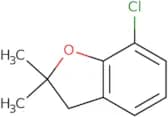
CAS:Versatile small molecule scaffold
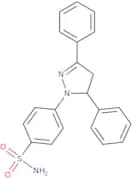
Fórmula:C10H11ClOPureza:Min. 95%Peso molecular:182.64 g/mol4-(3,5-Diphenyl-4,5-dihydro-1H-pyrazol-1-yl)benzenesulfonamide
CAS:Versatile small molecule scaffold
Fórmula:C21H19N3O2SPureza:Min. 95%Peso molecular:377.5 g/molRef: 3D-KAA17957
Produto descontinuado[4-(Cyanomethyl)phenyl]methanesulfonyl chloride
CAS:Versatile small molecule scaffold
Fórmula:C9H8ClNO2SPureza:Min. 95%Peso molecular:229.68 g/mol[1-(1-Ethyl-3-methyl-1H-pyrazol-4-yl)propyl]amine
CAS:Versatile small molecule scaffold
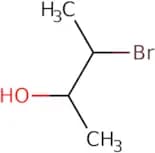
Fórmula:C9H17N3Pureza:Min. 95%Peso molecular:167.25 g/mol3-Bromobutan-2-ol
CAS:3-Bromobutan-2-ol is an alcohol that is used as a chemical intermediate in the preparation of bromohydrins, which are intermediates in the production of other organic compounds. 3-Bromobutan-2-ol can be prepared by catalytic asymmetric synthesis from 2-bromoethanol and dimethylamine. The stereoisomers of 3-bromobutan-2-ol are optically active and can be separated by column chromatography or recrystallization. The synthetic route for this compound involves esterification with formic acid followed by hydrolysis to give 3-bromobutanone, which then undergoes a dehydration reaction with boron tribromide to produce 3-bromobutan-2-ol. This product has been shown to have antifungal properties against Candida albicans, Coccidioides immitis, and Aspergillus fumigatus
Fórmula:C4H9BrOPureza:Min. 95%Peso molecular:153.02 g/molRef: 3D-FAA79880
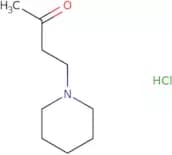
Produto descontinuado4-(Piperidin-1-yl)butan-2-one hydrochloride
CAS:Versatile small molecule scaffold
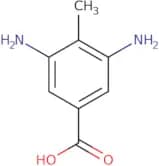
Fórmula:C9H18ClNOPureza:Min. 95%Peso molecular:191.7 g/mol3,5-Diamino-4-methylbenzoic acid
CAS:3,5-Diamino-4-methylbenzoic acid is a chemical compound with the formula C6H3N3O2. It is an organic nitrite that reacts readily with nucleophiles such as alcohols, phenols, and amines to form the corresponding N-substituted benzoic acid. The reaction proceeds via a two step process in which 3,5-diamino-4-methylbenzoic acid first reacts with sodium nitrite to produce 3,5-diamino-4-nitrobenzoic acid followed by hydrolysis of this intermediate to form the desired product. Nitrite salts are used in the food industry as preservatives and antimicrobials. They can be applied as a gas or dissolved in water. Nitrite salts are also used for wastewater treatment and for environmental remediation.
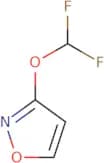
Fórmula:C8H10N2O2Pureza:Min. 95%Peso molecular:166.18 g/mol3-(Difluoromethoxy)-1,2-oxazole
CAS:Versatile small molecule scaffold
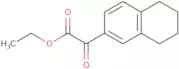
Fórmula:C4H3F2NO2Pureza:Min. 95%Peso molecular:135.07 g/molEthyl 2-oxo-2-(5,6,7,8-tetrahydronaphthalen-2-yl)acetate
CAS:Versatile small molecule scaffold
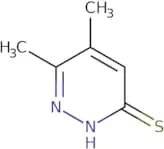
Fórmula:C14H16O3Pureza:Min. 95%Peso molecular:232.27 g/mol5,6-Dimethylpyridazine-3-thiol
CAS:Versatile small molecule scaffold
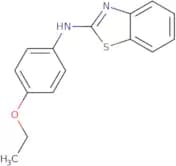
Fórmula:C6H8N2SPureza:Min. 95%Peso molecular:140.2 g/molBenzothiazol-2-yl-(4-ethoxy-phenyl)-amine
CAS:Benzothiazol-2-yl-(4-ethoxy-phenyl)-amine is a compound that has been shown to be active against solid tumours and metastases. It has been shown to inhibit phosphatase activity in the presence of monoclonal antibodies, which is an indicator for cancerous cells. Benzothiazol-2-yl-(4-ethoxy-phenyl)-amine may be used as a diagnostic marker for determining the presence of cancer cells in patients with infectious diseases, such as HIV/AIDS. This compound has also been shown to inhibit phosphatase activity in the presence of monoclonal antibodies, which is an indicator for cancerous cells. Benzothiazol-2-yl-(4-ethoxy-phenyl)-amine may be used as a diagnostic marker for determining the presence of cancer cells in patients with infectious diseases, such as HIV/AIDS.Fórmula:C15H14N2OSPureza:Min. 95%Peso molecular:270.4 g/molN-(1H-1,3-Benzodiazol-2-ylmethyl)benzamide
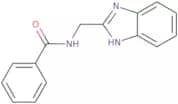
CAS:Versatile small molecule scaffold
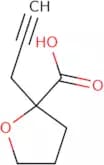
Fórmula:C15H13N3OPureza:Min. 95%Peso molecular:251.28 g/mol2-(Prop-2-yn-1-yl)oxolane-2-carboxylic acid
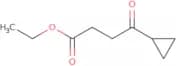
CAS:Versatile small molecule scaffoldFórmula:C8H10O3Pureza:Min. 95%Peso molecular:154.16 g/molEthyl 4-cyclopropyl-4-oxobutanoate
CAS:Versatile small molecule scaffold
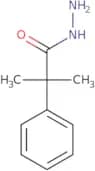
Fórmula:C9H14O3Pureza:Min. 95%Peso molecular:170.21 g/mol2-Methyl-2-phenylpropanehydrazide
CAS:Versatile small molecule scaffold
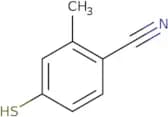
Fórmula:C10H14N2OPureza:Min. 95%Peso molecular:178.23 g/mol2-Methyl-4-sulfanylbenzonitrile
CAS:2-Methyl-4-sulfanylbenzonitrile is a chemical used for the preparation of DNA probes. It is an influential reagent in sample preparation, hybridization, and detection techniques. 2-Methyl-4-sulfanylbenzonitrile is also used to detect viruses and caffeine levels in humans' blood samples. This chemical has been shown to be stable at high temperatures and pH levels. It has been used as a solid phase microextraction technique to extract chemicals from plants, such as essential oils from mint leaves.
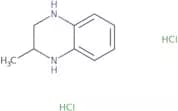
Fórmula:C8H7NSPureza:Min. 95%Peso molecular:149.21 g/mol2-Methyl-1,2,3,4-tetrahydroquinoxaline
CAS:2-Methyl-1,2,3,4-tetrahydroquinoxaline is an enantioselective antioxidant that has been shown to have a chiral conformation. It has also been found to be a catalyst in the reductive elimination of hydrochloric acid. This compound can be hydrogenated by catalytic hydrogenation and this reaction produces tetralin as a by-product. 2-Methyl-1,2,3,4-tetrahydroquinoxaline is used in research because it contains a methyl group and amines that are important for biological functions.
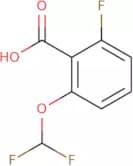
Fórmula:C9H12N2Pureza:Min. 95%Peso molecular:148.2 g/mol2-(Difluoromethoxy)-6-fluorobenzoic acid
CAS:Versatile small molecule scaffoldFórmula:C8H5F3O3Pureza:Min. 95%Peso molecular:206.12 g/mol

![[4-(Cyanomethyl)phenyl]methanesulfonyl chloride](/_next/image/?url=https%3A%2Fstatic.cymitquimica.com%2Fproducts%2F3D%2Fthumb-webp%2FJBD31318.webp&w=3840&q=75)
![[1-(1-Ethyl-3-methyl-1H-pyrazol-4-yl)propyl]amine](/_next/image/?url=https%3A%2Fstatic.cymitquimica.com%2Fproducts%2F3D%2Fthumb-webp%2FHQB46021.webp&w=3840&q=75)