Building Blocks
Subcategorias de "Building Blocks"
- Ácidos Borónicos e Derivados de Ácido Borónico(5.778 produtos)
- Building Blocks Quirais(1.243 produtos)
- Building Blocks Hidrocarbonetos(6.098 produtos)
- Building Blocks orgânicos(61.038 produtos)
Foram encontrados 205191 produtos de "Building Blocks"
Methyl 3-oxocyclohexanecarboxylate
CAS:Methyl 3-oxocyclohexanecarboxylate is a chiral molecule that belongs to the class of β-unsaturated ketones. It has been shown to interact with enzymes from horse liver, dehydrogenase and carbanion. Methyl 3-oxocyclohexanecarboxylate is unreactive under most conditions and does not react with other molecules. The compound can be used as a starting material for the synthesis of olefinic compounds.Fórmula:C8H12O3Pureza:Min. 95%Peso molecular:156.18 g/molMethyl 1-methyl-4-oxocyclohexanecarboxylate
CAS:Versatile small molecule scaffoldFórmula:C9H14O3Pureza:Min. 95%Peso molecular:170.21 g/mol2-Azaspiro[3.3]heptane-2,6-dicarboxylic acid 2-tert-butyl ester
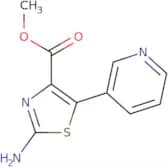
CAS:Versatile small molecule scaffoldFórmula:C12H19NO4Pureza:Min. 95%Peso molecular:241.28 g/molMethyl 2-amino-5-pyridin-3-yl-1,3-thiazole-4-carboxylate
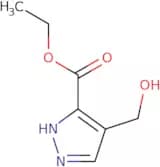
CAS:Versatile small molecule scaffoldFórmula:C10H9N3O2SPureza:Min. 95%Peso molecular:235.26 g/molEthyl 4-(hydroxymethyl)-1H-pyrazole-3-carboxylate
CAS:Versatile small molecule scaffoldFórmula:C7H10N2O3Pureza:Min. 95%Peso molecular:170.17 g/mol2-(Bromomethyl)-6-fluorobenzonitrile
CAS:Versatile small molecule scaffoldFórmula:C8H5BrFNPureza:Min. 95%Peso molecular:214.04 g/mol3-chloro-4-cyanobenzoic acid
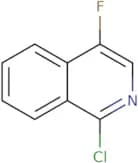
CAS:Versatile small molecule scaffoldFórmula:C8H4ClNO2Pureza:Min. 95%Peso molecular:181.58 g/mol1-chloro-4-fluoroisoquinoline
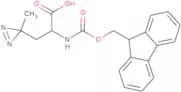
CAS:1-chloro-4-fluoroisoquinoline is a chlorinating agent that has been used as a synthetic method for the synthesis of oxychloride. It is typically used in the presence of palladium catalyst, in the presence of phosphorus and under reductive conditions. The chlorination reaction is initiated by addition of hydrochloric acid or phosphorous oxychloride. The 1-hydroxyisoquinoline reacts with phosphorus to form a chloroformate, which reacts with fluorine gas to produce an intermediate chlorofluorinate. This intermediate then reacts with chlorine gas in the presence of palladium catalyst to generate the desired product, 1-chloro-4-fluoroisoquinoline.Fórmula:C9H5ClFNPureza:Min. 95%Peso molecular:181.59 g/molFmoc-L-photo-leucine
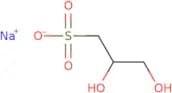
CAS:Versatile small molecule scaffoldFórmula:C20H19N3O4Pureza:Min. 95%Peso molecular:365.4 g/molSodium 2,3-dihydroxypropane-1-sulfonate
CAS:Sodium 2,3-dihydroxypropane-1-sulfonate is a granular detergent that can be used in the production of heavy duty liquid and solid granules. It is an anionic surfactant with a sulfonate group that has a granular consistency. This detergent is often used as a wetting agent in detergents and as a dispersing agent in paints, dyes, and pharmaceuticals. Sodium 2,3-dihydroxypropane-1-sulfonate has been shown to be effective at removing particulate matter from water and can also be used as a stabilizer for other surfactants during manufacturing.
Fórmula:C3H7NaO5SPureza:Min. 95%Peso molecular:178.14 g/mol4-Bromo-2-fluoropyrimidine
CAS:Versatile small molecule scaffold
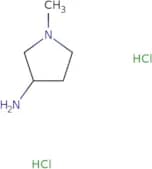
Fórmula:C4H2BrFN2Pureza:Min. 95%Peso molecular:176.97 g/mol1-Methylpyrrolidin-3-amine dihydrochloride
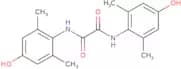
CAS:Versatile small molecule scaffoldFórmula:C5H12N2·2HClPureza:Min. 95%Peso molecular:173.09 g/molN1,N2-Bis(4-hydroxy-2,6-dimethylphenyl)ethanediamide
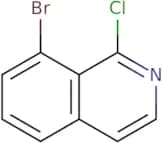
CAS:Versatile small molecule scaffoldFórmula:C18H20N2O4Pureza:Min. 95%Peso molecular:328.4 g/mol8-Bromo-1-chloroisoquinoline
CAS:Versatile small molecule scaffold
Fórmula:C9H5BrClNPureza:Min. 95%Peso molecular:242.5 g/mol5-Iodo-2-methylphenol
CAS:Versatile small molecule scaffoldFórmula:C7H7IOPureza:Min. 95%Peso molecular:234.03 g/mol1,4-Cubanedicarboxylic acid
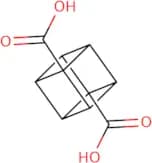
CAS:1,4-Cubanedicarboxylic acid is an organic compound that is a diacid. It has been shown to be an inhibitor of chloride secretion in the intestine, and can also decrease the rate at which hydrogen ions are released into the intestinal lumen. 1,4-Cubanedicarboxylic acid is also a cross-linking agent that can be used in organic solvents for large-scale synthesis. The optical properties of 1,4-cubanedicarboxylic acid have been studied using FTIR spectroscopy. This agent has been found to react with intramolecular hydrogen to form a six membered ring.Fórmula:C10H8O4Pureza:Min. 95%Peso molecular:192.17 g/mol2-Chloro-2-(chlorodifluoromethoxy)-1,1,1-trifluoroethane
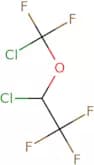
CAS:2-Chloro-2-(chlorodifluoromethoxy)-1,1,1-trifluoroethane (HFC-152a) is a chemical compound that belongs to the group of chlorofluorocarbons. It has been used as a refrigerant and aerosol propellant. HFC-152a is an azeotrope with methyl ethyl ketone and ethyl ketone. It has also been reported to have properties as an ether, acetone, and difluoromethyl.
Fórmula:C3HCl2F5OPureza:Min. 95%Peso molecular:218.94 g/mol(S)-2-Bromobutyric acid
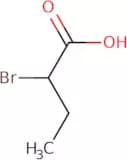
CAS:(S)-2-Bromobutyric acid is a chiral compound. It is an enantiomer of the biologically inactive (R)-2-bromobutyric acid. The (S)-enantiomer has been shown to exhibit biological activity, with a kinetic and detectable activity that are similar to those of the parent molecule. This compound can be used as a precursor for pharmaceuticals, such as antibiotics, which would be useful in cases where bacteria have developed resistance to existing antibiotics. The dehalogenase enzyme catalyzes the hydrolysis of halogenated aromatic compounds in a way that produces an alcohol and hydrogen bromide. This reaction can be detected by changes in the chemical properties of the environment or by detecting changes in the optical rotation or fluorescence of the product.Fórmula:C4H7BrO2Pureza:Min. 95%Peso molecular:167 g/molMethyl 4-fluorothiophene-2-carboxylate
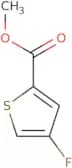
CAS:Methyl 4-fluorothiophene-2-carboxylate is a fluorinated organic compound that is used as a model compound in polymer chemistry. It has been used to synthesize polymers with stepwise fluorination and diketopyrrolopyrrole moieties. This molecule also has optoelectronic properties and can be converted to a conjugated, monofluorinated, or difluorinated form by the addition of electron-withdrawing groups such as nitro or cyano groups. Methyl 4-fluorothiophene-2-carboxylate is an acceptor for electron transfer reactions.Fórmula:C6H5FO2SPureza:Min. 95%Peso molecular:160.16 g/mol1,3,5,7-Tetrabromoadamantane
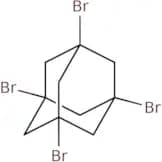
CAS:1,3,5,7-Tetrabromoadamantane is a molecule that has been synthesized and introduced as a mediator to introduce oxidants. The introduction of the oxidant is mediated by 1,3,5,7-tetrabromoadamantane. This molecule has been shown to be synthesized in two steps from hexamethylenetetramine (HMT) and iodomethane. The synthesis of this molecule can also be achieved by reacting synthons such as tetraphenylmethane with hydrochloric acid. 1,3,5,7-Tetrabromoadamantane is an equivalence mediator because it can mediate a redox reaction in which the oxidizing agent is reduced and the reducing agent is oxidized.Fórmula:C10H12Br4Pureza:Min. 95%Peso molecular:451.82 g/mol


![2-Azaspiro[3.3]heptane-2,6-dicarboxylic acid 2-tert-butyl ester](/_next/image/?url=https%3A%2Fstatic.cymitquimica.com%2Fproducts%2F3D%2Fthumb-webp%2FLYB52653.webp&w=3840&q=75)