


Building Blocks
Subcategorias de "Building Blocks"
- Ácidos Borónicos e Derivados de Ácido Borónico(5.786 produtos)
- Building Blocks Quirais(1.246 produtos)
- Building Blocks Hidrocarbonetos(6.107 produtos)
- Building Blocks orgânicos(61.080 produtos)
Foram encontrados 205478 produtos de "Building Blocks"
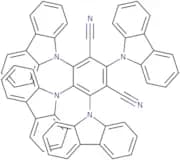
2,4,5,6-Tetra(9H-carbazol-9-yl)isophthalonitrile
CAS:2,4,5,6-Tetra(9H-carbazol-9-yl)isophthalonitrile is a redox molecule that emits light when excited by an electron or photon. It is used in organic light emitting devices (OLEDs) as the emissive material. This compound has been shown to have low chemical stability and limited transport properties. Its efficiency can be improved by increasing the concentration of the molecule. Activated 2,4,5,6-tetra(9H-carbazol-9-yl)isophthalonitrile emits a bright red orange emission with a maximum at 569 nm and it is activated by electron transfer from an electrode. 2,4,5,6-Tetra(9H-carbazol-9-yl)isophthalonitrile has been shown to emit blue light when excited by UV light in the presence of oxygen as an oxidant.Fórmula:C56H32N6Pureza:Min. 98 Area-%Cor e Forma:PowderPeso molecular:788.89 g/mol5-{2-Ethoxy-5-[(4-methylpiperazin-1-yl)sulfonyl]phenyl}-1-methyl-3-(2-methylpropyl)-1H,6H,7H-pyrazolo[4,3-d]pyrimidin-7-one
CAS:Tadalafil is a synthetic drug that is used as a treatment for erectile dysfunction. It works by inhibiting the PDE5 enzyme, which is responsible for breaking down cGMP. Tadalafil has been shown to be effective in the treatment of male erectile dysfunction and pulmonary hypertension, with few side effects. This drug is taken orally, with a meal or without one, and can be administered with or without food. To improve absorption, tadalafil should be taken at least 30 minutes before sexual activity. The dosage of tadalafil ranges from 2.5 to 20 mg, and it should not exceed 40 mg per day.
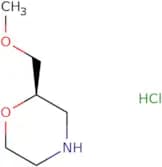
Fórmula:C23H32N6O4SPureza:Min. 95%Peso molecular:488.6 g/mol(R)-2-(Methoxymethyl)-morpholine hydrochloride
CAS:Versatile small molecule scaffoldFórmula:C6H14ClNO2Pureza:Min. 95%Peso molecular:167.63 g/molMethyl amino(2-chlorophenyl)acetate hydrochloride
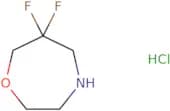
CAS:Versatile small molecule scaffoldFórmula:C9H11Cl2NO2Pureza:Min. 95%Peso molecular:236.1 g/mol6,6-difluoro-1,4-oxazepane hydrochloride
CAS:Versatile small molecule scaffoldFórmula:C5H10ClF2NOPureza:Min. 95%Peso molecular:173.6 g/mol5-(Methylamino)nicotinic acid
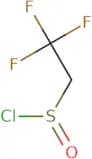
CAS:Versatile small molecule scaffoldFórmula:C7H8N2O2Pureza:Min. 95%Peso molecular:152.15 g/mol2,2,2-Trifluoroethanesulfinyl chloride
CAS:Please enquire for more information about 2,2,2-Trifluoroethanesulfinyl chloride including the price, delivery time and more detailed product information at the technical inquiry form on this page
Fórmula:C2H2ClF3OSPureza:Min. 95%Cor e Forma:Clear LiquidPeso molecular:166.55 g/molEthyl 4-methoxy-3-oxobutanoate
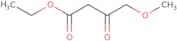
CAS:Versatile small molecule scaffold
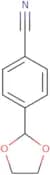
Fórmula:C7H12O4Pureza:Min. 95%Peso molecular:160.17 g/mol4-(1,3-Dioxolan-2-yl)benzonitrile
CAS:Versatile small molecule scaffoldFórmula:C10H9NO2Pureza:Min. 95%Peso molecular:175.18 g/mol4-Bromo-4-methyltetrahydropyran
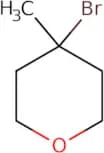
CAS:Versatile small molecule scaffold
Fórmula:C6H11BrOPureza:Min. 95%Peso molecular:179.06 g/mol3,3-Diethoxypropan-1-amine
CAS:3,3-Diethoxypropan-1-amine is a synthetic drug that reversibly inhibits the growth of bacteria. It has been shown to be effective against methicillin resistant strains of Staphylococcus aureus and Clostridium perfringens, with no detectable activity against acid-fast bacteria such as Mycobacterium tuberculosis or Mycobacterium avium complex. 3,3-Diethoxypropan-1-amine is a heterobifunctional compound that binds to epidermal growth factor with high affinity. 3,3-Diethoxypropan-1-amine can also bind to collagen and liposomal formulations, which may be useful for the treatment of wounds. This drug has been shown to inhibit δ opioid receptors in mice and rats, which is thought to contribute to its analgesic effects.Fórmula:C7H17NO2Pureza:Min. 95%Peso molecular:147.22 g/mol4-(Methylamino)benzene-1-sulfonamide
CAS:Versatile small molecule scaffold
Fórmula:C7H10N2O2SPureza:Min. 95%Peso molecular:186.23 g/mol(2S)-3-Hydroxy-2-phenylpropanoic acid
CAS:(2S)-3-Hydroxy-2-phenylpropanoic acid is an unlabelled, naturally occurring compound. It is the citric acid analog of L-phenylalanine. The structure of (2S)-3-Hydroxy-2-phenylpropanoic acid is a skeleton that consists of one hydroxyl group and one carboxylic acid group. The carboxylic acid group has a double bond in the alpha position to the carboxyl carbon, which gives this molecule an acidic character. The chloride ion is also present in this structure. This molecule can be synthesized by a kinetic reaction that involves fatty acids and brugmansia as catalysts. It can also be synthesized through a catalysed reaction using thionyl chloride as a catalyst.Fórmula:C9H10O3Pureza:Min. 95%Peso molecular:166.17 g/mol2-Hydroxy-3-(1-methylethyl)-butanedioic acid
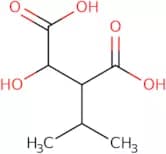
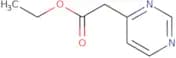
CAS:2-Hydroxy-3-(1-methylethyl)-butanedioic acid is an organic compound that is a metabolite of the amino acid methionine. It is formed by the oxidation of the methyl group on the 2 position in methionine. The protein subunits are expressed in liver cells and it has been shown to have antioxidant properties. The analytical methods used for this compound include LC-MS/MS, which separates it into its individual isomers. This method can be used to determine the purity of 2-hydroxy-3-(1-methylethyl)-butanedioic acid. The carbonyl group in this molecule makes it susceptible to steric interactions with other molecules, which may lead to it being oxidized or reduced. It has been found that 2-hydroxy-3-(1-methylethyl)-butanedioic acid shows thermophilic and enterocolitic properties.Fórmula:C7H12O5Pureza:Min. 95%Peso molecular:176.17 g/molEthyl 2-(pyrimidin-4-yl)acetate
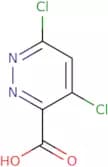
CAS:Versatile small molecule scaffoldFórmula:C8H10N2O2Pureza:Min. 95%Peso molecular:166.18 g/mol4,6-Dichloro-3-pyridazinecarboxylic acid
CAS:Versatile small molecule scaffold
Fórmula:C5H2Cl2N2O2Pureza:Min. 95%Peso molecular:192.99 g/mol5-bromo-3-methoxy-1h-pyrazole
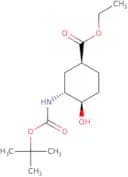
CAS:Versatile small molecule scaffoldFórmula:C4H5BrN2OPureza:Min. 95%Peso molecular:177 g/mol(1S,3R,4R)-3-(Boc-amino)-4-hydroxy-cyclohexanecarboxylic acid ethyl ester
CAS:Versatile small molecule scaffold
Fórmula:C14H25NO5Pureza:Min. 95%Peso molecular:287.35 g/mol2-[(6-Chloro-3,4-dihydro-3-methyl-2,4-dioxo-1(2H)-pyrimidinyl)methyl]-benzonitrile
CAS:2-[(6-Chloro-3,4-dihydro-3-methyl-2,4-dioxo-1(2H)-pyrimidinyl)methyl]-benzonitrile is an antibacterial agent that belongs to the group of nitro compounds. It inhibits bacterial growth by blocking the synthesis of proteins and DNA. 2-[(6-Chloro-3,4-dihydro-3-methyl-2,4-dioxo-1(2H)-pyrimidinyl)methyl]-benzonitrile has been shown to be active against a wide range of bacteria including Gram positive and Gram negative organisms. This compound also exhibits metal ion chelating properties and can be used for the removal of heavy metals from water. The square planar geometry of 2-[(6-Chloro-3,4-(dihydro)-3-(methyl)-2,4-(dioxo)-1Fórmula:C13H10ClN3O2Pureza:Min. 95%Peso molecular:275.69 g/mol3-(4-Hydroxyphenyl)hex-4-ynoic acid
CAS:Versatile small molecule scaffoldFórmula:C12H12O3Pureza:Min. 95%Peso molecular:204.22 g/mol

![5-{2-Ethoxy-5-[(4-methylpiperazin-1-yl)sulfonyl]phenyl}-1-methyl-3-(2-methylpropyl)-1H,6H,7H-pyraz…](/_next/image/?url=https%3A%2Fstatic.cymitquimica.com%2Fproducts%2F3D%2Fthumb-webp%2FRFC05395.webp&w=3840&q=75)





![2-[(6-Chloro-3,4-dihydro-3-methyl-2,4-dioxo-1(2H)-pyrimidinyl)methyl]-benzonitrile](/_next/image/?url=https%3A%2Fstatic.cymitquimica.com%2Fproducts%2F3D%2Fthumb-webp%2FQJB75896.webp&w=3840&q=75)
