Building Blocks
Subcategorias de "Building Blocks"
- Ácidos Borónicos e Derivados de Ácido Borónico(5.786 produtos)
- Building Blocks Quirais(1.246 produtos)
- Building Blocks Hidrocarbonetos(6.107 produtos)
- Building Blocks orgânicos(61.079 produtos)
Foram encontrados 205461 produtos de "Building Blocks"
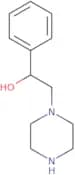
1-Phenyl-2-(piperazin-1-yl)ethan-1-ol
CAS:Versatile small molecule scaffold
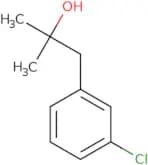
Fórmula:C12H18N2OPureza:Min. 95%Peso molecular:206.28 g/mol1-(3-Chlorophenyl)-2-methylpropan-2-ol
CAS:Versatile small molecule scaffold
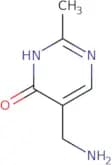
Fórmula:C10H13ClOPureza:Min. 95%Peso molecular:184.66 g/mol5-(Aminomethyl)-2-methylpyrimidin-4-ol
CAS:Versatile small molecule scaffold
Fórmula:C6H9N3OPureza:Min. 95%Peso molecular:139.16 g/molRef: 3D-BAA74972
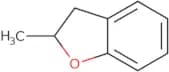
Produto descontinuado2-Methylcoumaran
CAS:2-Methylcoumaran is a functionalized coumarin. It is synthesized by the reaction of 2-methylcoumarin with an alkylating agent such as acetyl chloride or benzoyl chloride. This reaction involves the substitution of one of the hydroxyl groups in 2-methylcoumarin with an alkyl group, forming a new bond between the two carbon atoms. The resulting product has two new functional groups, which can be used in organic reactions.
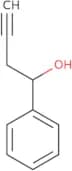
Fórmula:C9H10OPureza:Min. 95%Peso molecular:134.18 g/mol1-Phenylbut-3-yn-1-ol
CAS:1-Phenylbut-3-yn-1-ol is a monomer that belongs to the group of furyl compounds. It is one of the most important building blocks for organic chemistry. This compound has been used as a starting material in the synthesis of many other molecules, such as trisubstituted and asymmetric syntheses. The chloride ion can be substituted with other anions, such as dialkylamino or trisubstituted, to create different chemical structures. 1-Phenylbut-3-yn-1-ol can also be converted into biphenyl by adding phenoxy groups.
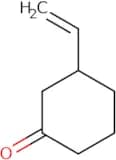
Fórmula:C10H10OPureza:Min. 95%Peso molecular:146.19 g/mol3-Ethenylcyclohexan-1-one
CAS:3-Ethenylcyclohexan-1-one is a palladium-catalyzed, tricyclic cyclization of diphosphine and decarboxylation. It is stereoselective and has been used in the synthesis of chiral, asymmetric lactones. 3-Ethenylcyclohexan-1-one has also been used to synthesize analogs with allylic substitution. 3-Ethenylcyclohexan-1-one is catalytic and can be used for intramolecular carbonate formation.
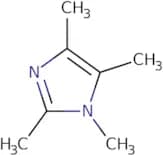
Fórmula:C8H12OPureza:Min. 95%Peso molecular:124.18 g/mol1,2,4,5-Tetramethylimidazole
CAS:1,2,4,5-Tetramethylimidazole is a synthetic organic compound that has been used to synthesize polymers. It is chemically stable in the presence of primary amines and other compounds that can form hydrogen bonds. 1,2,4,5-Tetramethylimidazole has been shown to be useful as a matrix polymer because it can undergo free radical polymerization with various functional groups. It can also react with anions such as nitrate or chloride ion to form ionic complexes. Thermally, 1,2,4,5-tetramethylimidazole decomposes into ammonia and methanol at temperatures above 200°C.
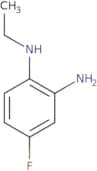
Fórmula:C7H12N2Pureza:Min. 95%Peso molecular:124.19 g/mol1-N-Ethyl-4-fluorobenzene-1,2-diamine
CAS:Versatile small molecule scaffold
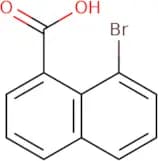
Fórmula:C8H11FN2Pureza:Min. 95%Peso molecular:154.18 g/mol8-bromonaphthalene-1-carboxylic acid
CAS:8-Bromonaphthalene-1-carboxylic acid is an organic compound with the chemical formula C6H4BrO2. It is a white solid that is soluble in water, methanol, and ethanol. 8-Bromonaphthalene-1-carboxylic acid can be synthesized by hydrolysis of ethyl esters of naphthalene with alkali or sulphonation. The yields are usually low (25%). The product can also be made via the diazotization of naphthalenes in the presence of sodium azide to form naphthamide, which then reacts with bromine to form 8-bromonaphthalene-1-carboxylic acid. 8-Bromonaphthalene carboxylic acid has been used as a nucleophile in organic synthesis for conjugate addition reactions.
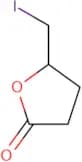
Fórmula:C11H7BrO2Pureza:Min. 95%Peso molecular:251.1 g/mol5-(Iodomethyl)oxolan-2-one
CAS:Versatile small molecule scaffold
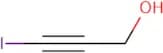
Fórmula:C5H7IO2Pureza:Min. 95%Peso molecular:226.01 g/mol3-Iodo-2-propynol
CAS:3-Iodo-2-propynol is a microbicidal agent, which belongs to the group of phenyl substituted alkylthio compounds. It is active against acarids and reactive with metal ions and organic solvents. 3-Iodo-2-propynol has been shown to have a high microbicidal activity against microorganisms such as Escherichia coli, Pseudomonas aeruginosa, and Staphylococcus aureus. The chemical structure of 3-iodo-2-propynol can be described as a chlorinated derivative of 2-propenal.
3-Iodo-2-propynol is an ester hydrochloride with the molecular formula CHClNO that was synthesized in 1885 by A. Wurtz and C. Perkin. The chemical properties of this compound are similar to those of phenylethyl alcohol (PEA).Fórmula:C3H3IOPureza:Min. 95%Peso molecular:181.96 g/molCyclododecanol
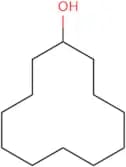
CAS:Cyclododecanol is a non-polar solvent that has been used in pharmaceutical preparations. Cyclododecanol is produced by the reaction of cyclododecanone with dodecanedioic acid, fatty acids, and hydrogen fluoride. The hydroxyl group of cyclododecanol reacts with piperazine to form a solid catalyst. This reaction solution can then be separated into two layers using a section: the lower layer contains cyclohexane and the upper layer contains cyclododecanol. Cyclododecanol has a hydrophobic effect due to its lack of polar functional groups.
Molecular Weight: 150
Boiling Point:
Melting Point: -156°C
Solubility: Soluble (0.1 g/100 mL) in water
Flash Point:
Vapor Pressure:
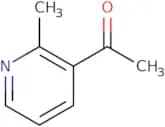
Density: 0.988 g/mL at 25°CFórmula:C12H24OPureza:Min. 95%Peso molecular:184.32 g/mol1-(2-Methylpyridin-3-yl)ethanone
CAS:1-(2-Methylpyridin-3-yl)ethanone is a ketone that can be synthesized using the reaction of methyl sulfone, benzyl sulfone, and sulphone. It has been shown to have anti-inflammatory properties by inhibiting prostaglandin synthesis and has been used as a nonsteroidal anti-inflammatory drug (NSAID). 1-(2-Methylpyridin-3-yl)ethanone has also been shown to have analgesic effects in mice. This synthetic compound may be useful in treating inflammation, pain, and fever.
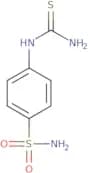
Fórmula:C8H9NOPureza:Min. 95%Peso molecular:135.16 g/mol4-Thioureidobenzenesulfonamide
CAS:4-Thioureidobenzenesulfonamide (4-TBS) is a biochemical that interacts with β-catenin and inhibits the proliferation of cardiac and cancer cells. 4-TBS has been shown to have anticancer activity in vitro, but clinical studies have not yet been conducted. 4-TBS has been shown to inhibit the growth of testicular cancer cells in whole-cell patch-clamp assays. 4-TBS also has an inhibition potential for heart disease, which may be due to its ability to reduce carbonic anhydrase 2 levels.
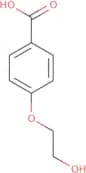
Fórmula:C7H9N3O2S2Pureza:Min. 95%Peso molecular:231.3 g/mol4-(2-Hydroxyethoxy)benzenecarboxylic acid
CAS:4-(2-Hydroxyethoxy)benzenecarboxylic acid is a polyester that has been shown to have heat resistance, high mechanical properties, and biologic activity. It is prepared by the polymerization of benzoic acid with titanium and a catalyst. This polyester can be used as a structural material for implants or as a polymerization catalyst for polycondensation reactions. 4-(2-Hydroxyethoxy)benzenecarboxylic acid has an aliphatic group with 2 aliphatic groups and an aliphatic substance. It also exhibits catalytic activity in promoting the formation of polyesters from diols and diacids.
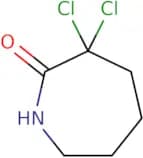
Fórmula:C9H10O4Pureza:Min. 95%Peso molecular:182.18 g/mol3,3-dichloroazepan-2-one
CAS:Versatile small molecule scaffold
Fórmula:C6H9NOCl2Pureza:Min. 95%Peso molecular:182.04 g/mol2-[2-(Dimethylamino)ethoxy]ethanol
CAS:Produto Controlado2-[2-(Dimethylamino)ethoxy]ethanol (DMAEE) is a chemical that belongs to the group of amines. It is used as a surfactant in the form of ethylene diamine or metal hydroxides and has been shown to have transport properties. DMAEE's protonated form has been shown to adsorb on metal oxides, such as iron oxide, aluminum oxide, and titanium dioxide. This adsorption mechanism may be due to its cationic nature. DMAEE also reacts with nitrous acid in water to form an intermediate which can be oxidized by atmospheric oxygen. The reaction mechanism for this oxidation is not yet well understood.
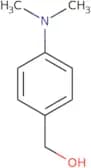
Fórmula:C6H15NO2Pureza:Min. 95%Cor e Forma:Clear LiquidPeso molecular:133.19 g/mol4-(Dimethylamino)benzyl Alcohol
CAS:4-(Dimethylamino)benzyl Alcohol is a chemical compound with the formula CH3(CH2)3NH2. It is used as an antibiotic drug and has been shown to have an average particle diameter of 80 nanometers, bulk polymerization, hydroxy group, and polymerization initiator. 4-(Dimethylamino)benzyl Alcohol has been shown to be effective against bacteria that are resistant to penicillin, ampicillin, erythromycin, or tetracycline. This chemical compound has FTIR spectra in the range of 400-4000 cm-1 and can be used for the synthesis of polymeric matrices in many applications.
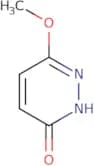
Fórmula:C9H13NOPureza:Min. 95%Peso molecular:151.21 g/mol6-Methoxy-2,3-dihydropyridazin-3-one
CAS:Versatile small molecule scaffold
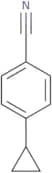
Fórmula:C5H6N2O2Pureza:Min. 95%Peso molecular:126.11 g/mol4-Cyclopropylbenzonitrile
CAS:4-Cyclopropylbenzonitrile is an electrophilic compound that reacts with a nucleophile to form a covalent bond. The reactivity of 4-cyclopropylbenzonitrile is activated by the addition of chloride. It can be used as a precursor to yield chloroform and other compounds, such as chloride and oxide. 4-Cyclopropylbenzonitrile can also react with sulfur or nitrosyl to form an electrophilic sulfur or nitrosyl compound.
Fórmula:C10H9NPureza:Min. 95%Peso molecular:143.19 g/mol

![2-[2-(Dimethylamino)ethoxy]ethanol](/_next/image/?url=https%3A%2Fstatic.cymitquimica.com%2Fproducts%2F3D%2Fthumb-webp%2FBAA70462.webp&w=3840&q=75)