Building Blocks
Subcategorias de "Building Blocks"
- Ácidos Borónicos e Derivados de Ácido Borónico(5.781 produtos)
- Building Blocks Quirais(1.242 produtos)
- Building Blocks Hidrocarbonetos(6.101 produtos)
- Building Blocks orgânicos(61.038 produtos)
Foram encontrados 205338 produtos de "Building Blocks"
2-[4-(Morpholin-4-yl)phenyl]acetic acid
CAS:Versatile small molecule scaffold
Fórmula:C12H15NO3Pureza:Min. 95%Peso molecular:221.25 g/molrac-(1R,2S)-2-(4-Methylphenyl)cyclopropan-1-amine hydrochloride
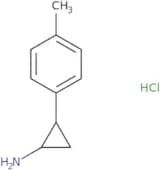
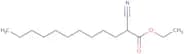
CAS:Versatile small molecule scaffoldFórmula:C10H14ClNPureza:Min. 95%Peso molecular:183.68 g/molEthyl 2-cyanododecanoate
CAS:Versatile small molecule scaffold
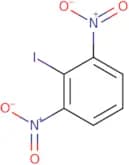
Fórmula:C15H27NO2Pureza:Min. 95%Peso molecular:253.38 g/mol2-Iodo-1,3-dinitrobenzene
CAS:Versatile small molecule scaffold
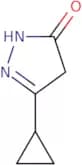
Fórmula:C6H3IN2O4Pureza:Min. 95%Peso molecular:294 g/mol3-Cyclopropyl-4,5-dihydro-1H-pyrazol-5-one
CAS:Versatile small molecule scaffold
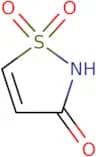
Fórmula:C6H8N2OPureza:Min. 95%Peso molecular:124.14 g/mol3(2H)-Isothiazolone 1,1-dioxide
CAS:Versatile small molecule scaffold
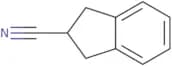
Fórmula:C3H3NO3SPureza:Min. 95%Peso molecular:133.13 g/mol2,3-Dihydro-1H-indene-2-carbonitrile
CAS:2,3-Dihydro-1H-indene-2-carbonitrile is a chemical compound that is used to synthesize enantiopure naphthalenes. It reacts with benzylpiperidine in the presence of sodium methoxide and potassium carbonate in a kinetic, stereoselective manner to form a 2,3-dihydro-1H-indene derivative. The compound can also be decyanated with dichromate to yield an olefinic product. The 2,3-dihydro-1H-indene derivative can be converted into its corresponding indane by catalyzed hydrogenation or stereochemical means through the use of dichroism spectroscopy.
Fórmula:C10H9NPureza:Min. 95%Peso molecular:143.18 g/mol5-(4-Chlorophenyl)-4-(2-methoxyethyl)-4H-1,2,4-triazole-3-thiol
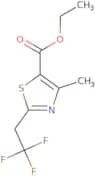
CAS:Versatile small molecule scaffoldFórmula:C11H12ClN3OSPureza:Min. 95%Peso molecular:269.75 g/molEthyl 4-methyl-2-(2,2,2-trifluoroethyl)-1,3-thiazole-5-carboxylate
CAS:Versatile small molecule scaffoldFórmula:C9H10F3NO2SPureza:Min. 95%Peso molecular:253.24 g/mol3-Phenyl-2-azaspiro[3.4]octan-1-one
CAS:Versatile small molecule scaffold
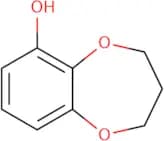
Fórmula:C13H15NOPureza:Min. 95%Peso molecular:201.26 g/mol3,4-Dihydro-2H-1,5-benzodioxepin-6-ol
CAS:Versatile small molecule scaffold
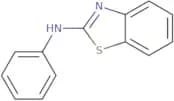
Fórmula:C9H10O3Pureza:Min. 95%Peso molecular:166.17 g/molN-Phenyl-1,3-benzothiazol-2-amine
CAS:N-Phenyl-1,3-benzothiazol-2-amine is a synthetic aromatic compound that has been used as an antiviral agent. It inhibits the replication of RNA by binding to the carbon disulphide group in the ribose moiety of nucleosides. This prevents formation of the helix structure and stops synthesis of viral DNA. N-Phenyl-1,3-benzothiazol-2-amine is also active against influenza A virus and some other viruses. The molecular descriptors for this compound are nitrogen atoms (N), stabilization (S), cb1 receptor (Cb1) and virus activity (V). This substance is an active ingredient in many pharmaceuticals, such as cough syrup, pain relief tablets, and eye drops. It can be synthesized from copper oxide and chloride or introduced into a drug formulation by impurities.
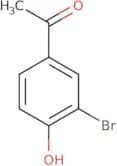
Fórmula:C13H10N2SPureza:Min. 95%Peso molecular:226.3 g/mol3'-Bromo-4'-hydroxyacetophenone
CAS:3'-Bromo-4'-hydroxyacetophenone is an epoxy that is used in the synthesis of a variety of chemical products. The mechanisms for its aerobic oxidation are not well understood, but it has been shown that it undergoes transformation reactions to form methides and phenols. It also participates in the aerobic oxidation process, which is a chemical reaction that occurs with oxygen and hydrogen peroxide as catalysts. 3'-Bromo-4'-hydroxyacetophenone has been shown to be a competitive inhibitor of cytochrome P450 enzymes.
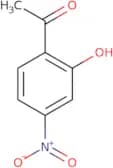
Fórmula:C8H7BrO2Pureza:Min. 95%Peso molecular:215.05 g/mol1-(2-Hydroxy-4-nitrophenyl)ethan-1-one
CAS:1-(2-Hydroxy-4-nitrophenyl)ethan-1-one (KPNE) is a potassium salt of a diketone that has antitubercular activity. KPNE inhibits the growth of Mycobacterium tuberculosis and has been shown to be effective as an antitubercular agent in animals. KPNE also has antiviral properties, inhibiting the RNA polymerase in HIV, which may be due to its ability to inhibit the synthesis of DNA. The mechanism of action for KPNE is thought to be due to its hydrolysis into 4-aminosalicylic acid, which inhibits bacterial protein synthesis by inhibition of the enzyme dihydrofolate reductase.
Fórmula:C8H7NO4Pureza:Min. 95%Peso molecular:181.15 g/mol[(2-Bromophenyl)methyl]trimethylsilane
CAS:Versatile small molecule scaffold
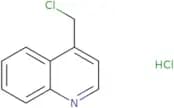
Fórmula:C10H15BrSiPureza:Min. 95%Peso molecular:243.21 g/mol4-chloromethylquinoline hcl
CAS:Versatile small molecule scaffold
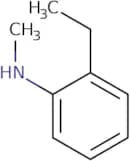
Fórmula:C10H9Cl2NPureza:Min. 95%Peso molecular:214.09 g/mol2-Ethyl-N-methylaniline
CAS:2-Ethyl-N-methylaniline is a colorless liquid that has a pyrrole ring and an indole group. It is used in the production of potassium and indoles, as well as in the synthesis of other organic compounds. 2-Ethyl-N-methylaniline also has pyrrole properties, which are similar to those of pyrrole. This chemical was first created by the German chemist Emil Fischer in 1887.
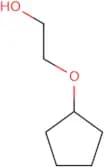
Fórmula:C9H13NPureza:Min. 95%Peso molecular:135.21 g/mol2-(cyclopentyloxy)ethanol
CAS:Versatile small molecule scaffold
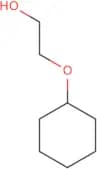
Fórmula:C7H14O2Pureza:Min. 95%Peso molecular:130.19 g/mol2-(Cyclohexyloxy)ethanol
CAS:2-(Cyclohexyloxy)ethanol is a synthetic, xylene-based glycol ether. It has been shown to have synergistic effects with boron trifluoride etherate, germanium trioxide, and alkyl substituents. 2-(Cyclohexyloxy)ethanol has an antibacterial activity against Gram-positive bacteria, including methicillin-resistant Staphylococcus aureus (MRSA). This compound also has a constant rate of degradation and can be used in peptide binding studies.
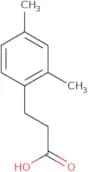
Fórmula:C8H16O2Pureza:Min. 95%Peso molecular:144.21 g/mol3-(2,4-Dimethylphenyl)propionic acid
CAS:3-(2,4-Dimethylphenyl)propionic acid is an organic compound that belongs to the class of propionic acid derivatives. It is a chiral compound with two stereoisomers. The crystal structure of the racemic mixture has been determined by x-ray crystallography and the absolute configuration was assigned as (S) based on its enantiomeric excess. 3-(2,4-Dimethylphenyl)propionic acid can be synthesized from benzyloxymethyl chloride and propionic acid. This reaction is mediated by a base, such as sodium methoxide or potassium t-butoxide.
3-(2,4-Dimethylphenyl)propionic acid is used in the synthesis of other compounds, such as phenylethyl propionate and 2-methylbenzaldehyde.Fórmula:C11H14O2Pureza:Min. 95%Peso molecular:178.23 g/mol
![2-[4-(Morpholin-4-yl)phenyl]acetic acid](/_next/image/?url=https%3A%2Fstatic.cymitquimica.com%2Fproducts%2F3D%2Fthumb-webp%2FBBA57757.webp&w=3840&q=75)


![3-Phenyl-2-azaspiro[3.4]octan-1-one](/_next/image/?url=https%3A%2Fstatic.cymitquimica.com%2Fproducts%2F3D%2Fthumb-webp%2FBAD22720.webp&w=3840&q=75)
![[(2-Bromophenyl)methyl]trimethylsilane](/_next/image/?url=https%3A%2Fstatic.cymitquimica.com%2Fproducts%2F3D%2Fthumb-webp%2FBAA83344.webp&w=3840&q=75)