


Building Blocks
Esta seção contém produtos fundamentais para a síntese de compostos orgânicos e biológicos. Building blocks são os materiais de partida essenciais usados para construir moléculas complexas através de várias reações químicas. Eles desempenham um papel crítico na descoberta de medicamentos, ciência dos materiais e pesquisa química. Na CymitQuimica, oferecemos uma ampla gama de building blocks de alta qualidade para apoiar suas pesquisas inovadoras e projetos industriais, garantindo que você tenha os componentes essenciais para uma síntese bem-sucedida.
Subcategorias de "Building Blocks"
- Ácidos Borónicos e Derivados de Ácido Borónico(5.756 produtos)
- Building Blocks Quirais(1.242 produtos)
- Building Blocks Hidrocarbonetos(6.093 produtos)
- Building Blocks orgânicos(60.533 produtos)
Foram encontrados 195534 produtos de "Building Blocks"
Ordenar por
Pureza (%)
0
100
|
0
|
50
|
90
|
95
|
100
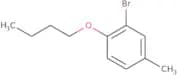
2-Bromo-1-butoxy-4-methylbenzene
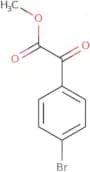
CAS:<p>Versatile small molecule scaffold</p>Fórmula:C11H15BrOPureza:Min. 95%Peso molecular:243.14 g/molMethyl 2-(4-bromophenyl)-2-oxoacetate
CAS:<p>Versatile small molecule scaffold</p>Fórmula:C9H7BrO3Pureza:Min. 95%Peso molecular:243.06 g/moltert-Butyl 1-pyrazolidinecarboxylate
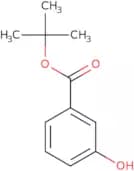
CAS:<p>Tert-butyl 1-pyrazolidinecarboxylate is a synthetic compound that can be used as a building block. It is an inhibitor of the enzyme xanthine oxidase, which catalyses the oxidation of hypoxanthine to xanthine and subsequently to uric acid. Xanthine oxidase inhibitors are used in the treatment of gout and other conditions involving uric acid accumulation. Tert-butyl 1-pyrazolidinecarboxylate has also been shown to inhibit the activity of other enzymes such as phosphodiesterases, proteases, and lipases. The conformational change of tert-butyl 1-pyrazolidinecarboxylate from its tautomeric form to its active form was determined by X-ray crystallography. This compound is a ligand for receptors such as GABA A .</p>Fórmula:C8H16N2O2Pureza:Min. 95%Peso molecular:172.23 g/moltert-Butyl 3-hydroxybenzoate
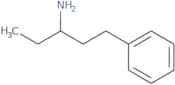
CAS:<p>Versatile small molecule scaffold</p>Fórmula:C11H14O3Pureza:Min. 95%Cor e Forma:PowderPeso molecular:194.23 g/mol1-Phenylpentan-3-amine
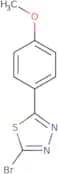
CAS:<p>1-Phenylpentan-3-amine is a primary amino compound that has a phenylalkylamine structure. It is synthesized by reacting benzene with ammonia and hydrogen, or by the reaction of aniline and ethyl acetate. The chemical formula for 1-Phenylpentan-3-amine is C9H12N2. 1-Phenylpentan-3-amine can be used as a precursor to produce other chemicals, such as benzene, benzenes, or amines.</p>Fórmula:C11H17NPureza:Min. 95%Peso molecular:163.26 g/mol2-Bromo-5-(4-methoxyphenyl)-1,3,4-thiadiazole
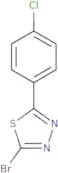
CAS:<p>Versatile small molecule scaffold</p>Fórmula:C9H7BrN2OSPureza:Min. 95%Peso molecular:271.14 g/mol2-Bromo-5-(4-chlorophenyl)-1,3,4-thiadiazole
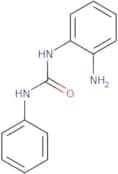
CAS:<p>Versatile small molecule scaffold</p>Fórmula:C8H4BrClN2SPureza:Min. 95%Peso molecular:275.55 g/mol3-(2-Aminophenyl)-1-phenylurea
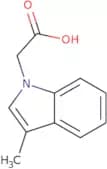
CAS:<p>3-(2-Aminophenyl)-1-phenylurea is a chemical compound that has a phenyl ring and isocyanate group. It has high selectivity for the phenyl isocyanate domain, which provides a selective reactivity to the chain with amino groups. This product can be used as an intermediate in organic synthesis of pharmaceuticals, agrochemicals, and other organic compounds. 3-(2-Aminophenyl)-1-phenylurea can also be used as a reagent for the preparation of polyurethane resins by reacting with isocyanates.</p>Fórmula:C13H13N3OPureza:Min. 95%Cor e Forma:PowderPeso molecular:227.26 g/mol2-(3-Methyl-1H-indol-1-yl)acetic acid
CAS:<p>Versatile small molecule scaffold</p>Fórmula:C11H11NO2Pureza:Min. 95%Peso molecular:189.21 g/molcis-hexahydro-1h-furo[3,4-c]pyrrole hcl
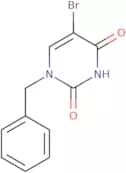
CAS:<p>Versatile small molecule scaffold</p>Fórmula:C6H12ClNOPureza:Min. 95%Peso molecular:149.62 g/mol1-Benzyl-5-bromo-1,2,3,4-tetrahydropyrimidine-2,4-dione
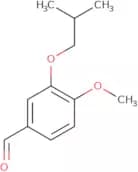
CAS:<p>1-Benzyl-5-bromo-1,2,3,4-tetrahydropyrimidine-2,4-dione is an experimental molecule and has not been studied extensively. It has been shown that this molecule binds to uracil in the cavity of a quadruplex and can form a functional quadruplex. The 1H NMR spectrum of 1-benzyl-5-bromo-1,2,3,4-tetrahydropyrimidine-2,4-dione shows the presence of two peaks at 3.34 and 3.06 ppm corresponding to the protons on the methylene group attached to the nitrogen atom of the pyrimidine ring.</p>Fórmula:C11H9BrN2O2Pureza:Min. 95%Peso molecular:281.1 g/mol4-Methoxy-3-(2-methylpropoxy)benzaldehyde
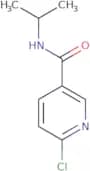
CAS:<p>Versatile small molecule scaffold</p>Fórmula:C12H16O3Pureza:Min. 95%Peso molecular:208.25 g/mol6-Chloro-N-(propan-2-yl)pyridine-3-carboxamide
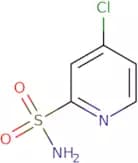
CAS:<p>Versatile small molecule scaffold</p>Fórmula:C9H11ClN2OPureza:Min. 95%Peso molecular:198.65 g/mol4-Chloro-2-pyridinesulfonamide
CAS:<p>Versatile small molecule scaffold</p>Fórmula:C5H5ClN2O2SPureza:Min. 95%Peso molecular:192.62 g/mol4H,6H-Furo[3,4-c][1,2]oxazol-6-one
CAS:<p>Versatile small molecule scaffold</p>Fórmula:C5H3NO3Pureza:Min. 95%Peso molecular:125.1 g/mol3-Chlorohippuric acid
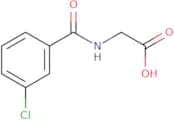
CAS:<p>3-Chlorohippuric acid is a drug that inhibits the activity of human liver and pancreatic lipase. This compound has been shown to reduce oxidative injury in animal models. 3-Chlorohippuric acid is also used as an antidiabetic agent, which may be due to its ability to inhibit transcriptional regulation in the pancreas. 3-Chlorohippuric acid binds to siderophores, which are iron-binding molecules present in bacteria. The uptake of this drug into bacteria is mediated by siderophores and may be one mechanism for the bactericidal effect of 3-chlorohippurate.</p>Fórmula:C9H8ClNO3Pureza:Min. 95%Peso molecular:213.62 g/mol2-[(3-bromophenyl)formamido]acetic acid
CAS:<p>Versatile small molecule scaffold</p>Fórmula:C9H8BrNO3Pureza:Min. 95%Peso molecular:258.1 g/molN-(2-Hydroxyethyl)-4-methoxybenzamide
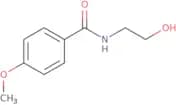
CAS:<p>Versatile small molecule scaffold</p>Fórmula:C10H13NO3Pureza:Min. 95%Peso molecular:195.21 g/mol2-bromo-1-(5-chloro-thiophen-2-yl)-ethanone
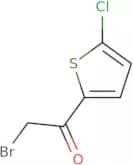
CAS:<p>Versatile small molecule scaffold</p>Fórmula:C6H4BrClOSPureza:Min. 95%Peso molecular:239.52 g/mol1-{6-Methylimidazo[2,1-b][1,3]thiazol-5-yl}ethan-1-one
CAS:<p>Versatile small molecule scaffold</p>Fórmula:C8H8N2OSPureza:Min. 95%Peso molecular:180.23 g/mol


![cis-hexahydro-1h-furo[3,4-c]pyrrole hcl](/_next/image/?url=https%3A%2Fstatic.cymitquimica.com%2Fproducts%2F3D%2Fthumb-webp%2FHCA71036.webp&w=3840&q=75)
![4H,6H-Furo[3,4-c][1,2]oxazol-6-one](/_next/image/?url=https%3A%2Fstatic.cymitquimica.com%2Fproducts%2F3D%2Fthumb-webp%2FHCA72815.webp&w=3840&q=75)
![2-[(3-bromophenyl)formamido]acetic acid](/_next/image/?url=https%3A%2Fstatic.cymitquimica.com%2Fproducts%2F3D%2Fthumb-webp%2FHCA72860.webp&w=3840&q=75)
![1-{6-Methylimidazo[2,1-b][1,3]thiazol-5-yl}ethan-1-one](/_next/image/?url=https%3A%2Fstatic.cymitquimica.com%2Fproducts%2F3D%2Fthumb-webp%2FHCA73811.webp&w=3840&q=75)