Building Blocks
Esta seção contém produtos fundamentais para a síntese de compostos orgânicos e biológicos. Building blocks são os materiais de partida essenciais usados para construir moléculas complexas através de várias reações químicas. Eles desempenham um papel crítico na descoberta de medicamentos, ciência dos materiais e pesquisa química. Na CymitQuimica, oferecemos uma ampla gama de building blocks de alta qualidade para apoiar suas pesquisas inovadoras e projetos industriais, garantindo que você tenha os componentes essenciais para uma síntese bem-sucedida.
Subcategorias de "Building Blocks"
- Ácidos Borónicos e Derivados de Ácido Borónico(5.756 produtos)
- Building Blocks Quirais(1.242 produtos)
- Building Blocks Hidrocarbonetos(6.093 produtos)
- Building Blocks orgânicos(60.532 produtos)
Foram encontrados 195534 produtos de "Building Blocks"
Ordenar por
Pureza (%)
0
100
|
0
|
50
|
90
|
95
|
100
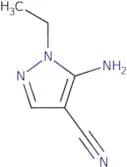
5-Amino-1-ethyl-1H-pyrazole-4-carbonitrile
CAS:<p>Versatile small molecule scaffold</p>Fórmula:C6H8N4Pureza:Min. 95%Peso molecular:136.15 g/mol7-Hydroxy-1-benzofuran-2-carboxylic acid
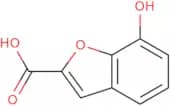
CAS:<p>Versatile small molecule scaffold</p>Fórmula:C9H6O4Pureza:Min. 95%Peso molecular:178.14 g/mol(2-Chloro-acetyl)-urea
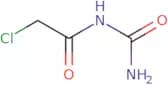
CAS:<p>2-Chloro-acetyl)-urea is a disinfectant that has been shown to be active against bacterial spores. It reacts with sodium taurocholate to form mercuric chloride and triazine, which are the reaction products of the 2-chloro-acetyl)-urea. The molecular modeling study of 2-chloro-acetyl)-urea showed that this molecule has a hydrophobic region and can bind with water molecules through hydrogen bonding. This property allows it to act as a detergent composition in cleaning products. 2-Chloro-acetyl)-urea also has an ethyl diazoacetate group, which is used in biocides for its ability to penetrate cell membranes.<br>2-Chloro-acetyl)-urea is also used in molecular modeling studies as a substrate for s-adenosylhomocysteine hydrolase (SAHH) enzymes, which are involved in the synthesis of ad</p>Fórmula:C3H5ClN2O2Pureza:Min. 95%Peso molecular:136.54 g/mol3-(2-Chloroacetyl)-1-phenylurea
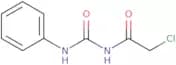
CAS:<p>Versatile small molecule scaffold</p>Fórmula:C9H9ClN2O2Pureza:Min. 95%Peso molecular:212.63 g/mol3-(2-Chloroacetyl)-1-ethylurea
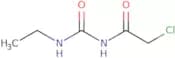
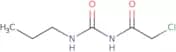
CAS:<p>Versatile small molecule scaffold</p>Fórmula:C5H9ClN2O2Pureza:Min. 95%Peso molecular:164.59 g/mol3-(2-Chloroacetyl)-1-propylurea
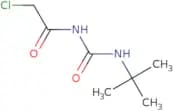
CAS:<p>Versatile small molecule scaffold</p>Fórmula:C6H11ClN2O2Pureza:Min. 95%Peso molecular:178.62 g/mol1-tert-Butyl-3-(2-chloroacetyl)urea
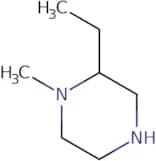
CAS:<p>Versatile small molecule scaffold</p>Fórmula:C7H13ClN2O2Pureza:Min. 95%Peso molecular:192.64 g/mol2-Ethyl-1-methylpiperazine
CAS:<p>Versatile small molecule scaffold</p>Fórmula:C7H16N2Pureza:Min. 95%Peso molecular:128.22 g/mol1,4-Dioxaspiro[4.6]undecan-8-one
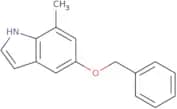
CAS:<p>Versatile small molecule scaffold</p>Fórmula:C9H14O3Pureza:Min. 95%Peso molecular:170.21 g/mol5-(Benzyloxy)-7-methyl-1H-indole
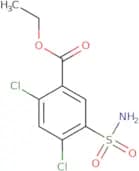
CAS:<p>Versatile small molecule scaffold</p>Fórmula:C16H15NOPureza:Min. 95%Peso molecular:237.3 g/molEthyl 2,4-dichloro-5-sulfamoylbenzoate
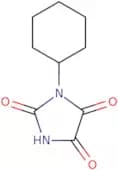
CAS:<p>Versatile small molecule scaffold</p>Fórmula:C9H9Cl2NO4SPureza:Min. 95%Peso molecular:298.14 g/mol1-Cyclohexylimidazolidine-2,4,5-trione
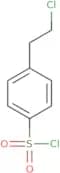
CAS:<p>Versatile small molecule scaffold</p>Fórmula:C9H12N2O3Pureza:Min. 95%Peso molecular:196.2 g/mol4-(2-Chloroethyl)benzene-1-sulfonyl chloride
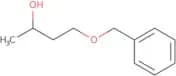
CAS:<p>Versatile small molecule scaffold</p>Fórmula:C8H8Cl2O2SPureza:Min. 95%Peso molecular:239.12 g/mol4-(Benzyloxy)butan-2-ol
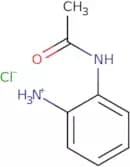
CAS:<p>4-Benzyloxybutan-2-ol is an immobilization linker that is used to connect a molecule to a solid surface, such as glass. The carboxylate group of 4-benzyloxybutan-2-ol reacts with the hydroxyl groups on the glass surface and forms a covalent bond by reacting with the amine groups of the molecule. This linker can be used for immobilizing biomolecules or synthetic molecules in order to study their kinetics or other properties. It is also used for solid phase synthesis. 4-Benzyloxybutan-2-ol has been shown to be biocatalyzed by lipase and has been shown to have high reactivity at temperatures below 40°C. Techniques such as IR spectroscopy, NMR spectroscopy, and mass spectrometry are commonly used to characterize this compound.</p>Fórmula:C11H16O2Pureza:Min. 95%Peso molecular:180.24 g/mol2-Amino-N-phenylacetamide hydrochloride
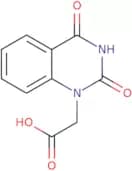
CAS:<p>Versatile small molecule scaffold</p>Fórmula:C8H11ClN2OPureza:Min. 95%Peso molecular:186.64 g/mol2-(2,4-Dioxo-1,2,3,4-tetrahydroquinazolin-1-yl)acetic acid
CAS:<p>Versatile small molecule scaffold</p>Fórmula:C10H8N2O4Pureza:Min. 95%Peso molecular:220.18 g/mol3-Bromo-2-methylimidazo[1,2-a]pyridine
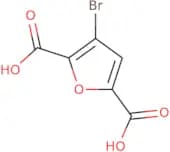
CAS:<p>Versatile small molecule scaffold</p>Fórmula:C8H7BrN2Pureza:Min. 95%Peso molecular:211.06 g/mol3-Bromofuran-2,5-dicarboxylic acid
CAS:<p>Versatile small molecule scaffold</p>Fórmula:C6H3BrO5Pureza:Min. 95%Peso molecular:234.99 g/mol3-Methylrhodanine
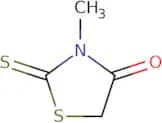
CAS:<p>3-Methylrhodanine is a tetronic acid that has been shown to be an inhibitor of a number of enzyme systems. 3-Methylrhodanine has been demonstrated to have acute toxicities in animals and humans, and it is amide-sensitive. The biological properties of 3-methylrhodanine have been studied by examining the effects on enzymes involved in the metabolism of cholesterol, steroid hormones, and amino acids. 3-Methylrhodanine has also been used as a surface-enhanced raman probe for detecting hydrogen bonds in organic molecules. It has been shown to bind to carbonyl groups and form coordination complexes with metals such as copper and zinc. This compound also forms intramolecular hydrogen bonds between its two hydroxyl groups.</p>Fórmula:C4H5NOS2Pureza:Min. 95%Peso molecular:147.22 g/mol2,6-Dimethyl-4-nitropyridine N-oxide
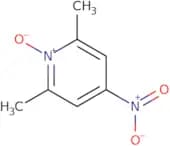
CAS:<p>2,6-Dimethyl-4-nitropyridine N-oxide (DMNPO) is a functional group that has been extensively studied in organic chemistry. DMNPO is the hydrochloride salt of DMNPO. It is a crystalline solid with a molecular weight of 138.08 g/mol and melting point of about 190 °C. The molecule has a planar structure with two nitro groups on the same side of the ring and an oxygen atom in between them. The nitro groups are electron withdrawing groups, which cause DMNPO to have a negative charge at physiological pH values. The chemical formula for DMNPO is C5H8NO2ClO2 and it can be synthesized by reacting 2,6-dimethylpyridine with nitric acid in acetic acid solvent at room temperature.</p>Fórmula:C7H8N2O3Pureza:Min. 95%Peso molecular:168.15 g/mol

![1,4-Dioxaspiro[4.6]undecan-8-one](/_next/image/?url=https%3A%2Fstatic.cymitquimica.com%2Fproducts%2F3D%2Fthumb-webp%2FEAA79237.webp&w=3840&q=75)
![3-Bromo-2-methylimidazo[1,2-a]pyridine](/_next/image/?url=https%3A%2Fstatic.cymitquimica.com%2Fproducts%2F3D%2Fthumb-webp%2FEAA80570.webp&w=3840&q=75)