Building Blocks
Esta seção contém produtos fundamentais para a síntese de compostos orgânicos e biológicos. Building blocks são os materiais de partida essenciais usados para construir moléculas complexas através de várias reações químicas. Eles desempenham um papel crítico na descoberta de medicamentos, ciência dos materiais e pesquisa química. Na CymitQuimica, oferecemos uma ampla gama de building blocks de alta qualidade para apoiar suas pesquisas inovadoras e projetos industriais, garantindo que você tenha os componentes essenciais para uma síntese bem-sucedida.
Subcategorias de "Building Blocks"
- Ácidos Borónicos e Derivados de Ácido Borónico(5.756 produtos)
- Building Blocks Quirais(1.242 produtos)
- Building Blocks Hidrocarbonetos(6.095 produtos)
- Building Blocks orgânicos(61.038 produtos)
Foram encontrados 196817 produtos de "Building Blocks"
Ordenar por
Pureza (%)
0
100
|
0
|
50
|
90
|
95
|
100
Indole
CAS:<p>Indole is a heterocyclic aromatic organic compound. It is a colorless solid that has a strong, unpleasant odor. Indole is classified as a nitrogenous base and is found in many natural products such as the amino acid tryptophan and the alkaloid caffeine. Indole can also be used as a building block for complex molecules, such as pharmaceuticals, herbicides, and pesticides. Indole is soluble in water, but insoluble in most organic solvents. It can be used to synthesize other compounds through reactions with other chemicals or by heating it with different reagents.</p>Fórmula:C8H7NPureza:Min. 98 Area-%Peso molecular:117.15 g/molRef: 3D-I-0800
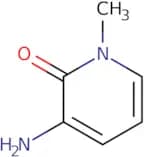
1kgA consultar5kgA consultar10kgA consultar25kgA consultar2500gA consultar-Unit-kgkgA consultar3-Amino-1-methylpyridin-2(1H)-one
CAS:<p>3-Amino-1-methylpyridin-2(1H)-one is an iodide that can be used to mediate arylation reactions. It can activate the c-h bond of a carboxylic acid or traceless aliphatic synthons and react with a variety of electrophiles to form new carbon–carbon bonds. 3-Amino-1-methylpyridin-2(1H)-one is also used as a reagent in the preparation of pharmaceuticals, including medicinal drugs and pesticides. This compound has been shown to produce high yields of arylated products under milder conditions than other methods.</p>Fórmula:C6H8N2OPureza:Min. 95%Peso molecular:124.14 g/mol2-Methoxypyridine-3,4-diamine
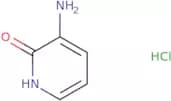
CAS:<p>Versatile small molecule scaffold</p>Fórmula:C6H9N3OPureza:Min. 95%Peso molecular:139.16 g/mol3-Amino-pyridin-2-ol hydrochloride
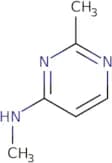
CAS:<p>Versatile small molecule scaffold</p>Fórmula:C5H7ClN2OPureza:Min. 95%Peso molecular:146.57 g/molN,2-Dimethylpyrimidin-4-amine
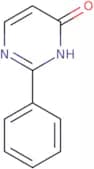
CAS:<p>Versatile small molecule scaffold</p>Fórmula:C6H9N3Pureza:Min. 95%Peso molecular:123.16 g/mol2-Phenyl-3,4-dihydropyrimidin-4-one
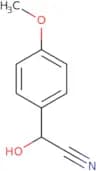
CAS:<p>Versatile small molecule scaffold</p>Fórmula:C10H8N2OPureza:Min. 95%Peso molecular:172.18 g/mol2-Hydroxy-2-(4-methoxyphenyl)acetonitrile
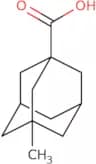
CAS:<p>Versatile small molecule scaffold</p>Fórmula:C9H9NO2Pureza:Min. 95%Peso molecular:163.17 g/mol3-Methyladamantane-1-carboxylic acid
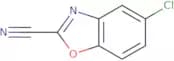
CAS:<p>3-Methyladamantane-1-carboxylic acid (3MACA) is a non-polar organic compound that is used in environmental monitoring. 3MACA is a potent inhibitor of the enzyme hydride transfer, which takes place in the presence of linoleyl alcohol and naphthenic acid. The toxicity of 3MACA has been studied, and it has been found to be toxic to aquatic animals, such as fish. It also causes eye irritation and skin irritation at high concentrations. 3MACA inhibits the production of prostaglandins by inhibiting cyclooxygenase enzymes responsible for arachidonic acid metabolism. This inhibition can lead to an increase in blood pressure and heart rate, as well as other toxicities such as respiratory distress and seizures.</p>Fórmula:C12H18O2Pureza:Min. 95%Peso molecular:194.27 g/mol5-Chloro-1,3-benzoxazole-2-carbonitrile
CAS:<p>Versatile small molecule scaffold</p>Fórmula:C8H3ClN2OPureza:Min. 95%Peso molecular:178.57 g/mol5-Methylbenzo[D]oxazole-2-carbonitrile
CAS:<p>Versatile small molecule scaffold</p>Fórmula:C9H6N2OPureza:Min. 95%Peso molecular:158.16 g/mol4,6-Dichloro-5-ethyl-2-phenylpyrimidine
CAS:<p>4,6-Dichloro-5-ethyl-2-phenylpyrimidine (4,6-DCP) is a pyrimidine amide that has been shown to be an effective inhibitor of the enzyme RNA polymerase II. 4,6-DCP inhibits bacterial growth and can be used for the treatment of tuberculosis. This drug also has anti-inflammatory properties, which may be due to its inhibition of prostaglandin synthesis.</p>Fórmula:C12H10Cl2N2Pureza:Min. 95%Peso molecular:253.12 g/mol2-Methylimidazo[1,2-a]pyrazine
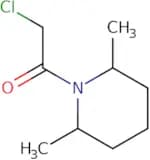
CAS:<p>Versatile small molecule scaffold</p>Fórmula:C7H7N3Pureza:Min. 95%Peso molecular:133.15 g/mol2-Chloro-1-(2,6-dimethyl-piperidin-1-yl)-ethanone
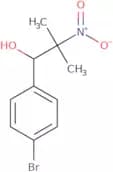
CAS:<p>Versatile small molecule scaffold</p>Fórmula:C9H16ClNOPureza:Min. 95%Peso molecular:189.68 g/mol1-(4-Bromophenyl)-2-methyl-2-nitropropan-1-ol
CAS:<p>Versatile small molecule scaffold</p>Fórmula:C10H12BrNO3Pureza:Min. 95%Peso molecular:274.11 g/mol3-[(Quinazolin-4-yl)amino]benzoic acid
CAS:<p>Versatile small molecule scaffold</p>Fórmula:C15H11N3O2Pureza:Min. 95%Peso molecular:265.27 g/mol3-Bromo-1-methylpyrrolidin-2-one
CAS:<p>3-Bromo-1-methylpyrrolidin-2-one is a chemical that belongs to the group of amines. It is a tertiary amine that can form a bond with carbonate and metal carbonates. 3-Bromo-1-methylpyrrolidin-2-one has been shown to be an enhancer for the transdermal delivery of methylamine, an alkaline drug. This compound has been found in animals and humans, but its effects on humans are not well understood.</p>Fórmula:C5H8BrNOPureza:Min. 95%Peso molecular:178.03 g/mol3-Azido-1-methylpyrrolidin-2-one
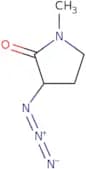
CAS:<p>Versatile small molecule scaffold</p>Fórmula:C5H8N4OPureza:Min. 95%Peso molecular:140.14 g/moltert-Butyl hydrogen phthalate
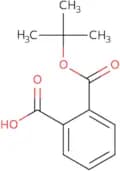
CAS:<p>Tert-butyl hydrogen phthalate is an organic chemical that is used in the production of polyvinyl chloride, butyral, and polypropylene. It is also used as a plasticizer for polyvinyl acetate and polystyrene. Tert-butyl hydrogen phthalate is an anti-aging agent for vinyl, which increases its resistance to oxidation. This chemical has been shown to be effective as a stabilizer for polyvinyl chloride against degradation by dichromate, stearic acid, and peroxide. Tert-butyl hydrogen phthalate reacts with succinic acid to form tert-butyl succinate and hydrogen chloride.</p>Fórmula:C12H14O4Pureza:Min. 95%Peso molecular:222.24 g/mol4-bromo-1-methyl-1H-pyrrole-2-carbaldehyde
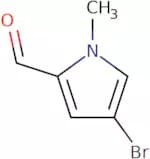
CAS:<p>Versatile small molecule scaffold</p>Fórmula:C6H6BrNOPureza:Min. 95%Peso molecular:188 g/mol2-(Phenylsulfanyl)propanenitrile
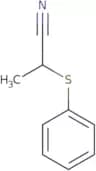
CAS:<p>Versatile small molecule scaffold</p>Fórmula:C9H9NSPureza:Min. 95%Peso molecular:163.24 g/mol



![5-Methylbenzo[D]oxazole-2-carbonitrile](/_next/image/?url=https%3A%2Fstatic.cymitquimica.com%2Fproducts%2F3D%2Fthumb-webp%2FIBA65290.webp&w=3840&q=75)

![2-Methylimidazo[1,2-a]pyrazine](/_next/image/?url=https%3A%2Fstatic.cymitquimica.com%2Fproducts%2F3D%2Fthumb-webp%2FIBA66880.webp&w=3840&q=75)
![3-[(Quinazolin-4-yl)amino]benzoic acid](/_next/image/?url=https%3A%2Fstatic.cymitquimica.com%2Fproducts%2F3D%2Fthumb-webp%2FIBA68329.webp&w=3840&q=75)