Building Blocks
Esta seção contém produtos fundamentais para a síntese de compostos orgânicos e biológicos. Building blocks são os materiais de partida essenciais usados para construir moléculas complexas através de várias reações químicas. Eles desempenham um papel crítico na descoberta de medicamentos, ciência dos materiais e pesquisa química. Na CymitQuimica, oferecemos uma ampla gama de building blocks de alta qualidade para apoiar suas pesquisas inovadoras e projetos industriais, garantindo que você tenha os componentes essenciais para uma síntese bem-sucedida.
Subcategorias de "Building Blocks"
- Ácidos Borónicos e Derivados de Ácido Borónico(5.756 produtos)
- Building Blocks Quirais(1.242 produtos)
- Building Blocks Hidrocarbonetos(6.095 produtos)
- Building Blocks orgânicos(61.055 produtos)
Foram encontrados 199650 produtos de "Building Blocks"
Ordenar por
Pureza (%)
0
100
|
0
|
50
|
90
|
95
|
100
2,4,4-Trimethyl-2-oxazoline
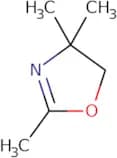
CAS:<p>2,4,4-Trimethyl-2-oxazoline is a potassium hydride reagent that has been used to study the mechanism of nucleophilic addition reactions. The acidity of this compound is determined by the presence of an acidic hydrogen atom on one side of the molecule. 2,4,4-Trimethyl-2-oxazoline can be used as a cationic polymerization monomer to produce polymers with high molecular weights. This compound is prepared by an ultrasonic preparative method in a solvent containing water and a base such as pyridine or triethylamine. Preparations must be done in an acidic environment because 2,4,4-trimethyl-2-oxazoline hydrolyzes readily in basic conditions. The viscosity of 2,4,4-trimethyl-2-oxazoline increases with increasing concentration and temperature. It also has a tendency to form hydrogen bonds with other molecules.</p>Fórmula:C6H11NOPureza:Min. 95%Peso molecular:113.16 g/mol8-Hydroxynaphthalene-1-carboxylic acid
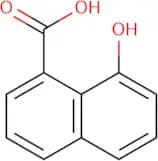
CAS:<p>The 8-hydroxynaphthalene-1-carboxylic acid (8HNCA) is a nonfluorescent, organic molecule that has been shown to form lactone at the interface with water. The 8HNCA has a diameter of 1.73 Å and is able to react at rates up to 10 times faster than in bulk solution. It can be used as an indicator for reactions occurring at the interface between two different liquids. The fluorescence of 8HNCA can be observed when it is excited by laser light and its reaction rate can be measured by observing the time dependence of the fluorescence emission intensity.</p>Fórmula:C11H8O3Pureza:Min. 95%Peso molecular:188.18 g/mol3-Phenylcyclobutan-1-amine hydrochloride
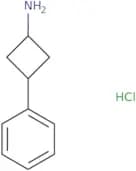
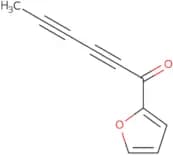
CAS:<p>Versatile small molecule scaffold</p>Fórmula:C10H14ClNPureza:Min. 95%Peso molecular:183.68 g/mol1-(Furan-2-yl)hexa-2,4-diyn-1-one
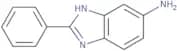
CAS:<p>Versatile small molecule scaffold</p>Fórmula:C10H6O2Pureza:Min. 95%Peso molecular:158.2 g/mol2-Phenyl-1H-1,3-benzodiazol-5-amine
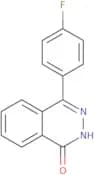
CAS:<p>Versatile small molecule scaffold</p>Fórmula:C13H11N3Pureza:Min. 95%Peso molecular:209.25 g/mol4-(4-Fluorophenyl)phthalazin-1(2H)-one
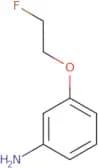
CAS:<p>Versatile small molecule scaffold</p>Fórmula:C14H9FN2OPureza:Min. 95%Peso molecular:240.23 g/mol3-(2-Fluoroethoxy)aniline
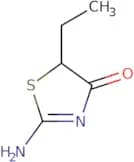
CAS:<p>Versatile small molecule scaffold</p>Fórmula:C8H10FNOPureza:Min. 95%Peso molecular:155.17 g/mol2-Amino-5-ethyl-4,5-dihydro-1,3-thiazol-4-one
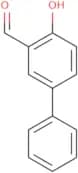
CAS:<p>Versatile small molecule scaffold</p>Fórmula:C5H8N2OSPureza:Min. 95%Peso molecular:144.2 g/mol2-Hydroxy-5-phenylbenzaldehyde
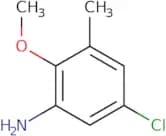
CAS:<p>2-Hydroxy-5-phenylbenzaldehyde is a fluorescent probe that is used in the detection of amines and thiosemicarbazides. 2-Hydroxy-5-phenylbenzaldehyde has been shown to have antibacterial activity against bacteria such as subtilis and Staphylococcus aureus. This compound also emits fluorescence when it reacts with an amine or thiosemicarbazide, which can be used to detect these compounds. 2-Hydroxy-5-phenylbenzaldehyde also reacts with triethyl orthoformate under acidic conditions, producing ethylene and formic acid, which can be used to produce a volatile gas that can be detected by gas chromatography (GC).</p>Fórmula:C13H10O2Pureza:Min. 95%Peso molecular:198.22 g/mol5-Chloro-2-methoxy-3-methylaniline
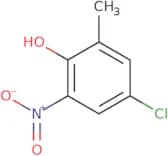
CAS:<p>Versatile small molecule scaffold</p>Fórmula:C8H10ClNOPureza:Min. 95%Peso molecular:171.62 g/mol4-Chloro-2-methyl-6-nitrophenol
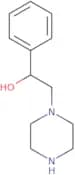
CAS:<p>4-Chloro-2-methyl-6-nitrophenol is an organic compound with the chemical formula C6H4ClNO2. It is a white solid that is soluble in water, alcohols and ether. It has uses as a pesticide and in the manufacture of dyes, pharmaceuticals, and herbicides. 4-Chloro-2-methyl-6-nitrophenol can be made by reacting phosphorus pentachloride with chlorophenols at temperatures below 100 °C. The reaction can also be activated by adding hydrochloric acid or absorbing electromagnetic radiation such as sunlight. The phototransformation of 4CMPNP to its photoproducts is dependent on irradiation wavelength. Irradiation of 4CMPNP with ultraviolet light leads to the formation of 3,5-dichloroaniline (3,5 DCA). The interaction between 4CMPNP and chlorine ions produces colorless monochlorob</p>Fórmula:C7H6ClNO3Pureza:Min. 95%Peso molecular:187.58 g/mol1-Phenyl-2-(piperazin-1-yl)ethan-1-ol
CAS:<p>Versatile small molecule scaffold</p>Fórmula:C12H18N2OPureza:Min. 95%Peso molecular:206.28 g/molN-Cyclohexylbenzamide
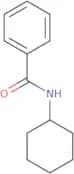
CAS:<p>N-Cyclohexylbenzamide is a cross-coupling reaction that is used in organic synthesis. It is an efficient method for the synthesis of organometallic compounds and pharmaceuticals, including drugs with high bioavailability. N-Cyclohexylbenzamide has been shown to be effective against intestinal bacteria such as Salmonella enterica and Helicobacter pylori. This drug has also been detected in humans, where it can be found at low concentrations in urine. The compound is metabolized by hydrolysis of the amide group to yield benzoic acid and cyclohexanol. The mechanism of action of N-Cyclohexylbenzamide is not fully understood, but it has been postulated that it inhibits the formation of reactive oxygen species (ROS) by preventing the activity of NADPH oxidase, which leads to oxidative stress and cell death.</p>Fórmula:C13H17NOPureza:Min. 95%Peso molecular:203.28 g/molMethyl 5-chloro-1H-pyrrole-2-carboxylate
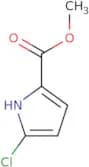
CAS:<p>Versatile small molecule scaffold</p>Fórmula:C6H6ClNO2Pureza:Min. 95%Peso molecular:159.57 g/mol2,5-Dimethyl 1H-pyrrole-2,5-dicarboxylate
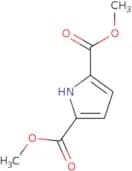
CAS:<p>Versatile small molecule scaffold</p>Fórmula:C8H9NO4Pureza:Min. 95%Peso molecular:183.16 g/mol5,5-Dimethyl-1,3,2-dioxathiane 2,2-dioxide
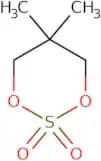
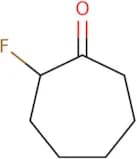
CAS:Versatile small molecule scaffoldFórmula:C5H10O4SPureza:Min. 95%Peso molecular:166.2 g/mol2-Fluorocycloheptan-1-one
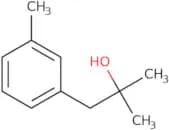
CAS:<p>Versatile small molecule scaffold</p>Fórmula:C7H11FOPureza:Min. 95%Peso molecular:130.16 g/mol2-Methyl-1-(3-methylphenyl)propan-2-ol
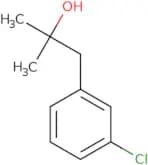
CAS:<p>Versatile small molecule scaffold</p>Fórmula:C11H16OPureza:Min. 95%Peso molecular:164.24 g/mol1-(3-Chlorophenyl)-2-methylpropan-2-ol
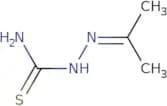
CAS:<p>Versatile small molecule scaffold</p>Fórmula:C10H13ClOPureza:Min. 95%Peso molecular:184.66 g/molAcetone Thiosemicarbazone
CAS:<p>Acetone thiosemicarbazone is a chelating agent that contains a hydroxyl group, an ethylene diamine group, and a sulfonamide group. The compound has been shown to be active in wastewater treatment for the removal of polyvinyl chloride (PVC) and other organic compounds. It is also used as an anti-inflammatory drug in pharmaceutical preparations. Acetone thiosemicarbazone has been shown to chelate metal ions and prevent their binding to proteins, which may lead to its ability to inhibit inflammation.</p>Fórmula:C4H9N3SPureza:Min. 95%Peso molecular:131.2 g/mol