Building Blocks
Esta seção contém produtos fundamentais para a síntese de compostos orgânicos e biológicos. Building blocks são os materiais de partida essenciais usados para construir moléculas complexas através de várias reações químicas. Eles desempenham um papel crítico na descoberta de medicamentos, ciência dos materiais e pesquisa química. Na CymitQuimica, oferecemos uma ampla gama de building blocks de alta qualidade para apoiar suas pesquisas inovadoras e projetos industriais, garantindo que você tenha os componentes essenciais para uma síntese bem-sucedida.
Subcategorias de "Building Blocks"
- Ácidos Borónicos e Derivados de Ácido Borónico(5.756 produtos)
- Building Blocks Quirais(1.242 produtos)
- Building Blocks Hidrocarbonetos(6.095 produtos)
- Building Blocks orgânicos(61.055 produtos)
Foram encontrados 199650 produtos de "Building Blocks"
Ordenar por
Pureza (%)
0
100
|
0
|
50
|
90
|
95
|
100
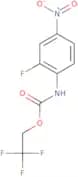
2,2,2-Trifluoroethyl N-(2-fluoro-4-nitrophenyl)carbamate
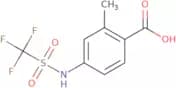
CAS:<p>Versatile small molecule scaffold</p>Fórmula:C9H6F4N2O4Pureza:Min. 95%Peso molecular:282.15 g/mol2-Methyl-4-trifluoromethanesulfonamidobenzoic acid
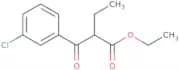
CAS:<p>Versatile small molecule scaffold</p>Fórmula:C9H8F3NO4SPureza:Min. 95%Peso molecular:283.23 g/molEthyl 2-(3-chlorobenzoyl)butanoate
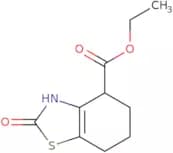
CAS:<p>Versatile small molecule scaffold</p>Fórmula:C13H15ClO3Pureza:Min. 95%Peso molecular:254.71 g/molEthyl 2-hydroxy-4,5,6,7-tetrahydro-1,3-benzothiazole-4-carboxylate
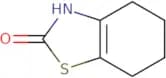
CAS:<p>Versatile small molecule scaffold</p>Fórmula:C10H13NO3SPureza:Min. 95%Peso molecular:227.28 g/mol2,3,4,5,6,7-Hexahydro-1,3-benzothiazol-2-one
CAS:<p>Versatile small molecule scaffold</p>Fórmula:C7H9NOSPureza:Min. 95%Peso molecular:155.22 g/mol2H,3H,4H,5H,6H,7H,8H-Cyclohepta[D][1,3]thiazol-2-one
CAS:<p>2H,3H,4H,5H,6H,7H,8H-Cyclohepta[D][1,3]thiazol-2-one is a synthetic compound that has been modified to produce various derivatives. It is used in the synthesis of oligosaccharides and polysaccharides. This chemical also has potential applications in the treatment of cancer and diabetes.</p>Fórmula:C8H11NOSPureza:Min. 95%Peso molecular:169.25 g/mol3-(1,3-Dioxo-2,3-dihydro-1H-isoindol-2-yl)propanethioamide
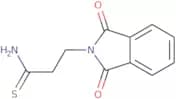
CAS:<p>Versatile small molecule scaffold</p>Fórmula:C11H10N2O2SPureza:Min. 95%Peso molecular:234.28 g/mol(2-Chloro-4-methylphenyl)thiourea
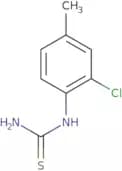
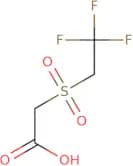
CAS:<p>Versatile small molecule scaffold</p>Fórmula:C8H9ClN2SPureza:Min. 95%Peso molecular:200.69 g/mol2-(2,2,2-Trifluoroethanesulfonyl)acetic acid
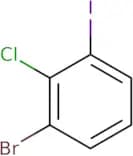
CAS:<p>Trifloxacin is a broad-spectrum antibacterial drug that belongs to the class of formyloxy compounds and the cephalosporin family. It has been shown to be active against both Gram-positive and Gram-negative bacteria, with activity against strains resistant to penicillin, ampicillin, erythromycin, and chloramphenicol. Trifloxacin binds to the bacterial ribosome by displacement of a pyridyl group in the ribosomal RNA, inhibiting protein synthesis. This binding inhibits cell growth by preventing the production of proteins that are vital for cell division.<br>br><br>Trifloxacin has also been found to inhibit DNA gyrase and topoisomerase IV in vitro. Trifloxacin's mechanism of action is similar to that of other quinolones such as norfloxacin and ciprofloxacin.</p>Fórmula:C4H5F3O4SPureza:Min. 95%Peso molecular:206.14 g/mol1-Bromo-2-chloro-3-iodobenzene
CAS:<p>Versatile small molecule scaffold</p>Fórmula:C6H3BrClIPureza:Min. 95%Peso molecular:317.35 g/mol4-Chloro-[1,1'-biphenyl]-3-amine
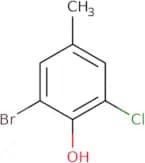
CAS:<p>Versatile small molecule scaffold</p>Fórmula:C12H10ClNPureza:Min. 95%Peso molecular:203.67 g/mol2-Bromo-6-chloro-4-methylphenol
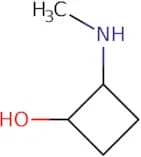
CAS:<p>Versatile small molecule scaffold</p>Fórmula:C7H6BrClOPureza:Min. 95%Peso molecular:221.48 g/molTrans-2-(methylamino)cyclobutan-1-ol
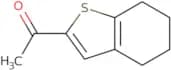
CAS:<p>Versatile small molecule scaffold</p>Fórmula:C5H11NOPureza:Min. 95%Peso molecular:101.15 g/mol1-(4,5,6,7-Tetrahydro-1-benzothiophen-2-yl)ethan-1-one
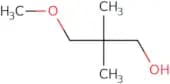
CAS:<p>Versatile small molecule scaffold</p>Fórmula:C10H12OSPureza:Min. 95%Peso molecular:180.27 g/mol3-Methoxy-2,2-dimethylpropan-1-ol
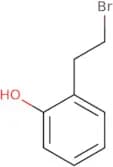
CAS:<p>3-Methoxy-2,2-dimethylpropan-1-ol is an experimental chemical that belongs to the group of cations. It has a transition state with yields of 1.0 kcal/mol and a molecular ion peak at m/z = 143. The spectra of 3-methoxy-2,2-dimethylpropan-1-ol show methoxy as the primary methyl group and an energetics of -3.3 kcal/mol. 3-Methoxy-2,2-dimethylpropan-1-ol can be used for fragmentation reactions. It also has been shown to form isomers by substituting the methoxy group on either side of the methyl group on the propane chain and it has a metastable isomeric form that can be observed in mass spectrometry. 3-Methoxypropane can also be used in transfer reactions to produce isobutene which is an isomeric</p>Fórmula:C6H14O2Pureza:Min. 95%Peso molecular:118.17 g/mol2-(2-Bromoethyl)phenol
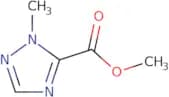
CAS:<p>Versatile small molecule scaffold</p>Fórmula:C8H9BrOPureza:Min. 95%Peso molecular:201.06 g/molMethyl 1-Methyl-1H-1,2,4-triazole-5-carboxylate
CAS:<p>Versatile small molecule scaffold</p>Fórmula:C5H7N3O2Pureza:Min. 95%Peso molecular:141.13 g/mol1-{Bicyclo[2.2.2]octan-1-yl}ethan-1-one
CAS:<p>Versatile small molecule scaffold</p>Fórmula:C10H16OPureza:Min. 95%Peso molecular:152.23 g/mol[3-(Hydroxymethyl)quinolin-2-yl]methanol
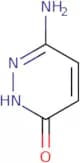
CAS:<p>Versatile small molecule scaffold</p>Fórmula:C11H11NO2Pureza:Min. 95%Peso molecular:189.21 g/mol6-Aminopyridazin-3(2H)-one
CAS:<p>6-Aminopyridazin-3(2H)-one is a chemical that belongs to the class of pyrazoles. It is non-toxic, has low solubility in water, and has not been shown to react with any other substances. It is a yellow solid that can be found in nature as an intermediate in the metabolism of amino acids. 6-Aminopyridazin-3(2H)-one can be used for screening purposes or research purposes.</p>Fórmula:C4H5N3OPureza:Min. 95%Peso molecular:111.1 g/mol

![2H,3H,4H,5H,6H,7H,8H-Cyclohepta[D][1,3]thiazol-2-one](/_next/image/?url=https%3A%2Fstatic.cymitquimica.com%2Fproducts%2F3D%2Fthumb-webp%2FHCA00116.webp&w=3840&q=75)
![4-Chloro-[1,1'-biphenyl]-3-amine](/_next/image/?url=https%3A%2Fstatic.cymitquimica.com%2Fproducts%2F3D%2Fthumb-webp%2FHCA01394.webp&w=3840&q=75)
![1-{Bicyclo[2.2.2]octan-1-yl}ethan-1-one](/_next/image/?url=https%3A%2Fstatic.cymitquimica.com%2Fproducts%2F3D%2Fthumb-webp%2FHCA03201.webp&w=3840&q=75)
![[3-(Hydroxymethyl)quinolin-2-yl]methanol](/_next/image/?url=https%3A%2Fstatic.cymitquimica.com%2Fproducts%2F3D%2Fthumb-webp%2FHCA03214.webp&w=3840&q=75)