Álcoois
Subcategorias de "Álcoois"
Foram encontrados 5818 produtos de "Álcoois"
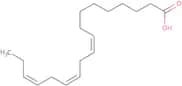
Linolenic acid, 98.5%
CAS:Linolenic acid is a polyunsaturated fatty acid that is an essential component of human nutrition. Linolenic acid has apoptosis-inducing properties and has been shown to induce the mitochondrial membrane potential in neuronal cells and induce neuronal death by decreasing the levels of pge2. Linolenic acid also participates in energy metabolism, as it can be converted into arachidonic acid, which is a precursor for prostaglandins. Linolenic acid has been shown to have physiological effects on humans, such as improving eye disorders and congestive heart failure. It does not seem to be linked with any toxicity or adverse effects.Fórmula:C18H30O2Pureza:Min. 95%Cor e Forma:Colorless Clear LiquidPeso molecular:278.43 g/mol1,3-Benzenedimethanol
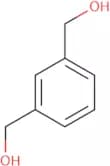
CAS:1,3-Benzenedimethanol is a diphenyl ether with the chemical formula C6H6O. It has been shown to be a good nucleophile and undergoes nucleophilic attack on a variety of substrates. The hydroxyl group in the molecule can be protonated to form the corresponding carboxylic acid or an alcohol. This compound has been shown to react with aluminium, magnesium oxide and trifluoroacetic acid in an acidic environment and undergo carbonyl reduction to form ethyl esters. 1,3-Benzenedimethanol is also soluble in water and can be extracted by gravimetric analysis.Fórmula:C8H10O2Pureza:Min. 95%Cor e Forma:PowderPeso molecular:138.16 g/mol5-Oxa-2-octyne-1,7-diol
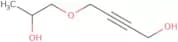
CAS:5-Oxa-2-octyne-1,7-diol is a monomer that belongs to the class of heterocyclic compounds. It has been used in research studies to coat metal surfaces with silicone. This compound is also a surfactant, which can be used for cleaning and degreasing dishes, pots and pans. 5-Oxa-2-octyne-1,7-diol is resistant to degradation by sulfate ester or carboxylate ester solvents. It has shown activity as a monomer with methyl esters and alkenyls for use in polymers.Fórmula:C7H12O3Pureza:Min. 95%Cor e Forma:PowderPeso molecular:144.17 g/molBithionol sulfoxide
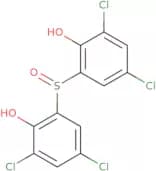
CAS:Bithionol sulfoxide is a glycol ether that has been used in the treatment of endoparasites. It is a toxic chemical that is metabolized to bithionol sulfoxide glucuronide conjugate (BSG). BSG has been shown to have pharmacological effects on animals, and as such it has been used in clinical treatments. BSG has also been shown to be effective against parasites and worms, with no significant side effects. BSG is an oily liquid at room temperature that can be soluble in alcohols, fatty acids and glycol esters. Bithionol sulfoxide can be dissolved in chloroform and ethyl acetate for use as a chromatographic solvent.Fórmula:C12H6Cl4O3SPureza:Min. 95%Cor e Forma:Off-White PowderPeso molecular:372.05 g/mol2-Bromo-3-pyridinol
CAS:2-Bromo-3-pyridinol is a nicotinic acetylcholine receptor antagonist that has anti-influenza activity. It was synthesized as an analogue of the natural product pyridostigmine, which inhibited influenza in mice. 2-Bromo-3-pyridinol binds to the nicotinic acetylcholine receptor at the same site as nicotine and prevents it from being activated by acetylcholine. This drug also inhibits tumor growth and proliferation in vitro and in vivo, showing potent cytotoxicity against carcinoma cells by inhibiting protein synthesis and cell division. 2-Bromo-3-pyridinol has been shown to inhibit Alzheimer's disease in a mouse model of this disorder. The drug inhibits amyloid plaque formation and toxicity in cultured cells, suggesting its potential for treating this disease.Fórmula:C5H4BrNOPureza:Min. 95%Cor e Forma:White To Off-White SolidPeso molecular:174 g/mol2-phenyl-quinoline
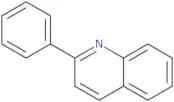
CAS:2-Phenyl-quinoline is a naturally occurring compound that exhibits antimicrobial activity. It has been shown to inhibit the growth of bacteria by interfering with the synthesis of ATP, which is necessary for bacterial cell division. 2-Phenyl-quinoline also possesses antioxidative properties and has been shown to have inhibitory effects on a number of bacterial strains. 2-Phenyl-quinoline has been shown to induce necrotic cell death in S. aureus strains, as well as anti-inflammatory and antinociceptive properties.Fórmula:C15H11NPureza:Min. 98 Area-%Cor e Forma:PowderPeso molecular:205.25 g/mol1,16-Hexadecanediol
CAS:1,16-Hexadecanediol is a plant hormone that is structurally related to abscisic acid and gibberellins. It is found in the tissues of plants. 1,16-Hexadecanediol has been shown to have the ability to regulate plant growth and development. The diffusional properties of this molecule suggest that it may be a model system for studying other molecules with similar properties. The conformational properties of this molecule are also important because they allow for hydrogen bonding, which stabilizes the molecule and prevents it from decomposing. This property also makes 1,16-hexadecanediol an excellent candidate as a low-energy sweetener. The molecule can be seen in nmr spectra as having two peaks at different chemical shifts because it contains intramolecular hydrogen bonds. The formula weight of 1,16-hexadecanediol is 270.27 g/mol.
Fórmula:C16H34O2Pureza:Min. 95%Cor e Forma:White/Off-White SolidPeso molecular:258.44 g/mol4-(Hydroxymethyl)cyclohexanol
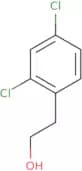
CAS:4-(Hydroxymethyl)cyclohexanol is a versatile building block that can be used in the synthesis of complex compounds. This chemical has been shown to have a high degree of purity and is a useful intermediate or reaction component for many different reactions. It is also an excellent scaffold for synthesizing other organic molecules.Fórmula:C7H14O2Pureza:Min. 95%Cor e Forma:Clear To White To Off-White SolidPeso molecular:130.18 g/mol2-(2,4-Dichlorophenyl)ethanol
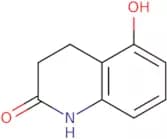
CAS:2-(2,4-Dichlorophenyl)ethanol is an organic compound that can be synthesized by reacting 2,4-dichlorobenzoic acid with trifluoroacetic acid in the presence of a base. The reaction scheme is:Fórmula:C8H8Cl2OPureza:Min. 95%Peso molecular:191.05 g/mol5-Hydroxy-3,4-dihydro-2(1H)-quinolinone
CAS:5-Hydroxy-3,4-dihydro-2(1H)-quinolinone is a high quality reagent with a CAS number of 30389-33-4. It has been shown to be a useful intermediate in the synthesis of complex compounds. This compound can also be used as an important building block for the synthesis of speciality chemicals and research chemicals. 5-Hydroxy-3,4-dihydro-2(1H)-quinolinone is versatile and can be used as a reaction component in many reactions that require the introduction of oxygen into molecules.Fórmula:C9H9NO2Pureza:Min. 95%Cor e Forma:White PowderPeso molecular:163.17 g/mol3,6-Dithia-1,8-octanediol
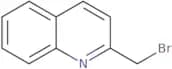
CAS:3,6-Dithia-1,8-octanediol is a coordination complex that contains four chloride ions and six water molecules. It is made up of two molecules of 3,6-dithia-1,8-octanediol coordinated with two diphenyl ethers. The molecule is planar with the two oxygen atoms of the hydroxyl group in one plane and the two carbon atoms in another plane. The hydrogen atom on the oxygen atom has an intramolecular bond to a hydrogen atom on the other oxygen atom. The molecule has a magnetic resonance spectrum that can be used for identification purposes because it is unique among other compounds. 3,6-Dithia-1,8-octanediol can react with sodium hydroxide solution to form a precipitate. This reaction can be used as an analytical chemistry technique to determine the concentration of chloride ions in plasma mass spectrometry samples.Fórmula:C6H14O2S2Pureza:Min. 95%Cor e Forma:White PowderPeso molecular:182.31 g/mol2-Bromomethylquinoline
CAS:2-Bromomethylquinoline is a quinoline derivative that has been synthesized to study the interaction between metal ions, such as copper and zinc, and chelate rings. The reaction products formed by 2-bromomethylquinoline have been shown to have antifungal activity in vitro. It has been found that the addition of a fluorescent probe can be used to detect quinoline derivatives, which fluoresce when excited with light. This makes them useful as fluorescent probes for reactions involving metal ions.Fórmula:C10H8BrNPureza:Min. 95%Cor e Forma:SolidPeso molecular:222.08 g/mol3-Chloroisoquinoline
CAS:3-Chloroisoquinoline is a thiolate, which is a reactive chemical group. 3-Chloroisoquinoline has been shown to react with trifluoromethanesulfonic acid to form a compound with biological properties. The amide and palladium complexes of 3-chloroisoquinoline have been prepared in the past. Additionally, the two isomers of 3-chloroisoquinoline are known as the halides and magnetic resonance spectroscopy of this compound has been studied. Structural isomers and functional groups of 3-chloroisoquinoline have also been studied in detail. Tautomers and lactams are structural isomers of 3-chloroisoquinoline that have also been researched extensively. Finally, trifluoroacetic acid reacts with 3-chloroisoquinoline to form an ester product.Fórmula:C9H6ClNPureza:Min. 95%Peso molecular:163.6 g/mol2-Boc-6-hydroxy-1,2,3,4-tetrahydroisoquinoline-1-carboxylic acid
CAS:2-Boc-6-hydroxy-1,2,3,4-tetrahydroisoquinoline-1-carboxylic acid is a useful scaffold with a high quality. It can be used as a building block in the synthesis of complex compounds and fine chemicals. 2-Boc-6-hydroxy-1,2,3,4-tetrahydroisoquinoline-1-carboxylic acid is also a useful intermediate and reagent in organic synthesis. This compound has CAS number 362492-00-0.
Fórmula:C15H19NO5Pureza:Min. 95%Cor e Forma:PowderPeso molecular:293.32 g/mol1,5-Hexadiene-3,4-diol
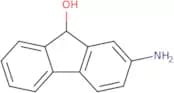
CAS:1,5-Hexadiene-3,4-diol is an organic compound that is used as a pharmaceutical intermediate. It has been shown to be effective in the treatment of infectious diseases and inflammatory diseases. 1,5-Hexadiene-3,4-diol has been shown to inhibit the transport rate of bacterial vaginosis and inflammatory diseases. The active form of this drug is soluble in water and it can be used as a vaginal gel preparation or eye drops. This drug has also been shown to have film forming properties and to act as a membrane system stabilizer. 1,5-Hexadiene-3,4-diol may also be used for the production of insoluble polymers and films.Fórmula:C6H10O2Pureza:Min. 95%Cor e Forma:Colorless Clear LiquidPeso molecular:114.14 g/mol2-Amino-9-fluorenol
CAS:2-Amino-9-fluorenol is a hydrophobic compound that binds to RNA. 2-Amino-9-fluorenol has been shown to have a binding constant of 1.2 x 10, which is much higher than the binding constant for curculigoside (5.2 x 10). This substance has shown to be an effective inhibitor of RNA synthesis in HL60 cells and various bacterial strains by binding to the ribose moiety of RNA and preventing transcription. The metabolic pathway for 2-amino-9-fluorenol consists of two steps: one involving a reactive intermediate, potassium ion, and another with methylamine as the reactant. These reactions are catalyzed by enzymes such as acetaldehyde dehydrogenase and amino transferases, respectively.Fórmula:C13H11NOPureza:Min. 95%Cor e Forma:Yellow solid.Peso molecular:197.23 g/mol[4-(Aminomethyl)cyclohexyl]methanol
CAS:4-(Aminomethyl)cyclohexyl]methanol is a dicarboxylic acid and ester with the chemical formula CH2=C(CH3)(CO2H). It is used to synthesize polycarbonates, which are polyesters that contain carbonate groups. 4-(Aminomethyl)cyclohexyl]methanol has two carboxyl groups and one hydroxyl group that can react with trimellitic anhydride to form polycarbonates. Polycarbonate is a polymer that contains bisphenol A, which is the building block of many plastics and resins. 4-(Aminomethyl)cyclohexyl]methanol can be used as a monomer in the synthesis of polyesters and copolymers.Fórmula:C8H17NOPureza:Min. 95%Cor e Forma:Beige PowderPeso molecular:143.23 g/molFmoc-O-tert-butyl-L-threoninol
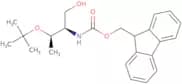
CAS:Fmoc-O-tert-butyl-L-threoninol is an aminoacyl chloroformate ester that is used in the synthesis of peptides. It has a conjugate acid chloride and a disulfide bond. The chloroformate group reacts with the carboxylic acid moiety of L-threonine to form an ester, which can then be cleaved by hydrolysis to yield L-threonine. This product is also used for the synthesis of peptides in which the threonine residue is conjugated to another amino acid such as cysteine or glutamic acid.
Fmoc-O-tert-butyl-L-threoninol is synthesized from l-threonine and isobutene via a phase chromatography process. The synthetic intermediate Fmoc-(S)-OH is reacted with trifluoroacetic acid (TFA)Fórmula:C23H29NO4Pureza:Min. 98 Area-%Cor e Forma:White PowderPeso molecular:383.48 g/mol1,6-Hexanediol dimethacrylate - stabilized with MEHQ
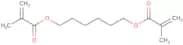
CAS:1,6-Hexanediol dimethacrylate - stabilized with MEHQ is a reactive chemical that is used to generate light-sensitive particles. The light exposure of these particles causes them to react and form new bonds, which can be exploited for various applications. 1,6-Hexanediol dimethacrylate - stabilized with MEHQ has been shown to cause genotoxic effects in primary cells and cell nuclei, as well as radiation-induced DNA damage in human fibroblast cells. It has also been shown to interfere with the replication of DNA in human cancer cells. This agent is chemically similar to other known carcinogens such as allyl carbonate and benzene.Fórmula:C14H22O4Pureza:Min. 95%Cor e Forma:Clear LiquidPeso molecular:254.32 g/mol4-Amino-2-methylphenol
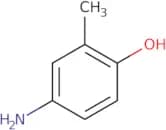
CAS:4-Amino-2-methylphenol is a chemical substance that is used in the production of dyes, cationic surfactants, and basic dyes. It can be produced through oxidation of phenol or by dehydration of aniline. 4-Amino-2-methylphenol has been shown to have potential use as a surface enhancer for Raman spectroscopy. This compound has also been used to extract amines and ethers from organic solvents.Fórmula:C7H9NOPureza:Min. 95%Cor e Forma:SolidPeso molecular:123.15 g/mol







![[4-(Aminomethyl)cyclohexyl]methanol](/_next/image/?url=https%3A%2Fstatic.cymitquimica.com%2Fproducts%2F3D%2Fthumb-webp%2FFA123010.webp&w=3840&q=75)