Álcoois
Subcategorias de "Álcoois"
Foram encontrados 5818 produtos de "Álcoois"
3-Methoxyphenylmethylcarbinol
CAS:3-Methoxyphenylmethylcarbinol is a hydrogen tartrate that can be used as an intermediate in the Friedel-Crafts reaction. It is also an imine, which is formed when a nitrogen atom of an amine reacts with a carbon atom of formaldehyde. 3-Methoxyphenylmethylcarbinol has been shown to have stereoselective properties in the Friedel-Crafts reaction, which means that only one product is produced from two reactants. In this case, the hydrogen tartrate and phosphorus oxychloride are reacted to produce oxone and chloride compounds. The selectivity of 3-methoxyphenylmethylcarbinol can be increased by adding triphosgene or dimethylamine to the reaction mixture. This compound dissociates easily into its component parts and can be regenerated by adding ethyl formate or ferrocene.Fórmula:C9H12O2Pureza:Min. 95%Cor e Forma:PowderPeso molecular:152.19 g/mol1,16-Hexadecanediol
CAS:1,16-Hexadecanediol is a plant hormone that is structurally related to abscisic acid and gibberellins. It is found in the tissues of plants. 1,16-Hexadecanediol has been shown to have the ability to regulate plant growth and development. The diffusional properties of this molecule suggest that it may be a model system for studying other molecules with similar properties. The conformational properties of this molecule are also important because they allow for hydrogen bonding, which stabilizes the molecule and prevents it from decomposing. This property also makes 1,16-hexadecanediol an excellent candidate as a low-energy sweetener. The molecule can be seen in nmr spectra as having two peaks at different chemical shifts because it contains intramolecular hydrogen bonds. The formula weight of 1,16-hexadecanediol is 270.27 g/mol.
Fórmula:C16H34O2Pureza:Min. 95%Cor e Forma:White/Off-White SolidPeso molecular:258.44 g/mol(3-Phenyl-1,2,4-oxadiazol-5-yl)methanol
CAS:3-Phenyl-1,2,4-oxadiazol-5-yl)methanol is a versatile building block that has been used in the synthesis of complex compounds and research chemicals. It is also a reagent that can be used in the laboratory to synthesize other fine chemicals. 3-Phenyl-1,2,4-oxadiazol-5-yl)methanol is an intermediate that can be used to create high quality and useful building blocks for chemical reactions. This compound has many uses as a scaffold in organic synthesis and it can be used to make valuable products such as pharmaceuticals and pesticides. 3-(3'-phenyl)-1,2,4-oxadiazole 5'-amine is listed on the Chemical Abstracts Service (CAS) database with number 5543-33-9.
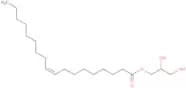
Fórmula:C9H8N2O2Pureza:Min. 95%Cor e Forma:PowderPeso molecular:176.17 g/mol1-Oleoyl-rac-glycerol - 50%
CAS:1-Oleoyl-rac-glycerol is a lipid that has been used in experimental studies to replace the use of animal-derived lipids for pharmaceutical applications. It can be synthesized by combining oleic acid with glycerol. 1-Oleoyl-rac-glycerol is soluble in water and has been shown to have a Langmuir adsorption isotherm, which means it can be used as a monoolein substitute. The basic protein in 1-Oleoyl-rac-glycerol has been determined using XRD data and found to be chitosan polymer. The experimental model for 1-Oleoyl-rac-glycerol was tested on rats and found not to cause toxicity, making it an ideal biocompatible polymer that can be used as an alternative to chitosan polymer.
Fórmula:C21H40O4Pureza:Min. 95%Cor e Forma:Slightly Yellow Clear LiquidPeso molecular:356.54 g/molQuinoline-2,8-diol
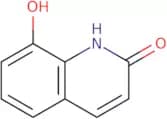
CAS:Quinoline-2,8-diol is a bacterial strain that can be used to remove fatty acids from wastewater. The recombinant cytochrome P450 in this strain can degrade fatty acids, which are carcinogenic and have been shown to cause hepatic steatosis. In addition, the quinoline-2,8-diol strain has shown an ability to inhibit xenograft tumor growth in mice by activating cytochrome P450 and inducing apoptosis. This bacterial strain also has the potential to produce xanthurenic acid from tyrosine. Xanthurenic acid is toxic and has been shown to inhibit polymerase chain reaction (PCR) amplification of DNA. Quinoline-2,8-diol may be used as a model for experimental studies of xanthurenic acid's effects on energy metabolism and DNA synthesis.
Fórmula:C9H7NO2Pureza:Min. 95 Area-%Cor e Forma:PowderPeso molecular:161.16 g/mol2,6-Dimethylthiophenol
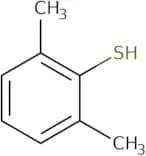
CAS:2,6-Dimethylthiophenol is a structural analog of the natural product sumatrana. It has been shown to be an effective catalyst for the cleavage of carbon-carbon bonds in organic molecules and fatty acids. 2,6-Dimethylthiophenol is unique because it contains two sulfur atoms that are part of a thiolate group, which can easily be oxidized to a sulfoxide or sulfone. This property makes 2,6-dimethylthiophenol an excellent reductant in reactions that require a metallacycle intermediate. The reactivity of this molecule is also influenced by its redox potential and the presence of nitrogen atoms. 2,6-Dimethylthiophenol was synthesized and studied using model compounds, yielding reaction yields as high as 98%.
Fórmula:C8H10SPureza:Min. 95 Area-%Cor e Forma:Clear LiquidPeso molecular:138.23 g/mol2,4-Dimethoxy-5-methylbenzyl alcohol
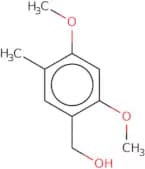
CAS:2,4-Dimethoxy-5-methylbenzyl alcohol is a high quality chemical that is used as an intermediate for the synthesis of complex compounds. It has been used as a reagent and as a building block for the synthesis of other chemicals. This compound can be used to produce fine chemicals and research chemicals. 2,4-Dimethoxy-5-methylbenzyl alcohol has been shown to be useful in the production of versatile building blocks and reaction components.
Fórmula:C10H14O3Pureza:Min. 95%Peso molecular:182.22 g/mol(R)-3,3'-Bis(triphenylsilyl)-1,1'-binaphthalene-2,2'-diol
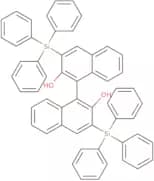
CAS:(R)-3,3'-Bis(triphenylsilyl)-1,1'-binaphthalene-2,2'-diol is a high quality chemical and useful scaffold that can be used as a reagent for the synthesis of complex compounds. This compound has CAS No. 111822-69-6 and is an intermediate for the preparation of fine chemicals and speciality chemicals. It is also a versatile building block that can be used in research or as a reaction component to produce useful scaffolds.Fórmula:C56H42O2Si2Pureza:Min. 95%Cor e Forma:White PowderPeso molecular:803.1 g/mol[5-(4-Aminophenyl)-2-furyl]methanol
CAS:Please enquire for more information about [5-(4-Aminophenyl)-2-furyl]methanol including the price, delivery time and more detailed product information at the technical inquiry form on this page
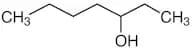
Fórmula:C11H11NO2Pureza:Min. 95%Cor e Forma:Brown PowderPeso molecular:189.21 g/mol3-Heptanol
CAS:Fórmula:C7H16OPureza:>98.0%(GC)Cor e Forma:Colorless to Almost colorless clear liquidPeso molecular:116.203-(Dibutylamino)propan-1-ol
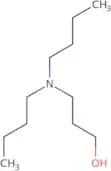
CAS:3-(Dibutylamino)propan-1-ol is an intermediate that is used in the synthesis of procainamide and procaine. It can be prepared by reaction of dibutylamine with propanol. 3-(Dibutylamino)propan-1-ol has a high stability in organic solvents, such as chloroform, as well as in bioreactors and automated synthesizers. This product is also an efficient catalyst for reactions involving esters. 3-(Dibutylamino)propan-1-ol has been shown to be effective at inhibiting the growth of Mycobacterium smegmatis and Mycobacterium tuberculosis.Fórmula:C11H25NOPureza:Min. 95%Cor e Forma:Clear LiquidPeso molecular:187.32 g/mol2-Amino-4,5-dimethylphenol
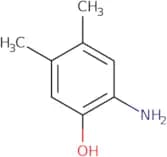
CAS:2-Amino-4,5-dimethylphenol is a compound that exhibits anticancer activity. It is an arylimine that has been shown to inhibit the proliferation of cancer cells in vitro and in vivo. The mechanism of action is not fully understood, but it is believed that 2-amino-4,5-dimethylphenol may act as a nucleophile in reverse Michael addition reactions with electrophiles. This compound also has been shown to be potent against some cancer cell lines and to induce apoptosis through caspase activation. 2-Amino-4,5-dimethylphenol interacts with aminophenols in vitro, forming supramolecular complexes that are cytotoxic to cancer cells.
Fórmula:C8H11NOPureza:Min. 95%Cor e Forma:Brown SolidPeso molecular:137.18 g/mol[4-(Aminomethyl)cyclohexyl]methanol
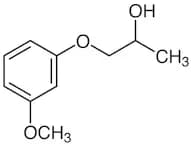
CAS:4-(Aminomethyl)cyclohexyl]methanol is a dicarboxylic acid and ester with the chemical formula CH2=C(CH3)(CO2H). It is used to synthesize polycarbonates, which are polyesters that contain carbonate groups. 4-(Aminomethyl)cyclohexyl]methanol has two carboxyl groups and one hydroxyl group that can react with trimellitic anhydride to form polycarbonates. Polycarbonate is a polymer that contains bisphenol A, which is the building block of many plastics and resins. 4-(Aminomethyl)cyclohexyl]methanol can be used as a monomer in the synthesis of polyesters and copolymers.Fórmula:C8H17NOPureza:Min. 95%Cor e Forma:Beige PowderPeso molecular:143.23 g/mol1-(3-Methoxyphenoxy)-2-propanol
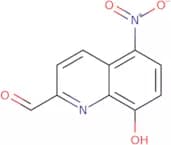
CAS:Fórmula:C10H14O3Pureza:>90.0%(GC)Cor e Forma:Colorless to Light yellow to Light orange clear liquidPeso molecular:182.228-Hydroxy-5-nitroquinoline-2-carbaldehyde
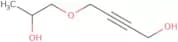
CAS:8-Hydroxy-5-nitroquinoline-2-carbaldehyde is a high quality, versatile building block that can be used as a reaction intermediate or to synthesize heterocycles. It is also a useful scaffold for the synthesis of complex compounds. The CAS number of this chemical is 884497-63-6.Fórmula:C10H6N2O4Pureza:Min. 95%Cor e Forma:PowderPeso molecular:218.17 g/mol5-Oxa-2-octyne-1,7-diol
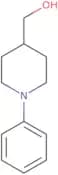
CAS:5-Oxa-2-octyne-1,7-diol is a monomer that belongs to the class of heterocyclic compounds. It has been used in research studies to coat metal surfaces with silicone. This compound is also a surfactant, which can be used for cleaning and degreasing dishes, pots and pans. 5-Oxa-2-octyne-1,7-diol is resistant to degradation by sulfate ester or carboxylate ester solvents. It has shown activity as a monomer with methyl esters and alkenyls for use in polymers.Fórmula:C7H12O3Pureza:Min. 95%Cor e Forma:PowderPeso molecular:144.17 g/mol(1-Phenylpiperidin-4-yl)methanol
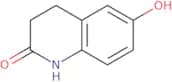
CAS:1-Phenylpiperidin-4-yl)methanol is a versatile building block that is used in the synthesis of many complex compounds. It is also a reagent and intermediate for the production of fine chemicals, speciality chemicals, and research chemicals. 1-Phenylpiperidin-4-yl)methanol has a CAS number of 697306-45-9 and it's molecular formula is C14H21NO.Fórmula:C12H17NOPureza:Min. 95%Cor e Forma:Red PowderPeso molecular:191.27 g/mol6-Hydroxy-3,4-dihydro-1H-quinoline-2-one
CAS:This is a quinoline derivative that has been shown to have inotropic and cardioprotective effects. It has been shown to increase the duration of action potentials and contractions in isolated heart muscle, as well as to improve the function of the heart by reducing the rate of myocardial oxygen consumption. 6-Hydroxy-3,4-dihydro-1H-quinoline-2-one has been shown to have anti-inflammatory properties and may be useful for treating respiratory diseases such as asthma. This compound is also used as a precursor for some pharmaceutical drugs, including chloroquine, mefloquine, amodiaquine, and primaquine. The compound is metabolized into conjugates that are recycled back into the body or excreted in human urine; this process is regulated by the balance between conjugation reactions and hydrolysis reactions.Fórmula:C9H9NO2Pureza:Min. 95%Peso molecular:163.17 g/mol1,6-Hexanediol dimethacrylate - stabilized with MEHQ
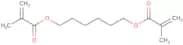
CAS:1,6-Hexanediol dimethacrylate - stabilized with MEHQ is a reactive chemical that is used to generate light-sensitive particles. The light exposure of these particles causes them to react and form new bonds, which can be exploited for various applications. 1,6-Hexanediol dimethacrylate - stabilized with MEHQ has been shown to cause genotoxic effects in primary cells and cell nuclei, as well as radiation-induced DNA damage in human fibroblast cells. It has also been shown to interfere with the replication of DNA in human cancer cells. This agent is chemically similar to other known carcinogens such as allyl carbonate and benzene.Fórmula:C14H22O4Pureza:Min. 95%Cor e Forma:Clear LiquidPeso molecular:254.32 g/mol1-Naphthalene ethanol
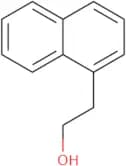
CAS:1-Naphthalene ethanol is a stabilizer that is used in the alkaline hydrolysis of primary amines. It has been shown to have fluorescence activity and has been used as a dye intermediate and chemical intermediate. 1-Naphthalene ethanol has also been shown to be an acetylation, ethylene, and dehydration agent. The compound is also a particle stabilizer and can be used as an additive for fuels. 1-Naphthalene ethanol is also a reagent that can transfer amines onto acidic chloride or chloral compounds.
Fórmula:C12H12OPureza:90%Cor e Forma:PowderPeso molecular:172.22 g/mol


![[5-(4-Aminophenyl)-2-furyl]methanol](/_next/image/?url=https%3A%2Fstatic.cymitquimica.com%2Fproducts%2F3D%2Fthumb-webp%2FFA134137.webp&w=3840&q=75)

![[4-(Aminomethyl)cyclohexyl]methanol](/_next/image/?url=https%3A%2Fstatic.cymitquimica.com%2Fproducts%2F3D%2Fthumb-webp%2FFA123010.webp&w=3840&q=75)