Álcoois
Os álcoois são uma ampla gama de moléculas orgânicas derivadas de hidrocarbonetos que contêm um ou mais grupos hidroxila (grupo OH). Estes compostos são essenciais em várias reações químicas e são amplamente utilizados em laboratórios para síntese, como solventes e em química analítica. Na CymitQuimica, oferecemos álcoois de alta qualidade preparados para uso laboratorial, apoiando suas pesquisas e aplicações industriais com produtos confiáveis e eficazes. Nossa seleção garante que você tenha os álcoois adequados para suas necessidades específicas, seja para trabalhos de laboratório de rotina ou para projetos de pesquisa especializados.
Subcategorias de "Álcoois"
Foram encontrados 5814 produtos de "Álcoois"
Ordenar por
Pureza (%)
0
100
|
0
|
50
|
90
|
95
|
100
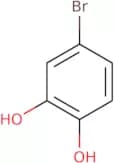
4-Bromobenzene-1,2-diol
CAS:<p>4-Bromobenzene-1,2-diol is a reactive substance that has been shown to have receptor binding and reaction intermediates. It has been shown to inhibit the formation of reactive oxygen species in rat liver microsomes. The formation rate of 4-bromobenzene-1,2-diol is increased by carbon source such as bromobenzene. This substance has also been shown to be an inhibitor of the reaction mechanism. 4-Bromobenzene-1,2-diol is used as a reactant in organic synthesis reactions and can be found in dry weight measurements.</p>Fórmula:C6H5BrO2Pureza:Min. 95%Peso molecular:189.01 g/mol5α-Pregnan-3β,17α-diol-20-one
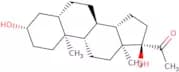
CAS:Produto Controlado5alpha-Pregnan-3beta,17alpha-diol-20-one is a versatile building block that can be used in the synthesis of a wide range of chemical compounds. It has CAS number 570-54-7 and is useful as a reagent in organic chemistry. This compound is also an intermediate for the synthesis of other chemicals, such as steroids and hormones. 5alpha-Pregnan-3beta,17alpha-diol-20-one can be used to produce high quality products with diverse biological activities and molecular structures. The compound is also useful in the production of pharmaceuticals, pesticides, and herbicides.Fórmula:C21H34O3Pureza:Min. 95%Cor e Forma:PowderPeso molecular:334.49 g/molH-Tyr-L-1,2,3,4-tetrahydroisoquinoline-3-carboxamide·HCl
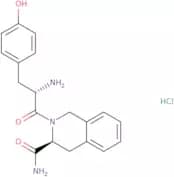
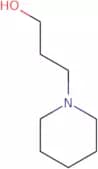
CAS:H-Tyr-L-1,2,3,4-tetrahydroisoquinoline-3-carboxamide·HCl is a monoclinic crystalline compound. It has a molecular weight of 607.14 and contains the dipeptide Tyr-Lys in its structure. H-Tyr-L-1,2,3,4-tetrahydroisoquinoline-3-carboxamide·HCl crystallizes in the P21/c space group and has an asymmetric unit cell with dimensions a=8.851 Å, b=7.965 Å and c=5.98 Å. This compound has been shown to have antibacterial properties against methicillin resistant Staphylococcus aureus (MRSA) isolates and Clostridium perfringens strains by inhibiting bacterial protein synthesis through inhibition of peptidyl transferase activity.Fórmula:C19H21N3O3·HClPureza:Min. 95%Peso molecular:375.85 g/mol3-Piperidin-1-ylpropan-1-ol
CAS:3-Piperidin-1-ylpropan-1-ol is a substance that is structurally related to biperiden and has affinity for the H3 receptor. It has been shown to have a high affinity for the H3 receptor, which is found in high concentration in the rat brain. 3-Piperidin-1-ylpropan-1-ol has been shown to have antagonistic activity against neuropathic pain in rats, by inhibiting the release of norepinephrine from nerve endings. This substance also has antihistaminic properties, which may be due to its ability to inhibit histamine release. 3-Piperidin-1-ylpropan-1-ol is an enantiomer of piperidine, with a slightly higher affinity for the H3 receptor than its mirror image. The racemic mixture isomeric form (i.e., both enantiomers) inhibits the H3 receptor with an equal potency,Fórmula:C8H17NOPureza:Min. 95%Cor e Forma:Colorless Clear LiquidPeso molecular:143.23 g/mol2-Chloro-N-[2-(diethylamino)ethyl]-4-quinolinecarboxamide
CAS:2-Chloro-N-[2-(diethylamino)ethyl]-4-quinolinecarboxamide is a carboxamide analog of dibucaine. It is synthesized from chloroacetyl chloride and isatin in the presence of sodium hydroxide. The synthesis has been scaled to an industrial level. 2-Chloro-N-[2-(diethylamino)ethyl]-4-quinolinecarboxamide has been shown to have analgesic properties, similar to those of dibucaine. Radiolysis of this compound gives a carboxylic acid and a heterocyclic ring product.Fórmula:C16H20ClN3OPureza:95%MinCor e Forma:PowderPeso molecular:305.8 g/mol9,11b-Epoxidetriamcinolone
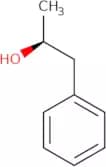
CAS:<p>Please enquire for more information about 9,11b-Epoxidetriamcinolone including the price, delivery time and more detailed product information at the technical inquiry form on this page</p>Fórmula:C21H26O6Pureza:Min. 95%Peso molecular:374.43 g/mol(S)-1-Phenyl-2-propanol
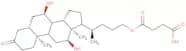
CAS:(S)-1-Phenyl-2-propanol is a chiral, enantiopure alcohol that is used as a substrate for the preparation of various drugs. It can be prepared by the reduction of (R)-1-phenyl-2-propanol with sodium borohydride. To obtain the desired product, high substrate concentrations are required. Molecular modeling and bioreactor studies have shown that this process can also be carried out in cells. Subtilis sps. were found to be suitable for this process due to their ability to synthesize (S)-1-phenyl-2-propanol from 6-phosphate and l-tert-leucine in a stepwise manner. The use of subtilis sps. may reduce the cost and time needed for production of (S)-1-phenyl-2-propanol because it does not require expensive starting materials or purification steps.END>>Fórmula:C9H12OPureza:Min. 95%Cor e Forma:Clear LiquidPeso molecular:136.19 g/mol3-Keto petromyzonol-24-hemisuccinate
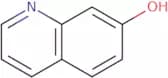
CAS:Produto ControladoPlease enquire for more information about 3-Keto petromyzonol-24-hemisuccinate including the price, delivery time and more detailed product information at the technical inquiry form on this pageFórmula:C28H44O7Pureza:Min. 95%Cor e Forma:PowderPeso molecular:492.65 g/mol7-Hydroxyquinoline
CAS:7-Hydroxyquinoline is a molecule that has been extensively studied in the context of transfer reactions. It is a sodium salt that contains an intermolecular hydrogen bond and an intramolecular hydrogen bond. The proton of 7-hydroxyquinoline can be transferred to the nitrogen atom of a protonated amine, forming an acid complex. This reaction mechanism is kinetically controlled and stabilizes the tautomers of 7-hydoxyquinoline. The hydroxyl group on the quinoline ring can form hydrogen bonds with various groups on other molecules, such as n-dimethyl formamide or deuterium isotope.Fórmula:C9H7NOPureza:Min. 95%Cor e Forma:Brown PowderPeso molecular:145.16 g/mol2,4-Dibromobenzyl alcohol
CAS:<p>2,4-Dibromobenzyl alcohol is a selective inhibitor of sglt2, which is an enzyme that inactivates the incretin hormones glucagon-like peptide-1 (GLP-1) and glucose-dependent insulinotropic polypeptide (GIP). It has been shown to have a strong inhibitory effect on the activity of sglt2 in vitro. This inhibition leads to increased levels of GLP-1 and GIP, which may help improve glycemic control. 2,4-Dibromobenzyl alcohol has been shown to reduce blood glucose levels in diabetic mice to the same degree as tofogliflozin, which is marketed for diabetes treatment.</p>Fórmula:C7H6Br2OPureza:Min. 95%Peso molecular:265.93 g/mol4-Fluoro-2-methoxyphenol
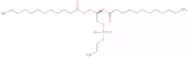
CAS:4-Fluoro-2-methoxyphenol is a fluorinating agent that is used in the manufacture of pharmaceuticals, plastics and pesticides. It has been shown to induce apoptosis in cultured cells by upregulating reactive oxygen species (ROS) and increasing mitochondrial membrane permeability, as well as inhibiting cellular physiology. 4-Fluoro-2-methoxyphenol also inhibits the production of ATP and may be toxic to cells by interfering with dinucleotide phosphate.Fórmula:C7H7FO2Pureza:Min. 95%Cor e Forma:Clear LiquidPeso molecular:142.13 g/mol1,2-Dilauroyl-sn-glycero-3-phosphoethanolamine
CAS:1,2-Dilauroyl-sn-glycero-3-phosphoethanolamine (DLPE) is a lipid molecule that can induce phase transition in aqueous solutions. DLPE is an active ingredient in nonsteroidal anti-inflammatory drugs and has been shown to inhibit the activity of enzymes such as cyclooxygenase and lipoxygenase. DLPE also inhibits the growth of infectious organisms such as Escherichia coli and HIV by inhibiting receptor activity. DLPE binds to receptors on the surface of cells, which prevents these cells from releasing inflammatory cytokines.Fórmula:C29H58NO8PPureza:Min. 95%Cor e Forma:PowderPeso molecular:579.75 g/molDimethyl benzyl carbinol acetate
CAS:<p>Dimethyl benzyl carbinol acetate is a polymer that forms a film on the skin and prevents water loss. It has been shown to have enzyme-inhibiting properties, which may be due to its ability to prevent geranyl production. Dimethyl benzyl carbinol acetate has also been used as a sealant in microcapsules, which are then broken down by enzymes in order to release the contents of the capsule. Dimethyl benzyl carbinol acetate can also be used as an antimicrobial agent, where it inhibits bacterial cell growth by interfering with fatty acid synthesis.</p>Pureza:Min. 95%Linolenic acid - 98%
CAS:Linolenic acid is a polyunsaturated fatty acid that is essential for human health. It is a precursor of prostaglandin E2 (PGE2), which has been implicated in the regulation of cell death and inflammation. Linolenic acid has been shown to induce apoptosis in vitro by inhibiting the mitochondrial membrane potential and activating caspases 3 and 9, thereby inducing neuronal death. In vivo, linolenic acid has been shown to have beneficial effects on cardiovascular function, including lowering cholesterol levels and improving blood flow to the heart. Linolenic acid also has antioxidant properties, which may be due to its ability to inhibit lipid peroxidation and scavenge free radicals.Fórmula:C18H30O2Pureza:Min. 95%Cor e Forma:PowderPeso molecular:278.43 g/mol4-Chlorophenethyl alcohol
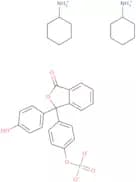
CAS:4-Chlorophenethyl alcohol is a synthetic, primary alcohol. It can be synthesized by reacting 2,4-dichlorobenzoic acid with a Grignard reagent. The reaction produces 4-chlorophenethyl alcohol, which is insoluble in water and reacts with chloride to form chloroform. This procedure can be used to produce other chlorinated alcohols. 4-Chlorophenethyl alcohol has been shown to have acute toxicities that are similar to those of trifluoroacetic acid and it is believed that the toxicity is due to its ability to react with proteins and nucleic acids.Fórmula:C8H9ClOPureza:Min. 95%Cor e Forma:PowderPeso molecular:156.61 g/molPhenolphthalein monophosphate di(cyclohexylammonium)
CAS:<p>Phenolphthalein monophosphate di(cyclohexylammonium) is a fine chemical that can be used as a building block in research, reagent, or speciality chemical. It is a versatile building block and reaction component that can be used as an intermediate to make other compounds. Phenolphthalein monophosphate di(cyclohexylammonium) is also used as a scaffold for the synthesis of complex chemicals. This complex compound has CAS number 14815-59-9.</p>Fórmula:C20H15O7P•2C6H13NPureza:Min. 90%Cor e Forma:PowderPeso molecular:596.65 g/mol2-Pyrimidinemethanol
CAS:2-Pyrimidinemethanol is a pyrimidine derivative that is used as a starting material for the synthesis of other compounds. 2-Pyrimidinemethanol is introduced into the body through the skin, lungs and gastrointestinal tract. It has been shown to cause sensitization in humans and rats, with photoexcitation being an important factor in its activity. 2-Pyrimidinemethanol binds to DNA and inhibits protein synthesis by inhibiting ribonucleotide reductase (RNR). The active site of this enzyme contains iron, which is why this compound may be toxic to humans.Fórmula:C5H6N2OPureza:Min. 95%Cor e Forma:Light (Or Pale) Yellow To Brown LiquidPeso molecular:110.11 g/mol(alphaR)-alpha-[[[2-(4-Nitrophenyl)ethyl]amino]methyl]benzenemethanol hydrochloride
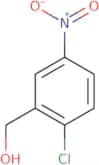
CAS:<p>Intermediate in the synthesis of mirabegron</p>Fórmula:C16H18N2O3·HClPureza:Min. 95%Peso molecular:322.79 g/mol2-Chloro-5-nitrobenzyl alcohol
CAS:2-Chloro-5-nitrobenzyl alcohol is a vibrational spectroscopy technique that can be used to study the interactions between molecules. The technique can be used to measure the population of molecules in a system and to determine the thermodynamic properties of systems. It has been shown that 2-chloro-5-nitrobenzyl alcohol is an inhibitor for macrocyclic compounds with electron withdrawing groups, such as carbonyl groups. This molecule has been studied using statistical strategies, which have been shown to be effective in predicting the binding affinity of 2-chloro-5-nitrobenzyl alcohol and other inhibitors for macrocyclic compounds.Fórmula:C7H6ClNO3Pureza:Min. 95%Cor e Forma:PowderPeso molecular:187.58 g/mol4-Fluoro-3-nitrobenzyl alcohol
CAS:<p>4-Fluoro-3-nitrobenzyl alcohol (4FNA) is a potent, orally bioavailable, and selective inhibitor of the tyrosine kinase AXL. 4FNA binds to the ATP binding site on AXL and blocks phosphorylation of its tyrosine kinase domain. This binding leads to a conformational change in the AXL protein that prevents it from interacting with downstream signaling molecules, inhibiting T cell activation.</p>Fórmula:C7H6FNO3Pureza:Min. 95%Peso molecular:171.13 g/mol

![2-Chloro-N-[2-(diethylamino)ethyl]-4-quinolinecarboxamide](/_next/image/?url=https%3A%2Fstatic.cymitquimica.com%2Fproducts%2F3D%2Fthumb-webp%2FFC20289.webp&w=3840&q=75)






![(alphaR)-alpha-[[[2-(4-Nitrophenyl)ethyl]amino]methyl]benzenemethanol hydrochloride](/_next/image/?url=https%3A%2Fstatic.cymitquimica.com%2Fproducts%2F3D%2Fthumb-webp%2FFN156825.webp&w=3840&q=75)