Álcoois
Subcategorias de "Álcoois"
Foram encontrados 5831 produtos de "Álcoois"
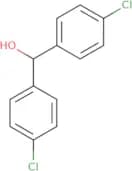
bis-(4-Chlorophenyl)-carbinol
CAS:Bis-(4-chlorophenyl)-carbinol is a nonpolar compound with a linear plot. It is used as an intermediate in the synthesis of herbicides, insecticides, and pharmaceuticals. Bis-(4-chlorophenyl)-carbinol has been shown to bind to cylindrospermum, which is a type of marine algae that can be found in ecosystems such as the Great Barrier Reef. This binding reaction is the result of diphenylmethane, which is an aromatic compound that binds to bis-(4-chlorophenyl)-carbinol's electron-donating groups. The binding reaction was studied using dispersive solid-phase extraction (DSPE) and carbon source experiments on soil microorganisms. Cytochrome P450 enzymes are responsible for metabolizing bis-(4-chlorophenyl)-carbinol into unidentified metabolites.Fórmula:C13H10Cl2OPureza:Min. 95%Peso molecular:253.12 g/mol(3,4,5-Trimethoxyphenyl)methyl carbinol
CAS:(3,4,5-Trimethoxyphenyl)methyl carbinol is a neuroprotective compound that belongs to the class of benzyl alcohols. It has been shown to have neuroprotective effects against daldinia-induced oxidative stress and biotoxicity. This compound has high electron transfer rates and can be used as an electron donor in enzymatic reactions. (3,4,5-Trimethoxyphenyl)methyl carbinol exhibits a high reactivity with alcohols and can be used in the synthesis of other compounds by transferring its alcohol group onto other molecules. The addition of deuterium atoms to this molecule has been shown to increase its reactivity with oxidants.
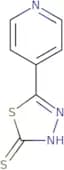
Fórmula:C11H16O4Pureza:Min. 95%Cor e Forma:LiquidPeso molecular:212.24 g/mol5-Pyridin-4-yl-1,3,4-thiadiazole-2-thiol
CAS:5-Pyridin-4-yl-1,3,4-thiadiazole-2-thiol is a molecule that is used as an immunosuppressant. It inhibits the production of cytokines and chemokines by inhibiting the activation of nuclear factor kappa B (NF-κB). This leads to less inflammation and a decrease in the ability of immune cells to proliferate. 5-Pyridin-4-yl-1,3,4-thiadiazole-2-thiol has been shown to have synergistic effects with other drugs, such as antifungal agents.
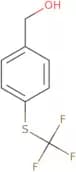
Fórmula:C7H5N3S2Pureza:Min. 95%Cor e Forma:PowderPeso molecular:195.27 g/mol4-(Trifluoromethylthio)benzyl alcohol
CAS:4-(Trifluoromethylthio)benzyl alcohol (4TFABA) is a chemical that is used as a reagent in organic synthesis. It can be used to synthesize a variety of compounds, including pharmaceuticals and agrochemicals. 4TFABA has been found to be an excellent building block for the synthesis of complex molecules. It is also widely used as a reaction component in high-quality research chemicals, such as chiral ligands and heteroaryl ligands.
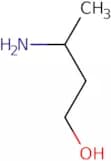
Fórmula:C8H7F3OSPureza:Min. 95%Cor e Forma:PowderPeso molecular:208.2 g/mol3-Aminobutan-1-ol
CAS:3-Aminobutan-1-ol is an amine that is synthesized industrially by the reduction of soybean trypsin with borohydride. This chemical has been used as a substrate in asymmetric synthesis and can be detected by high detection sensitivity. 3-Aminobutan-1-ol binds to the carbonyl group of amino acid residues and causes a reaction with chloride ions for detection. The product of this reaction is an enantiomer, which can be separated from other reaction products by purified chiral stationary phases. 3-Aminobutan-1-ol is also involved in the biosynthesis of proteins and enzymes. It reacts with hydrochloric acid to form a salt, which can then be used as an enzyme inhibitor.
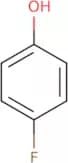
Fórmula:C4H11NOPureza:Min. 95%Cor e Forma:Clear LiquidPeso molecular:89.14 g/mol4-Fluorophenol
CAS:4-Fluorophenol is the organic compound with the formula CHFOH. It is a phenolic compound and has been used in the manufacture of other chemicals such as trifluoroacetic acid, sodium carbonate and creatinine sulfate. The hydroxyl group of 4-Fluorophenol is capable of donating a proton to hydrogen fluoride to form the intramolecular hydrogen bond, which is an important factor in its chemical reactivity. This reaction mechanism can be seen using electrochemical impedance spectroscopy on bacterial strains.
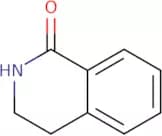
4-Fluorophenol has been shown to be effective for wastewater treatment due to its ability to react with oxygen nucleophiles such as creatinine sulfate and p-hydroxybenzoic acid.Fórmula:C6H5FOPureza:Min. 95%Cor e Forma:White PowderPeso molecular:112.1 g/mol3,4-Dihydroisoquinolin-1(2H)-one
CAS:3,4-Dihydroisoquinolin-1(2H)-one is a potent antagonist of the histamine H1 receptor and has been shown to be safe in animal studies. 3,4-Dihydroisoquinolin-1(2H)-one has also shown efficacy in treating inflammatory diseases, such as asthma and arthritis. This compound was recently tested for its potential to diagnose cancer by targeting the tumor microenvironment. The compound was found to bind to trifluoromethanesulfonic acid (TFMS) with high affinity and selectivity. TFMS is an emerging therapeutic target for cancer therapy because it is highly expressed in the tumor microenvironment and can act as a proton donor for drug delivery systems. 3,4-Dihydroisoquinolin-1(2H)-one has also been observed to have low toxicity profiles in preclinical models, but more research is needed before it can be used clinically.
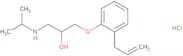
Fórmula:C9H9NOPureza:Min. 95%Cor e Forma:PowderPeso molecular:147.17 g/molAlprenolol hydrochloride
CAS:Produto ControladoAlprenolol hydrochloride is a beta-adrenergic receptor blocker that is used to treat high blood pressure, angina pectoris, and myocardial infarcts. It binds to the β1-adrenergic receptor in the myocardium and blocks the stimulation of adenylate cyclase. This prevents cAMP production, which leads to decreased calcium influx into the myocardium and an inhibition of contractility. Alprenolol hydrochloride has been shown to be effective in treating congestive heart failure (CHF). Alprenolol is metabolized by esterases in the liver and gut wall. The drug has been shown to have a low potency because it is rapidly metabolized by esterases in humans. It also has potential for drug interactions with other drugs that are metabolized by these enzymes. Alprenolol hydrochloride has structural similarity to guanine nucleotide-binding proteins, which may
Fórmula:C15H23NO2·HClPureza:Min. 98 Area-%Cor e Forma:PowderPeso molecular:285.81 g/mol2-Methoxyresorcinol
CAS:2-Methoxyresorcinol is a metabolite that is formed by the oxidation of resorcinol. It has two methoxy groups, which are functional groups that are usually found in organic compounds. 2-Methoxyresorcinol has been shown to inhibit the growth of tumour cells in vitro and in vivo. It also inhibits cell growth by decreasing protein synthesis and cell division. This compound is an analytical method for measuring hematocrit levels and can be used as a natural compound for the treatment of chronic kidney disease.
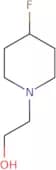
Fórmula:C7H8O3Pureza:Min. 95%Cor e Forma:PowderPeso molecular:140.14 g/mol4-Fluoro-1-piperidineethanol
CAS:Please enquire for more information about 4-Fluoro-1-piperidineethanol including the price, delivery time and more detailed product information at the technical inquiry form on this page
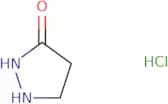
Fórmula:C7H14FNOPureza:Min. 95%Peso molecular:147.19 g/mol4,5-Dihydro-1H-pyrazol-3-ol hydrochloride
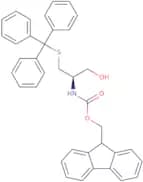
CAS:4,5-Dihydro-1H-pyrazol-3-ol hydrochloride (DHPE) is a potent inhibitor of the uptake and transport of serotonin in the rat brain. DHPE inhibits serotonin uptake by blocking the binding of serotonin to its transporter protein and also inhibits serotonin reuptake at the synapse. It is also an inhibitor of lysine hydroxylase, which converts lysine to catecholamine neurotransmitters. This inhibition leads to decreased levels of dopamine, norepinephrine and epinephrine, which can cause depression. DHPE binds to acidic amino acids such as glycine and glutamate, potentiating their actions on postsynaptic neurons. This effect may be due to increased synaptic activity or decreased inhibitory neurotransmitter release.br> br> The environment can affect the pharmacokinetics of DHPE. DHPE has been shown to have higher concentrations in acidic environments than basic environments because it is more solubleFórmula:C3H6N2OPureza:Min. 95%Cor e Forma:PowderPeso molecular:86.09 g/molFmoc-Cysteinol(Trt)
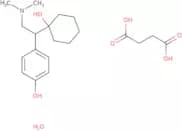
CAS:Fmoc-Cysteinol(Trt) is a versatile building block that can be used in the production of complex compounds and research chemicals. This compound is a high quality, useful building block that is used to synthesize many other compounds. It can also be used as a reagent or speciality chemical. Fmoc-Cysteinol(Trt) has been classified as a CAS No. 215954-72-6 and is a useful scaffold for chemical reactions.Fórmula:C37H33NO3SPureza:Min. 95%Cor e Forma:PowderPeso molecular:571.73 g/mol4-(2-(Dimethylamino)-1-(1-hydroxycyclohexyl)ethyl)phenol
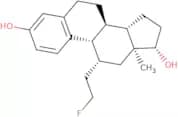
CAS:Produto ControladoVenlafaxine is a selective serotonin and norepinephrine reuptake inhibitor (SNRI) that is used to treat depression. Venlafaxine inhibits the reuptake of serotonin and norepinephrine into the presynaptic neuron, increasing their availability in the synaptic cleft. Venlafaxine has been shown to be effective in treating major depressive disorder and other depressive disorders, such as dysthymia and post-partum depression. The antidepressant effects of venlafaxine are believed to be due to its ability to block the uptake of serotonin and norepinephrine in the brain, resulting in an increased concentration of these neurotransmitters. Venlafaxine is metabolized by CYP2D6, CYP3A4, CYP1A2 and CYP2C19 enzymes, which may result in drug interactions with other drugs metabolized by these enzymes. To control for this effect, venlafaxine bloodFórmula:C16H25NO2Pureza:Min. 97 Area-%Cor e Forma:PowderPeso molecular:263.38 g/mol(8S,9S,11R,13S,14S,17S)-11-(2-Fluoroethyl)-13-Methyl-6,7,8,9,11,12,14,15,16,17-Decahydrocyclopenta[a]Phenanthrene-3,17-Diol
CAS:Produto Controlado(8S,9S,11R,13S,14S,17S)-11-(2-Fluoroethyl)-13-Methyl-6,7,8,9,11,12,14,15,16,17-Decahydrocyclopenta[a]Phenanthrene-3,17-Diol is a light emitting diode (LED) that emits light in the near infrared spectrum. This LED is composed of a single layer of CdTe nanowires and has an emission wavelength of 760 nm. It also has a high quantum efficiency and low energy requirements for fabrication. The lifetime of this device is also long and its optical properties are stable over time. This device can be used to replace traditional incandescent bulbs or to emit light in specific wavelengths for biomedical applications.Fórmula:C20H27FO2Pureza:Min. 95%Peso molecular:318.43 g/mol1-Chloro-3-[4-(2-methoxyethyl)phenoxy]-2-propanol
CAS:1-Chloro-3-[4-(2-methoxyethyl)phenoxy]-2-propanol is a potent antihypertensive agent that is synthesized by the chemoenzymatic process. It differs from other antihypertensive drugs in that it incorporates an oxirane group, which makes it more hydrophobic than other drugs. 1-Chloro-3-[4-(2-methoxyethyl)phenoxy]-2-propanol is a crystalline solid with a melting point of 128°C and a density of 1.0 g/mL. The chemical name for this drug is 4-[(1E)-1-(chloromethoxy)propyl]phenol, which has potent antihypertensive activity and high enantioselectivity.
Fórmula:C12H17ClO3Pureza:Min. 95%Peso molecular:244.71 g/molNiclosamide ethanolamine salt
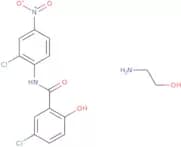
CAS:Chemically a chlorinated salicylanilide, niclosamide is clinically used as an anthelmintic agent. The action of niclosamide has been proven to proceed by inhibiting the STAT3 signaling pathway. Recently, niclosamide, has been considered as an antiproliferative agent in cancer treatment, e.g. melanoma and colorectal cancer. In 2021, niclosamide has been tested for the treatment of COVID-19 patients.Fórmula:C15H15Cl2N3O5Cor e Forma:PowderPeso molecular:388.2 g/mol5-Aminoquinoline
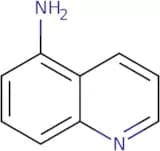
CAS:5-Aminoquinoline (5-AQ) is a chemical compound that was originally synthesized in the 1930s. 5-AQ is a trifluoroacetic acid derivative of quinoline, which has been used as a photographic developer and an agent for the removal of silver from photographic film. This molecule also has a fluorescence property, which can be seen when irradiated by light with a wavelength greater than 350 nm. A hydrogen bond exists between the hydroxyl group and the nitrogen atom of the amine group in 5-AQ. The reaction mechanism for 5-AQ is believed to involve the diazonium salt intermediate, which reacts with silver ions to form silver diazonide and free ammonia.
5-AQ is insoluble in water but soluble in organic solvents such as acetone or alcohol. It reacts with trifluoroacetic acid to form a precipitate, which may be removed by filtFórmula:C9H8N2Pureza:Min. 95%Cor e Forma:PowderPeso molecular:144.17 g/mol2-(3-Hydroxyphenyl)ethyl alcohol
CAS:2-(3-Hydroxyphenyl)ethyl alcohol is a reactive compound that can form an adduct with the tyrosinase enzyme, which catalyzes the conversion of tyrosine to dopa and dopaquinone. 2-(3-Hydroxyphenyl)ethyl alcohol also has been shown to inhibit tyrosinase activity in vitro. This compound has been found in natural compounds such as catechins and flavones.Fórmula:C8H10O2Pureza:Min. 95%Cor e Forma:Clear LiquidPeso molecular:138.16 g/mol4-Bromo-2-fluorophenol
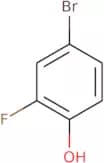
CAS:4-Bromo-2-fluorophenol is a mesomorphic substance that has a helical structure. It has been shown to have ferroelectric properties and light emission, as well as being spontaneously polar. 4-Bromo-2-fluorophenol is a dipole molecule with two hydrogen bonds on each side of the molecule. The fluorine atom in 4-bromo-2-fluorophenol interacts with chlorine atoms through an intramolecular hydrogen bond.Fórmula:C6H4BrFOPureza:Min. 95%Cor e Forma:Clear LiquidPeso molecular:191 g/mol1-Benzylglycerol
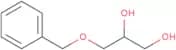
CAS:1-Benzylglycerol is a bifunctional reagent that can be used as an inorganic base or an organic solvent. It has been used to synthesize enantiopure compounds, such as fatty acids. 1-Benzylglycerol reacts with boron trifluoride etherate to form the corresponding ester, which is a reaction system for the synthesis of persulfates. The hydroxyl group on 1-benzylglycerol can be reacted with hydroxyl groups on fatty acids, catalyzed by lipase or chemoenzymes, to produce esters. 1-Benzylglycerol has been used in asymmetric synthesis and carbon tetrachloride immobilization reactions.
Fórmula:C10H14O3Pureza:Min. 95%Cor e Forma:Clear LiquidPeso molecular:182.22 g/mol



![1-Chloro-3-[4-(2-methoxyethyl)phenoxy]-2-propanol](/_next/image/?url=https%3A%2Fstatic.cymitquimica.com%2Fproducts%2F3D%2Fthumb-webp%2FFC27415.webp&w=3840&q=75)