Álcoois
Subcategorias de "Álcoois"
Foram encontrados 5831 produtos de "Álcoois"
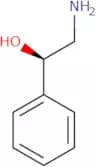
(R)-2-Amino-1-phenylethanol
CAS:(R)-2-Amino-1-phenylethanol is a molecule that has antimicrobial activity. It binds to the active site of bacterial enzymes, such as those involved in the synthesis of cell walls, and inhibits the growth of bacteria through competitive inhibition. This molecule also has a dihedral angle that is similar to that of other molecules with antibacterial activity. (R)-2-Amino-1-phenylethanol is an enantiomer, which means it can be synthesized from either (S)- or (R)-1-phenylethanol. The racemic form is more active than any individual enantiomer.
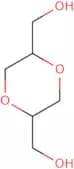
Fórmula:C8H11NOPureza:Min. 95%Cor e Forma:PowderPeso molecular:137.18 g/mol1,4-Dioxane-2,5-dimethanol
CAS:1,4-Dioxane-2,5-dimethanol is a low molecular weight compound that is insoluble in water. It reacts with glycidol to form ring-opening polymerization products. This compound has been shown to exhibit a variety of spectra, including peaks at ν = 3.69, 4.38, and 5.27 ppm (C-H stretching). The major configuration for 1,4-dioxane-2,5-dimethanol is the cis form due to the fact that it has two cationic rings. This substance can be used as an intermediate in the production of polyethers and polyesters. 1,4-Dioxane-2,5-dimethanol can also be used as a solvent for cellulose acetate or nitrocellulose coatings on paperboard or film base materials; however it may cause contamination by substances such as cationic ring opening products and trifluoride
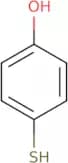
Fórmula:C6H12O4Pureza:Min. 95%Cor e Forma:PowderPeso molecular:148.16 g/mol4-Hydroxythiophenol
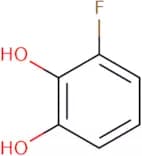
CAS:4-Hydroxythiophenol is an organic compound with the molecular formula C6H4OHO. It is a white crystalline solid that is soluble in water and ethanol. 4-Hydroxythiophenol has been shown to inhibit the growth of bacteria by reacting with free intracellular hydroxyl groups, which are necessary for the biosynthesis of cell walls. This molecule also reacts with other biological molecules, such as nucleic acids and proteins, to form covalent bonds. 4-Hydroxythiophenol has been shown to be effective against both Gram-positive and Gram-negative bacteria in vitro assays.Fórmula:C6H6OSPureza:(%) Min. 75%Cor e Forma:PowderPeso molecular:126.18 g/mol3-Fluorobenzene-1,2-diol
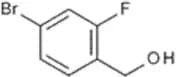
CAS:3-Fluorobenzene-1,2-diol is a chemical that belongs to the group of phenols. It has an effective dose of 0.1 mM and inhibits bacterial growth by reacting with the diphenyl ether and benzoate reaction intermediates. 3-Fluorobenzene-1,2-diol is able to inhibit the growth of Gram positive bacteria and thus can be used for the treatment of infections caused by these bacteria. 3-Fluorobenzene-1,2-diol has been shown to inhibit bacterial growth at concentrations greater than or equal to 1 mM. 3-Fluorobenzene-1,2-diol also binds to triclosan which causes a conformational change in the enzyme protein that leads to a reduction in its activity.Fórmula:C6H5FO2Pureza:Min. 95%Cor e Forma:PowderPeso molecular:128.1 g/mol4-Bromo-2-fluorobenzyl alcohol
CAS:4-Bromo-2-fluorobenzyl alcohol is a high quality chemical that is used as an intermediate to produce other useful chemicals. It is also a reagent, useful in the production of complex compounds. 4-Bromo-2-fluorobenzyl alcohol has a CAS No. 188582-62-9 and can be used as a building block for producing speciality chemicals. This compound can be used as a versatile building block for the production of new products and it is often used as a reaction component in organic synthesis.
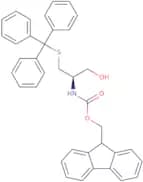
Fórmula:C7H6BrFOPureza:Min. 95%Cor e Forma:PowderPeso molecular:205.02 g/molFmoc-Cysteinol(Trt)
CAS:Fmoc-Cysteinol(Trt) is a versatile building block that can be used in the production of complex compounds and research chemicals. This compound is a high quality, useful building block that is used to synthesize many other compounds. It can also be used as a reagent or speciality chemical. Fmoc-Cysteinol(Trt) has been classified as a CAS No. 215954-72-6 and is a useful scaffold for chemical reactions.Fórmula:C37H33NO3SPureza:Min. 95%Cor e Forma:PowderPeso molecular:571.73 g/mol4-Bromo-3-methylphenol
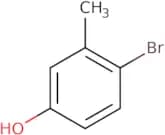
CAS:4-Bromo-3-methylphenol is a hydrochloride salt of 4-bromo-3-methylphenol that has acidic properties. It can be used as a reagent to prepare samples for phosphotungstic acid and ligand desorption techniques. It can also be used in the reduction of sulfoxides by means of hydrogen gas in an efficient method, which is suitable for on-line analysis. 4-Bromo-3-methylphenol is soluble in water and easily prepared from chlorobenzene. This compound has been extensively studied for its use in liquid phase electroosmotic techniques, which are based on the principle that the movement of ions is influenced by an electric field applied to a liquid medium.Fórmula:C7H7BrOPureza:Min. 95%Cor e Forma:PowderPeso molecular:187.03 g/mol2-Ethyl-2-adamantanol
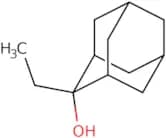
CAS:2-Ethyl-2-adamantanol is a polymerization inhibitor that can be used to prevent the formation of polymers. 2-Ethyl-2-adamantanol inhibits the reaction by reacting with chloride, preventing the formation of a covalent bond. This inhibition is reversible and does not affect other reactions. The use of 2-ethyl-2-adamantanol as an inhibitor has been shown to increase the reaction yield when using bromoethane as a feedstock. It also increases the selectivity for ethyl groups in this process, making it an excellent choice for synthesizing lanthanides.
Fórmula:C12H20OPureza:Min. 95%Cor e Forma:PowderPeso molecular:180.29 g/mol(2,4,6-Trimethoxyphenyl)methyl carbinol
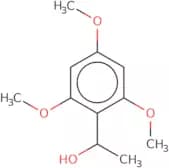
CAS:Trimethoxyphenylmethylcarbinol (TMPC) is a high quality chemical that can be used in the production of research chemicals, pharmaceuticals and other speciality chemicals. It has been shown to be an effective building block for complex compounds such as heterocycles. TMPC has also been shown to have protective effects against oxidative stress and may be useful as a reagent in chemical synthesis.Fórmula:C11H16O4Pureza:Min. 95%Cor e Forma:PowderPeso molecular:212.24 g/molNiclosamide ethanolamine salt
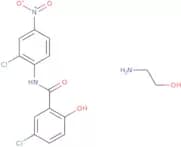
CAS:Chemically a chlorinated salicylanilide, niclosamide is clinically used as an anthelmintic agent. The action of niclosamide has been proven to proceed by inhibiting the STAT3 signaling pathway. Recently, niclosamide, has been considered as an antiproliferative agent in cancer treatment, e.g. melanoma and colorectal cancer. In 2021, niclosamide has been tested for the treatment of COVID-19 patients.Fórmula:C15H15Cl2N3O5Cor e Forma:PowderPeso molecular:388.2 g/mol1,3-Cyclopentanediol
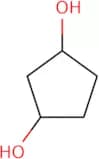
CAS:1,3-Cyclopentanediol is a synthetic chemical with a variety of applications. It is an intermediate in the production of polyester polymers. It also functions as an additive for plastics, paints and coatings, and as a solvent for pharmaceuticals. The reaction rate of 1,3-cyclopentanediol is dependent on the feedstock used and reaction temperatures. 1,3-Cyclopentanediol has been shown to inhibit tyrosine kinases in vitro, which could make it a potential drug target for cancer treatment.
Fórmula:C5H10O2Pureza:Min. 95%Peso molecular:102.13 g/mol7-Chloro-4-hydroxyquinoline-3-carboxylic acid
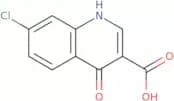
CAS:7-Chloro-4-hydroxyquinoline-3-carboxylic acid is a chemical compound that has antioxidative activity and is used in the production of various organic substances. It is synthesized by reacting ammonium nitrate with a hydroxy group, an organic solvent, and phenoxy. The resulting product can be heated to form 7-chloro-4-hydroxyquinoline, which undergoes a series of reactions to produce 7-chloro-4-(2,2,2,-trichloroethoxy)quinoline. This reaction system produces a quinoline derivative that has been shown to be expressed at high levels in phosphatidylcholine (PC) and alpha-tocopherol (a vitamin E derivative). The final product is then purified by triethyl orthoformate (TEO), which removes the sulfoxide group.
Fórmula:C10H6ClNO3Pureza:Min. 95%Cor e Forma:PowderPeso molecular:223.61 g/mol4,4'-(2-Pyridylmethylene)bisphenol diacetate
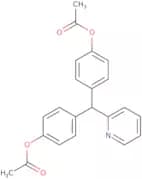
CAS:LaxativeFórmula:C22H19NO4Pureza:Min. 95%Cor e Forma:PowderPeso molecular:361.39 g/mol(R)-1-[3,5-Bis(trifluoromethyl)phenyl]ethan-1-ol
CAS:(R)-1-[3,5-Bis(trifluoromethyl)phenyl]ethan-1-ol is a triazolinone that has been shown to be an efficient contactor for the removal of organic pollutants from water. It is activated by potassium t-butoxide and immobilized on silicone gels. This compound is also active against a broad range of bacteria and fungi.Fórmula:C10H8F6OPureza:Min. 98%Cor e Forma:White PowderPeso molecular:258.16 g/mol16-Fluoroestradiol
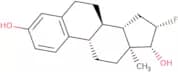
CAS:Produto Controlado16-Fluoroestradiol is a fluorinated form of estradiol that binds to the estrogen receptor. It has been shown to have high affinity for the receptor and is found in tissues such as breast, uterus, and vagina. 16-Fluoroestradiol has been used in cancer research to study uptake and metabolism of estrogens. The drug is metabolized by hydroxylation via cytochrome P450 enzymes and through the action of nucleophilic enzymes such as carboxylesterases. 16-Fluoroestradiol has also been shown to bind to muscle tissue, which may be due to its ability to inhibit uptake of glucose into cells.Fórmula:C18H23FO2Pureza:Min. 95%Peso molecular:290.37 g/mol(R)-(+)-3-Butyn-2-ol
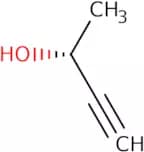
CAS:(R)-(+)-3-Butyn-2-ol is a chiral alcohol that can be used as a substrate for the synthesis of antibiotics. It has been shown to inhibit phosphatases in vivo and can be used as an inhibitor for phosphatases. (R)-(+)-3-Butyn-2-ol can also be used to synthesize glyoxylate, which is an intermediate for the production of antibiotics. This compound has been shown to have optical activity and stereoselectivity. The synthesis of (R)-(+)-3-butyn-2-ol starts with the alkylation reaction between acetylene and formaldehyde, followed by a cross-coupling reaction with bromoethane and lithium aluminum hydride. The final step is the hydrolysis of furfural using water or lipase, yielding (R)-(+)-3-butyn-2-ol.
Fórmula:C4H6OPureza:Min. 98 Area-%Cor e Forma:Clear LiquidPeso molecular:70.09 g/mol4-Bromo-2-fluorophenol
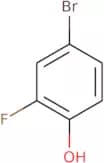
CAS:4-Bromo-2-fluorophenol is a mesomorphic substance that has a helical structure. It has been shown to have ferroelectric properties and light emission, as well as being spontaneously polar. 4-Bromo-2-fluorophenol is a dipole molecule with two hydrogen bonds on each side of the molecule. The fluorine atom in 4-bromo-2-fluorophenol interacts with chlorine atoms through an intramolecular hydrogen bond.Fórmula:C6H4BrFOPureza:Min. 95%Cor e Forma:Clear LiquidPeso molecular:191 g/mol1-Benzylglycerol
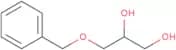
CAS:1-Benzylglycerol is a bifunctional reagent that can be used as an inorganic base or an organic solvent. It has been used to synthesize enantiopure compounds, such as fatty acids. 1-Benzylglycerol reacts with boron trifluoride etherate to form the corresponding ester, which is a reaction system for the synthesis of persulfates. The hydroxyl group on 1-benzylglycerol can be reacted with hydroxyl groups on fatty acids, catalyzed by lipase or chemoenzymes, to produce esters. 1-Benzylglycerol has been used in asymmetric synthesis and carbon tetrachloride immobilization reactions.
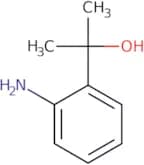
Fórmula:C10H14O3Pureza:Min. 95%Cor e Forma:Clear LiquidPeso molecular:182.22 g/mol2-Amino-α,α-dimethylbenzyl alcohol
CAS:2-Amino-α,α-dimethylbenzyl alcohol is a reagent that is useful in the synthesis of complex compounds. It is also a fine chemical and can be used as an intermediate for other compounds. 2-Amino-α,α-dimethylbenzyl alcohol has been shown to be reactive and can be used as a speciality chemical. This chemical is used as a reaction component for chemical reactions, such as Heck reactions, Suzuki couplings, and Sonogashira couplings. 2-Amino-α,α-dimethylbenzyl alcohol is versatile and can be used in many different reactions due to its high quality.
Fórmula:C9H13NOPureza:Min. 95%Cor e Forma:Clear LiquidPeso molecular:151.21 g/mol2,6-Dimethoxy-4-methylphenol
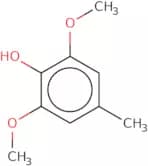
CAS:2,6-dimethoxy-4-methylphenol is a synthetic chemical with potential use as an insecticide. It is a cholinesterase inhibitor that inhibits the action of acetylcholinesterase, an enzyme that breaks down acetylcholine, which is a neurotransmitter important for cognitive function and muscle control. 2,6-dimethoxy-4-methylphenol has been shown to be toxic to insects in a sensitivity test and has also shown some toxicity to rats when administered orally at high doses. This chemical has been shown to inhibit the production of fatty acids in plants and can be used as a potential insecticide for human food crops.
Fórmula:C9H12O3Pureza:Min. 97.0%Cor e Forma:White Yellow PowderPeso molecular:168.19 g/mol

![(R)-1-[3,5-Bis(trifluoromethyl)phenyl]ethan-1-ol](/_next/image/?url=https%3A%2Fstatic.cymitquimica.com%2Fproducts%2F3D%2Fthumb-webp%2FFB43523.webp&w=3840&q=75)