Álcoois
Subcategorias de "Álcoois"
Foram encontrados 5814 produtos de "Álcoois"
11-Heneicosanol
CAS:Please enquire for more information about 11-Heneicosanol including the price, delivery time and more detailed product information at the technical inquiry form on this page
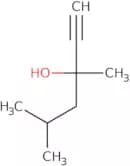
Fórmula:C21H44OPureza:Min. 95%Peso molecular:312.57 g/mol3,5-Dimethyl-1-hexyn-3-ol
CAS:3,5-Dimethyl-1-hexyn-3-ol is a reactive chemical that is used as a polymerase chain reaction (PCR) substrate film. The film has an active surface and can be used to detect the presence of DNA by adding colloidal gold. 3,5-Dimethyl-1-hexyn-3-ol reacts with the glycol ether and surfactant to form a hydrophobic film on the surface of the substrate film. The hydrophobic films are nonpolar and do not mix with water, so they do not dissolve in water. This allows for detection of DNA by using plasma mass spectrometry or eugenol, which reacts selectively with double bonds in DNA. 3,5-Dimethyl-1-hexyn-3-ol is also used in wastewater treatment as an antimicrobial agent to control bacterial growth.
Fórmula:C8H14OPureza:Min. 95%Cor e Forma:Clear LiquidPeso molecular:126.2 g/molPyridine-2,5-diol
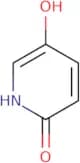
CAS:Pyridine-2,5-diol is a bacterial metabolite that is the product of the enzyme pyridoxal 5'-phosphate oxidase. This enzyme has been shown to be involved in microbial metabolism and enzymatic reactions, such as the conversion of picolinic acid to pyridine-2,5-diol. Pyridine-2,5-diol has been found to be expressed in wild type strains but not in mutant strains. The gene product for this enzyme has also been identified as maleate dehydrogenase.
Fórmula:C5H5NO2Pureza:Min. 95%Peso molecular:111.1 g/molrac 1-oleoyl-3-linoleoylglycerol
CAS:Rac-1-oleoyl-3-linoleoylglycerol is a synthetic compound that has been shown to have cytotoxic effects on leukemia cells. This drug induces apoptosis in leukemia cells by binding with the enzyme protein kinase C, which leads to the activation of caspases. Rac-1-oleoyl-3-linoleoylglycerol also inhibits the growth of murine leukemia cells by inducing apoptosis via an increase in reactive oxygen species and DNA damage. The cytotoxicity of rac 1-oleoyl-3-linoleoylglycerol may be due to its ability to inhibit glyceryl synthesis and accumulate stigmasterol within the cell.Fórmula:C39H70O5Pureza:Min. 95%Peso molecular:618.97 g/mol(2-Chloro-4-nitrophenyl)methanol
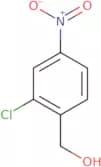
CAS:Please enquire for more information about (2-Chloro-4-nitrophenyl)methanol including the price, delivery time and more detailed product information at the technical inquiry form on this pageFórmula:C7H6ClNO3Pureza:Min. 95%Cor e Forma:PowderPeso molecular:187.58 g/molAzacyclonol
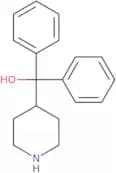
CAS:Produto ControladoAzacyclonol is a cytotoxic drug that prevents the proliferation of cancer cells, by inhibiting DNA synthesis. This drug has shown to be effective in treating bowel diseases, and is also used as a pharmacological agent for the treatment of infectious diseases. Azacyclonol has been shown to inhibit the growth of bacteria such as Mycobacterium tuberculosis, Listeria monocytogenes, and Haemophilus influenzae. It is also used to treat infections caused by HIV. The mechanism of action for azacyclonol is unknown; however, it may be due to its ability to bind with cell factor or stem cell factor.Fórmula:C18H21NOPureza:Min. 95%Peso molecular:267.37 g/mol7-Methylquinoline
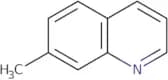
CAS:7-Methylquinoline is an organic compound that can be used to synthesize antimalarial drugs. It is a quinoline derivative with a methyl group at the 7th position. The structure of 7-methylquinoline contains a nitrogen atom and hydrogen atoms, which are bonded to fluorine, chlorine, and bromine atoms. This molecule has been shown to be stable in the presence of Friedel-Crafts catalysts and chloride ions. The reaction mechanism for 7-methylquinoline is intramolecular hydrogen transfer from the chloroform molecule to the quinoline ring system. The formation rate for this compound is slow because it requires two steps: nucleophilic substitution and electrophilic addition reactions.
Fórmula:C10H9NPureza:Min. 95%Peso molecular:143.19 g/mol2-Valeryl-17'-estradiol 17-valerate
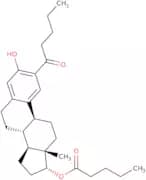
CAS:Produto ControladoPlease enquire for more information about 2-Valeryl-17'-estradiol 17-valerate including the price, delivery time and more detailed product information at the technical inquiry form on this page
Fórmula:CHOPureza:Min. 95%3-O-Acetyl 5,14-androstadiene-3b,17b-diol
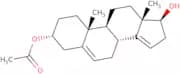
CAS:Produto ControladoPlease enquire for more information about 3-O-Acetyl 5,14-androstadiene-3b,17b-diol including the price, delivery time and more detailed product information at the technical inquiry form on this pageFórmula:C21H30O3Pureza:Min. 95%Peso molecular:330.46 g/mol3-Isoquinolinecarboxylic acid
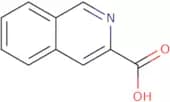
CAS:3-Isoquinolinecarboxylic acid is a molecule with a reactive group that can form cyclic structures. It has been shown that 3-Isoquinolinecarboxylic acid is an apoptotic agent in human macrophages and induces the release of picolinic acid from these cells. This molecule also has a high affinity for α7 nicotinic acetylcholine receptors, which are present on the surface of nerve cells. 3-Isoquinolinecarboxylic acid can be synthesized by condensing picolinic acid, an aromatic aminoacid, with an appropriate amine. The synthesis of this heterocycle is catalyzed by an enzyme called quinolinate synthase. The product of this reaction is oxidized to form 3-isoquinolyl carboxylic acid. The final step in the synthesis involves the oxidative cleavage of a disulfide bond using hydrogen peroxide, yielding 3-isoquinolyFórmula:C10H7NO2Pureza:Min. 95%Peso molecular:173.17 g/molDodecane-1-thiol
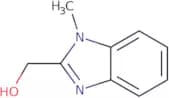
CAS:Dodecane-1-thiol is a chemical that is used as an ingredient in the production of nanoparticles. It has been shown to have high resistance to sodium salts and is chemically stable. Dodecane-1-thiol can be synthesized by reacting dodecane with hydroxylamine and mercaptan, which are both highly reactive compounds. Dodecane-1-thiol has a hydroxyl group on the thiol group and a dimethyl fumarate molecule attached to it. The hydroxyl group reacts with mercaptan, while the dimethyl fumarate molecule attaches to the thiol group to provide stability. Dodecane-1-thiol can also be synthesized using polymerization reactions.Fórmula:C12H26SPureza:95%MinPeso molecular:202.4 g/mol(1-Methyl-1H-benzimidazol-2-yl)methanol
CAS:Produto Controlado1-Methyl-1H-benzimidazol-2-yl)methanol is a mononuclear, ligand anion with a sulfate group. The compound has a molecular weight of 180.07 and its chemical formula is C6H5NOSO3S. It is soluble in water and alcohols, but insoluble in ethers and chloroform. 1-Methyl-1H-benzimidazol-2-yl)methanol reacts with oxygen to form the corresponding peroxide, which has a boiling point of 228°C at 760 mm Hg pressure. This compound also reacts with nitric acid to form the corresponding nitrate salt, which can be precipitated by adding sodium chloride or ammonium chloride.Fórmula:C9H10N2OPureza:Min. 95%Peso molecular:162.19 g/mol1-Methylcyclopropanol
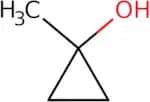
CAS:1-Methylcyclopropanol is a multigram chemical that can be produced on a large scale. It is an organic compound with the molecular formula CH3CCH2OH. It can be synthesized from monomers such as cyclobutanone, amines, and hydrogen bond by ring-opening polymerization to produce polycyclohexane rings. 1-Methylcyclopropanol has been used in the synthesis of polymers such as poly(1-methylcyclopropane). This chemical has also been investigated for use in laser ablation techniques that remove material from surfaces and in laser cutting techniques that cut materials into shapes. 1-Methylcyclopropanol has been found to react with hypobromous acid to form a diol ether product.Fórmula:C4H8OPureza:80%MinCor e Forma:Clear LiquidPeso molecular:72.11 g/mol(1-Isobutyl-1H-benzimidazol-2-yl)methanol
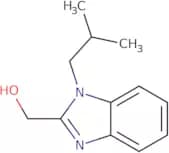
CAS:Produto ControladoPlease enquire for more information about (1-Isobutyl-1H-benzimidazol-2-yl)methanol including the price, delivery time and more detailed product information at the technical inquiry form on this pageFórmula:C12H16N2OPureza:Min. 95%Peso molecular:204.27 g/mol1,2-O-Dioctadecyl-rac-glycerol
CAS:1,2-O-Dioctadecyl-rac-glycerol is a lipid that belongs to the class of synthetic lipids. It has been used as a model system for studying the interactions between phosphatidylcholine (PC) and other lipids. The systematic study of the morphology of 1,2-O-dioctadecyl-rac-glycerol in various solvents revealed that it is an amphiphile with an elongated shape. This molecule interacts with PC membranes in a specific manner, which can be detected using optical measurements. The transition from the solid to liquid state causes 1,2-O-dioctadecyl-rac-glycerol to change its shape from a rod to an ellipsoid. This property can be used as a diagnostic tool for identifying transitions in nanomaterials.Fórmula:C39H80O3Pureza:Min. 95%Peso molecular:597.05 g/molCP 55940
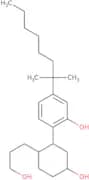
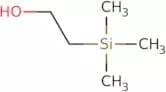
CAS:Produto ControladoCP 55940 is a cannabinoid receptor agonist that inhibits acetylcholine release in the brain and has been shown to cause neuronal death. CP 55940 binds to the α7 nicotinic acetylcholine receptor, which is important for memory and learning. The binding of this drug causes an increase in guanine nucleotide-binding protein (G protein) activity by reducing the rate of GTP hydrolysis, leading to inhibition of adenylyl cyclase activity and subsequent decrease in cAMP levels. CP 55940 has significant up-regulation of toll-like receptors following exposure, which leads to an increased immune response. This drug can also cause bowel disease or side effects such as seizures and psychotic symptoms. CP 55940 can interact with other drugs, including cannabinoids that may lead to serious side effects.Fórmula:C24H40O3Pureza:Min. 95%Peso molecular:376.57 g/mol2-(Trimethylsily)ethanol
CAS:2- (Trimethylsily)ethanol is a hdac inhibitor that is used in the synthesis of other chemical substances. It inhibits HDAC activity by binding to the hydroxyl group on the histone and prevents acetylation of lysine residues, preventing gene transcription. 2-(Trimethylsily)ethanol has been shown to inhibit oxidation reactions in biological systems, such as those caused by trifluoroacetic acid or trichloroacetic acid. In addition, this reagent can be used to prepare functional groups through a synthetic method with an activation energy of 15 kcal/mol and a reaction rate constant of 0.04 M-1 s-1. 2-(Trimethylsily)ethanol has also been used for preparative methods with cleavage products including sulfamoyl chloride.
Fórmula:C5H14OSiPureza:95%NmrCor e Forma:PowderPeso molecular:118.25 g/molMidazolam-d4 maleate - 100 mg/mL in methanol
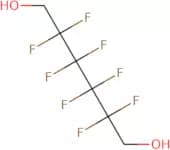
CAS:Produto ControladoPlease enquire for more information about Midazolam-d4 maleate - 100 mg/mL in methanol including the price, delivery time and more detailed product information at the technical inquiry form on this pageFórmula:C18D4H9ClFN3·C4H4O4Pureza:Min. 95%Peso molecular:445.86 g/mol2,2,3,3,4,4,5,5-Octafluoro-1,6-hexanediol
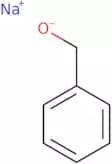
CAS:Octafluoro-1,6-hexanediol is a cyclic diol with the chemical formula C6F14O2. The compound is produced by the reaction of hexafluoropropylene oxide and hydrogen fluoride in the presence of a catalyst. This process can be repeated to produce higher molecular weight compounds such as octafluoro-1,8-octanediol (C8F18O2) and octafluoro-1,10-decanediol (C10F22O2). Octafluoro-1,6-hexanediol has been studied using spectroscopies and x-ray crystallography techniques. X-ray crystallographic studies have shown that this molecule has an intramolecular conformation with one hydroxy group on each end of the molecule. Octafluoro-1,6-hexanediol forms crystals that are colorless or light yellow in color. Crystals are monoclinFórmula:C6H6F8O2Pureza:Min. 95%Cor e Forma:PowderPeso molecular:262.1 g/molSodium benzyloxide solution - 1.0 M in benzyl alcohol
CAS:Sodium benzyloxide is an alkanoic acid with the chemical formula CH3C6H2O2. It is used as a matrix metalloproteinase inhibitor in the synthesis of bicyclic heterocycles. It is also used in asymmetric synthesis and as a substrate for enzyme inhibitors. Sodium benzyloxide has been shown to be effective against herpes simplex virus by preventing viral replication and inducing apoptosis.
Fórmula:C6H5CH2ONaCor e Forma:Clear LiquidPeso molecular:130.12 g/mol