Álcoois
Subcategorias de "Álcoois"
Foram encontrados 5814 produtos de "Álcoois"
Allopurinol-d2
CAS:Allopurinol-d2 is an inhibitor of xanthine oxidase, which is an enzyme that catalyzes the conversion of hypoxanthine to xanthine and then to uric acid. Allopurinol-d2 is used for the treatment of gout and hyperuricemia. The compound was expressed in Escherichia coli and purified by electrospray ionization mass spectrometry. It has been shown to inhibit methyltransferase activity, thereby decreasing the production of urate. Allopurinol-d2 has also been shown to decrease disease activity in animal models of colitis and ulcerative colitis.
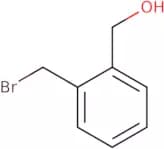
Fórmula:C5H2D2N4OPureza:Min. 95%Peso molecular:138.12 g/mol(2-(Bromomethyl)phenyl)methanol
CAS:(2-(Bromomethyl)phenyl)methanol is an acceptor of a palladium complex. It is used in the synthesis of amides and other functional groups, as well as in catalysis. 2-(Bromomethyl)phenyl)methanol can be quaternized with methyl iodide to form a bromoalkylamine. The reaction proceeds via an amide group on the bromoalkylamine and a hydrogen atom from the alkyl halide. This process is known as "supramolecular" or "intermolecular" hydrogen bonding. It has been found that 2-(Bromomethyl)phenyl)methanol forms complexes with palladium through intermolecular hydrogen bonding, which are more stable than those formed by other ligands such as phosphines and cyanides.Fórmula:C8H9BrOPureza:95%NmrPeso molecular:201.06 g/mol2-Methyl-2-propanethiol
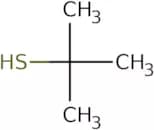
CAS:2-Methyl-2-propanethiol is an electron acceptor and a reagent that can be used for the synthesis of organic compounds. It is soluble in polar solvents, but insoluble in nonpolar solvents. 2-Methyl-2-propanethiol has been shown to react with thiols at concentrations below its optimum concentration. The reaction mechanism is believed to involve adsorption and intramolecular hydrogen transfer. The adsorption process occurs on the surface of the substrate and the intramolecular hydrogen transfer occurs through an intermolecular hydrogen bond with the substrate's hydroxyl group or disulfide bond. When 2-methyl-2-propanethiol reacts with a thiol, it forms a mercaptan group called p2 that contains two substituents, one on each carbon atom. This reaction produces a disulfide bond as well as an electrochemical detector signal known as "activated."
Fórmula:C4H10SPureza:Min. 98%Cor e Forma:Clear LiquidPeso molecular:90.19 g/molPotassium trimethylsilanolate
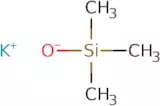
CAS:Potassium trimethylsilanolate is a chemical substance that has inhibitory properties. It is a trifluoroacetic acid derivative that inhibits the activity of certain enzymes, such as proteases and lipases. The compound's inhibitory properties are due to its ability to bind to cytochrome cb2 receptors by means of hydrogen bonding. The binding of potassium trimethylsilanolate to the receptor prevents the activation of apoptosis proteins and protein synthesis in cells. This substance also has an inhibitory effect on water vapor, inhibiting the formation of water molecules from hydrogen atoms and oxygen atoms. Potassium trimethylsilanolate can be used as an anti-cancer agent by preventing cell division in tumor cells and preventing cancer metastasis through inhibition of protease activity.Fórmula:C3H9KOSiPureza:Min. 95%Peso molecular:128.29 g/mol3,4-Dimethoxythiophenol
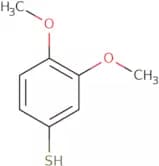
CAS:3,4-Dimethoxythiophenol is a chemical compound that is used as a fluorescence probe to study biological functions in cells. It reacts with hydroxyl groups and other reactive sites on proteins, including sulfhydryl groups, thiols, and amines. 3,4-Dimethoxythiophenol has been shown to inhibit the viability of cancer cells (e.g., prostate cancer cells) by interfering with the function of dehydrogenase enzymes. 3,4-Dimethoxythiophenol also inhibits growth of microglia (cells that protect neurons) in vitro. This inhibition is due to the production of reactive oxygen species by the microglial cells. The chemical structure of this compound includes a hydroxyl group and two methoxy groups.
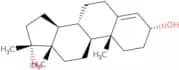
Fórmula:C8H10O2SPureza:Min. 95%Cor e Forma:Clear LiquidPeso molecular:170.23 g/mol17-Methyl-4-androstene-3a,17a-diol
CAS:Produto ControladoPlease enquire for more information about 17-Methyl-4-androstene-3a,17a-diol including the price, delivery time and more detailed product information at the technical inquiry form on this pageFórmula:C20H32O2Pureza:Min. 95%Peso molecular:304.47 g/molToluene-3,4-dithiol
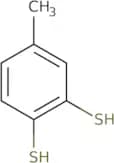
CAS:Toluene-3,4-dithiol is a reactive dithiol that has been shown to have synergistic effects with other organic compounds. It is used in the preparation of methyl ethyl and its derivatives. Toluene-3,4-dithiol has also been shown to inhibit both the activity of enzymes and the growth of bacteria. The biological properties of this compound are not well understood, but it can be used as a model system for studying disulfide bonds and their role in protein folding. Studies have shown that this compound inhibits enzymatic activity and reduces bacterial growth without affecting cell viability.
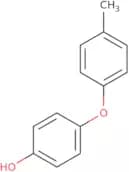
Fórmula:C7H8S2Pureza:Min. 95%Peso molecular:156.27 g/mol4-(4-Methylphenoxy)phenol
CAS:Please enquire for more information about 4-(4-Methylphenoxy)phenol including the price, delivery time and more detailed product information at the technical inquiry form on this pageFórmula:C13H12O2Pureza:Min. 95%Peso molecular:200.23 g/molPotassium methoxide, 25% w/w in methanol
CAS:Potassium methoxide is a strong base that reacts with methanol to produce potassium metal and methanol. It has been used as a model system for studying the reaction mechanism of metal carbonyls. The reaction solution is heated to produce glycol esters, which are catalyzed by the potassium metal. This process can be used to synthesize biologically active molecules, such as anti-inflammatory drugs, which are difficult to make using conventional methods. Potassium methoxide has also been shown to have protective effects against metabolic disorders in mice and has biological properties that may be useful in the treatment of infectious diseases.Fórmula:CH3OKPureza:Min. 95%Cor e Forma:Clear LiquidPeso molecular:70.13 g/mol[5-(Trifluoromethyl)-1,2-Oxazol-3-Yl]Methanol
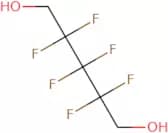
CAS:Please enquire for more information about [5-(Trifluoromethyl)-1,2-Oxazol-3-Yl]Methanol including the price, delivery time and more detailed product information at the technical inquiry form on this pageFórmula:C5H4F3NO2Pureza:Min. 95%Peso molecular:167.09 g/mol2,2,3,3,4,4-Hexafluoro-1,5-pentanediol
CAS:Produto Controlado2,2,3,3,4,4-Hexafluoro-1,5-pentanediol is a colorless liquid with a boiling point of 155°C. It is soluble in water and has an odor similar to that of hexane. 2,2,3,3,4,4-Hexafluoro-1,5-pentanediol is used as a chemical intermediate for the production of sodium salts and quaternary ammonium compounds. This substance can be obtained by reacting butanediol with hydrofluoric acid or trifluoromethanesulfonic acid. The most common use of 2,2,3,3,4,4-hexafluoro-1,5-pentanediol is in the synthesis of amines. It also has been used as a solvent for electroplating metals and as a high boiling point solvent in organic reactions. This compound exhibits nucleophilic properties with amines and canFórmula:C5H6F6O2Pureza:Min. 95%Peso molecular:212.09 g/mol3-O-Benzyl estriol
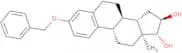
CAS:Produto Controlado3-O-Benzyl estriol is a synthetic estrogen that is used to treat menopausal symptoms. This drug has been shown to have a high affinity for the estrogen receptor, and it is also able to activate the estrogen receptor in cells. 3-O-Benzyl estriol has been shown to be more potent than other estrogens such as estrone or estriol and has been shown to increase the synthesis of proteins by increasing RNA synthesis. 3-O-Benzyl estriol is conjugated with glucuronic acid and excreted in the bile. It also has a number of metabolic transformations, including pyrolysis, which produces cyanamid and triethylamine.Fórmula:C25H30O3Pureza:Min. 95%Peso molecular:378.5 g/mol3-O-Benzyl 16-epiestriol
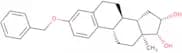
CAS:Produto ControladoPlease enquire for more information about 3-O-Benzyl 16-epiestriol including the price, delivery time and more detailed product information at the technical inquiry form on this pageFórmula:C25H30O3Pureza:Min. 95%Peso molecular:378.5 g/mol2-Cyclopentyl-4-chlorophenol
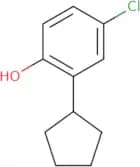
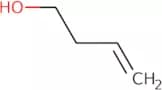
CAS:2-Cyclopentyl-4-chlorophenol is a synthetic fatty acid that is used as an antiviral agent. It inhibits the synthesis of fatty acids by inhibiting the conversion of 2,4-dienoyl CoA to 3-hydroxyacyl CoA. 2-Cyclopentyl-4-chlorophenol has been shown to be effective against a number of test organisms, including bacteria such as staphylococcus and virus such as herpes simplex virus. 2-Cyclopentyl-4-chlorophenol inhibits viral protein synthesis by blocking the action of host enzymes required for this process. The target cell for this drug is the host cell infected with a virus. This drug also has antihelminthic properties and can be used to treat parasitic infections caused by schistosoma haematobium and clonorchis sinensis worms. 2CPCP's structural formula is shown below:Fórmula:C11H13ClOPureza:Min. 95%Peso molecular:196.67 g/mol3-Buten-1-ol
CAS:3-Buten-1-ol is a reactive, anhydrous alcohol that can be used as a model system for hydrogen bonding. It can also be used to demonstrate the uptake of hydrochloric acid and hydroxyl group substitution reactions. 3-Buten-1-ol is soluble in organic solvents such as benzene and chloroform, but insoluble in water. The structural analysis of 3-buten-1-ol has been performed using spectroscopic techniques such as laser ablation and x-ray diffraction to determine its molecular formula. The reaction solution of 3-buten-1-ol with zirconium oxide has been shown to produce intramolecular hydrogen bonds and solid catalysts.
Fórmula:C4H8OPureza:Min. 95%Cor e Forma:Clear LiquidPeso molecular:72.11 g/mol1,2-O-Dioctadecyl-sn-glycerol
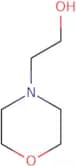
CAS:1,2-O-Dioctadecyl-sn-glycerol is a hydrogenated glycerol that can be used as an advance in synthetic chemistry. It can be hydrogenolyzed to produce choline and cyclic phosphatidylglycerols. The catalytic properties of 1,2-O-dioctadecyl-sn-glycerol are due to its ability to react with chloride or cadmium chloride to form dialkyl glycerols. This product is also used in the synthesis of cadmium.Fórmula:C39H80O3Pureza:Min. 95%Peso molecular:597.05 g/mol2-Morpholinoethanol
CAS:2-Morpholinoethanol is a potent inhibitor of the enzyme nitric oxide synthase, which is involved in the synthesis of nitric oxide. Nitric oxide is an important molecule that regulates many physiological processes, such as inflammation and blood flow. 2-Morpholinoethanol has been shown to have high resistance to thermal expansion, due to its intramolecular hydrogen bonding. It also inhibits the activity of amine oxidases, which are enzymes that catalyze reactions involving amines and oxygen. The mechanism of action of 2-morpholinoethanol has been studied by using group P2 fatty acids and amines as substrates for nitric oxide synthase.
Fórmula:C6H13NO2Pureza:Min. 95%Peso molecular:131.17 g/molMethoxypropoxypropanol
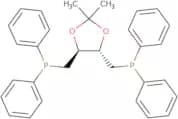
CAS:Methoxypropoxypropanol (MPP) is a highly selective inhibitor of the enzyme picolinic acid carboxylase, which converts L-pyridoxal 5'-phosphate to picolinic acid. MPP has shown good efficacy in reducing disease activity in animal models and is being developed for the treatment of rheumatoid arthritis. This drug also has been shown to be toxicologically safe in both acute and chronic toxicity studies. Methoxypropoxypropanol has also been used as an analytical reagent for the qualitative detection of picolinic acid in urine and blood samples. The use of this compound as a wastewater treatment agent for removal of organic acids from industrial effluents is well studied. MPP has been found to have some beneficial effects on congestive heart failure in rats by lowering their blood pressure and cholesterol levels.Fórmula:C7H16O3Pureza:Min. 95%Cor e Forma:Clear LiquidPeso molecular:148.2 g/mol(2S,3S)-(+)-1,4-Bis(diphenylphosphino)-2,3-O-isopropylidene-2,3-butanediol
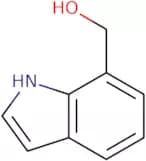
CAS:(2S,3S)-(+)-1,4-Bis(diphenylphosphino)-2,3-O-isopropylidene-2,3-butanediol is a chiral phosphine ligand. It has been used as an optical catalyst for styrene polymerization and as a homogeneous catalyst for the electrochemical oxidation of cyclic aldehydes. This compound has also been used in preparative voltammetric studies of phosphines and diphosphines. (2S,3S)-(+)-1,4-Bis(diphenylphosphino)-2,3-O-isopropylidene-2,3-butanediol can be obtained by reduction of bis-(diphenylphosphine)ethane with lithium aluminum hydride or sodium borohydride. This compound is soluble in solvents such as benzene and chloroFórmula:C31H32O2P2Pureza:Min. 95%Peso molecular:498.53 g/molIndole-7-methanol
CAS:Indole-7-methanol is a flavin cofactor that catalyses the formylation of indole-7-carboxylic acid. Indole-7-methanol can be synthesized by the conversion of indole-7-carboxaldehyde with formaldehyde and ammonium acetate. The macrocyclic, isomeric, and formylated forms of indole-7-methanol have been shown to have utilisation activity in the synthesis of various compounds. These reactions are catalyzed by flavins such as FAD or FMN. Mutant, unsymmetrical derivatives of indole-7-methanol are also known to undergo these types of reactions. The most common derivative is indirubin, which has been shown to inhibit DNA polymerase III and IV in vitro.Fórmula:C9H9NOPureza:Min. 95%Peso molecular:147.17 g/mol



![[5-(Trifluoromethyl)-1,2-Oxazol-3-Yl]Methanol](/_next/image/?url=https%3A%2Fstatic.cymitquimica.com%2Fproducts%2F3D%2Fthumb-webp%2FFT89239.webp&w=3840&q=75)