Álcoois
Os álcoois são uma ampla gama de moléculas orgânicas derivadas de hidrocarbonetos que contêm um ou mais grupos hidroxila (grupo OH). Estes compostos são essenciais em várias reações químicas e são amplamente utilizados em laboratórios para síntese, como solventes e em química analítica. Na CymitQuimica, oferecemos álcoois de alta qualidade preparados para uso laboratorial, apoiando suas pesquisas e aplicações industriais com produtos confiáveis e eficazes. Nossa seleção garante que você tenha os álcoois adequados para suas necessidades específicas, seja para trabalhos de laboratório de rotina ou para projetos de pesquisa especializados.
Subcategorias de "Álcoois"
Foram encontrados 5814 produtos de "Álcoois"
Ordenar por
Pureza (%)
0
100
|
0
|
50
|
90
|
95
|
100
5-Chloropentanol
CAS:5-Chloropentanol is a reactive compound that can be used as an epidermal growth factor. It has been shown to have potentiating effects on the production of epidermal growth factor in a biological sample. 5-Chloropentanol has also been shown to increase the rate of cell proliferation, which could be due to its ability to generate reactive chloroform in cells. It is not known whether 5-Chloropentanol has any carcinogenic properties.Pureza:Min. 95%trans-Decahydroquinoline
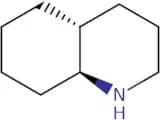
CAS:<p>Trans-decahydroquinoline is a chiral compound that can be synthesized by an asymmetric synthesis. It is an amide with a carbonyl group and a dialkylamino group. Trans-decahydroquinoline can be used to synthesize different compounds, such as enantiopure drugs, pharmaceuticals, and agrochemicals. The synthesis of trans-decahydroquinoline can be accomplished through the aldol cyclization or the addition of an acid to the carbonyl group. The magnetic resonance spectroscopy (NMR) and molecular modeling techniques have been used to study its structure and properties.</p>Fórmula:C9H17NPureza:Min. 95%Peso molecular:139.24 g/mol1-Aziridineethanol
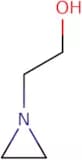
CAS:1-Aziridineethanol is a chemical used in research to study the effects of radiation on cells. It has been shown that the presence of 1-aziridineethanol in cells increases their sensitivity to radiation. In addition, this compound can be used as a chelate ligand for potassium ions. This product is also hydrophilic, allowing it to be dissolved in water and other polar solvents. Moreover, this chemical contains one hydroxy group and can undergo dehydration reactions with acids such as hydrochloric acid. The patterning of this product is determined by the presence of hydroxyl groups, which are reactive with hydrogen bond formation. 1-Aziridineethanol is also able to react with aromatic hydrocarbons and proteins due to its nucleophilic property. This product can undergo a number of chemical reactions, including the formation of azo bonds with azides and amines, as well as epoxidation reactions with peroxyacids such as m-Fórmula:C4H9NOPureza:Min. 95%Peso molecular:87.12 g/mol2,3-Dimercapto-1-propanol
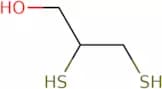
CAS:2,3-Dimercapto-1-propanol (DMPC) is an antibiotic that has been shown to have a potent synergistic effect when used in combination with other antibiotics. DMPC inhibits the enzyme fatty acid synthase and prevents the synthesis of long-chain fatty acids. It also inhibits the uptake of long-chain fatty acids by tissues such as liver, muscle, and fat cells. DMPC is also a reactive chemical that reacts with oxygen from the air to form 2,3-dimercapto-1-propanol peroxyl radicals and hydrogen peroxide. These reactive species are toxic to cells exposed to DMPC in tissue culture or in vivo. This chemical is also a potent inducer of all-trans retinoic acid and dehydroascorbic acid production.Fórmula:C3H8OS2Pureza:Min. 95%Cor e Forma:Clear LiquidPeso molecular:124.23 g/mol4-[2-(Cyclopropylmethoxy)ethyl]phenol
CAS:<p>4-[2-(Cyclopropylmethoxy)ethyl]phenol is a potent beta-blocker that has been used as an antiglaucoma drug. This substance has been shown to have cardiovascular effects, such as vasodilation and peripheral vasoconstriction, that are mediated by its blockade of beta-adrenergic receptors. 4-[2-(Cyclopropylmethoxy)ethyl]phenol also reduces intraocular pressure in the eye, which may be due to its inhibition of prostaglandin synthesis.</p>Fórmula:C12H16O2Pureza:Min. 95%Peso molecular:192.25 g/mol(R)-(-)-2-Amino-1-butanol
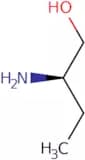
CAS:(R)-(-)-2-Amino-1-butanol is an organic compound that is used as a reagent in the synthesis of pharmaceuticals. It has antimycobacterial properties and can be used to treat tuberculosis. The mechanism for its antimycobacterial activity is not fully understood, but it may involve copper complex formation with the mycobacteria. The chloride ion may also play a role in this process by binding to the copper complex and increasing its solubility in water. This compound may react with aminothiols from the host cell, leading to degradation of DNA, RNA, and proteins. (R)-(-)-2-Amino-1-butanol has been shown to have cytotoxic effects on colorectal adenocarcinoma cells and human lung cancer cells in culture. It also inhibits human colon carcinoma cells in culture through the production of organic acids such as formic acid and acetic acid.Fórmula:C4H11NOPureza:Min. 95%Peso molecular:89.14 g/mol2-((3-Amino-4-methoxyphenyl)amino)ethanol sulfate
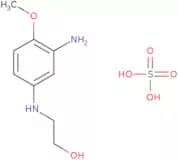
CAS:2-((3-Amino-4-methoxyphenyl)amino)ethanol sulfate is a potent antibacterial agent that inhibits the growth of bacteria by binding to the 50S ribosomal subunit. It is also used in dermatology, as an aminophenol, and as an ingredient in cosmetics. 2-((3-Amino-4-methoxyphenyl)amino)ethanol sulfate has been shown to be efficacious against bacterial infections caused by methicillin resistant Staphylococcus aureus (MRSA), Pseudomonas aeruginosa, Proteus mirabilis, and Klebsiella pneumoniae. This compound also has antihistamine properties.Fórmula:C9H16N2O6SPureza:Min. 95%Peso molecular:280.3 g/molBromadiolone
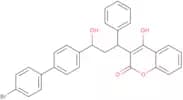
CAS:<p>Bromadiolone NA is a rodenticide that is used in the treatment of rodents in wastewater treatment. Bromadiolone NA has been shown to inhibit the mitochondrial membrane potential, which leads to the release of cytochrome C and activation of caspase 3. Bromadiolone NA also has antioxidative properties that protect against oxidative injury and its metabolites have been found to inhibit human serum albumin. This compound has been used as an antimicrobial agent to control biofilm formation and prevent microbial growth. The mode of action for bromadiolone is through the inhibition of chitosan polymerization, which prevents bacterial attachment and biofilm formation on surfaces. Bromadiolone NA was also shown to bind with DNA, inhibiting replication and transcription.</p>Fórmula:C30H23BrO4Pureza:Min. 95%Cor e Forma:PowderPeso molecular:527.41 g/mol5-Hexyn-1-ol
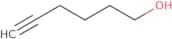
CAS:5-Hexyn-1-ol is a molecule that belongs to the group of organic compounds called fatty acids. It is a colorless liquid with an odor reminiscent of that of hexane. 5-Hexyn-1-ol has been shown to inhibit the proliferation of brain cells and tumor cells in culture. It also inhibits the growth of caco-2 cell lines, which are used as a model for human intestinal epithelial cells. The hydroxyl group in 5-hexyn-1-ol reacts with nitrogen nucleophiles such as picolinic acid and palladium chloride to form an intermediate compound, which can then be transformed into the desired product by addition of a second reactant.Fórmula:C6H10OPureza:Min. 95%Peso molecular:98.14 g/molp-Mentha-8-thiol-3-one
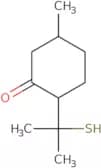
CAS:<p>p-Mentha-8-thiol-3-one is a stabilizer that can be used in the synthesis of agathosma and other terpenes. It is also used as a mass spectrometric standard for the identification of stereoisomers. p-Mentha-8-thiol-3-one has been shown to have antibacterial effects against gram positive bacteria, including methicillin resistant Staphylococcus aureus (MRSA). This compound can be used in vitro to study the interactions between cytochrome P450 enzymes, lipid matrix and terpene compounds. In addition, it has been shown to work as a gas sensor, where it reacts with sodium sulfide to produce hydrogen sulfide gas.</p>Fórmula:C10H18OSPureza:Min. 95%Cor e Forma:Clear LiquidPeso molecular:186.32 g/mol6-Methoxy-2-methylquinolin-4(1H)-one
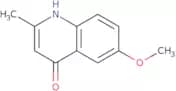
CAS:6-Methoxy-2-methylquinolin-4(1H)-one is a heterocyclic molecule that has the ability to undergo oxidation reactions. It is an intermediate in the synthesis of other molecules, such as 4-hydroxyquinoline and 4-hydroxybenzaldehyde. The acidity of 6-methoxy-2-methylquinolin-4(1H)-one can be increased by adding alkali, which will cause it to react with hydroxyl and form a phenylhydrazine. When heated with hydrazine, 6-methoxy-2-methylquinolin-4(1H)-one undergoes tautomerism and forms 2-(phenylhydrazinyl) quinoline. The chemical structure of 6-methoxy-2 methylquinolin 4(1H)-one can be detected by analyzing its spectrum (i.e., absorption or emission spectra). This chemical shows bandsFórmula:C11H11NO2Pureza:Min. 95%Peso molecular:189.21 g/moltert-Butyl alcohol
CAS:Produto Controlado<p>Tert-butyl alcohol is used in wastewater treatment as a biocide. It has been shown to inhibit the growth of bacteria by binding to their aminotransferase enzymes. Tert-butyl alcohol binds to the active site of an enzyme and inhibits its activity by forming a covalent bond with an amino acid residue. Tert-butyl alcohol also binds to human serum albumin, which may be due to its ability to react with hydroxyl groups on the protein surface. The reaction solution is analyzed using a kinetic method, which determines how much tert-butyl alcohol is consumed over time (k1/2). This information can be used to determine the reaction mechanism for tert-butyl alcohol.</p>Fórmula:C4H10OPureza:(Gc) Min. 99.0%Cor e Forma:Clear LiquidPeso molecular:74.12 g/mol(1,5-Dimethyl-1H-benzimidazol-2-yl)methanol
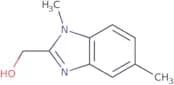
CAS:Produto ControladoPlease enquire for more information about (1,5-Dimethyl-1H-benzimidazol-2-yl)methanol including the price, delivery time and more detailed product information at the technical inquiry form on this pageFórmula:C10H12N2OPureza:Min. 95%Peso molecular:176.22 g/mol1,2,3,4-Tetrahydro-4,6-dihydroxy-2-methyl-isoquinoline
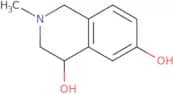
CAS:<p>1,2,3,4-Tetrahydro-4,6-dihydroxy-2-methyl-isoquinoline is a useful building block in the synthesis of various compounds such as pharmaceuticals and pesticides. It is an intermediate for the preparation of other valuable chemicals such as the antihistamine diphenhydramine, which is used to treat allergies. Tetrahydroisoquinoline can also be used as a reagent to synthesize other chemical compounds. This compound has been used in research as well as commercial applications. Tetrahydroisoquinoline is also a versatile scaffold that can be modified to produce different derivatives with different properties.</p>Fórmula:C10H13NO2Pureza:Min. 95%Cor e Forma:White PowderPeso molecular:179.22 g/mol3-Acetyl-1-propanol
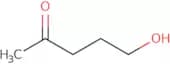
CAS:<p>3-Acetyl-1-propanol is a chemical substance that contains a hydroxy group and a hydrogen chloride molecule. The kinetic data for the reaction of 3-acetyl-1-propanol with water vapor has been found to be constant. This reaction is a nucleophilic attack on the C=O bond, which is followed by an intramolecular hydrogen transfer from one of the OH groups to the other. The product of this reaction is 3-hydroxypropanoic acid, which can be converted back to 3-acetyl propanol by hydrolysis. Hydrochloric acid is used as a catalyst in this process.</p>Fórmula:C5H10O2Pureza:Min. 95%Cor e Forma:Colourless To Light (Or Pale) Yellow To Red-Brown LiquidPeso molecular:102.13 g/mol(17a)-3-Ethynyl-19-norpregna-3,5-dien-20-yn-17-ol
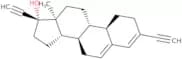
CAS:Produto Controlado<p>Please enquire for more information about (17a)-3-Ethynyl-19-norpregna-3,5-dien-20-yn-17-ol including the price, delivery time and more detailed product information at the technical inquiry form on this page</p>Fórmula:C22H26OPureza:Min. 95%Peso molecular:306.44 g/mol4-Chloroquinoline-6-carboxylicacid
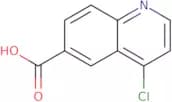
CAS:Please enquire for more information about 4-Chloroquinoline-6-carboxylicacid including the price, delivery time and more detailed product information at the technical inquiry form on this pageFórmula:C10H6ClNO2Pureza:Min. 95%Peso molecular:207.61 g/mol(S)-1-Benzyl-pyrrolidin-3-ol
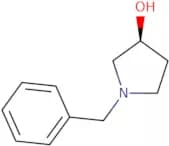
CAS:<p>(S)-1-Benzyl-pyrrolidin-3-ol is an enantiopure chiral drug that is used as a reagent for the synthesis of sodium salts. It is also used in environmental pollution studies, where it was found to inhibit the reaction between sulfate and sodium salts. (S)-1-Benzyl-pyrrolidin-3-ol has been shown to be stereoselective and has been used for the analysis of sulfate fractions in environmental samples. The compound can also be alkylated with various alcohols to form compounds with different properties, such as antiviral properties. (S)-1-Benzyl-pyrrolidin-3-ol is a chiral molecule that exists as two enantiomers: capitatum and helicatum. When analyzed by HPLC, these two forms can be distinguished by their retention times on a sds polyacrylamide gel electrophoresis system.</p>Fórmula:C11H15NOPureza:Min. 95%Peso molecular:177.24 g/molCyclobutanemethanol
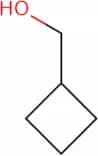
CAS:<p>Cyclobutanemethanol is a drug used to treat inflammatory diseases. It is an uptake inhibitor that blocks the transport of uridine into cells, preventing the activation of G-protein coupled receptors and the subsequent production of inflammatory mediators. Cyclobutanemethanol has been shown to have anti-inflammatory properties by inhibiting the CB2 receptor, which is found in large quantities in inflammatory tissues. Cyclobutanemethanol also prevents dehydration and increases blood flow to inflamed areas by acting on vascular endothelial cells. It can be synthesized from two molecules of hydrochloric acid and one molecule of cyclobutane. The synthesis pathway includes removal of a hydroxy group and addition of an alkynyl group via hydrogen bonding interactions with chloride ions. Cyclobutanemethanol has been shown to inhibit influenza virus replication in vitro, but not in vivo.</p>Fórmula:C5H10OPureza:Min. 95%Peso molecular:86.13 g/mol(S)-(+)-2-Butanol
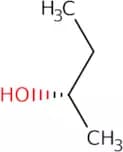
CAS:Produto Controlado<p>The compound (S)-(+)-2-Butanol is a chiral molecule that is used in the synthesis of benzodiazepines. The (+) enantiomer of 2-butanol has been shown to bind to the GABA receptor and has an inhibitory effect on benzodiazepine binding. It is also a competitive inhibitor for the enzyme dehydrogenase, which converts 2-butanol to acetaldehyde. The (-) enantiomer of 2-butanol does not have any effect on the GABA receptor or dehydrogenase activity. This means that the (+) enantiomer is responsible for the activation energy and stereoselectivity of this reaction. The activation energy for this reaction can be calculated by measuring the amount of heat released during the reaction. This process can be done through vibrational spectroscopy or by running control experiments with a known concentration of reactants and products. There are many ways to determine whether this reaction follows an elimination or dehydration mechanism,</p>Fórmula:C4H10OPureza:Min. 95%Cor e Forma:Clear LiquidPeso molecular:74.12 g/mol


![4-[2-(Cyclopropylmethoxy)ethyl]phenol](/_next/image/?url=https%3A%2Fstatic.cymitquimica.com%2Fproducts%2F3D%2Fthumb-webp%2FFC20740.webp&w=3840&q=75)