Álcoois
Os álcoois são uma ampla gama de moléculas orgânicas derivadas de hidrocarbonetos que contêm um ou mais grupos hidroxila (grupo OH). Estes compostos são essenciais em várias reações químicas e são amplamente utilizados em laboratórios para síntese, como solventes e em química analítica. Na CymitQuimica, oferecemos álcoois de alta qualidade preparados para uso laboratorial, apoiando suas pesquisas e aplicações industriais com produtos confiáveis e eficazes. Nossa seleção garante que você tenha os álcoois adequados para suas necessidades específicas, seja para trabalhos de laboratório de rotina ou para projetos de pesquisa especializados.
Subcategorias de "Álcoois"
Foram encontrados 5814 produtos de "Álcoois"
Ordenar por
Pureza (%)
0
100
|
0
|
50
|
90
|
95
|
100
(2-Chlorophenyl)diphenylmethanol
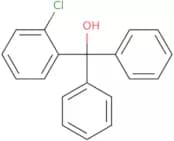
CAS:<p>2-Chlorophenyl)diphenylmethanol is an antifungal drug that blocks the function of a calcium ionophore in fungal cells. It has been shown to be effective against a variety of filamentous fungi, including Aspergillus fumigatus, Candida albicans, and Trichosporon cutaneum. This drug is used as a topical antifungal agent for treatment of skin infections caused by these fungi. 2-Chlorophenyl)diphenylmethanol has been shown to have anti-inflammatory properties in animal models of kidney fibrosis and cell binding. Clinical data suggests that it can be used for the prevention or treatment of stem cell transplantation complications such as graft versus host disease and leukemia.</p>Fórmula:C19H15ClOPureza:Min. 95%Cor e Forma:PowderPeso molecular:294.77 g/molp-Xylene-α,α'-diol
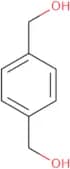
CAS:<p>p-Xylene-α,α'-diol is a water-soluble polymer that can be prepared by the reaction of ethylene diamine with sodium citrate. The resulting product has a low molecular weight and high viscosity. The polymer is insoluble in water at pH values higher than 9.5 and soluble in acidic solutions. p-Xylene-α,α'-diol has been shown to exhibit good chemical stability and thermal expansion properties when exposed to temperatures of up to 300 °C. The polymer is soluble in organic solvents such as benzene, chloroform, acetone, ether, and carbon tetrachloride. The polymer has been shown to have transport properties for some drugs, such as ketoprofen and ibuprofen, with good kinetic data at various concentrations.</p>Fórmula:C8H10O2Pureza:Min. 98 Area-%Cor e Forma:White PowderPeso molecular:138.16 g/molH-Tyr-L-1,2,3,4-tetrahydroisoquinoline-3-carboxamide·HCl
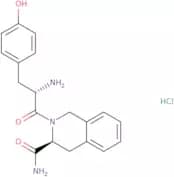
CAS:H-Tyr-L-1,2,3,4-tetrahydroisoquinoline-3-carboxamide·HCl is a monoclinic crystalline compound. It has a molecular weight of 607.14 and contains the dipeptide Tyr-Lys in its structure. H-Tyr-L-1,2,3,4-tetrahydroisoquinoline-3-carboxamide·HCl crystallizes in the P21/c space group and has an asymmetric unit cell with dimensions a=8.851 Å, b=7.965 Å and c=5.98 Å. This compound has been shown to have antibacterial properties against methicillin resistant Staphylococcus aureus (MRSA) isolates and Clostridium perfringens strains by inhibiting bacterial protein synthesis through inhibition of peptidyl transferase activity.Fórmula:C19H21N3O3·HClPureza:Min. 95%Peso molecular:375.85 g/molSchisanhenol
CAS:Produto Controlado<p>Schisanhenol is a natural drug that belongs to the class of fructus. It has been shown to have cytosolic calcium-lowering effects in vitro. Schisanhenol has been shown to inhibit polymerase chain reaction (PCR) and reverse transcriptase activity, which may be due to its ability to inhibit oxidative injury, such as free radicals. This drug also inhibits sulfa drugs and integrin receptors, which may be due to its antioxidant properties. Schisanhenol has been shown to inhibit the growth of cancer cells in vitro and has been used as an adjuvant treatment for adriamycin.</p>Fórmula:C23H30O6Pureza:Min. 95%Cor e Forma:PowderPeso molecular:402.48 g/mol2-Bromo-1-indanol
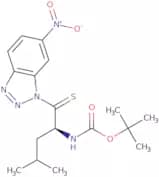
CAS:2-Bromo-1-indanol is an industrial solvent used in the production of dyes, pigments, perfumes, pharmaceuticals, and other organic compounds. It is a chiral compound with two stereoisomers (R and S) that have different properties. The R isomer has a hydroxyl group on the 2 position of the indane ring, while the S isomer does not. The industrial process involves recycling of 2-bromo-1-indanol from the reaction mixture. This process can be monitored using mass spectrometric detection for bromine and hydrogen ions released during hydrolysis. 2-Bromo-1-indanol can be used to synthesize methoxybenzaldehyde with high regioselectivity, which can then be used to make some drugs such as amphetamine and methamphetamine.Fórmula:C9H9BrOPureza:Min. 95%Cor e Forma:PowderPeso molecular:213.07 g/molBoc-Thionoleu-1-(6-nitro)benzotriazolide
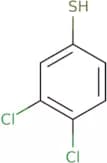
CAS:<p>Please enquire for more information about Boc-Thionoleu-1-(6-nitro)benzotriazolide including the price, delivery time and more detailed product information at the technical inquiry form on this page</p>Fórmula:C17H23N5O4SPureza:Min. 95%Peso molecular:393.46 g/mol3,4-Dichlorothiophenol
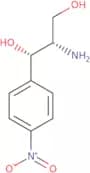
CAS:3,4-Dichlorothiophenol is a chemical compound that belongs to the group of reactive compounds. It can be used as a chemical intermediate for the synthesis of other organic compounds. 3,4-Dichlorothiophenol is an inhibitor of methylating enzymes such as glyoxalase I and II and glyceraldehyde-3-phosphate dehydrogenase. This inhibition leads to the accumulation of methylglyoxal and 3-deoxyglucosone in cells, which are potent inhibitors of protein glycosylation. 3,4-Dichlorothiophenol also inhibits nucleophilic attack on DNA by epoxide hydrolases such as epoxide hydrolase 1 and 2. This inhibition results in the accumulation of reactive metabolites that are covalently adducted with DNA bases.Fórmula:C6H4Cl2SPureza:Min. 95%Peso molecular:179.07 g/molL-threo-(+)-2-Amino-1-(4-nitrophenyl)-1,3-propanediol
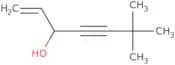
CAS:L-threo-(+)-2-amino-1-(4-nitrophenyl)-1,3-propanediol is a functional group that is composed of a fatty acid and an amino acid. It has been shown to inhibit the growth of corynebacterium glutamicum bacteria by hydrolyzing their cell wall. This compound also inhibits the activity of bacterial enzymes that are involved in the synthesis of proteins. This functional group may be useful for the treatment of chronic lymphocytic leukemia and HIV infection.Fórmula:C9H12N2O4Pureza:Min. 95%Cor e Forma:PowderPeso molecular:212.2 g/mol6,6-Dimethyl-1-heptene-4-yn-3-ol
CAS:<p>6,6-Dimethyl-1-heptene-4-yn-3-ol is a chlorinating agent that is used in the production of epidermophyton. It also has antifungal properties and can be used as an antimycotic. 6,6-Dimethyl-1-heptene-4-yn-3-ol can be added to hydrochloric acid or magnesium chloride to form an acetylide. This agent has been shown to have selective chlorination activity at temperatures below 10°C. It is also capable of minimizing organometallic chloride catalysts and has been shown to reduce microsporum gypseum and microsporum titinium at pH 2.5.</p>Fórmula:C9H14OPureza:Min. 95%Cor e Forma:Colourless To Yellow LiquidPeso molecular:138.21 g/mol2-Propyl-1-heptanol
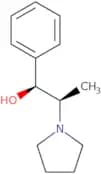
CAS:<p>2-Propyl-1-heptanol (2PH) is a phenolic compound that has been used as a sealant for wounds. 2PH forms a chemical bond with chloride ions, which is the reaction mechanism for its effectiveness. 2PH has been shown to be effective in human data, but the carcinogenic potential of this chemical is unknown. This chemical may also have pharmaceutical uses, such as being an ingredient in pharmaceutical preparations. 2PH is toxic to cells and can cause cell death by interfering with fatty acid and protein synthesis. The toxicity of 2PH varies depending on the type of cell it comes into contact with and other factors, such as its concentration or duration of exposure.</p>Fórmula:C10H22OPureza:Min. 95%Cor e Forma:Clear Colourless LiquidPeso molecular:158.28 g/mol(1S, 2R)-1-Phenyl-2-(1-pyrrolidinyl)-1-propanol
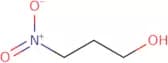
CAS:Produto ControladoPlease enquire for more information about (1S, 2R)-1-Phenyl-2-(1-pyrrolidinyl)-1-propanol including the price, delivery time and more detailed product information at the technical inquiry form on this pageFórmula:C13H19NOPureza:Min. 95%Cor e Forma:PowderPeso molecular:205.3 g/mol3-Nitropropanol
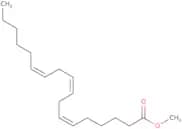
CAS:<p>3-Nitropropanol is an inhibitor of the enzyme nitrite reductase, which is involved in the conversion of nitrite to nitric oxide. 3-Nitropropanol is a dietary supplement that has been shown to have a significant inhibitory effect on the growth of cancer cells and microbial metabolism. Nitrite levels were found to be reduced by 25% in mice treated with this substance. The analytical method for measuring 3-nitropropanol was developed using a type strain and fatty acid standards.</p>Fórmula:C3H7NO3Pureza:Min. 95%Peso molecular:105.09 g/molMethyl γ-linolenate
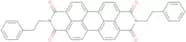
CAS:Methyl gamma-linolenate is a fatty acid that is derived from linoleic acid. It has shown to have anti-inflammatory effects and inhibit the growth of prostate cancer cells in vitro. Methyl gamma-linolenate also inhibits caspase-9, an enzyme that plays a key role in the apoptosis pathway. Methyl gamma-linolenate has been shown to regulate the production of amp-activated protein kinase (AMPK), which is a cellular regulator that controls glucose and lipid metabolism, insulin signaling, and inflammation. This activity may be due to its ability to bind to the regulatory domain of AMPK.Pureza:Min. 95%2,9-Bis(2-Phenylethyl)anthra(2,1,9-def:6,5,10-d'e'f')diisoquinoline-1,3,8,10(2H,9H)-tetrone
CAS:2,9-Bis(2-phenylethyl)anthraquinone (BPAQ) is a synthetic compound that is used as an fluorescent probe to study biological processes. BPAQ binds to peptides and inhibits their binding to the surface of cells. This property has been used in diagnostic tests for stenosis, infantum, and other conditions. BPAQ has also been shown to inhibit HIV-1 replication in human cells by binding to the HIV-1 envelope protein gp120 and blocking its interaction with CD4 receptors on host cells. The discovery of the antiviral activity of BPAQ was based on its ability to inhibit leishmania growth in animals.Fórmula:C40H26N2O4Pureza:Min. 95%Cor e Forma:PowderPeso molecular:598.65 g/mol3-Bromophenol
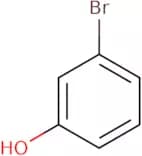
CAS:3-Bromophenol is an organic compound that is a bromophenol. It is used as a fluorometric probe in wastewater treatment and as a tracer for metabolic pathways in the proximal tubules of the kidney. 3-Bromophenol has a molecular weight of 184.16 g/mol and has been shown to be metabolized by bacteria into 2,4-dihydroxyphenylacetic acid (2,4-DPA). 3-Bromophenol can also be synthesized from 2,4-dihydroxyphenylacetic acid using sodium hydroxide solution and carbon source in a synthetic process. This synthetic process can be carried out at room temperature and atmospheric pressure.Fórmula:C6H5BrOPureza:Min. 98 Area-%Cor e Forma:Clear LiquidPeso molecular:173.01 g/mol1,6-Hexanediol
CAS:<p>1,6-Hexanediol is a diol that can be used as a control agent for radiation-sensitive polymeric matrices. It has been shown to bind to the hydroxyl groups of polymers and form hydrogen bonds with other molecules. 1,6-Hexanediol also reacts with trifluoroacetic acid in an electrochemical impedance spectroscopy study to produce low energy electrons. The kinetic data show that the optimum concentration of 1,6-hexanediol is between 0.1 and 0.2 M and the activation energies are in the range of 4.0 - 7.0 kcal/mol.</p>Fórmula:C6H14O2Pureza:Min. 95%Cor e Forma:PowderPeso molecular:118.17 g/mol2,2,6,6-Tetramethyl-4-piperidinol 1-oxyl, free radical
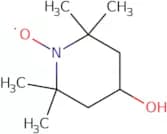
CAS:2,2,6,6-Tetramethyl-4-piperidinol 1-oxyl (TEMPO) is a reactive oxygen species that belongs to the group of nitroxide radicals. It can be used as a radical scavenger and has been shown to inhibit the production of pro-apoptotic proteins in human macrophages. TEMPO has also been shown to bind to DNA and prevent the binding of HIV viral protein gp120. TEMPO can be used as an inhibitor for glycol ethers in laboratory experiments. The most common use is as a water vapor scavenger during polymerization reactions in organic chemistry.Fórmula:C9H18NO2Pureza:Min. 98 Area-%Cor e Forma:Orange SolidPeso molecular:172.24 g/mol14-Azido-3,6,9,12-tetraoxatetradecanol
CAS:Please enquire for more information about 14-Azido-3,6,9,12-tetraoxatetradecanol including the price, delivery time and more detailed product information at the technical inquiry form on this pageFórmula:C10H21N3O5Pureza:Min. 95%Peso molecular:263.29 g/mol(alphaR)-alpha-[[[2-(4-Nitrophenyl)ethyl]amino]methyl]benzenemethanol hydrochloride
CAS:<p>Intermediate in the synthesis of mirabegron</p>Fórmula:C16H18N2O3·HClPureza:Min. 95%Peso molecular:322.79 g/molCampestanol
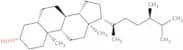
CAS:Produto Controlado<p>Please enquire for more information about Campestanol including the price, delivery time and more detailed product information at the technical inquiry form on this page</p>Fórmula:C28H50OPureza:Min. 95%Peso molecular:402.7 g/mol






![(alphaR)-alpha-[[[2-(4-Nitrophenyl)ethyl]amino]methyl]benzenemethanol hydrochloride](/_next/image/?url=https%3A%2Fstatic.cymitquimica.com%2Fproducts%2F3D%2Fthumb-webp%2FFN156825.webp&w=3840&q=75)