Éteres
Foram encontrados 40902 produtos de "Éteres"
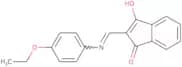
2-(((4-ethoxyphenyl)amino)methylene)indane-1,3-dione
CAS:Please enquire for more information about 2-(((4-ethoxyphenyl)amino)methylene)indane-1,3-dione including the price, delivery time and more detailed product information at the technical inquiry form on this page
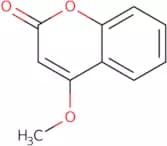
Pureza:Min. 95%4-Methoxycoumarin
CAS:4-Methoxycoumarin is a type of coumarin derivative that contains a hydroxy group. It is synthesized by the reaction of methoxyphenol and acetoacetic acid in the presence of an acid catalyst. This compound has been used in the synthesis of other coumarin derivatives, such as benzocoumarins, which are used for their cytostatic effects against plant cells. 4-Methoxycoumarin is also found in plants and has been shown to be active against some viruses. 4-Methoxycoumarin can be converted into its monohydroxylated form, which reacts with hydrogen ions to produce a protonated cationic surfactant. The resulting flow system can be used for analytical purposes.Fórmula:C10H8O3Pureza:Min. 95%Peso molecular:176.17 g/mol2-[(2-Ethoxy phenoxy)methyl]morpholine HCl
CAS:2-[(2-Ethoxy phenoxy)methyl]morpholine HCl is a sophisticated chemical compound utilized extensively in scientific research. As a synthetic organic compound, it is derived through a meticulous process involving the reaction of morpholine with ethoxy phenoxy derivatives, followed by hydrochloride salt formation. This synthesis ensures high purity and accurate functionality, making it suitable for precise laboratory studies.Fórmula:C13H20ClNO3Pureza:Min. 95%Cor e Forma:PowderPeso molecular:273.76 g/mol3-(4-Ethoxyphenyl)propionic acid
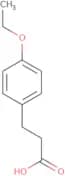
CAS:3-(4-Ethoxyphenyl)propionic acid is a speciality chemical that is used in the production of other complex chemicals. It has been shown to be a useful intermediate in the production of pharmaceuticals, fine chemicals, and agrochemicals. 3-(4-Ethoxyphenyl)propionic acid is also a versatile building block for use in organic synthesis. It has been shown to be a useful building block for the synthesis of natural products, such as antibiotics and natural products with antiviral properties. This compound can also be used as an effective reagent for research purposes. 3-(4-Ethoxyphenyl)propionic acid is a high quality chemical with CAS number 4919-34-0.Fórmula:C11H14O3Pureza:Min. 95%Cor e Forma:PowderPeso molecular:194.23 g/mol5-Methoxy-2-methylbenzoic acid
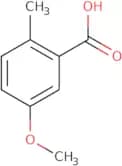
CAS:5-Methoxy-2-methylbenzoic acid is an intermediate in the synthesis of vitamin D3. It can also be used to synthesize calciferol, a configurationally stable form of vitamin D3 that has been shown to be optically active. Lactonic forms are composed of a 5-methoxy group and a 2-methylbenzoic acid moiety. Enantiomers are compounds with the same chemical formula but different arrangements of their atoms in space and each enantiomer is capable of rotating plane polarized light in opposite directions.Fórmula:C9H10O3Pureza:Min. 95%Cor e Forma:PowderPeso molecular:166.17 g/mol3-(Trifluoromethoxy)hydrocinnamic acid
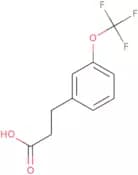
CAS:3-(Trifluoromethoxy)hydrocinnamic acid is a useful building block that is used in the synthesis of many organic compounds. It has been used as a reagent and as a speciality chemical, and is also a versatile building block for the synthesis of complex compounds. 3-(Trifluoromethoxy)hydrocinnamic acid can be synthesized from cinnamic acid, which is available commercially and can be obtained by reacting benzaldehyde with nitric acid. 3-(Trifluoromethoxy)hydrocinnamic acid has CAS No. 168833-77-0 and can be found under the name 2,4-dichloro-3-(trifluoromethoxy)benzene.
Fórmula:C10H9F3O3Pureza:Min. 98 Area-%Cor e Forma:Clear LiquidPeso molecular:234.17 g/mol3-(2-(2-(2-Aminoethoxy)ethoxy)ethoxy)propanoic acid HCI
CAS:3-(2-(2-(2-Aminoethoxy)ethoxy)ethoxy)propanoic acid HCI is a PEG compound with two different functional groups (also known as heterobifunctional). Unlike homobifunctional PEG compounds (same functional group on both ends), this type of compounds are more versatile as have two different anchor points. 3-(2-(2-(2-Aminoethoxy)ethoxy)ethoxy)propanoic acid HCI is used as a linker and spacer to add a PEG moiety, via pegylation (a bioconjugation technique) to proteins, peptides, oligonucleotides, small molecules and nanoparticles.
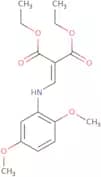
Fórmula:C9H19NO5·HClCor e Forma:Slightly Yellow Yellow Clear Liquid PowderPeso molecular:257.71 g/moldiethyl 2-(((2,5-dimethoxyphenyl)amino)methylene)propane-1,3-dioate
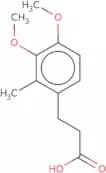
CAS:Please enquire for more information about diethyl 2-(((2,5-dimethoxyphenyl)amino)methylene)propane-1,3-dioate including the price, delivery time and more detailed product information at the technical inquiry form on this pagePureza:Min. 95%3,4-Dimethoxy-2-methylphenylpropionic acid
CAS:3,4-Dimethoxy-2-methylphenylpropionic acid is a building block for organic synthesis. It has been used as a research chemical and as a reaction component in the synthesis of other chemicals. 3,4-Dimethoxy-2-methylphenylpropionic acid is also available at high purity levels and can be used as a reagent for analytical purposes.Fórmula:C12H16O4Pureza:Min. 95%Cor e Forma:PowderPeso molecular:224.25 g/mol5-Methoxytryptamine hydrochloride
CAS:Produto ControladoNon-selective serotonin receptor agonist that lacks affinity for the 5-HT3 receptor.
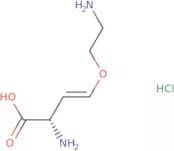
Fórmula:C11H15ClN2OPeso molecular:226.71 g/mol(S)-trans-2-Amino-4-(2-aminoethoxy)-3-butenoic acid hydrochloride
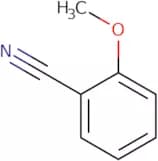
CAS:(S)-trans-2-Amino-4-(2-aminoethoxy)-3-butenoic acid hydrochloride is a chemical pesticide that inhibits the production of ethylene in plants. It is used to control growth and enhance the fruit quality of horticultural crops. It is also used as an inhibitor of serine proteases, which are enzymes that catalyze the hydrolysis of proteins. This product has been shown to act as a growth regulator by inhibiting the activity of serine proteases and blocking the biosynthesis of ethylene. (S)-trans-2-Amino-4-(2-aminoethoxy)-3-butenoic acid hydrochloride also blocks the biosynthesis of human chorionic gonadotropin, a hormone involved in reproduction and development.Fórmula:C6H13ClN2O3Pureza:Min. 97 Area-%Cor e Forma:Off-White PowderPeso molecular:196.63 g/mol2-Methoxybenzonitrile
CAS:2-Methoxybenzonitrile is a reactive molecule that can undergo a variety of reactions. In simulations, 2-methoxybenzonitrile reacts with carbon tetrachloride to form chlorobenzene and hydrochloric acid. The reaction mechanism involves the metal surface, which is believed to act as a catalyst and transfer the molecule to the receptor binding site on the substrate molecule. 2-Methoxybenzonitrile has been shown to react with various functional groups on a substrate molecule, including ester, amide, nitrile, sulfide, sulfone, and phosphate groups. This reaction system also produces different reaction products depending on the type of functional group.
Fórmula:C8H7NOPureza:Min. 95%Cor e Forma:Clear LiquidPeso molecular:133.15 g/mol2,5-Dimethoxy-3-nitrobenzoic acid
CAS:2,5-Dimethoxy-3-nitrobenzoic acid is a versatile building block that can be used to synthesize many different compounds. It is often used in the synthesis of complex organic molecules and can be used as a reagent or intermediate. The CAS number for this compound is 17894-26-7.Fórmula:C9H9NO6Pureza:Min. 95%Cor e Forma:PowderPeso molecular:227.17 g/mol3,5-Dimethoxy-4-hydroxyphenylacetic acid
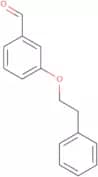
CAS:3,5-Dimethoxy-4-hydroxyphenylacetic acid is a phenolic compound that is found in the leaves of plants. It is a major component of the essential oil from the bark of the cinnamon tree. 3,5-Dimethoxy-4-hydroxyphenylacetic acid has been shown to be a potent inhibitor of plant growth and an effective herbicide for weed control in tobacco. 3,5-Dimethoxy-4-hydroxyphenylacetic acid has also been shown to have antiplatelet activity and may be useful in treating thrombosis.Fórmula:C10H12O5Pureza:Min. 95%Cor e Forma:Brown PowderPeso molecular:212.2 g/mol3-(2-Phenylethoxy)benzaldehyde
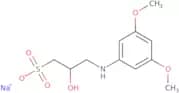
CAS:3-(2-Phenylethoxy)benzaldehyde is a benzaldehyde derivative with an ether group at the 3-position. It is used as a building block for the synthesis of organic compounds and as a reaction component in the preparation of research chemicals, speciality chemicals, and complex compounds. This compound has been shown to have high purity and to be a versatile building block for the synthesis of pharmaceuticals, agrochemicals, and other fine chemicals.Fórmula:C15H14O2Pureza:Min. 95%Cor e Forma:PowderPeso molecular:226.27 g/molN-(2-Hydroxy-3-sulfopropyl)-3,5-dimethoxyaniline sodium
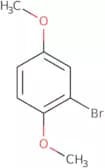
CAS:N-(2-Hydroxy-3-sulfopropyl)-3,5-dimethoxyaniline sodium is a chemical compound that has been shown to have antidiabetic activity in animal studies. It is a competitive inhibitor of the enzyme cholesterol esterase and has been shown to reduce the level of fatty acids and cholesterol in blood plasma. N-(2-Hydroxy-3-sulfopropyl)-3,5-dimethoxyaniline sodium binds to dextran sulfate as well as other amines and can be used for the analysis of test samples. This chemical also binds to monoclonal antibodies, which are proteins produced by B lymphocytes that recognize specific structures on foreign objects such as bacteria or viruses.Fórmula:C11H16NO6SNaPureza:Min. 95%Cor e Forma:White PowderPeso molecular:313.3 g/mol1-Bromo-2,5-dimethoxybenzene
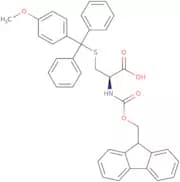
CAS:1,2-Bromo-2,5-dimethoxybenzene is a methylating agent that can be used in Friedel-Crafts acylation reactions. It reacts with hydrochloric acid to yield 1,2-dibromoethane and hydrogen peroxide. The product of the reaction is a mixture of chloride and alkylation products. Bromine is released as a byproduct in this reaction. This agent has been shown to be useful in the synthesis of compounds containing C=N bonds such as dienolates and amides.Fórmula:C8H9BrO2Pureza:Min. 95%Peso molecular:217.06 g/molFmoc-S-4-methoxytrityl-L-cysteine
CAS:Fmoc-S-4-methoxytrityl-L-cysteine is a synthetic, amphipathic, amide, ester linkages, cyclic peptide. It has been shown to be a potent growth factor that inhibits the proliferation of human pancreatic cancer cells in tissue culture and induces apoptosis in these cells. Fmoc-S-4-methoxytrityl-L-cysteine also inhibits the growth of staphylococcus in tissue culture and reduces metastatic pancreatic cancer cell proliferation in rats.
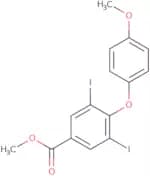
Fórmula:C38H33NO5SPureza:90%MinCor e Forma:White PowderPeso molecular:615.74 g/mol3,5-Diiodo-4(4'-methoxyphenoxy)benzoic acid methyl ester
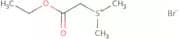
CAS:3,5-Diiodo-4(4'-methoxyphenoxy)benzoic acid methyl ester (DIMBOA) is a hormone analogue that inhibits the growth of cancer cells by interfering with mitochondrial function. DIMBOA binds to the mitochondria of animal cells and prevents adenosine triphosphate (ATP) production. DIMBOA also blocks the synthesis of DNA and RNA in animal cells, which may be due to its ability to interfere with enzyme activities such as protein synthesis, cell proliferation, and apoptosis. 3,5-Diiodo-4(4'-methoxyphenoxy)benzoic acid methyl ester has been shown to inhibit cellular growth by autophagy. This drug has been shown to have no adverse effects on normal fibroblasts or antigen presenting cells in animals.Fórmula:C15H12I2O4Pureza:Min. 95%Cor e Forma:PowderPeso molecular:510.06 g/mol(Ethoxycarbonylmethyl)dimethylsulfonium bromide
CAS:(Ethoxycarbonylmethyl)dimethylsulfonium bromide is an isoxazoline. It is used in the synthesis of oxime derivatives, which are bioactive molecules that have a wide range of applications in the field of medicine, including as intermediates for anti-inflammatory, anti-viral and antibacterial drugs. This compound has shown to be active against methicillin resistant Staphylococcus aureus (MRSA). The mechanism by which this molecule inhibits MRSA involves its nitro group and the release of nitric oxide.Fórmula:C6H13BrO2SPureza:Min. 97.5 Area-%Cor e Forma:PowderPeso molecular:229.14 g/mol

![2-[(2-Ethoxy phenoxy)methyl]morpholine HCl](/_next/image/?url=https%3A%2Fstatic.cymitquimica.com%2Fproducts%2F3D%2Fthumb-webp%2FFE152271.webp&w=3840&q=75)