Éteres
Foram encontrados 40906 produtos de "Éteres"
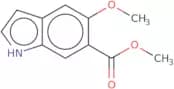
5-Acetoxy-6-methoxyindole
CAS:5-Acetoxy-6-methoxyindole is a fine chemical, useful building block, and research chemical with CAS No. 112919-69-4. It is a versatile building block and reaction component that can be used as a reagent or speciality chemical in the synthesis of other complex compounds. 5-Acetoxy-6-methoxyindole is also used as an intermediate in the synthesis of drugs and pharmaceuticals. This compound has high purity, making it a high quality product with many uses.Fórmula:C11H11NO3Pureza:Min. 95%Peso molecular:205.21 g/mol3,5-Dimethoxycinnamide
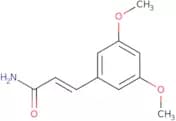
CAS:3,5-Dimethoxycinnamide is a compound that has been shown to inhibit the C1-4 alkoxy and C1-4 alkyl esterase activity of the enzyme secretase. This enzyme is involved in the production of amyloid beta peptides and is thought to be an important contributor to Alzheimer's Disease. 3,5-Dimethoxycinnamide also inhibits the aspartyl protease activity of aspartyl proteases, which are enzymes that may play a role in Alzheimer's disease. 3,5-Dimethoxycinnamide binds to the hydrophobic region of these enzymes and prevents them from binding to their substrates. The affinity of this compound for these enzymes precludes its ability to bind with other proteins in the brain, thereby reducing its potential toxicity. 3,5-Dimethoxycinnamide can be labeled with halogeno groups or other chemical moieties for profiling purposes.Fórmula:C11H13NO3Pureza:Min. 95%Peso molecular:207.23 g/mol3,3'-Dimethoxyazoxybenzene
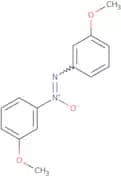
CAS:3,3'-Dimethoxyazoxybenzene is a nitroarene that has electron-donating properties. It reacts with primary amines to form azoxy groups in the presence of alkoxide. 3,3'-Dimethoxyazoxybenzene can be used for the synthesis of nitrophenyl and aniline derivatives by reaction with nitroarenes, alcohols, or amines. It can also serve as a photoreduced molecule in mechanistic studies.
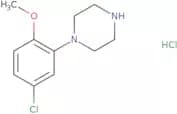
Fórmula:C14H14N2O3Pureza:Min. 95%Peso molecular:258.27 g/mol1-(5-Chloro-2-methoxyphenyl)piperazine HCl
CAS:Produto Controlado1-(5-Chloro-2-methoxyphenyl)piperazine HCl is a fine chemical that belongs to the group of research chemicals. It is used as a reagent, speciality chemical and intermediate in organic synthesis. 1-(5-Chloro-2-methoxyphenyl)piperazine HCl is an effective building block for complex compounds, which can be used in reactions involving acetals, amides, nitriles, sulfones, sulfonamides and imines. This compound also has versatile building blocks and is a useful scaffold in organic synthesis.Fórmula:C11H16Cl2N2OPureza:Min. 95%Cor e Forma:Off-White PowderPeso molecular:263.16 g/molBis(2,2,2-trifluoroethyl) Ether
CAS:Fórmula:C4H4F6OPureza:>99.0%(GC)Cor e Forma:Colorless to Almost colorless clear liquidPeso molecular:182.073,6-Dimethoxyterephthaldicarboxaldehyde
3,6-Dimethoxyterephthaldicarboxaldehyde is a chemical compound that can be used in the synthesis of complex compounds. It has been shown to be an effective reagent for the synthesis of heterocycles and has also been used as a building block in the synthesis of pharmaceuticals and other organic compounds. 3,6-Dimethoxyterephthaldicarboxaldehyde is a versatile building block with many potential uses. It has also been identified as a useful scaffold for drug design and development.Pureza:Min. 95%3-Ethoxy-4-hydroxyphenylnitroethene
CAS:3-Ethoxy-4-hydroxyphenylnitroethene is a fine chemical with the CAS number 90922-85-3. It is a versatile building block that can be used for research, as a reagent, or as a speciality chemical. This compound has many applications in synthesis due to its high quality and complex nature. It is also an intermediate in the production of other compounds.Fórmula:C10H11NO4Pureza:Min. 95%Cor e Forma:PowderPeso molecular:209.2 g/mol2,4-Dibromoanisole
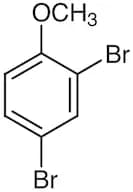
CAS:Fórmula:C7H6Br2OPureza:>98.0%(GC)Cor e Forma:White to Light yellow to Light red powder to crystalPeso molecular:265.933-Methoxyphenylmethylcarbinol
CAS:3-Methoxyphenylmethylcarbinol is a hydrogen tartrate that can be used as an intermediate in the Friedel-Crafts reaction. It is also an imine, which is formed when a nitrogen atom of an amine reacts with a carbon atom of formaldehyde. 3-Methoxyphenylmethylcarbinol has been shown to have stereoselective properties in the Friedel-Crafts reaction, which means that only one product is produced from two reactants. In this case, the hydrogen tartrate and phosphorus oxychloride are reacted to produce oxone and chloride compounds. The selectivity of 3-methoxyphenylmethylcarbinol can be increased by adding triphosgene or dimethylamine to the reaction mixture. This compound dissociates easily into its component parts and can be regenerated by adding ethyl formate or ferrocene.Fórmula:C9H12O2Pureza:Min. 95%Cor e Forma:PowderPeso molecular:152.19 g/molDibenzoyl-(+)-p-methoxy-D-tartaric acid
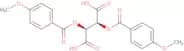
CAS:Dibenzoyl-(+)-p-methoxy-D-tartaric acid is a macrocyclic molecule that has been synthesized as an enantiomer. It has been found to be an effective drug against schistosomiasis in experimental studies. The compound inhibits the growth of Schistosoma mansoni by preventing the formation of eggs, which are released by the female worms into the environment. Dibenzoyl-(+)-p-methoxy-D-tartaric acid also inhibits the development of larval stages and prevents the release of eggs from male worms. This drug is not yet used clinically for this purpose, but it is being researched for use in tropical regions where schistosomiasis is endemic.Fórmula:C20H18O10Pureza:Min. 95%Cor e Forma:White PowderPeso molecular:418.35 g/mol5-Chloro-2-methoxybenzaldehyde
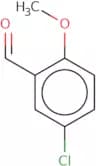
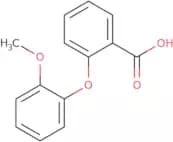
CAS:5-Chloro-2-methoxybenzaldehyde is a potent inhibitor of the bacterial enzyme acetylcholinesterase. It has been shown to have an interaction with biomolecules, such as chalcones, and can be used in the manufacture of antibacterial agents. 5-Chloro-2-methoxybenzaldehyde has been found to have potent inhibitory activity against organocatalytic aldehydes and atypical aldehydes and can be used as an active ingredient in the synthesis of novel compounds with antibacterial activity.Fórmula:C8H7ClO2Pureza:Min. 95%Cor e Forma:PowderPeso molecular:170.59 g/mol2-(2-Methoxyphenoxy)Benzoic Acid
CAS:2-(2-Methoxyphenoxy)benzoic acid is an organic compound that can be synthesized in the laboratory. It has been shown to dimerize spontaneously in aqueous solutions with the release of hydrogen peroxide and oxygen. The mechanism is thought to involve oxidative dimerization, which may lead to carboxylate bond cleavage, intramolecular radical formation, or mechanistically radical attack. This process also results in the formation of a 2-methoxyphenoxy radical.
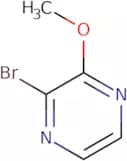
Fórmula:C14H12O4Pureza:Min. 95%Cor e Forma:PowderPeso molecular:244.24 g/mol2-Bromo-3-methoxypyrazine
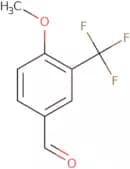
CAS:2-Bromo-3-methoxypyrazine is a chemical compound that is used as a precursor in the biosynthesis of geosmin. Geosmin, also known as 2-methylisoborneol or 2-MIB, is a volatile organic compound which has a musty or earthy smell. It is produced by some species of bacteria, including Myxobacterium and Chondromyces crocatus. It can be found in soil and water samples from areas with high levels of organic matter. 2-Bromo-3-methoxypyrazine was first isolated from cultures of M. crocatus in 1950. It can be synthesized from 3,4,5-trimethoxybenzaldehyde via bromination followed by reduction with sodium hydrosulfide. This process creates an intermediate called 2-(2'-bromoethyl)pyrazine, which undergoes methylation to create 2Fórmula:C5H5BrN2OPureza:Min. 95%Cor e Forma:White Off-White PowderPeso molecular:189.01 g/mol4-Methoxy-3-(trifluoromethyl)benzaldehyde
CAS:4-Methoxy-3-(trifluoromethyl)benzaldehyde is a fine chemical that can be used as a building block for pharmaceuticals and other organic compounds. It is also used in research for the synthesis of complex compounds. This chemical has been reported to be a useful intermediate or scaffold for organic syntheses. 4-Methoxy-3-(trifluoromethyl)benzaldehyde is soluble in water and ethanol, and insoluble in ether. It has a melting point of 140°C, boiling point of 249°C, density 1.096 g/cm³, and refractive index (20°C) 1.567.Fórmula:C9H7F3O2Pureza:Min. 95%Peso molecular:204.15 g/mol2,4,6-Trimethoxybenzoic acid methyl ester
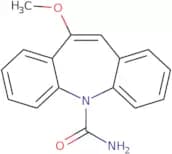
CAS:2,4,6-Trimethoxybenzoic acid methyl ester is a yellow crystalline solid that can be dissolved in acetone, chloroform, ether, and benzene. It has a molecular weight of 164.3 g/mol and its chemical name is 2,4,6-trimethoxybenzoic acid methyl ester. It has a melting point of 144 °C and can be found in the hexanones group. This product is manufactured in Australia and its registry number is 135949-06-8.Fórmula:C11H14O5Pureza:Min. 95%Peso molecular:226.23 g/mol10-Methoxy carbamazepine
CAS:Produto Controlado10-Methoxy carbamazepine is a drug that belongs to the group of anticonvulsants. It inhibits neuronal excitability by blocking voltage-sensitive sodium channels, which are membrane channels that allow sodium ions to enter the neuron. 10-Methoxy carbamazepine is used for the treatment of trigeminal neuralgia and other types of pain. The effective dose of 10-methoxy carbamazepine varies from person to person, but it can be measured using blood sampling. 10-Methoxy carbamazepine has an acidic pH and should not be taken with milk or dairy products because this will cause its absorption to be reduced. This drug should not be taken by women who are pregnant or breastfeeding without medical supervision because it can cause injury or death to a developing fetus. 10-Methoxy carbamazepine may also interact with other drugs, including antidepressants, antipsychotics, and antihistamines, which can lead to serious sideFórmula:C16H14N2O2Pureza:Min. 95%Cor e Forma:PowderPeso molecular:266.29 g/mol3,4-Dimethoxyphenylboronic acid
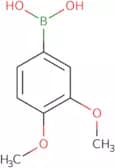
CAS:3,4-Dimethoxyphenylboronic acid is a boronate ester that has been shown to be an effective coupling partner for the Suzuki reaction. It has also been used in cancer therapy and as a photochemical probe for the study of biological properties. 3,4-Dimethoxyphenylboronic acid has been shown to demethylate DNA and inhibit methionine aminopeptidase activity. It also cross-couples with halides, such as chlorides or iodides, and activates tertiary alcohols. 3,4-Dimethoxyphenylboronic acid is soluble in organic solvents and can be used in supramolecular chemistry.Fórmula:C8H11BO4Pureza:Min. 95%Cor e Forma:White PowderPeso molecular:181.98 g/molN-alpha-Fmoc-Nepsilon-7-methoxycoumarin-4-acetyl-L-lysine
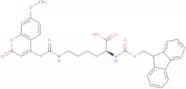
CAS:N-alpha-Fmoc-Nepsilon-7-methoxycoumarin-4-acetyl-L-lysine is a fluorogenic molecule that is synthesized by the solid phase method. It is an analog of lysine, which is a bioactive amino acid. This compound binds to copper and exhibits fluorescence emission at 585 nm when excited at 488 nm. N-alpha-Fmoc-Nepsilon-7-methoxycoumarin-4-acetyl-L-lysine can be used as a substrate for bone growth in vitro and in vivo. It can also be used as a labeling reagent for bone tissue, such as bone sections or cells. It has been shown to produce osteogenic activity in vitro and in vivo.Fórmula:C33H32N2O8Pureza:Min. 97 Area-%Cor e Forma:PowderPeso molecular:584.62 g/mol4-Methoxy-3,5-dimethyl-2-pyridinecarboxaldehyde
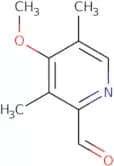
CAS:4-Methoxy-3,5-dimethyl-2-pyridinecarboxaldehyde is a trifunctional molecule that has been shown to suppress the growth of cancer cells in mice. This compound is an inhibitor of acid synthesis and has also been shown to be an antirheumatic drug. 4-Methoxy-3,5-dimethyl-2-pyridinecarboxaldehyde inhibits the activity of three enzymes: synthetase, an enzyme that synthesizes fatty acids; 3-ketoacyl CoA synthase, which synthesizes ketones; and enoyl CoA reductase, which produces fatty acids. The long term efficacy of this molecule has not yet been studied in humans.Fórmula:C9H11NO2Pureza:Min. 95%Cor e Forma:Colourless LiquidPeso molecular:165.19 g/molN-(4-Methoxyphenyl)ethane-1,2-diamine
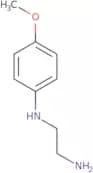
CAS:N-(4-Methoxyphenyl)ethane-1,2-diamine is a synthetic compound that has been shown to inhibit the activity of cathepsins. It can be used in the treatment of diseases caused by these enzymes, such as osteoarthritis and Alzheimer's disease. N-(4-Methoxyphenyl)ethane-1,2-diamine has a pharmacokinetic profile that is favorable for oral administration. The drug is absorbed from the gastrointestinal tract readily and undergoes extensive metabolism in the liver. This process leads to the formation of active metabolites which are excreted in urine or bile. N-(4-Methoxyphenyl)ethane-1,2-diamine also inhibits nitroalkanes with activated aromatic rings, such as 4-nitrobenzaldehyde and 2,4,6-trinitrobenzene.Fórmula:C9H14N2OPureza:Min. 95%Cor e Forma:Slightly Yellow PowderPeso molecular:166.22 g/mol