Nitro
Foram encontrados 2517 produtos de "Nitro"
4-Chloro-3-nitro-5-sulfamoylbenzoic acid
CAS:4-Chloro-3-nitro-5-sulfamoylbenzoic acid is a chemical compound that belongs to the group of speciality chemicals. It is a versatile building block for the synthesis of complex compounds. 4-Chloro-3-nitro-5-sulfamoylbenzoic acid has high quality and can be used as reagents in research or as a building block for the synthesis of new molecules.Fórmula:C7H5ClN2O6SPureza:Min. 95%Cor e Forma:PowderPeso molecular:280.64 g/mol4-Hydroxy-3-nitrobenzophenone
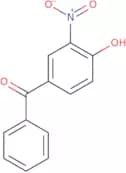
CAS:4-Hydroxy-3-nitrobenzophenone is a divinylbenzen compound that is used as a polymerization catalyst. This product is an efficient method for synthesizing polymeric matrices containing immobilized carboxylic acids, which can be used in chromatographic science. 4-Hydroxy-3-nitrobenzophenone has been shown to have anticholinesterase activity and can be used for the synthesis of polymeric matrices containing immobilized carboxylic acids, which can be used in chromatographic science. 4-Hydoxy-3-nitrobenzophenone also has an acid catalyst that can react with glyceraldehyde 3 phosphate dehydrogenase.Fórmula:C13H9NO4Pureza:Min. 95%Cor e Forma:SolidPeso molecular:243.21 g/mol2-Bromo-6-methyl-4-nitroaniline
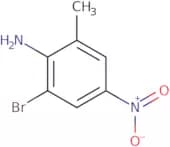
CAS:2-Bromo-6-methyl-4-nitroaniline is a fine chemical that is used in the preparation of other chemicals and as a reagent. It can be used as an intermediate for organic synthesis, such as the conversion of 2-bromoindole to indoxyl, or as a building block for the preparation of more complex compounds. This chemical is also versatile in that it can be used in reactions with different reactants, including amines, carboxylic acids, thiols, and alcohols.Fórmula:C7H7BrN2O2Pureza:Min. 95%Cor e Forma:PowderPeso molecular:231.05 g/mol2-Nitrophenethylamine hydrochloride
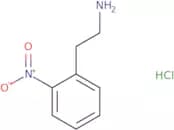
CAS:Produto Controlado2-Nitrophenethylamine hydrochloride is a fine chemical that is useful as a versatile building block. It can be used as a reaction component, or in the synthesis of other chemicals. 2-Nitrophenethylamine hydrochloride has CAS No. 861337-74-8 and is a complex compound with many possible uses, including as a research chemical or speciality chemical. As an intermediate for other compounds, it can be used to produce high quality reagents and products.Fórmula:C8H11ClN2O2Pureza:Min. 95 Area-%Cor e Forma:PowderPeso molecular:202.64 g/mol4-Methyl-2-nitroanisole
CAS:4-Methyl-2-nitroanisole (4NA) is a hydronium that has been shown to be an anticancer drug. It inhibits the growth of cancer cells by binding to reactive methoxy groups on the cell surface and promotes apoptosis, or programmed cell death. 4NA also produces nitric oxide, which may cause DNA damage in cancer cells. The mechanism of action for 4NA is not fully understood but it has been shown to have a radical mechanism of action which leads to the formation of reactive molecules that can react with other molecules in the cell, leading to DNA damage and cell death. Preparative methods for synthesizing 4NA are acidic and involve aldehydes and nitrites.
Fórmula:C8H9NO3Pureza:Min. 95%Cor e Forma:PowderPeso molecular:167.16 g/mol2,6-Dichloro-3-nitrobenzonitrile
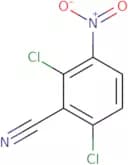
CAS:2,6-Dichloro-3-nitrobenzonitrile is a chemical compound that has been synthesized by optimising the potentials of monoclonal antibodies. It has shown to have high affinity for rat brain membranes and is also able to bind to the target molecule with high affinity. 2,6-Dichloro-3-nitrobenzonitrile can be used as a pesticide and has been shown to have an affinity for the target molecule with high affinity. This chemical compound is trisubstituted and has three nitro groups, which are all located in the same position on the benzene ring. The structure of this chemical compound is optimized, meaning that it has been modified so that its physical properties are more desirable than its original form.
Fórmula:C7H2Cl2N2O2Pureza:Min. 95%Cor e Forma:PowderPeso molecular:217.01 g/molβ-Nitrostyrene
CAS:b-Nitrostyrene is a nitroso compound that has been shown to inhibit the activity of methoxy groups in the intestine. It also inhibits the growth of animals, both in vitro and in vivo. b-Nitrostyrene binds to a receptor that is found on cells in the brain and other organs, which may be related to its ability to prevent cancerous tumors from forming. The binding affinity for this receptor is much lower than that of carbazole or sulfonic acid compounds, which may account for its greater toxicity. b-Nitrostyrene also has a number of other effects, such as inhibiting radiation-induced damage to maternal tissue or optical properties. It can also act as an additive for devices or quaternary alkaloids.
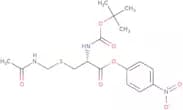
Fórmula:C8H7NO2Pureza:Min. 95%Peso molecular:149.15 g/molBoc-S-acetamidomethyl-L-cysteine 4-nitrophenyl ester
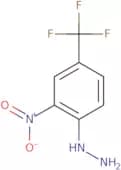
CAS:Please enquire for more information about Boc-S-acetamidomethyl-L-cysteine 4-nitrophenyl ester including the price, delivery time and more detailed product information at the technical inquiry form on this pageFórmula:C17H23N3O7SPureza:Min. 95%Cor e Forma:PowderPeso molecular:413.45 g/mol4-Hydrazino-3-nitrobenzotrifluoride
CAS:4-Hydrazino-3-nitrobenzotrifluoride (4HNBF) is a derivative of 4-hydrazinobenzoic acid that has been used as a precursor for the synthesis of vitamin D. The drug is detectable in blood plasma samples by mass spectrometry and can be quantified using linear calibration curves. 4HNBF has been detected in human urine samples after oral administration, but not in other biological fluids. It has also been used to measure the flow rate of urine. The drug's use for cancer treatment has been investigated, with results showing that it inhibits the growth of cancer cells and induces apoptosis. 4HNBF may act on GABA receptors to inhibit their activity and induce a reduction in the release of oxysterols.Fórmula:C7H6F3N3O2Pureza:Min. 95%Cor e Forma:PowderPeso molecular:221.14 g/mol6-Nitroindole
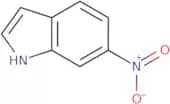
CAS:6-Nitroindole is a heterocyclic compound that belongs to the group of nitro compounds. It is a methylating agent that can be used for the production of 6-nitropurines, which are used as anticancer agents. The reaction mechanism of this compound involves the attack of the electrophilic nitro group on an electron-deficient carbon atom in a molecule. This process creates an N-methylated product, which can then be oxidized to form a carboxylic acid. The kinetics of this reaction have been studied using kinetic data and anomers. 6-Nitroindole has also been shown to inhibit DNA synthesis by binding to oligodeoxynucleotides and inhibiting their catalytic activity.
Fórmula:C8H6N2O2Pureza:Min. 95%Cor e Forma:PowderPeso molecular:162.15 g/mol4-Hydroxy-3-nitrobenzoic acid ethyl ester
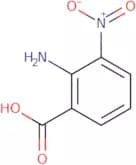
CAS:4-Hydroxy-3-nitrobenzoic acid ethyl ester is a small molecule that binds to DNA and RNA. It is cytotoxic, inhibiting cell growth in the presence of amides, nucleosides, or nucleotides. 4-Hydroxy-3-nitrobenzoic acid ethyl ester also inhibits the proliferation of cancer cells in culture. This drug has been shown to be effective against pancreatic cancer, ovarian cancer, and glioblastoma cells. The structure of this compound was elucidated by spectral analysis of its NMR and mass spectra data. It has yielded a 2780% increase in glioblastoma cell line growth rates when compared to control cells.Fórmula:C9H9NO5Pureza:Min. 95%Cor e Forma:PowderPeso molecular:211.17 g/mol2-Amino-3-nitrobenzoic acid
CAS:2-Amino-3-nitrobenzoic acid (2ABN) is a peroxide that is used as an antiviral. 2ABN has been shown to inhibit the formation of reactive oxygen species in cancer cells, leading to apoptosis. It also inhibits the growth of carcinoma cell lines and tissues. 2ABN reacts with chloral hydrate to form a particle that can be encapsulated for delivery and release in vivo. This drug has been expressed in Escherichia coli, which may lead to improved stability and ease of production. 2ABN is thought to have anti-inflammatory properties due to its ability to inhibit the production of prostaglandins. The reactivity of 2ABN with surfactants such as sodium laureth sulfate (SLES) has been shown, which leads to it being used as an emulsifying agent for topical application.Fórmula:C7H6N2O4Pureza:Min. 95%Cor e Forma:PowderPeso molecular:182.13 g/mol5-Chloro-2-nitroaniline
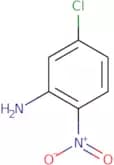
CAS:5-Chloro-2-nitroaniline is a proton transport agent that is used to dissolve the stones in the kidney and bladder. It belongs to the chemical class of anilines and has a chlorine atom. This drug is structurally similar to sorafenib, which is used for cancer treatment, and has been shown to inhibit cb2 receptor activity. 5-Chloro-2-nitroaniline also reacts with hydrochloric acid or sodium hydroxide solution to produce nitrous acid, which can be used as a reactant in organic synthesis.Fórmula:C6H5ClN2O2Pureza:Min. 95%Peso molecular:172.57 g/mol2-Nitrobenzanilide
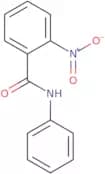
CAS:2-Nitrobenzanilide is a synthetic nitro compound that has been used as a reagent in organic synthesis. It is a colorless or pale yellow solid with a melting point of -14°C. It can be dissolved in benzene, chloroform, acetone and ether, but not in water. 2-Nitrobenzanilide can react with acridones to produce nitrosamines, which are carcinogenic compounds. The reaction rate for this reaction depends on the solvent used and the pH of the solution. Acridones are an alkaloid from plants of the genus Acridium. They have also been synthesized from anilines and potassium t-butoxide in sulphates or chloride media. 2-Nitrobenzanilide is one of the isomeric products when acridone reacts with chlorine at elevated temperatures. Synthesis takes place by heating acridone with potassium t-butoxide and sulphuric acid or hydroFórmula:C13H10N2O3Pureza:Min. 95%Cor e Forma:PowderPeso molecular:242.23 g/mol2-Chloro-N-(2-chloro-5-nitrophenyl)propanamide
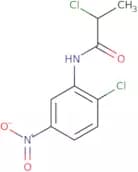
CAS:Please enquire for more information about 2-Chloro-N-(2-chloro-5-nitrophenyl)propanamide including the price, delivery time and more detailed product information at the technical inquiry form on this pageFórmula:C9H8Cl2N2O3Pureza:Min. 95%Peso molecular:263.08 g/mol3-Chloro-4-nitrotoluene
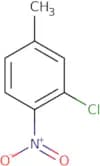
CAS:3-Chloro-4-nitrotoluene (3CNT) is a lactam that is produced from hydrochloric acid and styrene. 3CNT has a reactive nature, as it readily undergoes dehydration to produce benzothiazine. The reaction of 3CNT with hydroxamic acids yields the corresponding nitro compound, which can be used for the synthesis of organic compounds. 3CNT also reacts with protonated amines to form an oxazoline derivative. 3CNT is used in cross-coupling reactions, which are important for the synthesis of complex molecules such as pharmaceuticals and agrochemicals. Kinetic data on 3CNT’s reaction with hydroxamic acids show that it has a high rate of conversion to nitro compounds.Fórmula:C7H6ClNO2Pureza:Min. 95%Cor e Forma:PowderPeso molecular:171.58 g/molMethyl 3-methyl-2-nitrobenzoate
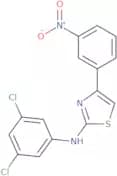
CAS:Methyl 3-methyl-2-nitrobenzoate is a chiral, catalytic, and magnetic additive. It is used in the production of alkyl chlorides, cinnolines, and cyclic compounds. Methyl 3-methyl-2-nitrobenzoate can be used as a diagnostic for chloride ions or chlorine gas in water. It also has an important application in wastewater treatment by removing organics from wastewater effluent. Methyl 3-methyl-2-nitrobenzoate can be synthesized from allylic oxidation of methyl benzoate with sodium hypochlorite in the presence of copper sulfate catalyst. The reaction proceeds through an addition–elimination mechanism to produce the desired product and copper(II) chloride as a byproduct. The process occurs on a mesoporous material to increase surface area for the reaction to proceed more quickly and efficiently.Fórmula:C9H9NO4Pureza:Min. 95%Peso molecular:195.17 g/mol(3,5-dichlorophenyl)(4-(3-nitrophenyl)(2,5-thiazolyl))amine
CAS:Please enquire for more information about (3,5-dichlorophenyl)(4-(3-nitrophenyl)(2,5-thiazolyl))amine including the price, delivery time and more detailed product information at the technical inquiry form on this pagePureza:Min. 95%N-Nitroso-N-methylaniline
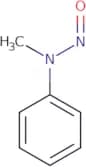
CAS:N-Nitroso-N-methylaniline is a chemical substance that has been shown to have genotoxic effects in rats. It reacts with deuterium isotopes, which are hydrogen isotopes, to form a nitrite ion. The nitrite ion then reacts with hydrochloric acid to form a carbonyl group and the trifluoroacetic acid product. The reaction mechanism is as follows: N-Nitroso-N-methylaniline + deuterium isotope → N-nitrosodimethylaniline + deuterium isotope N-Nitrosodimethylaniline + hydrochloric acid → N-nitrosomethylenetriamine + carbonyl group N-Nitrosomethylenetriamine + trifluoroacetic acid → N,O-dimethyltrifluoroacetamidineFórmula:C7H8N2OPureza:Min. 95 Area-%Cor e Forma:Clear LiquidPeso molecular:136.15 g/mol2,6-Difluoronitrobenzene
CAS:2,6-Difluoronitrobenzene is a compound that is classified as an aromatic amine. It has been shown to be a potential antiviral drug for the treatment of pandemic covid-19. Covid-19 virus is a respiratory syncytial virus that causes serious disease in infants and young children, with symptoms including fever, runny nose, cough and difficulty breathing. 2,6-Difluoronitrobenzene inhibits the viral membrane fusion by competing with the receptor activity of the virus. This drug also has anti-inflammatory effects on muscle cells by inhibiting proliferation and decreasing cytokines such as TNF-α and IL-1β.Fórmula:C6H3F2NO2Pureza:Min. 95%Cor e Forma:Red Clear LiquidPeso molecular:159.09 g/mol