Nitro
Foram encontrados 2517 produtos de "Nitro"
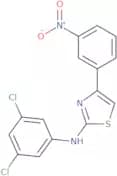
(3,5-dichlorophenyl)(4-(3-nitrophenyl)(2,5-thiazolyl))amine
CAS:Please enquire for more information about (3,5-dichlorophenyl)(4-(3-nitrophenyl)(2,5-thiazolyl))amine including the price, delivery time and more detailed product information at the technical inquiry form on this pagePureza:Min. 95%5-Methyl-2-nitrophenol
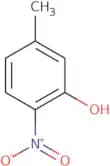
CAS:5-Methyl-2-nitrophenol is a phytotoxic chemical that is used as a synthetic intermediate in organic chemistry. It has been shown to have a high bioconcentration factor and can be found in wastewater. The major use of 5-methyl-2-nitrophenol is the synthesis of 2,4,6-trinitrophenylhydrazine (TNP) which is used as an analytical reagent for the determination of nitrates. The reaction mechanism of 5-methyl-2-nitrophenol involves intramolecular hydrogen transfer from the methylene group to the nitro group and subsequent elimination of HCl. This reaction product can be found by using analytical methods such as gas chromatography, mass spectrometry, or nuclear magnetic resonance spectroscopy. Functional groups on the reactant include phenols and nitro groups with the following endpoints: hydrochloric acid (HCl), kinetic method, and vapor pressure
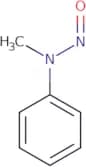
Fórmula:C7H7NO3Pureza:Min. 95%Cor e Forma:PowderPeso molecular:153.14 g/molN-Nitroso-N-methylaniline
CAS:N-Nitroso-N-methylaniline is a chemical substance that has been shown to have genotoxic effects in rats. It reacts with deuterium isotopes, which are hydrogen isotopes, to form a nitrite ion. The nitrite ion then reacts with hydrochloric acid to form a carbonyl group and the trifluoroacetic acid product. The reaction mechanism is as follows: N-Nitroso-N-methylaniline + deuterium isotope → N-nitrosodimethylaniline + deuterium isotope N-Nitrosodimethylaniline + hydrochloric acid → N-nitrosomethylenetriamine + carbonyl group N-Nitrosomethylenetriamine + trifluoroacetic acid → N,O-dimethyltrifluoroacetamidineFórmula:C7H8N2OPureza:Min. 95 Area-%Cor e Forma:Clear LiquidPeso molecular:136.15 g/mol2,6-Difluoronitrobenzene
CAS:2,6-Difluoronitrobenzene is a compound that is classified as an aromatic amine. It has been shown to be a potential antiviral drug for the treatment of pandemic covid-19. Covid-19 virus is a respiratory syncytial virus that causes serious disease in infants and young children, with symptoms including fever, runny nose, cough and difficulty breathing. 2,6-Difluoronitrobenzene inhibits the viral membrane fusion by competing with the receptor activity of the virus. This drug also has anti-inflammatory effects on muscle cells by inhibiting proliferation and decreasing cytokines such as TNF-α and IL-1β.Fórmula:C6H3F2NO2Pureza:Min. 95%Cor e Forma:Red Clear LiquidPeso molecular:159.09 g/mol2,2'-Dithio-bis(5-nitropyridine)
CAS:2,2'-Dithio-bis(5-nitrophenyl) is a redox probe that can be used to study ATP-sensitive K+ channels. This probe has been shown to bind to the carboxy terminal of the channel and disulfide bond through its thiol group. The binding of 2,2'-dithio-bis(5-nitropyridine) to the activated liver cells causes an increase in the redox potential, which leads to an accumulation of electrons in these cells. These electrons are then transferred to pyridine nucleotides and phosphate ions, leading to an increase in ATP levels and activation of ATP-sensitive K+ channels.Fórmula:C10H6N4O4S2Pureza:Min. 95%Peso molecular:310.31 g/mol3-Nitrophenylguanidine nitrate
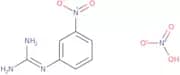
CAS:3-Nitrophenylguanidine nitrate is a drug that targets the enzyme kinases, which are involved in the regulation of cell growth and division. It has been shown to inhibit the activity of stromal tumor cells, as well as chronic myeloid leukemia cells. 3-Nitrophenylguanidine nitrate inhibits protein synthesis by inhibiting demethylation and efflux, which enables imatinib to bind to the target site. This drug also has a rapid onset of action and can be used for monitoring chronic myeloid leukemia patients without the need for positron emission tomography (PET) scanning.
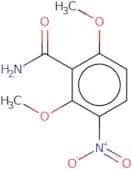
Fórmula:C7H8N4O2•HNO3Pureza:Min. 95%Cor e Forma:PowderPeso molecular:243.18 g/mol2,6-Dimethoxy-3-nitrobenzamide
CAS:2,6-Dimethoxy-3-nitrobenzamide is a fine chemical that is used as an intermediate in the synthesis of other compounds. This material can be used to make pharmaceuticals and research chemicals, such as antibiotics and pesticides. 2,6-Dimethoxy-3-nitrobenzamide is a versatile building block that can be used for the production of many different compounds. It has a CAS number of 55776-15-3 and has been assigned the Chemical Abstracts Service (CAS) registry number of 71887-92-8.
Fórmula:C9H10N2O5Pureza:Min. 90%Cor e Forma:PowderPeso molecular:226.19 g/molMethyl 4-hydroxy-3-nitrobenzoate
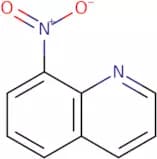
CAS:Methyl 4-hydroxy-3-nitrobenzoate (HNBP) is a nitro chemical that has been shown to have inhibitory properties. It was found to be a potent inhibitor of the virus covid-19, which is related to the pandemic H1N1 flu. Covid-19 is an influenza A virus that contains a single gene segment encoding for hemagglutinin and neuraminidase. The compound has also shown inhibitory activity against pyridine 2,4 dicarboxylate and is able to form hydrogen bonds with its target. This chemical is not active against many other compounds, such as amides and esters.Fórmula:C8H7NO5Pureza:Min. 95%Peso molecular:197.14 g/mol8-Nitroquinoline
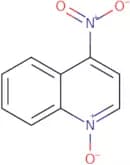
CAS:8-Nitroquinoline is a nitrogenous compound that has been used as an inhibitor of Leishmania, a parasite that causes leishmaniasis. 8-Nitroquinoline inhibits the growth of Leishmania by inhibiting the enzyme hepg2, which is involved in the synthesis of lipids and cholesterol. The inhibition of this enzyme leads to the accumulation of malonic acid, which inhibits the production of ATP. This inhibition may lead to cell death or inhibitory effects on other enzyme activities. 8-Nitroquinoline has been shown to be effective against Leishmania parasites in vivo.Fórmula:C9H6N2O2Pureza:Min. 95%Cor e Forma:PowderPeso molecular:174.16 g/mol4-Nitroquinoline-N-oxide
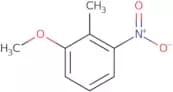
CAS:4-Nitroquinoline-N-oxide is a polymerase chain reaction (PCR) inhibitor that blocks the activity of methyltransferases, which are enzymes involved in DNA replication and repair. The mechanism of action has been shown to be due to the inhibition of the activities of these enzymes in cancer tissues. The efficacy of 4-Nitroquinoline-N-oxide has been demonstrated using an experimental model system composed of cells from Candida glabrata and other cancers, as well as a model system for carcinogenesis in vitro. This compound also shows antiinflammatory activity and can be used as a natural compound for chemotherapy. Chromatographic analysis has revealed that 4-Nitroquinoline-N-oxide is not toxic to wild type strains, but it is toxic to cancer cells with mutations in their DNA repair mechanisms.Fórmula:C9H6N2O3Pureza:Min. 95%Cor e Forma:PowderPeso molecular:190.16 g/mol2-Methyl-3-nitroanisole
CAS:2-Methyl-3-nitroanisole is a synthetic molecule with a bicyclic, cyclized ring system. It was synthesized by the cyclization reaction of 2-methylbenzaldehyde and nitroethane. The reductive amination of 2-methyl-3-nitroanisole with hydroxylamine yields a mixture of products that can be used to study intramolecular reductive amination.Fórmula:C8H9NO3Pureza:Min. 95%Cor e Forma:PowderPeso molecular:167.16 g/mol2-(2,2-dimethyl(3-oxaindan-4-yloxy))-5-nitropyridine
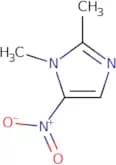
CAS:Please enquire for more information about 2-(2,2-dimethyl(3-oxaindan-4-yloxy))-5-nitropyridine including the price, delivery time and more detailed product information at the technical inquiry form on this pagePureza:Min. 95%1,2-Dimethyl-5-nitro-1H-imidazole
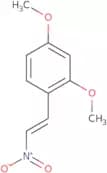
CAS:1,2-Dimethyl-5-nitro-1H-imidazole is a chemical reagent that has been used as an antimicrobial agent in the treatment of infectious diseases. It is structurally related to estradiol benzoate and can be used as a matrix in analytical methods. 1,2-Dimethyl-5-nitro-1H-imidazole has been shown to have genotoxic activity and can cause DNA strand breaks in human serum. This chemical reagent is also soluble in water and exhibits stable chemical properties when exposed to light or heat. The detection limit for 1,2-dimethyl-5 nitroimidazole was found to be 10 μM with a linear range from 10 to 500 μM.Fórmula:C5H7N3O2Pureza:Min. 97 Area-%Cor e Forma:Off-White To Yellow Brown SolidPeso molecular:141.13 g/mol2,4-Dimethoxy-β-nitrostyrene
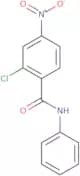
CAS:2,4-Dimethoxy-beta-nitrostyrene is a high quality, versatile building block for synthesis of complex compounds. It is an intermediate for the production of pharmaceuticals and other fine chemicals. 2,4-Dimethoxy-beta-nitrostyrene is used as a reagent in organic chemistry to produce complex compounds, such as esters and amides. This chemical has also been shown to be useful in research into the synthesis of new drugs.Fórmula:C10H11NO4Pureza:Min. 95%Peso molecular:209.2 g/mol2-Chloro-4-nitrobenzanilide
CAS:2-Chloro-4-nitrobenzanilide is a reactive intermediate in organic synthesis. It has been used as a reagent for the synthesis of 2,3-dihydrobenzofuran and the preparation of 2,5-dichloroaniline. It is also a useful scaffold for the formation of complex compounds with various functional groups. This compound has been used as an intermediate to prepare other chemicals such as 4-chloroquinoline, 3-chloropyridine, and 3,4,5-trichloropyridine. It is also a versatile building block for the preparation of speciality chemicals such as 1H-[1,2]oxazolo[4,3-a]quinoxalin-1-one and 4-(2'-chlorophenyl)benzenamine.Fórmula:C13H9ClN2O3Pureza:Min. 95%Cor e Forma:PowderPeso molecular:276.67 g/mol2'-Hydroxy-5'-nitrohexadecanamide
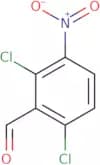
CAS:2'-Hydroxy-5'-nitrohexadecanamide is a synthetic fatty acid derivative that inhibits lysosomal hydrolase, which is an enzyme that breaks down cellular lipids. This compound can be used as a diagnostic agent for the detection of certain types of cancer. 2'-Hydroxy-5'-nitrohexadecanamide reacts with the magnesium ion in the lysosome to form an insoluble precipitate, which then settles to the bottom of the test tube, allowing for easy detection of cells with high levels of lysosomal hydrolase.Fórmula:C22H36N2O4Pureza:Min. 95%Cor e Forma:PowderPeso molecular:392.53 g/mol2,6-Dichloro-3-nitrobenzaldehyde
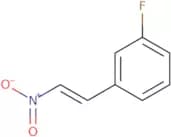
CAS:2,6-Dichloro-3-nitrobenzaldehyde (DCNB) is an electrophilic bidentate ligand that reacts with chlorine to form chloroform. It is also a good ligand for many metal ions, such as copper and nickel. DCNB can catalyze the epoxidation of alkenes to form epoxides. DCNB has been used in the industrial production of chlorinated solvents and hydrocarbons. It is a very efficient reagent for formylation, which can be used to convert alcohols and amines into formyl groups or carboxylic acids. The DCN group is also an excellent leaving group, which makes it useful as a solvent in organic syntheses. Finally, DCNB reacts with chlorine atoms to produce chloride ions that are soluble in water and organic solvents.Fórmula:C7H3Cl2NO3Pureza:Min. 95%Peso molecular:220.01 g/mol1-(3-Fluorophenyl)-2-nitroethene
CAS:1-(3-Fluorophenyl)-2-nitroethene is a high quality reagent, complex compound, with CAS No. 705-84-0. It is used as an intermediate in the synthesis of pharmaceuticals and fine chemicals. This compound is one of the most useful scaffolds for organic synthesis due to its versatility in reactions. 1-(3-Fluorophenyl)-2-nitroethene is a versatile building block that can be used in many different reactions, such as the formation of amides, esters, and lactams.Fórmula:C8H6FNO2Pureza:Min. 95%Cor e Forma:PowderPeso molecular:167.14 g/mol4-Bromo-3-nitroaniline
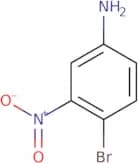
CAS:4-Bromo-3-nitroaniline is a white crystalline solid. It has a molecular weight of 256.38 and it has a molar mass of 314.6 g/mol. This chemical belongs to the group of aromatic compounds, which are organic compounds that contain at least one benzene ring, and are often used in the production of dyes and perfumes. 4-Bromo-3-nitroaniline can be synthesized by nitrating an aromatic compound containing an amino group, such as 1,4-diaminobenzene (1). Nitration is the process whereby nitric acid reacts with an organic compound to produce nitrates, which can be further reacted to produce a variety of other organic molecules with different properties. The molecular structure of 4-bromo-3-nitroaniline consists of two methyl groups (-CH3) bonded to each end of the molecule's central carbon atom (-C),
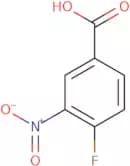
Fórmula:C6H5BrN2O2Pureza:Min. 95%Cor e Forma:PowderPeso molecular:217.02 g/mol4-Fluoro-3-nitrobenzoic acid
CAS:4-Fluoro-3-nitrobenzoic acid (4FNBA) is a molecule that has been studied for its ability to inhibit the activity of amine oxidases and haloperoxidases. 4FNBA was shown to be a substrate for the model protein, with an equilibrium constant of 2.6 x 10^6 M^(-1). The conversion of 4FNBA to the corresponding quinoxalines was also observed. Molecular docking analysis revealed that 4FNBA binds to the chloride ion and hydrogen bond interactions with nitrogen and oxygen atoms in the protein. This molecule is structurally diverse and may be useful in chemical synthesis or as a drug for treating certain medical conditions.Fórmula:C7H4FNO4Cor e Forma:PowderPeso molecular:185.11 g/mol