Cetonas
Foram encontrados 18873 produtos de "Cetonas"
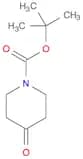
N-(tert-Butoxycarbonyl)-4-piperidone
CAS:Produto ControladoFórmula:C10H17NO3Pureza:98%Cor e Forma:SolidPeso molecular:199.2469Ref: IN-DA0035CT
Produto descontinuado2-(tert-Butylamino)-1-(3-chlorophenyl)propan-1-onehydrochloride
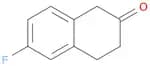
CAS:Fórmula:C13H19Cl2NOPureza:98%Cor e Forma:SolidPeso molecular:276.20212(1H)-Naphthalenone, 6-fluoro-3,4-dihydro-
CAS:Fórmula:C10H9FOPureza:97%Cor e Forma:SolidPeso molecular:164.1763Ref: IN-DA003SOK
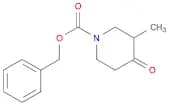
Produto descontinuado1-Piperidinecarboxylic acid, 3-methyl-4-oxo-, phenylmethyl ester
CAS:Fórmula:C14H17NO3Pureza:98%Cor e Forma:SolidPeso molecular:247.2897Ref: IN-DA0003J2
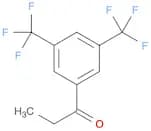
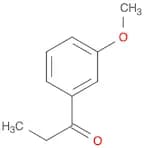
Produto descontinuado3',5'-BIS(TRIFLUOROMETHYL)PROPIOPHENONE
CAS:Fórmula:C11H8F6OPureza:97%Cor e Forma:LiquidPeso molecular:270.171Ref: IN-DA008GOT
Produto descontinuadoRef: IN-DA00DEVR
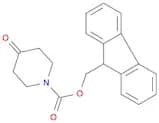
Produto descontinuado1-Piperidinecarboxylic acid, 4-oxo-, 9H-fluoren-9-ylmethyl ester
CAS:Fórmula:C20H19NO3Pureza:97%Cor e Forma:SolidPeso molecular:321.3698Ref: IN-DA0029FT
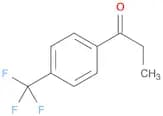
Produto descontinuado1-(4-(Trifluoromethyl)phenyl)propan-1-one
CAS:Fórmula:C10H9F3OPureza:98%Cor e Forma:SolidPeso molecular:202.1731Ref: IN-DA006BIV
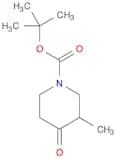
Produto descontinuado1-BOC-3-METHYL-PIPERIDIN-4-ONE
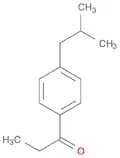
CAS:Fórmula:C11H19NO3Pureza:97%Cor e Forma:SolidPeso molecular:213.27351-(4-ISOBUTYLPHENYL)PROPAN-1-ONE
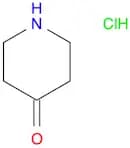
CAS:Fórmula:C13H18OPureza:97%Cor e Forma:LiquidPeso molecular:190.281420000000054-Oxopiperidine hydrochloride
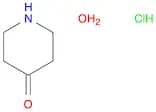
CAS:Fórmula:C5H10ClNOPureza:97%Cor e Forma:SolidPeso molecular:135.59204-Piperidone Hydrochloride Monohydrate
CAS:Fórmula:C5H12ClNO2Pureza:98%Cor e Forma:SolidPeso molecular:153.6073Ref: 4Z-B-126007
Produto descontinuadoRef: 4Z-B-126003
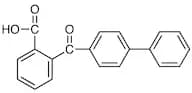
Produto descontinuado2-(4-Biphenylylcarbonyl)benzoic Acid
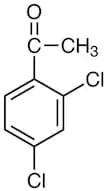
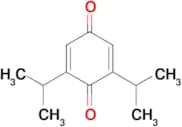
CAS:Fórmula:C20H14O3Pureza:>97.0%(GC)(T)Cor e Forma:White to Almost white powder to crystalPeso molecular:302.332',4'-Dichloroacetophenone
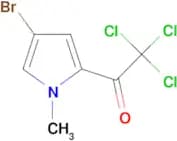
CAS:Fórmula:C8H6Cl2OPureza:>98.0%(GC)Cor e Forma:White or Colorless to Light yellow powder to lump to clear liquidPeso molecular:189.041-(4-Bromo-1-methyl-1H-pyrrol-2-yl)-2,2,2-trichloroethanone
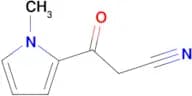
CAS:Pureza:97.0%Cor e Forma:SolidPeso molecular:305.38000488281253-(1-methyl-1H-pyrrol-2-yl)-3-oxopropanenitrile
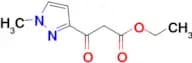
CAS:Pureza:95.0%Cor e Forma:SolidPeso molecular:148.16499328613283-(1-Methyl-1 H -pyrazol-3-yl)-3-oxo-propionic acid ethyl ester
CAS:Cor e Forma:Solid, solidPeso molecular:196.205993652343751,7-Bis(4-hydroxyphenyl)hepta-1,6-diene-3,5-dione
CAS:Pureza:95.0%Cor e Forma:SolidPeso molecular:308.3330078125Ref: 10-F618802
Produto descontinuadoRef: 10-F240675
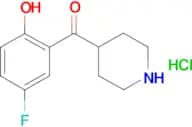
Produto descontinuado(5-fluoro-2-hydroxyphenyl)(piperidin-4-yl)methanone hydrochloride
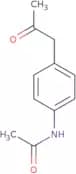
CAS:Pureza:95.0%Peso molecular:259.7099914550781(4-Acetamidophenyl)acetone
CAS:(4-Acetamidophenyl)acetone is a chemical compound that belongs to the class of complex compounds. It is an intermediate in the synthesis of other chemicals and can be used as a building block for more complicated molecules. (4-Acetamidophenyl)acetone has been used as a reagent in organic synthesis, and it has shown high reactivity. This chemical is also used in research, such as the development of new pharmaceutical drugs, and it can be used to synthesize speciality chemicals. The versatility of this chemical makes it useful in many different reactions.
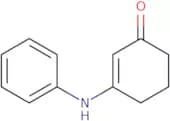
Fórmula:C11H13NO2Pureza:Min. 95%Cor e Forma:Brown Beige PowderPeso molecular:191.23 g/mol3-Anilinocyclohex-2-en-1-one
CAS:3-Anilinocyclohex-2-en-1-one is an organic compound that has been modified with groups of atoms to give it a particular function. The functional theory states that the molecule will have a different shape, depending on the modifications made to it. 3-Anilinocyclohex-2-en-1-one is a fluorescing molecule with a low energy transfer rate. It is macroscopic and photophysical in nature, which means that it can be analysed by techniques such as polarimetry and FTIR spectroscopy. The modification of 3-Anilinocyclohex-2-en-1-one alters its frequency and may also stabilize the molecule.
Fórmula:C12H13NOPureza:Min. 95%Cor e Forma:PowderPeso molecular:187.24 g/molRef: 3D-FA169191
Produto descontinuado3-((4,5-dichloroimidazolyl)methyl)-4-bromo-2-methyl-1-phenyl-3-pyrazolin-5-one
CAS:Please enquire for more information about 3-((4,5-dichloroimidazolyl)methyl)-4-bromo-2-methyl-1-phenyl-3-pyrazolin-5-one including the price, delivery time and more detailed product information at the technical inquiry form on this page
Pureza:Min. 95%Ref: 3D-FD169753
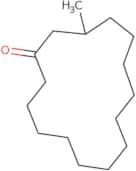
Produto descontinuado3-Methyl-1-cyclopentadecanone
CAS:3-Methyl-1-cyclopentadecanone is a chemical compound with the molecular formula C10H18O. It has an optimum concentration of 0.08% and phase transition temperature of -83 degrees Celsius. The pro-apoptotic protein, Bax, is activated by 3-methyl-1-cyclopentadecanone in mammalian cells, inducing apoptosis. This compound also inhibits the activity of enzymes such as lipoxygenase and cyclooxygenase, which are involved in inflammation. 3-Methyl-1-cyclopentadecanone has been shown to be effective against cancer tissues and neuronal death in rats. 3MCTD has been shown to inhibit polymerase chain reaction (PCR) amplification of DNA from rhizoma gastrodiae, a traditional Chinese herbal medicine for the treatment of myocardial infarcts.
Fórmula:C16H30OPureza:Min. 95%Cor e Forma:Clear LiquidPeso molecular:238.41 g/mol(5a)-Androst-2-en-17-one
CAS:Produto Controlado(5a)-Androst-2-en-17-one is a synthetic substance that has been used as a supplement. It is an androgenic steroid, which means it stimulates the development of male sex organs and secondary sex characteristics in boys. The use of (5a)-androst-2-en-17-one has been associated with the development of liver tumors in laboratory animals. There are no studies to date on the effects of (5a)-androst-2-en-17-one on human liver function. Androgens may also affect the kidneys, bladder, prostate gland, or brain. In addition, these substances can have pharmacological effects such as increasing blood pressure or heart rate or suppressing the production of certain hormones by the pituitary gland. Androgens can also cause other adverse side effects including acne, hair loss or hair growth in unwanted places, shrinking of the testicles in men, enlargement of breasts in men and women, fluid retention and high
Fórmula:C19H28OPureza:Min. 95%Cor e Forma:White PowderPeso molecular:272.43 g/mol5-Amino-1,3-dimethyl-1,3-dihydro-2H-benzimidazol-2-one dihydrochloride
CAS:5-Amino-1,3-dimethyl-1,3-dihydro-2H-benzimidazol-2-one dihydrochloride (5ADMB) is a high quality reagent that is used as a complex compound. It has been shown to be useful in the synthesis of various compounds and is a fine chemical that can be used as a building block. 5ADMB has also been shown to be an excellent scaffold for the synthesis of benzo[b]thiophenes. This compound is also useful as a research chemical or specialty chemical. 5ADMB can be used in organic syntheses as a versatile building block and it reacts with nucleophiles such as alcohols and amines to form substituted derivatives. It has an appearance of white solid powder and its CAS number is 1986846-08-5.
Fórmula:C9H11N3O·2HClPureza:Min. 95%Cor e Forma:PowderPeso molecular:250.12 g/molRef: 3D-FA120120
Produto descontinuado7-Chloro-2H-pyrido[3,2-B]-1,4-oxazin-3(4H)-one
CAS:7-Chloro-2H-pyrido[3,2-B]-1,4-oxazin-3(4H)-one is a chemical which is used as a reagent and building block in the synthesis of more complex compounds. It has been reported to be an intermediate for the production of pharmaceuticals and agrochemicals. The compound can also be used as an intermediate for the synthesis of other valuable chemicals such as pesticides and dyes. 7-Chloro-2H-pyrido[3,2-B]-1,4-oxazin-3(4H)-one has a CAS number of 205748-05-6.
Fórmula:C7H5ClN2O2Pureza:Min. 96 Area-%Cor e Forma:PowderPeso molecular:184.58 g/molRef: 3D-FC66462
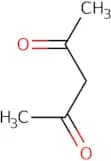
Produto descontinuado2,4-Pentanedione
CAS:2,4-Pentanedione is a fluorescence probe that can be used as an intramolecular hydrogen-sensitive reagent. It is also used to detect bowel disease and other diseases. 2,4-Pentanedione reacts with acetylacetone in the presence of methyl ethyl ketone to form a fluorescent compound. This reaction is shown in two steps: CH3COCOCH2CH3 + p-nitrophenyl phosphate → CH3COOCOCH2CH2 + p-nitrophenol 2,4-Pentanedione + CH3COOCOCH2CH2 → 2,4-pentanedione-1,5-dione + CO This compound is also used for wastewater treatment and as a ferroelectric material. X-ray diffraction data has been collected on this compound at different temperatures and in different solvents. Biological studies have been done on the effects of
Fórmula:C5H8O2Pureza:Min. 95%Cor e Forma:PowderPeso molecular:100.12 g/molRef: 3D-FP35056
Produto descontinuado4-Oxahomoadamantan-5-one
CAS:4-Oxahomoadamantan-5-one is a synthetic molecule with a labile peroxide group. It has biological functions, including the ability to bind to and activate the benzodiazepine receptor. The molecule forms an ethyl ester and an acid solution. The compound's nmr spectra have been obtained in both acetonitrile and formamide solutions, in which the stereoisomers are visible. It reacts with oxygen to form a peroxide group, which is easily oxidized to create a reactive intermediate that can be used for chemical reactions such as oxidation of alcohols or alkyl halides. 4-Oxahomoadamantan-5-one can be synthesized from benzonitrile and acetone using two different methods: by reacting with sodium methoxide in methanol or by reacting with potassium formate in methanol.
Fórmula:C10H14O2Pureza:Min. 95%Cor e Forma:White PowderPeso molecular:166.22 g/molRef: 3D-FO67037
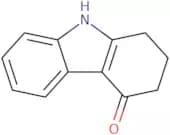
Produto descontinuado1,2,3,9-Tetrahydro-4H-carbazol-4-one
CAS:1,2,3,9-Tetrahydro-4H-carbazol-4-one is a cyclic ketone compound, which can be synthesized through various organic reactions involving appropriate precursors. It is often derived from indole-based substrates through catalytic hydrogenation, allowing the formation of its stable tetrahydro structure with a retained core carbazole skeleton.
Fórmula:C12H11NOPureza:Min. 95%Cor e Forma:PowderPeso molecular:185.23 g/molRef: 3D-FT02555
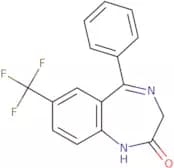
Produto descontinuado5-Phenyl-7-(Trifluoromethyl)-1,3-Dihydro-1,4-Benzodiazepin-2-One
CAS:Produto Controlado5-Phenyl-7-(Trifluoromethyl)-1,3-Dihydro-1,4-Benzodiazepin-2-One is a pyrethroid that has been shown to have an effective dose of 10 μg/kg in pharmacological tests. It has been shown to modulate hydrogen bond formation and the hydrophobic effects of diazepam. 5-Phenyl-7-(Trifluoromethyl)-1,3-Dihydro-1,4-Benzodiazepin-2-One is a monomer that can be used for the treatment of cancer. This active compound has been found to bind to the benzodiazepine binding site on GABA receptors in the brain and has been shown to induce digitonin release from nerve endings. It also binds with carbonyl groups which are found on proteins and nucleic acids.
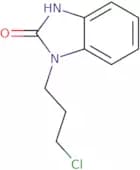
Fórmula:C16H11F3N2OPureza:Min. 95%Peso molecular:304.27 g/mol1-(3-Chloropropyl)-1,3-dihydro-2H-benzimidazole-2-one
CAS:Phenylmethyl (PM) is a drug that belongs to the class of phenylmethanesulfonamides. It is used in the treatment of diarrhea, specifically in cases where there are no other suitable anti-diarrheal drugs available. The active form of PM is 1-(3-chloropropyl)-1,3-dihydro-2H-benzimidazole-2-one (PCP). This drug inhibits bacterial growth by binding to the 50S ribosomal subunit and inhibiting protein synthesis. PCP has been shown to have a narrow spectrum of activity against most enteric bacteria and some protozoa. The drug is poorly absorbed from the gastrointestinal tract and does not cross the blood–brain barrier, which limits its use for systemic infections.
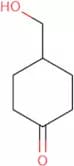
Fórmula:C10H11ClN2OPureza:Min. 95%Cor e Forma:PowderPeso molecular:210.66 g/mol4-(Hydroxymethyl)cyclohexanone
CAS:4-(Hydroxymethyl)cyclohexanone is a dicarboxylic acid methyl ester. It is synthesized by reacting formic acid with hexamethylene diamine. 4-(Hydroxymethyl)cyclohexanone can be used in the production of a variety of products, including pharmaceuticals, cosmetics, and perfumes. This compound is produced from renewable resources and does not contribute to global warming or ozone depletion.
Fórmula:C7H12O2Pureza:Min. 95%Cor e Forma:PowderPeso molecular:128.17 g/molRef: 3D-FH54426
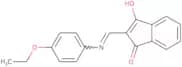
Produto descontinuado2-(((4-ethoxyphenyl)amino)methylene)indane-1,3-dione
CAS:Please enquire for more information about 2-(((4-ethoxyphenyl)amino)methylene)indane-1,3-dione including the price, delivery time and more detailed product information at the technical inquiry form on this page
Pureza:Min. 95%Ref: 3D-FE169667
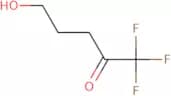
Produto descontinuado1,1,1-Trifluoro-5-hydroxy-2-pentanone
CAS:1,1,1-Trifluoro-5-hydroxy-2-pentanone is a versatile building block that has been used extensively in the synthesis of complex compounds. It is an important reagent for the preparation of speciality chemicals and reactive intermediates. 1,1,1-Trifluoro-5-hydroxy-2-pentanone is also a useful intermediate for the synthesis of other compounds. This compound can be reacted with various groups to produce valuable scaffolds for drug discovery research.
Fórmula:C5H7F3O2Pureza:Min. 95%Cor e Forma:PowderPeso molecular:156.1 g/molRef: 3D-FT83611
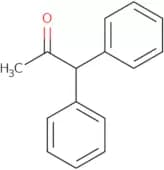
Produto descontinuado1,1-Diphenylacetone
CAS:1,1-Diphenylacetone is a molecule that belongs to the group of aromatic hydrocarbons. It has two functional groups, a carbonyl group and a diphenyl ether. 1,1-Diphenylacetone can be synthesized by reacting benzene with acetone in the presence of sodium hydroxide. The molecule fluoresces with a short lifetime and has been used as a corrosion inhibitor for metals such as copper and aluminum. 1,1-Diphenylacetone has also been used to synthesize polymers via free radical polymerization or copolymerization reactions. X-ray structures have shown that 1,1-diphenylacetone binds to metal ions such as copper or silver ions. This binding causes light emission when the metal ion is excited by an external source such as x-rays or visible light.
Fórmula:C15H14OPureza:Min. 95%Peso molecular:210.27 g/molRef: 3D-FD45824
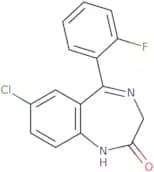
Produto descontinuado7-Chloro-5-(2-fluorophenyl)-1,3-dihydro-2H-1,4-benzodiazepin-2-one
CAS:Produto Controlado7-Chloro-5-(2-fluorophenyl)-1,3-dihydro-2H-1,4-benzodiazepin-2-one is a GABA receptor antagonist that is used in the treatment of anxiety. It is an analogue of cinolazepam, which has been shown to inhibit the binding of gamma aminobutyric acid (GABA) to its receptors in human serum and urine samples. Cinolazepam was found to be more potent than 7-chloro-5-(2-fluorophenyl)-1,3-dihydro-2H-1,4 benzodiazepin 2 one in blocking the binding of GABA to its receptor. This drug has also been tested on geriatric patients with high levels of anxiety and found to be well tolerated.Fórmula:C15H10ClFN2OPureza:Min. 98 Area-%Cor e Forma:White PowderPeso molecular:288.7 g/mol










![2-Azaspiro[3.5]nonan-7-one hydrochloride](/_next/image/?url=https%3A%2Fstatic.cymitquimica.com%2Fproducts%2F10%2Fthumb-webp%2FF618802.webp&w=3840&q=75)
![2-[4-(methylamino)-3-nitrobenzoyl]benzoic acid](/_next/image/?url=https%3A%2Fstatic.cymitquimica.com%2Fproducts%2F10%2Fthumb-webp%2FF518183.webp&w=3840&q=75)



![7-Chloro-2H-pyrido[3,2-B]-1,4-oxazin-3(4H)-one](/_next/image/?url=https%3A%2Fstatic.cymitquimica.com%2Fproducts%2F3D%2Fthumb-webp%2FFC66462.webp&w=3840&q=75)