Ácidos carboxílicos
Foram encontrados 12457 produtos de "Ácidos carboxílicos"
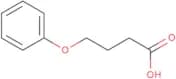
4-Phenoxybutyric acid
CAS:Produto Controlado4-Phenoxybutyric acid is a molecule that is produced by filamentous fungi. It has been shown to inhibit the growth of many bacteria, including Staphylococcus aureus, Salmonella typhimurium, and Enterobacter aerogenes. 4-Phenoxybutyric acid binds to the receptor on the surface of the bacterial cell membrane and prevents it from functioning correctly. It also prevents the production of proteins necessary for growth and survival. This inhibition leads to a loss of energy in the cell, which eventually leads to death. The molecule has been shown to be effective in inhibiting bacteria even if they are resistant to antibiotics. 4-Phenoxybutyric acid has been shown to be more efficient than other methods for microbial biotransformation, such as dispersive solid-phase extraction or liquid-liquid extraction.
Fórmula:C10H12O3Pureza:Min. 95%Peso molecular:180.2 g/mol5-Hexynoic acid
CAS:5-Hexynoic acid is a chemical compound that has been shown to have anticancer properties. The mechanism of action is not fully understood, but it may be due to its ability to inhibit an enzyme called irreversible acetylcholinesterase, which is involved in the production of several pro-inflammatory mediators. 5-Hexynoic acid has also been shown to inhibit the growth of prostate cancer cells and can be used as a therapeutic agent for prostate cancer. It is synthesized by plants and some microorganisms, although it is not found in humans. 5-Hexynoic acid can be produced from conjugates with glutamic acid or oxalyl chloride in an acidic environment.
Fórmula:C6H8O2Pureza:Min. 95%Cor e Forma:Clear LiquidPeso molecular:112.13 g/molRef: 3D-FH61672
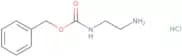
Produto descontinuadoBenzyl N-(2-aminoethyl)carbamate hydrochloride
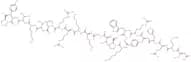
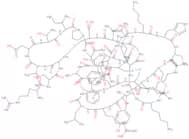
CAS:Please enquire for more information about Benzyl N-(2-aminoethyl)carbamate hydrochloride including the price, delivery time and more detailed product information at the technical inquiry form on this pageFórmula:C10H15ClN2O2Pureza:Min. 95%Peso molecular:230.69 g/molAcetyl-ACTH (3-24) (human, bovine, rat) trifluoroacetate salt
CAS:Please enquire for more information about Acetyl-ACTH (3-24) (human, bovine, rat) trifluoroacetate salt including the price, delivery time and more detailed product information at the technical inquiry form on this page
Fórmula:C126H198N38O28SPureza:Min. 95%Peso molecular:2,725.23 g/molRef: 3D-FA109959
Produto descontinuadoStichodactyla helianthus Neurotoxin (ShK) trifluoroacetate salt
CAS:ShK is an amide toxin that is found in the skin of the tropical marine organism Stichodactyla helianthus. It has been shown to have antimicrobial activity against E. coli and other bacteria, as well as a protective effect on inflammatory bowel disease. ShK has been shown to act by inhibiting protein synthesis, which may be due to its ability to bind to signal peptides and change their conformation.Fórmula:C169H274N54O48S7Pureza:Min. 95%Peso molecular:4,054.78 g/molRef: 3D-FS108658
Produto descontinuado1-(Benzyloxy)-6-oxo-1,6-dihydropyridine-2-carboxylic acid
CAS:Please enquire for more information about 1-(Benzyloxy)-6-oxo-1,6-dihydropyridine-2-carboxylic acid including the price, delivery time and more detailed product information at the technical inquiry form on this page
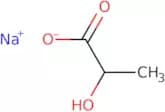
Fórmula:C13H11NO4Pureza:Min. 95%Cor e Forma:PowderPeso molecular:245.23 g/molDL-Lactic acid sodium salt, 60% w/w syrup
CAS:Lactic acid is a natural product that has been used for many years as an antimicrobial agent in wastewater treatment. It is also used in the food industry to prevent the growth of bacteria and fungi, and as a preservative. Lactic acid has been shown to have a physiological effect on locomotor activity, which may be due to its ability to convert pyruvate into lactate. Lactic acid also inhibits the growth of some bacterial strains by increasing the disulfide bond formation between two cysteine residues. The sodium salt form of lactic acid is more soluble than the acid form and can be used as an experimental model for studying sodium-lactate interactions. Sodium lactate is used in maternal blood transfusions to increase blood pH levels during labor, and is also added to water vapor for humidification purposes.
Fórmula:C3H5O3NaCor e Forma:Colorless Clear LiquidPeso molecular:112.06 g/mol(5-Chloropyridin-3-yl)boronic acid
CAS:Please enquire for more information about (5-Chloropyridin-3-yl)boronic acid including the price, delivery time and more detailed product information at the technical inquiry form on this page
Fórmula:C5H5BClNO2Pureza:Min. 95%Peso molecular:157.36 g/molRef: 3D-FC160837
Produto descontinuado(3-Acetyl-1H-indol-1-yl)acetic acid
CAS:Produto ControladoPlease enquire for more information about (3-Acetyl-1H-indol-1-yl)acetic acid including the price, delivery time and more detailed product information at the technical inquiry form on this page
Fórmula:C12H11NO3Pureza:Min. 95%Peso molecular:217.22 g/molRef: 3D-FA124443
Produto descontinuado4-(4-Chlorophenoxy)butyric acid
CAS:Produto Controlado4-(4-Chlorophenoxy)butyric acid (4CBA) is a nitrobenzodiazepine derivative. It has been shown to bind to the benzodiazepine receptor at the same site as benzodiazepines, but with a different conformation. This drug has been shown to be an effective treatment for anxiety, but not depression. In addition, 4CBA has been shown to interact with GABA receptors and modulate their activity. It also appears that this drug may be useful in the treatment of epilepsy and other neurological disorders because it can enhance GABAergic transmission. 4CBA binds to the carboxylate site on GABA A receptors and inhibits chloride ion influx, which leads to membrane hyperpolarization. This binding also causes conformational changes in the receptor protein that have an effect on the binding of other ligands at the same site. The molecular modelling techniques used for this research showed that 4CBA binds in a similar manner as benzod
Fórmula:C10H11ClO3Pureza:Min. 95%Peso molecular:214.65 g/molRef: 3D-FC54216
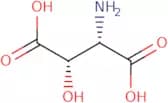
Produto descontinuadoD,L-Threo-b-hydroxy aspartic acid
CAS:D,L-Threo-b-hydroxy aspartic acid is a stereoselective synthetic amino acid that has been used to study the uptake and hydrolysis of D,L-threo-b-hydroxy aspartic acid by rat brain synaptosomes. It has also been used in the synthesis of an L-alanine analogue with the same stereochemistry at the chiral center. The stereoselective synthesis of this compound is achieved by epimerization reaction using d-alanine as a starting material. Threo bhda has been shown to inhibit glutamate release from neurons and stimulate GABA release in synaptosomes, which may be due to its ability to bind to ion channels. Threo bhda has also been found to inhibit the binding of radioactive thymidine to calf thymus DNA with a high degree of stereoselectivity.
Fórmula:C4H7NO5Pureza:Min. 95%Peso molecular:149.1 g/molRef: 3D-FT28259
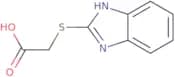
Produto descontinuado2-(Benzimidazolylthio) acetic acid
CAS:2-(Benzimidazolylthio) acetic acid is a ligand that can be used as an antihelminthic. It can also be used to produce luminescent substances, inorganic salts and heterocycles. 2-(Benzimidazolylthio) acetic acid reacts with nucleophiles by nucleophilic attack, cleaving the bond and releasing the atom or group. 2-(Benzimidazolylthio) acetic acid has been used to synthesize condensation products with irradiation. This chemical has been shown to have antimicrobial properties against bacteria and fungi.
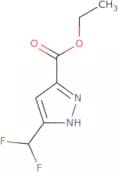
Fórmula:C9H8N2O2SPureza:Min. 95%Cor e Forma:PowderPeso molecular:208.24 g/molEthyl 3-(difluoromethyl)-1H-pyrazole-5-carboxylate
CAS:Please enquire for more information about Ethyl 3-(difluoromethyl)-1H-pyrazole-5-carboxylate including the price, delivery time and more detailed product information at the technical inquiry form on this pageFórmula:C7H8F2N2O2Pureza:Min. 95%Cor e Forma:PowderPeso molecular:190.15 g/molRef: 3D-FE133779
Produto descontinuado4-(2-Chlorophenyl)-9-methyl-6H-thieno[3,2-f][1,2,4]triazolo[4,3-a][1,4]diazepine-2-propanoic acid methyl ester
CAS:Produto ControladoPlease enquire for more information about 4-(2-Chlorophenyl)-9-methyl-6H-thieno[3,2-f][1,2,4]triazolo[4,3-a][1,4]diazepine-2-propanoic acid methyl ester including the price, delivery time and more detailed product information at the technical inquiry form on this pageFórmula:C19H17ClN4O2SPureza:Min. 95%Peso molecular:400.88 g/molRef: 3D-FC20337
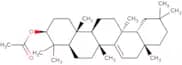
Produto descontinuadoTaraxeryl acetate
CAS:Produto ControladoTaraxeryl acetate is a fatty acid that is found in the extract of Curcuma aromatica (turmeric). It has been shown to inhibit cervical cancer cells in tissue culture. Taraxeryl acetate inhibits the growth of Streptococcus faecalis by binding to its ribosomal RNA and inhibiting protein synthesis. Toxicological studies on rats have shown that this compound does not have any harmful effects on physiological functions. This molecule has also been shown to be an inhibitor for protocatechuic acid, which is a chemical structure involved in the cycle analysis of curcuminoids. In addition, taraxeryl acetate has been used as an active ingredient in Chinese medicine preparations for the treatment of symptoms related to herpes simplex virus infections.
Pureza:Min. 95%Ref: 3D-FT74120
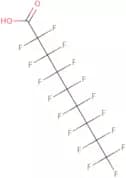
Produto descontinuadoHeptadecafluorononanoic acid
CAS:Heptadecafluorononanoic acid is a long-chain fatty acid that has been used as a building block in the synthesis of polymers. It has been shown to have an effect on locomotor activity and thermal expansion in human serum, as well as on maternal blood. Heptadecafluorononanoic acid has also been found to be effective for the treatment of hepatic steatosis and may have long-term efficacy. This compound is also able to bind with receptors, which can contribute to its biological properties. Heptadecafluorononanoic acid has been shown to inhibit geriatric patients' reaction solution. The analytical method for heptadecafluorononanoic acid consists of gas chromatography with flame ionization detection (GC-FID).
Fórmula:C9HF17O2Pureza:Min. 95%Cor e Forma:PowderPeso molecular:464.08 g/molRef: 3D-FH60471
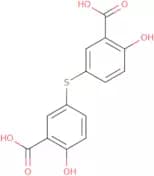
Produto descontinuado5,5'-Thiodisalicylic Acid
CAS:5,5'-Thiodisalicylic Acid is a reactive functional group with a silver ion. This compound has a hydrochloric acid and hydroxy group that react to form a hydroxyl group with the proton. It also has a nitrogen atom, which can be found in the reactive acidic hydroxyl group of 5,5'-thiodisalicylic acid. The fatty acids are viscosity and carbonyl groups. 5,5'-Thiodisalicylic Acid is an organic compound that reacts with chloride to form patterns.
Pureza:Min. 95%Ref: 3D-FT62679
Produto descontinuado3-Thienylmalonic acid
CAS:3-Thienylmalonic acid is a template molecule that is used in kinetic studies of receptor binding reactions. It is a white solid with a molecular weight of 170.07 g/mol and an empirical formula of CHOS. 3-Thienylmalonic acid has been shown to be effective for corrosion inhibition, as it reacts with chloride ions to form a complex that does not allow the metal surface to corrode. This process can be done in a pH range from 1 to 14 and the reaction solution is colorless, odorless, and stable at room temperature. 3-Thienylmalonic acid also has photocatalytic activity, which allows it to degrade organic molecules such as malonic acid or human serum proteins. The compound can also be used as an electrochemical impedance spectroscopy (EIS) probe for wastewater treatment or chloride solutions.
Pureza:Min. 95%Ref: 3D-FT03095
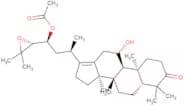
Produto descontinuadoAlisol B 23-acetate
CAS:Alisol B is a natural compound that has been shown to have significant cytotoxicity in vitro. Alisol B also inhibits the mitochondrial membrane potential, which is vital for cell survival. Alisol B is found to be active against several human cancer cell lines, including leukemia and breast cancer cells. It has also been shown to inhibit autophagy, the process by which cells degrade their own components and organelles in response to starvation or other stresses. This inhibition of autophagy leads to increased cell death. The anti-cancer effects of Alisol B are mediated through a number of different mechanisms, including the inhibition of protein synthesis and the induction of apoptosis. Alisol B has also been shown to have hepatoprotective properties in animal models.
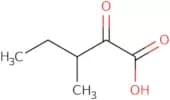
Fórmula:C32H50O5Pureza:Min. 95%Peso molecular:514.74 g/mol(±)-3-Methyl-2-oxovaleric acid
CAS:(±)-3-Methyl-2-oxovaleric acid is a fatty acid that is found in the mitochondria of liver cells and other tissues. It is an intermediate in the citric acid cycle and can be converted into acetyl-CoA, which is used for energy production. (±)-3-Methyl-2-oxovaleric acid has been shown to cause necrotic cell death when it binds to the mitochondrial membrane potential and causes a loss of ATP production. This results in a lack of energy for the cell, leading to cell death. (±)-3-Methyl-2-oxovaleric acid has also been shown to inhibit protein synthesis by decreasing uptake and increasing creatine kinase activity. This inhibition leads to decreased body formation and tissue culture growth in vitro. In vivo, (±)-3-Methyl-2-oxovaleric acid causes primary sclerosing cholangitis, a disease characterized by inflammation of bile ducts that
Fórmula:C6H10O3Pureza:Min. 95%Cor e Forma:White PowderPeso molecular:130.14 g/mol





![4-(2-Chlorophenyl)-9-methyl-6H-thieno[3,2-f][1,2,4]triazolo[4,3-a][1,4]diazepine-2-propanoic acid …](/_next/image/?url=https%3A%2Fstatic.cymitquimica.com%2Fproducts%2F3D%2Fthumb-webp%2FFC20337.webp&w=3840&q=75)