Aldeídos
Os aldeídos são compostos orgânicos que contêm um grupo carbonila (C=O) ligado a pelo menos um átomo de hidrogênio. Esses compostos versáteis são fundamentais em várias reações químicas, incluindo oxidação, redução e adição nucleofílica. Os aldeídos são building blocks essenciais na síntese de produtos farmacêuticos, fragrâncias e polímeros. Na CymitQuimica, oferecemos uma ampla seleção de aldeídos de alta qualidade para apoiar suas aplicações de pesquisa e industriais.
Foram encontrados 8573 produtos de "Aldeídos"
Ordenar por
Pureza (%)
0
100
|
0
|
50
|
90
|
95
|
100
4,4-difluorocyclohexane-1-carbaldehyde
CAS:<p>Please enquire for more information about 4,4-difluorocyclohexane-1-carbaldehyde including the price, delivery time and more detailed product information at the technical inquiry form on this page</p>Fórmula:C7H10F2OPureza:Min. 95%Cor e Forma:Colorless PowderPeso molecular:148.15 g/mol5-Ethyl-2-furaldehyde
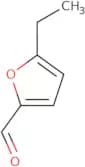
CAS:<p>Furfural is a five-carbon aldehyde produced by the hydrolysis of pentoses. It has been used as an industrial solvent, plasticizer, and fuel. Furfural is also used to produce butanol and biofuels. Furfural can be oxidized in the redox cycle to produce active oxygen species that are reactive with other biological molecules. Furfural is also used as an inhibitor of acetaldehyde formation in beer production. This molecule has two forms: the cis form (C3H4O) and the trans form (C3H3O). The cis form has a chemical structure of CH2=CH-CH2OH, whereas the trans form is CH=CH-CH2OH.</p>Fórmula:C7H8O2Pureza:Min. 95%Peso molecular:124.14 g/molFerrocenecarboxaldehyde
CAS:<p>Ferrocenecarboxaldehyde is a fatty acid with a ferrocene carboxylic acid group. It has been shown to have antimicrobial activity against bacteria, fungi, and yeast when it was mixed with nitric acid. Ferrocenecarboxaldehyde can be synthesized by reacting ferrocene with glycerol in the presence of sulfuric acid. The reaction mechanism of this synthesis is as follows: The structural analysis of ferrocenecarboxaldehyde has been studied using FT-IR spectroscopy and NMR spectroscopy. The chemical structure of ferrocenecarboxaldehyde is as follows: The asymmetric synthesis of ferrocenecarboxaldehyde is shown below:</p>Fórmula:C11H10FeOPureza:Min. 95%Cor e Forma:PowderPeso molecular:214.04 g/molPyridazine 3-carbaldehyde
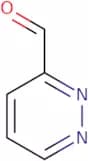
CAS:Pyridazine 3-carbaldehyde is a potential antiviral agent that has shown to be effective against herpes simplex virus type 1. It is a methylene compound that binds to the active site of the enzyme ribonucleotide reductase, which is required for DNA synthesis. This compound also exhibits synergistic effects with other antiviral agents and has cytotoxic properties. Pyridazine 3-carbaldehyde can be synthesized from pyridine-3-carboxaldehyde via a two-step process involving thermal decarboxylation followed by an oxidation reaction.Fórmula:C5H4N2OPureza:Min. 95%Peso molecular:108.1 g/mol3-(Trifluoromethyl)benzaldehyde
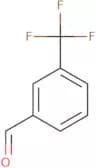
CAS:<p>3-(Trifluoromethyl)benzaldehyde is an organic compound that has the chemical formula C8H7FO. It is a trifunctional molecule with three phenolic hydroxyl groups, which makes it a good candidate for drug design. 3-(Trifluoromethyl)benzaldehyde can be synthesized by reacting an imine with a chiral acid chloride in the presence of a base and a catalytic amount of DMAP. The reaction yield is low, but this synthetic method is efficient. 3-(Trifluoromethyl)benzaldehyde has been shown to inhibit the growth of Mycobacterium avium, but not Mycobacterium tuberculosis or other bacteria such as Listeria monocytogenes and Escherichia coli. This might be due to its ability to inhibit protein synthesis by binding to ribosomes. This compound also possesses anti-inflammatory properties and inhibits leukemia Hl-</p>Fórmula:C8H5F3OPureza:Min. 95%Cor e Forma:Clear LiquidPeso molecular:174.12 g/mol2-Methylvaleraldehyde
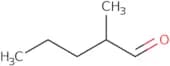
CAS:2-Methylvaleraldehyde is a colorless liquid with a pleasant odor. It is soluble in water and has an acidity of about 8.2%. The chemical formula for 2-methylvaleraldehyde is C6H12O2, and it has a molecular weight of 108.18 g/mol. 2-Methylvaleraldehyde can be obtained by the oxidation of cinnamic acid or by reduction of acetone with sodium borohydride or lithium aluminum hydride. 2-Methylvaleraldehyde can react with sodium carbonate or calcium carbonate to form sodium methoxyethoxide or calcium methoxyethoxide, respectively. The reaction intermediates are methyl ethyl ketone (MEK) and dimethyl ether (DME). These compounds are used in the synthesis of various other chemicals, including pentane, butadiene, and chloroprene. Pentane is a colorless liquid that has an odor threshold at 1Fórmula:C6H12OPureza:Min. 95%Peso molecular:100.16 g/mol10-Chloro-9-anthraldehyde
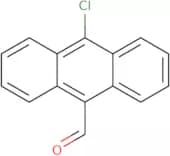
CAS:<p>10-Chloro-9-anthraldehyde is an antibacterial agent that exhibits activity against a wide variety of bacteria. It is the product of the photomodification of anthracene, which is activated by ultraviolet light to produce 10-chloro-9-anthraldehyde. The preliminary functional studies of this compound indicate that it may be used in coatings for polymers and textiles as well as in innovative applications such as fluorescence labeling and immunoassays. 10-Chloro-9-anthraldehyde also has a protonation site at the 9 position, making it useful for conjugation with biomolecules.</p>Fórmula:C15H9ClOPureza:Min. 95%Peso molecular:240.68 g/mol1,3-Dimethyl-1H-pyrazole-5-carbaldehyde
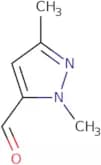
CAS:<p>Please enquire for more information about 1,3-Dimethyl-1H-pyrazole-5-carbaldehyde including the price, delivery time and more detailed product information at the technical inquiry form on this page</p>Fórmula:C6H8N2OPureza:Min. 95%Peso molecular:124.14 g/mol5-Bromo-2-furaldehyde
CAS:<p>5-Bromo-2-furaldehyde is a chemical compound that belongs to the class of heterocycles. It is used in industry as a precursor for the synthesis of other organic compounds. 5-Bromo-2-furaldehyde has been shown to have anti-inflammatory properties, which may be due to its ability to inhibit prostaglandin synthesis. The use of this chemical has been linked with autoimmune diseases and cancer development in animal models. 5-Bromo-2-furaldehyde is an environmental pollutant that can enter the body by ingestion or inhalation, and it can cause irritation of the skin, eyes, nose, throat, and lungs. This chemical is also known as amide or suzuki coupling reaction (SCR).</p>Fórmula:C5H3BrO2Pureza:Min. 98%Cor e Forma:Off-White To Yellow To Light Brown SolidPeso molecular:174.98 g/mol6-Chloro-1,3-dimethyl-1H-pyrazolo[3,4-b]pyridine-5-carboxaldehyde
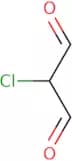
CAS:<p>Please enquire for more information about 6-Chloro-1,3-dimethyl-1H-pyrazolo[3,4-b]pyridine-5-carboxaldehyde including the price, delivery time and more detailed product information at the technical inquiry form on this page</p>Fórmula:C9H8ClN3OPureza:Min. 95%Peso molecular:209.63 g/mol2-Chloromalonaldehyde
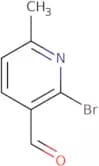
CAS:2-Chloromalonaldehyde is a reactive chemical that can be used as a pharmaceutical intermediate. It has been shown to have anti-inflammatory properties and is often used in pharmaceutical preparations. 2-Chloromalonaldehyde has shown an ability to bind with integrin receptors and inhibit the production of pro-inflammatory molecules, such as prostaglandins. This compound has also been shown to have a photoelectron spectrum that includes an intramolecular hydrogen bond, which contributes to its biological activity.Fórmula:C3H3ClO2Pureza:(%) Min. 90%Cor e Forma:PowderPeso molecular:106.51 g/mol2-Bromo-6-methylpyridine-3-carboxaldehyde
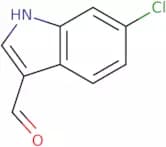
CAS:<p>2-Bromo-6-methylpyridine-3-carboxaldehyde (BMPCA) is a pharmacological agent that belongs to the group of antagonists. It has been shown to be a potent antagonist at the NMDA receptor and may be used for treating neuropathic pain. BMPCA also has been shown to have competitive inhibition at the naphthyridine receptor, which may allow it to act as an antagonist or an agonist depending on its binding site. The regioisomeric analogs of BMPCA are 2-(2,5-dichloropyridyl)-6-methylpyridine-3-carboxaldehyde and 2-(2,5-dimethylpyridyl)-6-methylpyridine-3-carboxaldehyde. These analogs have been shown to inhibit the growth of tumor cells in vitro and in vivo.</p>Fórmula:C7H6BrNOPureza:Min. 95%Peso molecular:200.03 g/mol6-Chloroindole-3-carboxaldehyde
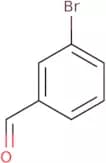
CAS:6-Chloroindole-3-carboxaldehyde is a natural compound with the molecular formula C8H6ClNO2. It has been shown to have anticancer activity against lung cancer cells and has been found to inhibit the growth of metastatic lung cancer cells in mice. 6-Chloroindole-3-carboxaldehyde inhibits the proliferation of human lung cancer cells by arresting cells in the G1 phase of the cell cycle, which may be due to its ability to bind to deoxyhexose and form a complex. This compound also has antimicrobial activity against bacterial strains such as Streptococcus pneumoniae and Mycoplasma pneumoniae.Fórmula:C9H6ClNOPureza:Min. 95%Peso molecular:179.6 g/mol3-Bromobenzaldehyde
CAS:<p>3-Bromobenzaldehyde is an organic compound with the formula CHBrCHO. It is a colorless liquid that is soluble in many organic solvents. 3-Bromobenzaldehyde can be synthesized by the reaction of ethyl acetoacetate and anhydrous sodium in methanol, and can be purified by distillation or recrystallization from ethanol. This compound has been used as a solvent for analytical methods, such as GC-MS analysis, due to its high boiling point and low volatility. 3-Bromobenzaldehyde also reacts with hydrogen chloride to form benzoyl chloride, which can then be reacted with alcohols to produce esters. 3-Bromobenzaldehyde has been shown to react with chalcones to form optical active compounds, such as curcumin analogues. These reactions are typically carried out in solution using acetic acid or sulfuric acid as a catalyst.br>br></p>Fórmula:C7H5BrOPureza:Min. 95%Peso molecular:185.02 g/molAc-Ile-Glu-Thr-Asp-aldehyde (pseudo acid)
CAS:<p>Ac-Ile-Glu-Thr-Asp-aldehyde (pseudo acid) is a neurotrophic factor that plays an important role in the development and function of the nervous system. It stimulates the production of other neurotrophic factors such as NGF, BDNF, and GDNF. This protein has been shown to be involved in a number of autoimmune diseases, including multiple sclerosis and rheumatoid arthritis. Ac-Ile-Glu-Thr-Asp-aldehyde (pseudo acid) is also known to reduce neuronal death by binding to toll receptors on neurons and activating mitogen activated protein kinases. Acetylcholine esterase activity can also be inhibited by this protein. Acetylcholine esterase is responsible for breaking down acetylcholine, which is a neurotransmitter that transmits nerve impulses across the synapses between neurons. The inhibition of this enzyme leads to an increase in acetylcholine levels and increased transmission of</p>Fórmula:C21H34N4O10Pureza:Min. 95%Peso molecular:502.52 g/mol2-(Dimethylamino)acetaldehyde sulfite
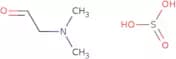
CAS:<p>2-(Dimethylamino)acetaldehyde sulfite is a white crystalline solid with a melting point of around 100°C. It is soluble in water and slightly soluble in organic solvents. 2-(Dimethylamino)acetaldehyde sulfite can be used as a reagent to prepare alkali solutions and acid hydrochlorides. It can also be used as an intermediate for the synthesis of methacrylic acid, methyl acetate, and other organic compounds. 2-(Dimethylamino)acetaldehyde sulfite can be synthesized using a high-yield synthetic method involving lithium, acidification, and an organic solvent.</p>Pureza:Min. 95%N-Boc-4-piperidineacetaldehyde
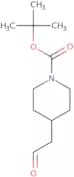
CAS:<p>N-Boc-4-piperidineacetaldehyde is a chiral, stable, and readily available aldehyde. It has been used in the synthesis of various biologically active molecules including imidazolidinones, which are important for their use as catalysts in organic chemistry. The synthesis of this molecule by the condensation of 4-piperidineacetic acid with acetaldehyde followed by reduction with sodium borohydride is an example of this type of reaction. N-Boc-4-piperidineacetaldehyde can be used to synthesize imines and linkers that are covalently bonded to the protein backbone. This molecule also has conformational stability and is not susceptible to oxidation or radiation damage.</p>Fórmula:C12H21NO3Pureza:Min. 95%Peso molecular:227.3 g/moltrans-2-Hexenal
CAS:<p>Trans-2-hexenal is a natural compound that has been used as a model system for studying the toxicity of sodium salts. It is also used in studies on the enzyme activities of leaves and its carcinogenic potential. Trans-2-hexenal exhibits genotoxic effects, which may be due to its reaction with DNA or by inhibiting the polymerase chain reaction. In addition, this compound can inhibit enzymes involved in the synthesis of fatty acids, leading to cell death. Trans-2-hexenal is also found in plants and fruits such as apples, bananas, and pineapples.</p>Fórmula:C6H10OPureza:Min. 97 Area-%Cor e Forma:Clear LiquidPeso molecular:98.14 g/molN-Boc-2-aminoacetaldehyde
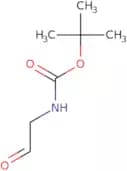
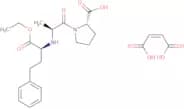
CAS:<p>N-Boc-2-aminoacetaldehyde is an aliphatic aldehyde that has been used in the synthesis of a number of bioactive molecules. It is synthesized by reacting an N-Boc amino acid with chloroform and hydrochloric acid. The reaction time is typically 2 hours at room temperature, although it can be decreased to 20 minutes if the temperature is increased to 60°C. The product can be purified using extraction or recrystallization methods. N-Boc-2-aminoacetaldehyde reacts with chloride ions to form phosphoranes, which are useful in clinical development as antimicrobial peptides. This compound also reacts with fluorine to form hydrogenated derivatives that have been shown to have neurokinin activity in animal models.</p>Fórmula:C7H13NO3Pureza:Min. 95%Cor e Forma:Colorless PowderPeso molecular:159.18 g/molEnalapril maleate
CAS:<p>Angiotensin-converting enzyme inhibitor; anti-hypertensive</p>Fórmula:C20H28N2O5•C4H4O4Pureza:Min. 95%Cor e Forma:PowderPeso molecular:492.52 g/mol



![6-Chloro-1,3-dimethyl-1H-pyrazolo[3,4-b]pyridine-5-carboxaldehyde](/_next/image/?url=https%3A%2Fstatic.cymitquimica.com%2Fproducts%2F3D%2Fthumb-webp%2FFC30642.webp&w=3840&q=75)