Heterociclos mistos
Nesta seção, você encontrará uma coleção de compostos cíclicos que possuem átomos de pelo menos dois elementos diferentes como membros da estrutura do anel. Heterociclos mistos são versáteis e amplamente utilizados na síntese de produtos farmacêuticos, agroquímicos e materiais devido às suas diversas propriedades químicas e atividades biológicas. Esses compostos são essenciais no desenvolvimento de moléculas complexas e materiais inovadores. Na CymitQuimica, oferecemos uma ampla gama de heterociclos mistos de alta qualidade para apoiar suas pesquisas e aplicações industriais.
Subcategorias de "Heterociclos mistos"
- 7H-Purina(1 produtos)
- Azaindoles(25 produtos)
- Benzofuranos(923 produtos)
- Benzotiofenos(690 produtos)
- Benzotriazóis(436 produtos)
- Benzoxazina(30 produtos)
- Benzoxazol(39 produtos)
- Carbolinas(37 produtos)
- Indazóis(2.029 produtos)
- Isoquinolina(1.063 produtos)
- Morfolina(2.207 produtos)
- Oxadiazóis(1.168 produtos)
- Oxaziridinas(4 produtos)
- Oxazol(152 produtos)
- Pirazolo[1,5-a]piridina(232 produtos)
- Pirido(2,3-b)pirazina(35 produtos)
- Pirrolo[1,2-a]pirazina(11 produtos)
- Pirrolo[1,2-b]piridazina(10 produtos)
- Pirrolo[2,3-b]piridina(284 produtos)
- Pirrolo[2,3-c]piridina(195 produtos)
- Quinazolina(1.005 produtos)
- Quinolinas(5.366 produtos)
- Quinoxalina(437 produtos)
- Tiadiazóis(476 produtos)
- Tiazinas(124 produtos)
- Tiazóis(4.489 produtos)
- Tiomorfolina(371 produtos)
- [1,2,3]Triazolo[4,5-b]piridina(20 produtos)
- [1,2,4]Triazolo[4,3-a]piridina(161 produtos)
Exibir 21 mais subcategorias
Foram encontrados 4846 produtos de "Heterociclos mistos"
Ordenar por
Pureza (%)
0
100
|
0
|
50
|
90
|
95
|
100
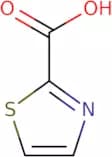
2-Carboxythiazole
CAS:<p>2-Carboxythiazole is a heterocyclic compound that contains a thiazole ring fused with a carboxylic acid. It has been shown to have potent antagonist effects at the histamine H4 receptor, which may be due to its hydrogen bond interactions with the receptor. 2-Carboxythiazole has also been shown to be an effective treatment for autoimmune diseases, such as psoriasis and rheumatoid arthritis. This compound inhibits the production of T cells in the immune system by binding to the H4 receptor on T cells. 2-Carboxythiazole is also used as an anti-tuberculosis drug for the treatment of tuberculosis infections. It inhibits bacterial growth by binding to DNA-dependent RNA polymerase, thereby preventing transcription and replication. The high frequency of human activity has been shown using a patch-clamp technique on human erythrocytes. This active form is metabolized through a number of metabolic transformations, including hydroly</p>Fórmula:C4H3NO2SPureza:Min. 95%Cor e Forma:PowderPeso molecular:129.14 g/mol3,4,5,6,7,8-Hexahydro-2,9-benzodioxacyclododecin-1,10-dione
CAS:<p>3,4,5,6,7,8-Hexahydro-2,9-benzodioxacyclododecin-1,10-dione is a research chemical that is an important intermediate for the synthesis of many useful compounds. It can be used as a building block for the synthesis of more complex and valuable compounds in the pharmaceutical industry. 3,4,5,6,7,8-Hexahydro-2,9-benzodioxacyclododecin-1,10-dione is also an important reagent for organic chemistry reactions. It has been shown to behave as a good scaffold for the synthesis of other molecules with high purity. This compound has been shown to be useful in many different reactions such as condensations and cyclizations.</p>Fórmula:C14H16O4Pureza:Min. 95%Cor e Forma:PowderPeso molecular:248.27 g/mol2-Cyano-6-hydroxybenzothiazole
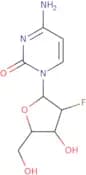
CAS:2-Cyano-6-hydroxybenzothiazole is a molecule that is an intermediate in the synthesis of other compounds. This compound has been shown to have anti-inflammatory properties, with a molecular weight of 164.2 g/mol. It reacts with hydroxyl groups and nucleophilic attack to form new molecules, which can cause light emission. 2-Cyano-6-hydroxybenzothiazole has been shown to be fluorescent and can be used as a marker for hydroxyl group formation in mammalian tissue. 2-Cyano-6-hydroxybenzothiazole can also be found in the human serum and is involved in transcription processes by binding to DNA polymerase or RNA polymerase, forming polymers. The rate at which these polymers are formed depends on the concentration of 2-cyano-6-hydroxybenzothiazole and will vary depending on the light emission from a photomultiplFórmula:C8H4N2OSPureza:Min. 95%Cor e Forma:Slightly Yellow Yellow PowderPeso molecular:176.2 g/mol4-Amino-1-(2-deoxy-2-fluoro-β-D-arabinofuranosyl)-2(1H)-pyrimidinone
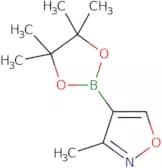
CAS:<p>Please enquire for more information about 4-Amino-1-(2-deoxy-2-fluoro-β-D-arabinofuranosyl)-2(1H)-pyrimidinone including the price, delivery time and more detailed product information at the technical inquiry form on this page</p>Fórmula:C9H12FN3O4Pureza:Min. 95%Peso molecular:245.21 g/mol3-Methyl-4-(4,4,5,5-tetramethyl-1,3,2-dioxaborolan-2-yl)isoxazole
CAS:<p>3-Methyl-4-(4,4,5,5-tetramethyl-1,3,2-dioxaborolan-2-yl)isoxazole is a fine chemical that belongs to the class of boron compounds. It can be used as a reagent or in the synthesis of other compounds. 3-Methyl-4-(4,4,5,5-tetramethyl-1,3,2-dioxaborolan-2-yl)isoxazole is an intermediate for the production of pharmaceuticals and agrochemicals. It can also be used as a building block in organic synthesis and a scaffold for the preparation of complex molecules.</p>Fórmula:C10H16BNO3Pureza:Min. 95%Cor e Forma:PowderPeso molecular:209.05 g/mol2-Benzofurancarboxylic acid
CAS:<p>2-Benzofurancarboxylic acid is a potent antimicrobial agent that inhibits the growth of bacteria by binding to amines, carthamus tinctorius, coumarin derivatives, and reaction mechanism. It has been shown to be effective against several types of cancer cells and autoimmune diseases. 2-Benzofurancarboxylic acid binds reversibly to the active site of an enzyme with high affinity for amines, carthamus tinctorius, coumarin derivatives, and reaction mechanism. This binding prevents the enzyme from performing its normal function.<br>2-Benzofurancarboxylic acid has also been shown to inhibit bacterial growth in a microgravity environment and was found to be more effective than its analogs in a molecular docking analysis.</p>Fórmula:C9H6O3Pureza:Min. 98 Area-%Cor e Forma:PowderPeso molecular:162.14 g/mol6-FAM azide
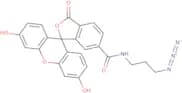
CAS:<p>6-Fluorescein Azide or 6-FAM azide finds application in biomolecules labelling. 6-FAM azide reacts with a terminal alkyne or cyclooctene derivative with a fast click reaction, forming a stable adduct.</p>Fórmula:C24H18N4O6Pureza:Min. 95%Cor e Forma:PowderPeso molecular:458.43 g/mol2-Amino-3-(furan-3-yl)propanoic acid hydrochloride
CAS:<p>Please enquire for more information about 2-Amino-3-(furan-3-yl)propanoic acid hydrochloride including the price, delivery time and more detailed product information at the technical inquiry form on this page</p>Fórmula:C7H9NO3•HClPureza:Min. 95%Cor e Forma:PowderPeso molecular:191.61 g/mol3-Bromofuran
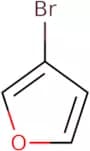
CAS:<p>3-Bromofuran is a synthetic chemical that can be used to treat cancer, specifically as an anti-cancer agent. 3-Bromofuran has been shown to inhibit the growth of tumour cells in culture. It also selectively inhibits antigen expression and induces apoptosis in tumour cells. 3-Bromofuran is synthesized by a Sharpless asymmetric dihydroxylation of hippuric acid and efficiently undergoes cross coupling reactions with electron deficient polyatomic molecules such as organoaluminium compounds. The major metabolite of 3-bromofuran is 3,4-dihydroxybenzoic acid (3,4-DHBA), which has been found to have antiviral and antibacterial properties.</p>Fórmula:C4H3BrOPureza:Min. 95%Cor e Forma:Clear LiquidPeso molecular:146.97 g/mol1,3-Diphenylisobenzofuran
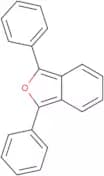
CAS:<p>1,3-Diphenylisobenzofuran is a reactive compound that has been shown to have anti-infectious and anticancer properties. It has been shown to cause cell lysis in a variety of infectious diseases, such as Chlamydia pneumoniae, Borrelia burgdorferi, and Salmonella typhimurium. It also has anticancer activity against human tumor cells lines and is ancillary to photodynamic therapy (PDT). 1,3-Diphenylisobenzofuran is able to induce apoptosis in rat liver microsomes by binding to the thiol group of cysteine residues on proteins. The activity index for this compound was found to be 10.0 μM.</p>Fórmula:C20H14OPureza:Min. 95%Cor e Forma:Yellow SolidPeso molecular:270.32 g/moltert-Butyl 2-(furan-2-yl)-1H-indole-1-carboxylate
CAS:<p>Please enquire for more information about tert-Butyl 2-(furan-2-yl)-1H-indole-1-carboxylate including the price, delivery time and more detailed product information at the technical inquiry form on this page</p>Fórmula:C17H17NO3Pureza:Min. 95%Cor e Forma:Clear LiquidPeso molecular:283.32 g/mol2,5-Furandicarboxylic acid
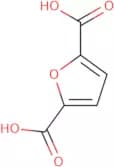
CAS:<p>Interest in renewable based polymers has led to 2,5-furandicarboxylic acid being proposed as a green, sustainable alternative to the widely used petroleum-based terephthalic acid in the synthesis of polyesters. 2,5-Furandicarboxylic acid is produced from oxidation of 5-hydroxymethylfurfural (HMF) which is obtained from the dehydration of bio-based sugars such as fructose.</p>Fórmula:C6H4O5Pureza:Min. 98 Area-%Cor e Forma:White Clear LiquidPeso molecular:156.09 g/mol1,2-Naphthoquinone-4-sulfonic acid potassium salt
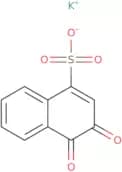
CAS:<p>1,2-Naphthoquinone-4-sulfonic acid potassium salt is a pesticide that has been shown to be active against many types of insects. It is used as an insecticide and acaricide in agriculture, horticulture, and forestry. The compound is stable and does not hydrolyze in water, making it easy to handle. This product is also a natural product that can be synthesized from cyanamide and amines, which are both commercially available. 1,2-Naphthoquinone-4-sulfonic acid potassium salt has been found to be effective at killing insects when injected into their bodies with the use of a syringe or when sprayed on the surface where they live. GC–MS analysis has shown that this compound contains no reactive functional groups or substances that would cause harm to humans or animals. Research has shown this product to be safe for use in food crops and animal feed.</p>Fórmula:C10H5O5SKPureza:Min. 98 Area-%Cor e Forma:Orange PowderPeso molecular:276.31 g/molFmoc-Lys(5-TAMRA)-OH
CAS:<p>Please enquire for more information about Fmoc-Lys(5-TAMRA)-OH including the price, delivery time and more detailed product information at the technical inquiry form on this page</p>Fórmula:C46H44N4O8Pureza:Min. 95%Peso molecular:780.9 g/mol2,2,4,6-Tetramethyl-1,3-dioxan-5-one
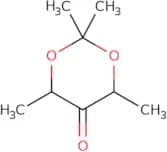
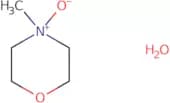
CAS:<p>Please enquire for more information about 2,2,4,6-Tetramethyl-1,3-dioxan-5-one including the price, delivery time and more detailed product information at the technical inquiry form on this page</p>Fórmula:C8H14O3Pureza:Min. 95%Cor e Forma:PowderPeso molecular:158.2 g/mol4-Methylmorpholine N-oxide monohydrate
CAS:<p>Intermediate for organic syntheses</p>Fórmula:C5H13NO3Cor e Forma:PowderPeso molecular:135.16 g/mol3-Furaldehyde
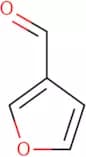
CAS:<p>Plant-derived; solvent</p>Fórmula:C5H4O2Pureza:Min. 96 Area-%Cor e Forma:Yellow To Dark Brown Clear LiquidPeso molecular:96.08 g/mol8-Hydroxypenillic acid
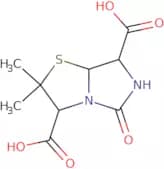
CAS:<p>8-Hydroxypenillic acid is an intermediate in the synthesis of penicillin. It is produced by the enzyme 8-hydroxylase, which converts L-lysine to L-3,4-dihydroxyphenylalanine. This reaction requires a number of cofactors, including magnesium ions and oxygen. The product is then converted to 8-hydroxypenillic acid by the enzyme hydroxypenicillinase. Inhibition of this enzyme leads to accumulation of 8-hydroxypenillic acid, which can be used as a biomarker for production of penicillin.</p>Fórmula:C9H12N2O5SPureza:Min. 95%Cor e Forma:PowderPeso molecular:260.27 g/molcis-N-(3-Chloroallyl)-1-(R)-aminoindan hydrochloride
CAS:<p>cis-N-(3-Chloroallyl)-1-(R)-aminoindan hydrochloride is a high quality, research chemical that is a versatile building block. It is used as a reagent and reaction component for the synthesis of fine chemicals, speciality chemicals, and complex compounds. cis-N-(3-Chloroallyl)-1-(R)-aminoindan hydrochloride has CAS number 1175018-80-0.</p>Fórmula:C12H14ClN·HClPureza:Min. 95 Area-%Cor e Forma:PowderPeso molecular:244.16 g/mol2-Thiophenecarboxylic acid hydrazide
CAS:<p>2-Thiophenecarboxylic acid hydrazide is a potent antifungal agent that inhibits the growth of bacteria by binding to the cell membrane. It has been shown to be an effective inhibitor of Candida albicans, as well as other fungi, including Saccharomyces cerevisiae and Aspergillus niger. 2-Thiophenecarboxylic acid hydrazide binds to the cell membrane by forming stable complexes with nitrogen atoms in the bacterial cell wall. This binding prevents the formation of an antibiotic-inhibitor complex with enzymes required for protein synthesis, resulting in inhibition of protein synthesis and cell division. 2-Thiophenecarboxylic acid hydrazide also inhibits epidermal growth factor (EGF) activity in vitro, which may be due to its ability to form amide bonds with α1-acid glycoprotein.</p>Fórmula:C5H6N2OSPureza:Min. 98 Area-%Cor e Forma:White PowderPeso molecular:142.18 g/mol