Heterociclos mistos
Subcategorias de "Heterociclos mistos"
- 7H-Purina(1 produtos)
- Azaindoles(26 produtos)
- Benzofuranos(928 produtos)
- Benzotiofenos(701 produtos)
- Benzotriazóis(438 produtos)
- Benzoxazina(30 produtos)
- Benzoxazol(39 produtos)
- Carbolinas(37 produtos)
- Indazóis(2.038 produtos)
- Isoquinolina(1.064 produtos)
- Morfolina(2.220 produtos)
- Oxadiazóis(1.174 produtos)
- Oxaziridinas(4 produtos)
- Oxazol(152 produtos)
- Pirazolo[1,5-a]piridina(233 produtos)
- Pirido(2,3-b)pirazina(35 produtos)
- Pirrolo[1,2-a]pirazina(11 produtos)
- Pirrolo[1,2-b]piridazina(10 produtos)
- Pirrolo[2,3-b]piridina(284 produtos)
- Pirrolo[2,3-c]piridina(196 produtos)
- Quinazolina(1.012 produtos)
- Quinolinas(5.409 produtos)
- Quinoxalina(439 produtos)
- Tiadiazóis(480 produtos)
- Tiazinas(124 produtos)
- Tiazóis(4.511 produtos)
- Tiomorfolina(371 produtos)
- [1,2,3]Triazolo[4,5-b]piridina(20 produtos)
- [1,2,4]Triazolo[4,3-a]piridina(162 produtos)
Foram encontrados 4869 produtos de "Heterociclos mistos"
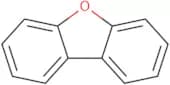
Dibenzofuran
CAS:Dibenzofuran is a polycyclic aromatic hydrocarbon (PAH) that can be found in the environment and in living organisms. The body mass index, concentrations of dibenzofurans in maternal blood, and analytical method are factors that determine the levels of this compound. Dibenzofurans have been shown to induce enzyme activities in human serum. It is also an oral pathogen for humans, causing health problems such as DNA damage and cancer. Dibenzofurans are metabolized by cytochrome P450 enzymes and can react with other PAHs to form polychlorinated dibenzodioxins. Structural analysis shows nitrogen atoms on the benzene ring, which are essential for biological properties such as mutagenicity.Fórmula:C12H8OPureza:Min. 95%Cor e Forma:White PowderPeso molecular:168.19 g/mol5-Hydroxymethyl-2-furancarboxylic acid
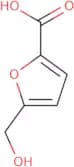
CAS:5-Hydroxymethylfurfural (5-HMF) is a structural analysis of the high values obtained in the reaction solution. 5-HMF is a polymerase chain reaction product that is obtained from p-hydroxybenzoic acid and malonic acid during the enzymatic conversion of carbohydrates. It can be used as a biocompatible polymer. The reaction mechanism for this process has been proposed to be through the formation of pyrazinoic acid, followed by an elimination reaction with chlorogenic acids. This mechanism is supported by modeling studies, which show that pyrazinoic acid is a key intermediate in the conversion of glucose to 5-HMF.Fórmula:C6H6O4Pureza:Min. 95%Cor e Forma:White PowderPeso molecular:142.11 g/mol8-Hydroxypenillic acid
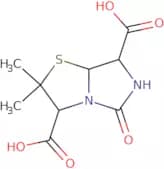
CAS:8-Hydroxypenillic acid is an intermediate in the synthesis of penicillin. It is produced by the enzyme 8-hydroxylase, which converts L-lysine to L-3,4-dihydroxyphenylalanine. This reaction requires a number of cofactors, including magnesium ions and oxygen. The product is then converted to 8-hydroxypenillic acid by the enzyme hydroxypenicillinase. Inhibition of this enzyme leads to accumulation of 8-hydroxypenillic acid, which can be used as a biomarker for production of penicillin.Fórmula:C9H12N2O5SPureza:Min. 95%Cor e Forma:PowderPeso molecular:260.27 g/mol2-Bromothiazole
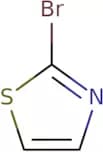
CAS:2-Bromothiazole is an anticancer agent that can be prepared by coupling of 2-bromo-1,2-dithiolane and thiourea. This chemical has been found to be effective against a number of cancers in both animal and human studies. It is also used as a reagent in the industrial preparation of pesticides and dyes. 2-Bromothiazole is highly reactive with nucleophiles such as amines, alcohols, and phenols, which makes it a powerful catalyst for cross-coupling reactions. It can be used to make other organic compounds that have not been available from commercial sources due to its high reactivity. The compound's anti-inflammatory properties may be related to its ability to inhibit prostaglandin synthesis by inhibiting cyclooxygenase activity.Fórmula:C3H2BrNSPureza:Min. 95%Cor e Forma:PowderPeso molecular:164.02 g/molThianaphthene
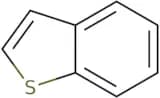
CAS:Used in raloxifene synthesis and preparation of 2-thianapthenylphenyllithiumFórmula:C8H6SPureza:Min. 94 Area-%Cor e Forma:Brown White Yellow PowderPeso molecular:134.2 g/mol2-Carboxythiazole
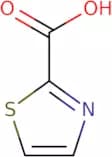
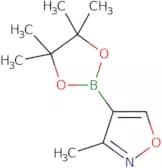
CAS:2-Carboxythiazole is a heterocyclic compound that contains a thiazole ring fused with a carboxylic acid. It has been shown to have potent antagonist effects at the histamine H4 receptor, which may be due to its hydrogen bond interactions with the receptor. 2-Carboxythiazole has also been shown to be an effective treatment for autoimmune diseases, such as psoriasis and rheumatoid arthritis. This compound inhibits the production of T cells in the immune system by binding to the H4 receptor on T cells. 2-Carboxythiazole is also used as an anti-tuberculosis drug for the treatment of tuberculosis infections. It inhibits bacterial growth by binding to DNA-dependent RNA polymerase, thereby preventing transcription and replication. The high frequency of human activity has been shown using a patch-clamp technique on human erythrocytes. This active form is metabolized through a number of metabolic transformations, including hydrolyFórmula:C4H3NO2SPureza:Min. 95%Cor e Forma:PowderPeso molecular:129.14 g/mol3-Methyl-4-(4,4,5,5-tetramethyl-1,3,2-dioxaborolan-2-yl)isoxazole
CAS:3-Methyl-4-(4,4,5,5-tetramethyl-1,3,2-dioxaborolan-2-yl)isoxazole is a fine chemical that belongs to the class of boron compounds. It can be used as a reagent or in the synthesis of other compounds. 3-Methyl-4-(4,4,5,5-tetramethyl-1,3,2-dioxaborolan-2-yl)isoxazole is an intermediate for the production of pharmaceuticals and agrochemicals. It can also be used as a building block in organic synthesis and a scaffold for the preparation of complex molecules.
Fórmula:C10H16BNO3Pureza:Min. 95%Cor e Forma:PowderPeso molecular:209.05 g/mol3,4,5,6,7,8-Hexahydro-2,9-benzodioxacyclododecin-1,10-dione
CAS:3,4,5,6,7,8-Hexahydro-2,9-benzodioxacyclododecin-1,10-dione is a research chemical that is an important intermediate for the synthesis of many useful compounds. It can be used as a building block for the synthesis of more complex and valuable compounds in the pharmaceutical industry. 3,4,5,6,7,8-Hexahydro-2,9-benzodioxacyclododecin-1,10-dione is also an important reagent for organic chemistry reactions. It has been shown to behave as a good scaffold for the synthesis of other molecules with high purity. This compound has been shown to be useful in many different reactions such as condensations and cyclizations.
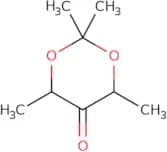
Fórmula:C14H16O4Pureza:Min. 95%Cor e Forma:PowderPeso molecular:248.27 g/mol2,2,4,6-Tetramethyl-1,3-dioxan-5-one
CAS:Please enquire for more information about 2,2,4,6-Tetramethyl-1,3-dioxan-5-one including the price, delivery time and more detailed product information at the technical inquiry form on this page
Fórmula:C8H14O3Pureza:Min. 95%Cor e Forma:PowderPeso molecular:158.2 g/molFmoc-Lys(5-TAMRA)-OH
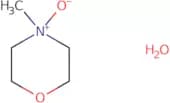
CAS:Please enquire for more information about Fmoc-Lys(5-TAMRA)-OH including the price, delivery time and more detailed product information at the technical inquiry form on this pageFórmula:C46H44N4O8Pureza:Min. 95%Peso molecular:780.9 g/mol4-Methylmorpholine N-oxide monohydrate
CAS:Intermediate for organic synthesesFórmula:C5H13NO3Cor e Forma:PowderPeso molecular:135.16 g/molLinalool glucoside
CAS:Please enquire for more information about Linalool glucoside including the price, delivery time and more detailed product information at the technical inquiry form on this pageFórmula:C16H28O6Pureza:Min. 95%Cor e Forma:Clear LiquidPeso molecular:316.39 g/molGemcitabine monophosphate disodium monohydrate
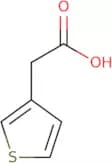
CAS:Please enquire for more information about Gemcitabine monophosphate disodium monohydrate including the price, delivery time and more detailed product information at the technical inquiry form on this pageFórmula:C9H12F2N3O7P•Na2•H2OPureza:90%Min By HplcCor e Forma:PowderPeso molecular:407.16 g/mol3-Thiopheneacetic acid
CAS:3-Thiopheneacetic acid (3-TAA) is an insoluble polymer that can be used in analytical chemistry to measure the concentration of sodium carbonate. This polymer is prepared by reacting 3-thiophenecarboxylic acid with sodium carbonate. 3-TAA is a white powder and soluble in water, but insoluble in organic solvents. The transfer reactions of 3-TAA have been studied using electrochemical impedance spectroscopy and thermal expansion measurements. Due to its redox potential, it has been shown to be a potent inhibitor of human serum albumin transport and also inhibits the activity of enzymes such as glyceraldehyde phosphate dehydrogenase, phosphofructokinase, and pyruvate kinase.
Fórmula:C6H6O2SPureza:Min. 97.5 Area-%Cor e Forma:White PowderPeso molecular:142.18 g/molEthyl 2-amino-4-methylthiophene-3-carboxylate
CAS:Ethyl 2-amino-4-methylthiophene-3-carboxylate (EMTC) is a cytotoxic agent. It inhibits the HIV virus by interfering with the synthesis of viral proteins. EMTC has been shown to be effective against cancer cells, but not against healthy cells. The cytotoxic effect of EMTC is related to its ability to inhibit DNA synthesis and RNA transcription in both normal and cancer cells, which leads to cell death.Fórmula:C8H11NO2SPureza:Min. 95%Cor e Forma:PowderPeso molecular:185.24 g/mol4H-Cyclopenta[2,1-b:3,4-b']dithiophene
CAS:4H-Cyclopenta[2,1-b:3,4-b']dithiophene is a molecule that has been shown to be photovoltaic. It has an optical absorption spectrum that peaks in the UV region and is able to absorb light from 300 to 400 nm. 4H-Cyclopenta[2,1-b:3,4-b']dithiophene can be fabricated into devices by means of cyclic voltammetry or other techniques. As a result of its high electron mobility and its ability to absorb visible light, this molecule may lead to high efficiency solar cells. Photovoltaic devices made with 4H-Cyclopenta[2,1-b:3,4-b']dithiophene have been shown to have efficiencies as high as 2%.Fórmula:C9H6S2Pureza:Min. 95%Cor e Forma:PowderPeso molecular:178.28 g/mol2-Cyano-6-hydroxybenzothiazole
CAS:2-Cyano-6-hydroxybenzothiazole is a molecule that is an intermediate in the synthesis of other compounds. This compound has been shown to have anti-inflammatory properties, with a molecular weight of 164.2 g/mol. It reacts with hydroxyl groups and nucleophilic attack to form new molecules, which can cause light emission. 2-Cyano-6-hydroxybenzothiazole has been shown to be fluorescent and can be used as a marker for hydroxyl group formation in mammalian tissue. 2-Cyano-6-hydroxybenzothiazole can also be found in the human serum and is involved in transcription processes by binding to DNA polymerase or RNA polymerase, forming polymers. The rate at which these polymers are formed depends on the concentration of 2-cyano-6-hydroxybenzothiazole and will vary depending on the light emission from a photomultiplFórmula:C8H4N2OSPureza:Min. 95%Cor e Forma:Slightly Yellow Yellow PowderPeso molecular:176.2 g/molLauroyl coenzyme A lithium
CAS:Please enquire for more information about Lauroyl coenzyme A lithium including the price, delivery time and more detailed product information at the technical inquiry form on this page
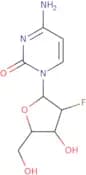
Fórmula:C33H58N7O17P3S•LixPureza:90%Cor e Forma:Powder4-Amino-1-(2-deoxy-2-fluoro-β-D-arabinofuranosyl)-2(1H)-pyrimidinone
CAS:Please enquire for more information about 4-Amino-1-(2-deoxy-2-fluoro-β-D-arabinofuranosyl)-2(1H)-pyrimidinone including the price, delivery time and more detailed product information at the technical inquiry form on this page
Fórmula:C9H12FN3O4Pureza:Min. 95%Peso molecular:245.21 g/mol2-Acetyl-5-bromothiophene
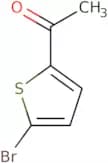
CAS:2-Acetyl-5-bromothiophene is an organosulfur compound that is a reactive intermediate in the Suzuki coupling reaction. It has been used as a substrate for biological studies of toxicity and cancer, and to generate unsymmetrical compounds with multi-walled carbon light emission. 2-Acetyl-5-bromothiophene also has the ability to inhibit glutamate dehydrogenase and hydroxide solution, which are enzymes necessary for the production of energy in cells. 2-Acetyl-5-bromothiophene is toxic to animals and humans because it can cause cancer and other health problems such as neurotoxicity, liver dysfunction, and kidney damage. 2-Acetyl-5-bromothiophene has been shown to cause DNA strand breaks in human breast cancer cells.Fórmula:C6H5BrOSPureza:Min. 98.5 Area-%Cor e Forma:PowderPeso molecular:205.07 g/mol






![4H-Cyclopenta[2,1-b:3,4-b']dithiophene](/_next/image/?url=https%3A%2Fstatic.cymitquimica.com%2Fproducts%2F3D%2Fthumb-webp%2FFC13994.webp&w=3840&q=75)