Ácidos Benzóicos
Foram encontrados 5475 produtos de "Ácidos Benzóicos"
4-Formyl-3-hydroxybenzoic acid
CAS:4-Formyl-3-hydroxybenzoic acid (4FHB) is a member of the phenylacetic acid family. It has been shown to have potential as a substrate for creatine kinase and amines, as well as an inhibitor of the enzyme. 4FHB binds to the surface of silica particles in order to enhance Raman scattering in a solid-phase synthesis. The molecular weight of 4FHB is 148 g/mol, with optical properties that can be described by fluorescence spectroscopy. 4FHB has been shown to be homochiral and tetradentate, with a magnetic resonance spectrum that can be characterized by hydroxyl group and salicylaldehyde groups.Fórmula:C8H6O4Pureza:Min. 96.5 Area-%Cor e Forma:PowderPeso molecular:166.13 g/mol3-Methoxybenzoic acid
CAS:3-Methoxybenzoic acid is a compound that has two carboxyl groups, one on each of the two benzene rings. It is a white crystalline solid with a melting point of 86°C and a boiling point of 240°C at 1 mmHg. 3-Methoxybenzoic acid can be found in plants such as cranberries and strawberries. It also occurs naturally in animal fat, where it functions as an antioxidant and antimicrobial agent. 3-Methoxybenzoic acid has been shown to have synergistic effects when combined with protocatechuic acid in the treatment of carcinoma cells.Fórmula:C8H8O3Pureza:Min. 95%Cor e Forma:PowderPeso molecular:152.15 g/mol2-Amino-4,5-dimethoxybenzoic acid
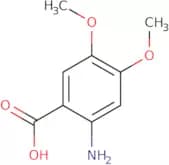
CAS:2-Amino-4,5-dimethoxybenzoic acid is a potent antitumor agent that inhibits the growth of tumor cells. It has been shown to inhibit the production of epidermal growth factor (EGF) and plays a role in the inhibition of tumor cell proliferation in vitro. 2-Amino-4,5-dimethoxybenzoic acid has also been shown to have photochemical properties and can be activated by light. This compound can be used as an indicator for gravimetric analysis because it reacts with diazonium salts and produces a colored product. 2-Amino-4,5-dimethoxybenzoic acid is also reactive and may be used in Suzuki coupling reactions. This chemical compound is chemically related to other inhibitors such as mcf7 and suzuki coupling reactions.Fórmula:C9H11NO4Pureza:Min. 95%Cor e Forma:Beige PowderPeso molecular:197.19 g/mol3-Amino-2,4,6-triiodobenzoic acid
CAS:3-Amino-2,4,6-triiodobenzoic acid (3AIBA) is a chemical compound that is used as a contrast agent for medical imaging. It has been shown to be useful in the diagnosis of bladder cancer, and is used in the embolization of renal artery and ureteral calculi. 3AIBA functions by binding to the antigen binding sites on the tumor cells and allows visualization with X-rays. It has also been shown to be effective in reducing blood flow in tumors by blocking blood vessels with its cationic monomer. 3AIBA binds to the phosphate groups on DNA and causes crosslinking, which prevents DNA polymerase from binding with DNA. This inhibits DNA synthesis and cell division.Fórmula:C7H4I3NO2Pureza:Min. 95%Cor e Forma:PowderPeso molecular:514.83 g/mol3,4-Diaminobenzoic acid
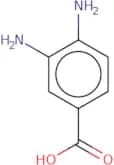
CAS:3,4-Diaminobenzoic acid is a compound that is produced by the condensation of two molecules of hydrochloric acid. 3,4-Diaminobenzoic acid has been used as a reagent in the synthesis of coumarin derivatives. This chemical has been shown to be an effective proton scavenger in an optimum concentration. Benzimidazole compounds are also synthesized from 3,4-diaminobenzoic acid and have been shown to be effective against autoimmune diseases. 3,4-Diaminobenzoic acid can be used for the production of diazonium salts, which are used in the synthesis of anti-inflammatory drugs and other pharmaceuticals. The hydroxyl group on this molecule makes it chemically stable and kinetic data shows that it has high diphenolase activity.Fórmula:C7H8N2O2Pureza:Min. 96 Area-%Cor e Forma:PowderPeso molecular:152.15 g/mol3-Methoxy-4-methylbenzoic acid methyl ester
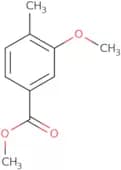
CAS:3-Methoxy-4-methylbenzoic acid methyl ester is a potent inhibitor of the neurotoxic effects of β-amyloid peptide (Aβ) on cultured human neurons. 3-Methoxy-4-methylbenzoic acid methyl ester inhibits fibrillation in vitro and fluorescence assay, suggesting that it may be a promising therapeutic agent for Alzheimer's disease. The fluorescence assay is based on the inhibition of fluorescence by 3-methoxy-4-methylbenzoic acid methyl ester, which competes with Aβ for binding to an acceptor molecule. This inhibition can be used as a marker to measure the amount of Aβ present in vivo.Fórmula:C10H12O3Pureza:Min. 95%Cor e Forma:White PowderPeso molecular:180.2 g/mol3-Chloro-5-hydroxybenzoic acid ethyl ester
Please enquire for more information about 3-Chloro-5-hydroxybenzoic acid ethyl ester including the price, delivery time and more detailed product information at the technical inquiry form on this page
Fórmula:C9H9ClO3Pureza:Min. 98 Area-%Cor e Forma:PowderPeso molecular:200.62 g/molMethyl 4-ethylbenzoate
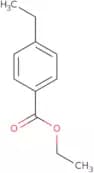
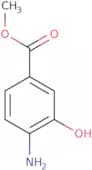
CAS:Methyl 4-ethylbenzoate is a molecule that has been shown to have synergistic effects with magnesium oxide, polyvinylpyrrolidone, and glycerin. It also has the ability to be used as a template molecule for the synthesis of hydrotalcite. Methyl 4-ethylbenzoate can be synthesized from ethyl benzoate and methyl iodide. It is an ingredient in some cosmetics and personal care products, such as skin lotions, hair conditioners, and fragrances. Methyl 4-ethylbenzoate has antioxidant properties due to its ability to scavenge free radicals. This compound is also used as a solvent for paints and lacquers.Fórmula:C11H14O2Pureza:Min. 95%Cor e Forma:Clear LiquidPeso molecular:178.23 g/molMethyl 4-amino-3-hydroxybenzoate
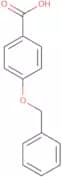
CAS:Methyl 4-amino-3-hydroxybenzoate is a synthetic compound that has been shown to inhibit the neuraminidase enzyme in the influenza virus. It is a ligand for the influenza virus and inhibits the release of progeny virions from infected cells. Methyl 4-amino-3-hydroxybenzoate has been shown to have antiviral effects against influenza A and B viruses in vivo and in vitro. The mechanism of action is thought to be due to its interaction with metal ion, which can reduce the availability of free water needed for viral replication.Fórmula:C8H9NO3Pureza:Min. 95%Cor e Forma:Off-White PowderPeso molecular:167.16 g/mol4-Benzyloxybenzoic acid
CAS:4-Benzyloxybenzoic acid is a carboxylic acid that is structurally related to adenosine. It has been shown to bind to the group P2 adenosine receptor, which may be involved in the regulation of locomotor activity and photophysical properties. This compound also inhibits fatty acid biosynthesis and has inhibitory effects on nerve injury, amide formation, and benzoate degradation. It has been reported that 4-Benzyloxybenzoic acid binds to metal ions such as cobalt and manganese, which may be important for its antimycobacterial activity.
Fórmula:C14H12O3Pureza:Min. 95%Cor e Forma:PowderPeso molecular:228.24 g/mol4-Azidobenzoic acid
CAS:Please enquire for more information about 4-Azidobenzoic acid including the price, delivery time and more detailed product information at the technical inquiry form on this pageFórmula:C7H5N3O2Pureza:Min. 97 Area-%Cor e Forma:PowderPeso molecular:163.13 g/mol3-Methyl-4-nitrobenzoic acid
CAS:3-Methyl-4-nitrobenzoic acid is a white solid that can be synthesized by heating 2,4-dichlorobenzoic acid with potassium dichromate in the presence of nitrogen. It has been shown to be effective against Candida glabrata strains and other bacteria. 3-Methyl-4-nitrobenzoic acid is soluble in water and other polar solvents, such as acetic acid or sodium carbonate, but insoluble in nonpolar solvents such as hexane or ether. The reaction mechanism for this compound is not yet known. It has been found to have a phase equilibrium between its solid and liquid forms at room temperature. Solubility data for this compound are available from experimental measurements.
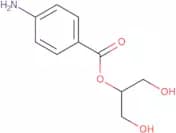
Fórmula:C8H7NO4Pureza:Min. 95%Cor e Forma:PowderPeso molecular:181.15 g/molGlyceryl-4-aminobenzoate monomer
CAS:Glyceryl-4-aminobenzoate monomer is a fine chemical that is an important building block in the synthesis of a variety of complex compounds. It has been used as a reagent and intermediate in research and development of pharmaceuticals and agrochemicals. Glyceryl-4-aminobenzoate monomer is a versatile building block, which can be used to form polymers, coatings, adhesives, elastomers, polyurethanes, and more. The compound also has been shown to have anticancer activity against human breast cancer cells.
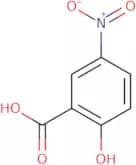
Fórmula:C10H13NO4Pureza:Min. 75 Area-%Cor e Forma:Off-white to beige solid.Peso molecular:211.21 g/mol5-Nitrosalicylic acid
CAS:5-Nitrosalicylic acid is an ethylene diamine derivative that is used in organic synthesis. It reacts with nitrogen atoms to form stable complexes. 5-Nitrosalicylic acid reacts with hydrogen and forms a protonated acid complex, which is more soluble in water than the molecule itself. The protonated acid complex can be used for the production of glycan, which are biomolecules that play a major role in the human body. Synchronous fluorescence spectroscopy has shown that 5-nitrosalicylic acid reacts with glycan by hydrogen bonding interactions and stabilizing nitro groups.
Fórmula:C7H5NO5Pureza:Min. 95%Cor e Forma:Slightly Yellow PowderPeso molecular:183.12 g/mol3-Iodo-4-methylbenzoic acid
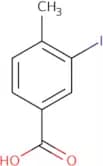
CAS:3-Iodo-4-methylbenzoic acid is a synthetic growth factor that is used in the production of monoclonal antibodies. It is synthesized by reacting 3-iodo-4-methylbenzoic acid with trifluoroacetic acid, then purified by dispersive solid-phase extraction. The synthesis of 3-Iodo-4-methylbenzoic acid requires a labeling agent to be added to the reaction mixture for detection purposes. The labeled compound can be detected using assays such as radioimmunoassay or ELISA. In order to synthesize 3-Iodo-4-methylbenzoic acid, methyl esterification of 3-(2′,2′,2′,-trichloroethoxy)phenylacetic acid is required. This process involves an organic solvent and bromine as a catalyst. This compound has been shown to inhibit the BCR/ABL tyrosine kinase receptorFórmula:C8H7IO2Pureza:Min. 95%Cor e Forma:PowderPeso molecular:262.04 g/mol2,5-Dichlorobenzoic acid ethyl ester
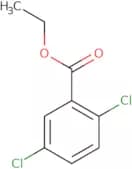
CAS:2,5-Dichlorobenzoic acid ethyl ester is a high quality, versatile building block that can be used as a reagent or intermediate. It is a useful scaffold for the synthesis of fine chemicals and research chemicals. This compound has been used in the synthesis of 2,5-dichloro-N-(2-hydroxyethyl)benzamide (CAS No. 35112-27-7), which is a speciality chemical with potential applications in pharmaceuticals and agrochemicals. 2,5-Dichlorobenzoic acid ethyl ester reacts with an amine to produce an N-[2-(2,5-dichlorophenyl)ethyl]amine (CAS No. 35112-27-7). The reaction proceeds via an amide bond formation by condensation of the amine with the acid chloride formed from the acid and ethyl chloride. This reaction is facilitated by heat andFórmula:C9H8Cl2O2Pureza:Min. 95%Cor e Forma:PowderPeso molecular:219.06 g/mol2-Methoxy-4-aminobenzoic acid
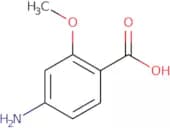
CAS:2-Methoxy-4-aminobenzoic acid is a solute that can be used in the manufacture of pharmaceuticals. It has a high affinity for receptors and is potentially useful in the treatment of hypertension. 2-Methoxy-4-aminobenzoic acid has been shown to exhibit antihypertensive activity in animals by reducing cardiac output, systemic vascular resistance, and total peripheral resistance. The mechanism of action may be due to its ability to inhibit calcium ion influx into myocardial cells and block voltage-gated potassium channels. This drug also has an acidic pH, which makes it soluble in water. 2-Methoxy-4-aminobenzoic acid is insoluble in organic solvents such as hydrochloric acid or ether, which means it cannot be extracted from aqueous solutions by these solvents.Fórmula:C8H9NO3Pureza:Min. 95%Cor e Forma:Off-White PowderPeso molecular:167.16 g/molGallic acid anhydrous
CAS:Gallic acid anhydrous is a compound that is found in plants and has antioxidant properties. Gallic acid anhydrous can be used as a model system for the study of electrochemical impedance spectroscopy. It has shown to have anti-cancer activity in vitro, but not in vivo, against squamous carcinoma cells. In addition, gallic acid anhydrous has been shown to inhibit oral pathogens and to scavenge anion radicals. Gallic acid anhydrous may have structural similarities to procyanidin B4, which is important for its antioxidant activity.Fórmula:C7H6O5Pureza:Min. 99 Area-%Cor e Forma:White PowderPeso molecular:170.12 g/mol2-(4'-Chlorobenzoyl)benzoic acid
CAS:2-(4'-Chlorobenzoyl)benzoic acid (2-CBA) is a sulfa drug that inhibits bacterial growth by blocking the synthesis of folic acid. It is also known to be luminescent and can be used in techniques such as luminescent probes. 2-CBA has antibacterial activity and can inhibit bacterial growth in a chromatographic method. 2-CBA is chemically stable and has been shown to have antibacterial properties against gram-positive bacteria, including Bacillus subtilis and Staphylococcus aureus. 2-CBA also has the ability to react with phthalazinone, an inhibitor of glutamine synthetase, which is involved in the production of ATP from ADP. This reaction results in the formation of an unstable intermediate which decomposes into CO2 and benzoic acid.
Fórmula:C14H9ClO3Pureza:Min. 95%Cor e Forma:White PowderPeso molecular:260.67 g/mol3-Amino-2-hydroxybenzoic acid
CAS:3-Amino-2-hydroxybenzoic acid (AAHB) is a nonsteroidal anti-inflammatory drug that belongs to the group of pharmaceutical preparations. It inhibits the enzyme dehydroascorbate reductase, which is involved in the production of hydrogen peroxide and other reactive oxygen species by phagocytes. Hydrogen peroxide and other reactive oxygen species can cause DNA damage and lead to cancer development. AAHB may also have antimicrobial effects, as it has been shown to inhibit bacterial growth and cell adhesion. AAHB interacts with fatty acids in a similar manner as aspirin does, but with a lower potency. It has been shown to inhibit prostaglandin synthesis by inhibiting lipoxygenase activity. The binding of AAHB at these sites prevents the formation of arachidonic acid from linoleic acid and blocks the conversion of arachidonic acid into prostaglandin H2 (PGH2).Fórmula:C7H7NO3Pureza:Min. 98 Area-%Cor e Forma:Off-White PowderPeso molecular:153.14 g/mol