Padrões Farmacêuticas
Os padrões farmacêuticos são um conjunto abrangente de materiais de referência essenciais para garantir a segurança, eficácia e qualidade dos produtos farmacêuticos. Esta categoria inclui padrões para ingredientes farmacêuticos ativos (APIs), que são os componentes principais responsáveis pelos efeitos terapêuticos. Além disso, abrange compostos e metabólitos relevantes tanto para a indústria farmacêutica quanto veterinária, fornecendo referências para a medição e análise precisa dessas substâncias. Padrões de controle de nitrosaminas são cruciais para detectar e mitigar nitrosaminas potencialmente prejudiciais em formulações de medicamentos. Padrões de toxicologia ajudam a avaliar a segurança e os potenciais efeitos adversos de compostos farmacêuticos. Além disso, padrões de ativadores e inibidores de enzimas são vitais para pesquisa e desenvolvimento, permitindo estudos precisos de vias bioquímicas e mecanismos de ação de medicamentos. Esses padrões farmacêuticos são ferramentas indispensáveis para conformidade regulatória, controle de qualidade e pesquisa, garantindo que os produtos farmacêuticos atendam a rigorosos critérios de segurança e eficácia.
Subcategorias de "Padrões Farmacêuticas"
- APIs para pesquisa e impurezas(275.013 produtos)
- Activadores e Inibidores de Enzimas(2.827 produtos)
- Nitrosaminas(2.605 produtos)
- Compostos e metabolitos farmacêuticos e veterinários(2.878 produtos)
- Toxicologia(13.652 produtos)
Foram encontrados 7836 produtos de "Padrões Farmacêuticas"
Ordenar por
Pureza (%)
0
100
|
0
|
50
|
90
|
95
|
100
3-Caffeoyl-1,5-quinolactone(3-Caffeoyl-gamma-quinide)
CAS:<p>3-Caffeoyl-1,5-quinolactone (3-Caffeoyl-gamma-quinide) is a coffee-derived compound, identified as a phytochemical present in roasted coffee beans. It is primarily formed during the roasting process through the complex transformation of caffeoylquinic acids, which are abundant in green coffee beans. This compound is gaining attention for its notable biological properties, particularly its antioxidant and enzyme inhibitory activities.</p>Fórmula:C16H16O8Pureza:Min. 95%Cor e Forma:PowderPeso molecular:336.29 g/mol(4-Fluoro-3-Nitrophenyl)Acetonitrile
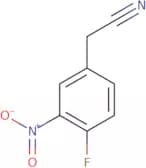
CAS:<p>4-Fluoro-3-nitrophenylacetonitrile is a monomer that can be synthesised from the reaction of carbamic acid and diphenyl ether. It is chiral, stereoselective and nucleophilic. 4-Fluoro-3-nitrophenylacetonitrile can also be synthesised by reacting fluoroacetamide with sodium cyanide in water, forming the corresponding amide, which reacts with acetonitrile to form the nitro compound. The anti-cancer properties of 4-fluoro-3 nitrophenylacetonitrile have been studied in vitro and in vivo. This substance has been shown to inhibit growth of cancer cells and induce apoptosis. In addition, this substance has been used as a synthetic strategy for dihydroisoquinolines, which are important for their anti-cancer properties.</p>Fórmula:C8H5FN2O2Pureza:Min. 95%Peso molecular:180.14 g/molRef: 3D-FF83023
Produto descontinuadoValeric acid
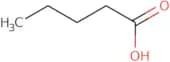
CAS:<p>Valeric acid is a fatty acid that is used in the manufacture of polymers. Valeric acid can be synthesized from caproic acid, which is found in palm oil and coconut oil. Valeric acid has been shown to inhibit the activity of nicotinic acetylcholine receptors at low concentrations and to have an inhibitory effect on the ryanodine receptor at high concentrations. Valeric acid also has a matrix effect on analytical methods such as gas-liquid chromatography, which has been modeled using polymer compositions.</p>Fórmula:C5H10O2Pureza:Min. 95%Peso molecular:102.13 g/molRef: 3D-FV34914
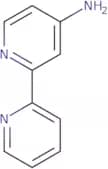
Produto descontinuado4-Amino-2,2'-bipyridine
CAS:<p>Please enquire for more information about 4-Amino-2,2'-bipyridine including the price, delivery time and more detailed product information at the technical inquiry form on this page</p>Fórmula:C10H9N3Pureza:Min. 95%Cor e Forma:PowderPeso molecular:171.2 g/mol24(S)-Hydroxycholesterol
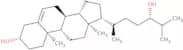
CAS:Produto Controlado<p>24(S)-Hydroxycholesterol is a cholesterol metabolite that is synthesized by the liver and can be found in human serum. It has been shown to be an important inducer of transcriptional regulation, as it regulates the expression of genes involved in lipid metabolism and inflammatory response. 24(S)-Hydoxycholesterol is also an activator of the peroxisome proliferator-activated receptor (PPAR) and may cause hepatic steatosis. This molecule has potent activity in inducing polymerase chain reaction (PCR) and protein synthesis in neuronal cells, leading to neuronal death. The molecule also induces apoptosis by caspase-independent cell death, which is mediated by mitochondrial membrane potential. 24(S)-Hydoxycholesterol may serve as a biomarker for nonsteroidal anti-inflammatory drugs (NSAIDs), with low potency against these drugs.br></p>Fórmula:C27H46O2Pureza:Min. 95%Cor e Forma:PowderPeso molecular:402.65 g/molNaphthenic acid
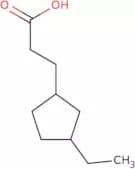
CAS:<p>Naphthenic acid is a metal chelate that is used in synchronous fluorescence spectroscopy. It has been shown to have biodegradation properties and can be used as an indicator for water quality. Naphthenic acid has been found to be a potent inhibitor of corrosion and is often used as an additive to petroleum products, such as gasoline, that are made from crude oil. Naphthenic acid also has acute toxicities and can cause toxicity studies on humans. It is able to inhibit energy metabolism in cells by binding to the mitochondrial membrane, which may be due to its ability to bind with benzalkonium chloride. Naphthenic acid can also be used for analytical methods, such as electrochemical impedance spectroscopy, because it has high sensitivity and specificity.</p>Fórmula:C7H10O2Cor e Forma:Clear LiquidPeso molecular:126.15 g/molRef: 3D-FN139341
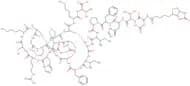
Produto descontinuadoBiotinyl-Hepcidin-25 (human) trifluoroacetate salt
CAS:<p>Please enquire for more information about Biotinyl-Hepcidin-25 (human) trifluoroacetate salt including the price, delivery time and more detailed product information at the technical inquiry form on this page</p>Fórmula:C123H184N36O33S10Pureza:Min. 95%Peso molecular:3,015.66 g/molRef: 3D-FB109926
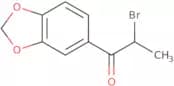
Produto descontinuado2-Bromo-3',4'-(methylenedioxy)propiophenone
CAS:Produto Controlado<p>Please enquire for more information about 2-Bromo-3',4'-(methylenedioxy)propiophenone including the price, delivery time and more detailed product information at the technical inquiry form on this page</p>Fórmula:C10H9BrO3Pureza:Min. 95%Cor e Forma:PowderPeso molecular:257.08 g/molBiotinyl-Neuromedin S (human) trifluoroacetate salt
CAS:<p>Please enquire for more information about Biotinyl-Neuromedin S (human) trifluoroacetate salt including the price, delivery time and more detailed product information at the technical inquiry form on this page</p>Fórmula:C183H279N55O46SPureza:Min. 95%Peso molecular:4,017.58 g/molRef: 3D-FB109765
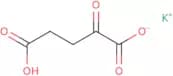
Produto descontinuadoα-Ketoglutaric acid potassium
CAS:<p>Intermediate in the Krebs cycle; nitrogen transporter</p>Fórmula:C5H5O5KPureza:Min. 98 Area-%Cor e Forma:PowderPeso molecular:184.19 g/mol2,2'-Biphenyldicarboxylic acid anhydride - 70%
CAS:<p>2,2'-Biphenyldicarboxylic acid anhydride is a diphenic anhydride that has a carboxylate group on one end and a phenyl group on the other. The nitrogen atoms in this molecule are part of the intramolecular hydrogen bonds that stabilize the molecule. 2,2'-Biphenyldicarboxylic acid anhydride is used in wastewater treatment as it reacts with amines to form ammonium salts. This process also releases hydrogen, which can be used for fuel cells or light emission. It is also used to produce other compounds such as malonic acid and phenylacetic acid.</p>Fórmula:C14H8O3Pureza:(%) Min. 70%Cor e Forma:Brown Beige PowderPeso molecular:224.21 g/mol5'-Chloro-2'-hydroxy-3'-nitro-[1,1'-biphenyl]-3-carboxylic acid
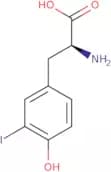
CAS:<p>Please enquire for more information about 5'-Chloro-2'-hydroxy-3'-nitro-[1,1'-biphenyl]-3-carboxylic acid including the price, delivery time and more detailed product information at the technical inquiry form on this page</p>Fórmula:C13H8ClNO5Pureza:Min. 95%Peso molecular:293.66 g/mol3-Iodo-L-tyrosine
CAS:<p>Please enquire for more information about 3-Iodo-L-tyrosine including the price, delivery time and more detailed product information at the technical inquiry form on this page</p>Fórmula:C9H10INO3Pureza:Min. 96.0 Area-%Cor e Forma:PowderPeso molecular:307.09 g/molRef: 3D-FI12110
Produto descontinuadoEuropium tris[3-(heptafluoropropylhydroxymethylene)-(+)-camphorate]
CAS:<p>Europium Tris[3-(Heptafluoropropylhydroxymethylene)-(+)-Camphorate] is a chiral compound that can be used as a catalyst for the asymmetric synthesis of spiroketals. The catalyst is immobilized on a monolayer and has been shown to work with nitrogen nucleophiles such as ammonia and amines. It also shows catalytic activity in hydrosilylation reactions, which are used in the production of polymers. Europium Tris[3-(Heptafluoropropylhydroxymethylene)-(+)-Camphorate] is soluble in organic solvents such as ethyl diazoacetate, styrene, and tetrahydrofuran.</p>Fórmula:C42H42EuF21O6Pureza:Min. 95%Peso molecular:1,193.71 g/mol5-(2-Methyl-4-nitrophenyl)-2-furaldehyde
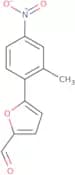
CAS:<p>Please enquire for more information about 5-(2-Methyl-4-nitrophenyl)-2-furaldehyde including the price, delivery time and more detailed product information at the technical inquiry form on this page</p>Fórmula:C12H9NO4Pureza:Min. 95%Peso molecular:231.2 g/molRef: 3D-FM117214
Produto descontinuado4-Sulpho-1,8-naphthalic anhydride potassium salt
CAS:<p>4-Sulpho-1,8-naphthalic anhydride potassium salt is a reagent that belongs to the family of sulfonic acids. It is used for recycling purposes in biochemical studies and for the synthesis of other compounds in organic chemistry. The chloride ion can be substituted with bromide or iodide ions to yield 4-bromobenzaldehyde. Studies have also shown that 4-SNAK can act as an electron acceptor in cellular respiration pathways and has been shown to inhibit synaptic transmission.</p>Fórmula:C12H5KO6SPureza:Min. 95%Cor e Forma:SolidPeso molecular:316.33 g/molRef: 3D-FS33600
Produto descontinuado


![5'-Chloro-2'-hydroxy-3'-nitro-[1,1'-biphenyl]-3-carboxylic acid](/_next/image/?url=https%3A%2Fstatic.cymitquimica.com%2Fproducts%2F3D%2Fthumb-webp%2FFC159731.webp&w=3840&q=75)
![Europium tris[3-(heptafluoropropylhydroxymethylene)-(+)-camphorate]](/_next/image/?url=https%3A%2Fstatic.cymitquimica.com%2Fproducts%2F3D%2Fthumb-webp%2FFE98265.webp&w=3840&q=75)