Glicociência
Subcategorias de "Glicociência"
- Amino açúcares(108 produtos)
- Anticorpos Glico-Relacionados(284 produtos)
- Glicolípidos(46 produtos)
- Glicosaminoglicanos (GAGs)(55 produtos)
- Glicosídeos(419 produtos)
- Monossacáridos(6.622 produtos)
- Oligossacarídeos(3.691 produtos)
- Polissacáridos(506 produtos)
Foram encontrados 11036 produtos de "Glicociência"
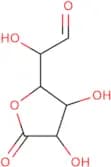
D-Galacturono-6,3-lactone
CAS:D-Galacturono-6,3-lactone is a fatty acid that is part of the glucuronolactone family and has been shown to have anti-obesity effects in vitro. D-Galacturono-6,3-lactone has been synthesized from sodium citrate and hydrochloric acid in the presence of magnesium salt, and the product was purified by crystallization. It has also been shown to inhibit aminotransferase activity and increase locomotor activity. D-Galacturono-6,3-lactone has a ph optimum of 4.5, which can be determined by an analytical method involving the measurement of hydrogen ion concentration.
Pureza:Min. 95%Ref: 3D-MG01313
Produto descontinuadoN-Acetylmuramic acid 6-phosphate
CAS:N-Acetylmuramic acid 6-phosphate is a molecule that belongs to the class of compounds known as nucleotide phosphates. It is an intermediate in the biosynthesis of peptidoglycan, which is a major component of bacterial cell walls. N-Acetylmuramic acid 6-phosphate is synthesized from ATP and N-acetylmuramic acid by hydrolysis. The reaction mechanism for this transformation involves an imine intermediate, which can be formed through the action of two molecules of ATP and one molecule of N-acetylmuramic acid. This reaction is catalyzed by an enzyme called heterocyst. The enzyme kinetics for this transformation are influenced by many factors, including temperature, pH, and substrate concentration.Fórmula:C11H20NO11PPureza:Min. 95%Peso molecular:373.25 g/molMono-(6-(diethylenetriamine)-6-deoxy)-β-Cyclodextrin
CAS:Please enquire for more information about Mono-(6-(diethylenetriamine)-6-deoxy)-β-Cyclodextrin including the price, delivery time and more detailed product information at the technical inquiry form on this page
Fórmula:C46H81N3O34Pureza:Min. 95%Peso molecular:1,220.1 g/molRef: 3D-QCA29432
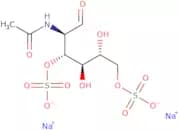
Produto descontinuadoN-Acetyl-D-glucosamine-3-6-di-O-sulfate sodium
CAS:N-Acetyl-D-glucosamine-3-6-di-O-sulfate sodium salt is a synthetic oligosaccharide. It is a fluorinated glycosylic acid glycosidase, an enzyme that catalyzes the hydrolysis of beta-(1,2)-glycosidic linkages in polysaccharides. This product can be custom synthesized to meet your specifications and can be modified with methylation or click modification for your specific needs.Fórmula:C8H15NO12S2•Na2Pureza:(13C-Nmr Spectrum) Min. 95%Cor e Forma:White PowderPeso molecular:427.32 g/molRef: 3D-MA58453
Produto descontinuadoN-Benzoyl-D-glucosamine
CAS:Lectins are carbohydrate-binding proteins that can be classified into different types based on their specificities for glycan structures. One of the most common types is the N-acetyl-D-glucosamine (NAG) lectin, which binds to oligomers of NAG and related sugars. Lectins are used to activate cells and induce cell death. The dodecyl NAG lectin has been shown to bind to glucocerebrosides in a reductively irreversible manner and has been used as a model for such interactions. This lectin is also inexpensively produced from a synthetic benzylidene acetal, which can be made from commercially available materials. It has been shown that this lectin binds to polyacrylamide gels in an SDS-polyacrylamide gel electrophoresis, with a pH optimum at 7.0 and an amino acid composition that includes glutamic acid, glutamine, asparagine, ser
Fórmula:C13H17NO6Pureza:Min. 95%Cor e Forma:White PowderPeso molecular:283.28 g/molRef: 3D-MB03953
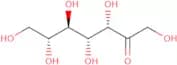
Produto descontinuadoD-Sedoheptulose
CAS:D-Sedoheptulose is a sugar that is a member of the pentoses. It has been shown to have a ph optimum of 4.5 and oxidizing potential of -0.18 V. It is also an important intermediate in carbohydrate metabolism and can be used as an energy source by cells. D-Sedoheptulose plays a role in transcriptional regulation and cellular physiology, as well as being involved in the production of acyl chains and disulfide bonds for proteins. D-Sedoheptulose has also been found to have synergic effects with other sugars such as glucose, sucrose, or fructose, which may be due to its ability to act as an inducer of reductive enzymes such as glucose-6-phosphate dehydrogenase (G6PD).
Fórmula:C7H14O7Pureza:Min. 95%Cor e Forma:PowderPeso molecular:210.18 g/molD-Mannose tablets
CAS:Please enquire for more information about D-Mannose tablets including the price, delivery time and more detailed product information at the technical inquiry form on this page
Fórmula:C6H12O6Pureza:Min. 95%Cor e Forma:PowderPeso molecular:180.16 g/mol1,2,3,4,6-Penta-O-acetyl-D-galactopyranose
CAS:1,2,3,4,6-Penta-O-acetyl-D-galactopyranose is an analog of the natural pentoses that binds to the mitochondrial membrane and inhibits the production of pro-inflammatory cytokines. This drug has been shown to inhibit the binding of lysophosphatidic acid (LPA) to its receptor by substituting for LPA in this binding site. 1,2,3,4,6-Penta-O-acetyl-D-galactopyranose also inhibits the expression of proinflammatory cytokines such as interleukin 6 (IL6) and IL1β in a dose dependent manner. This drug is also capable of inhibiting phosphotungstic acid from binding to a monolayer surface and can be used as a glycopolymer for cell culture. It has been shown that 1,2,3,4,6-Penta-O-acetylFórmula:C16H22O11Pureza:Min. 95%Cor e Forma:PowderPeso molecular:390.34 g/molRef: 3D-MP03541
Produto descontinuadoDanaparoid sodium - mixture of dermatan sulfate, heparan sulfate and chondroitin sulfate
CAS:Danaparoid sodium (the active pharmaceutical ingredient in Orgaran; Merck Sharp and Dohme) is a biopolymeric non-heparin drug that is used as anticoagulant and antithrombotic agent, approved for the prophylaxis of postoperative deep-vein thrombosis. It consists of a mixture of three glycosaminoglycans: heparan sulphate, dermatan sulphate, and chondroitin sulphate. Danaparoid, has well established antithrombotic activity. The drug has a high antifactor Xa to antifactor IIa (thrombin) activity ratio, a low tendency to cause bleeding and minimal effects on the fibrinolytic system.
Pureza:Min. 95%Cor e Forma:White PowderRef: 3D-YD58324
Produto descontinuadoGum Jhingan
Gum Jhingan is a modified carbohydrate with a fluorinated saccharide. It is an oligosaccharide that has been synthesized from the sugar galactose. Gum Jhingan is a high-purity, custom-synthesized product that has been methylated and glycosylated. The modification process of this carbohydrate includes fluorination and click chemistry.
Pureza:Min. 95%Cor e Forma:SolidRef: 3D-YG170163
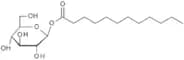
Produto descontinuado1-Oxododecyl β-D-glucopyranoside
CAS:1-Oxododecyl β-D-glucopyranoside is a synthetic compound that is used as an intermediate in the synthesis of oligosaccharides, monosaccharides, saccharides, and other carbohydrates. It has a purity of >98% and can be custom synthesized to meet your specifications. 1-Oxododecyl β-D-glucopyranoside is also available for purchase with fluorination, glycosylation, and methylation modifications. The CAS number for this product is 64395-92-2.
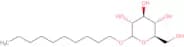
Fórmula:C18H34O7Pureza:Min. 95 Area-%Cor e Forma:PowderPeso molecular:362.46 g/molDecyl D-glucopyranoside
CAS:Decyl D-glucopyranoside is a sodium salt of decyl D-glucopyranoside that is used as a detergent additive in cleaning compositions. Decyl D-glucopyranoside has shown antimicrobial activity against both Gram-positive and Gram-negative bacteria, including methicillin resistant Staphylococcus aureus (MRSA) and Clostridium perfringens. Decyl D-glucopyranoside has also been shown to have chemical stability at high temperatures, making it useful in the manufacture of lacrimal gland preparations and cationic surfactants.
Fórmula:C16H32O6Peso molecular:320.42 g/molRef: 3D-MD11310
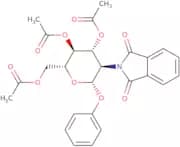
Produto descontinuadoPhenyl 3,4,6-tri-O-acetyl-2-deoxy-2-phthalimido-b-D-glucopyranoside
CAS:Phenyl 3,4,6-tri-O-acetyl-2-deoxy-2-phthalimido-b-D-glucopyranoside is a fluorinated synthetic monosaccharide that has been synthesized to serve as a glycosylation and polysaccharide modification agent. Phenyl 3,4,6-tri-O-acetyl-2-deoxy-2--phthalimido--b--D--glucopyranoside is an effective methylation agent for the synthesis of complex carbohydrates. It can be used for click modifications on the sugar moiety of oligosaccharides and polysaccharides. Phenyl 3,4,6 -tri -O -acetyl -2 -deoxy -2 -phthalimido -b -D--glucopyranoside is soluble in water as well as many organic solvents. The CAS No. 120498 97 7 is assigned toFórmula:C26H25NO10Pureza:Min. 95%Peso molecular:511.48 g/molRef: 3D-MP12488
Produto descontinuadoGlucosamine L-5-methyltetrahydrofolate
CAS:Please enquire for more information about Glucosamine L-5-methyltetrahydrofolate including the price, delivery time and more detailed product information at the technical inquiry form on this page
Fórmula:C20H25N7O6•(C6H13NO5)2Pureza:Min. 95%Peso molecular:817.8 g/molMethyl b-D-fructofuranoside
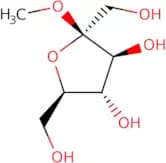
CAS:Methyl b-D-fructofuranoside is a chemical compound that is used in the production of esters and fatty acids. Methyl b-D-fructofuranoside is produced by a dehydration reaction between two molecules of acetone. The product of this reaction, methyl b-D-fructopyranoside, can be broken down into two molecules of acetone and one molecule each of methyl alcohol and carbon dioxide. This process is called alkylation. Furanocoumarin derivatives are often found in plants such as asperulosidic acid and quinquefasciatus. These compounds are found in many species of plant, but they are most concentrated in the roots of these plants because they are more metabolically active there than other parts of the plant. Environmental pollution can lead to high concentrations of furanocoumarins in plants, which can have toxic effects on organisms that come into contact with them.
Fórmula:C7H14O6Pureza:Min. 98 Area-%Cor e Forma:Clear LiquidPeso molecular:194.18 g/molD-Gluconic acid potassium salt
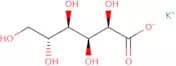
CAS:D-Gluconic acid potassium salt is a glycol ether with biochemical properties that can be used to synthesize covalent linkages. It has been shown to have antimicrobial properties in wild-type strains of Escherichia coli and Salmonella typhimurium. D-Gluconic acid potassium salt has been shown to exhibit inhibitory effects on the synthesis of DNA, RNA, and protein, as well as enzyme activities. The matrix effect is an analytical method that measures the inhibition of bacterial growth in agar plates. Electrochemical impedance spectroscopy (EIS) is a technique that measures changes in electrical resistance when bacteria are placed on an electrode surface. This technique has been used to show that D-gluconic acid potassium salt exhibits inhibitory effects against group P2 enzymes, such as polymerase chain reaction (PCR), which is used for DNA replication and amplification.
Fórmula:C6H11KO7Pureza:Min. 95%Peso molecular:234.25 g/mol3'-methoxy apiin;Chrysoeiol-7-(2-O-apiosylglucoside)
CAS:Please enquire for more information about 3'-methoxy apiin;Chrysoeiol-7-(2-O-apiosylglucoside) including the price, delivery time and more detailed product information at the technical inquiry form on this page
Pureza:Min. 95%Cellulose - Microcystalline USP
CAS:Cellulose is a linear polysaccharide of β 1-4 linked glucose residues. The polysaccharide chains are bundled as microfibrils in cell walls and provide the essential structural components within growing plants. Each microfibril exhibits a high degree of three-dimensional internal bonding resulting in a crystalline structure that is insoluble in water, resistant to reagents and very strong. The crystalline region of cellulose is isolated to produce microcrystalline cellulose. Microcrystalline cellulose is a term for refined wood pulp and is used as a texturizer, an anti-caking agent, a fat substitute, an emulsifier, an extender, and a bulking agent in food production.
Pureza:Min. 95%Ref: 3D-YC05773
Produto descontinuadoNystatin A3
CAS:8,9-Dideoxy-28,29-dihydro-7,10-dihydroxy-35-O-(2,6-dideoxy-L-ribo-hexopyranosyl)amphotericin B is an antifungal drug that belongs to the class of polyene macrolides. It is a potent inhibitor of Candida albicans and Candida glabrata. This compound has been shown to have synergistic effects when used in combination with nystatin against C. albicans. 8,9-Dideoxy-28,29-dihydro-7,10-dihydroxy-35O-(2,6 - dideoxy - L - ribo - hexopyranosyl)amphotericin B also inhibits toll like receptor 4 (TLR4), which is responsible for the induction of inflammatory cytokines such as IL1B and IL8
Fórmula:C53H85NO20Pureza:Min. 95%Peso molecular:1,056.24 g/molRef: 3D-MD146814
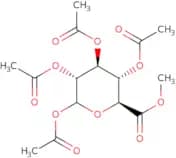
Produto descontinuado1,2,3,4-Tetra-O-acetyl-D-glucuronide methyl ester
CAS:1,2,3,4-Tetra-O-acetyl-D-glucuronide methyl ester is a lactone that can be used as a precursor for the synthesis of various types of compounds. The chemical structure was determined by high-resolution x-ray diffraction to be a planar molecule with two conformations: one where the four acetyl groups are on different sides and another where they are all on the same side. The latter conformation is more stable due to the dihedral angle between the hydroxyl group and carbonyl group. This compound is an intermediate in synthesizing 2-(4'-hydroxybenzoyl)-1,2,3,4-tetra-O-acetyl-.alpha.-D-.beta.-D glucopyranoside methyl ester by reacting with 3-(3'-azido)benzaldehyde. The single crystal x-ray diffraction study revealed that this compound has a conformation
Fórmula:C15H20O11Pureza:Min. 97 Area-%Cor e Forma:White PowderPeso molecular:376.31 g/molRef: 3D-MT04862
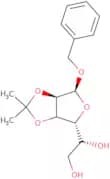
Produto descontinuadoBenzyl 2,3-O-isopropylidene-α-D-mannofuranoside
CAS:Benzyl 2,3-O-isopropylidene-a-D-mannofuranoside is a fluorinated monosaccharide that is synthesized using glycosylation and polysaccharide modification. This product has a CAS number of 20689-03-6 and can be used for complex carbohydrate synthesis. It has been shown to have high purity.
Fórmula:C16H22O6Pureza:Min. 95%Cor e Forma:PowderPeso molecular:310.34 g/molRef: 3D-MB04631
Produto descontinuado4-O-{[(6-Azidoethoxy)ethoxy]ethyl}-β-D-galactopyranosyl-2-deoxy-α-D-glucopyranose-2,1-oxazoline
CAS:Please enquire for more information about 4-O-{[(6-Azidoethoxy)ethoxy]ethyl}-β-D-galactopyranosyl-2-deoxy-α-D-glucopyranose-2,1-oxazoline including the price, delivery time and more detailed product information at the technical inquiry form on this page
Fórmula:C20H34N4O12Pureza:Min. 95%Peso molecular:522.5 g/molRef: 3D-OA183929
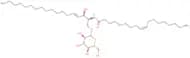
Produto descontinuadoD-glucosyl--1,1' N-oleoyl-D-erythro-sphingosine
CAS:D-glucosyl--1,1' N-oleoyl-D-erythro-sphingosine is a synthetic oligosaccharide with a fluorinated alpha-hydroxy group and a methylated nitrogen atom. It is also a complex carbohydrate that has been modified by glycosylation and polysaccharide modification. D-glucosyl--1,1' N-oleoyl-D-erythro-sphingosine can be used in custom synthesis, click modification, methylation, and sugar modification. This product has high purity and can be used in the synthesis of drugs or other chemical compounds.Fórmula:C42H79NO8Pureza:Min. 95%Peso molecular:726.08 g/molMethyl 2-deoxy-2-fluoro-β-D-glucopyranoside
CAS:Methyl 2-deoxy-2-fluoro-b-D-glucopyranoside is a synthetic glycosylation product that is prepared by monosaccharide and polysaccharide modification. This fluorinated sugar has high purity and is easy to handle. It can be used in the synthesis of oligosaccharides, sugar chains, and other complex carbohydrate molecules. The CAS number for Methyl 2-deoxy-2-fluoro-b-D-glucopyranoside is 39110–58–2.Fórmula:C7H13FO5Pureza:Min. 95%Peso molecular:196.17 g/molTrehalose 6-tetradecanoate
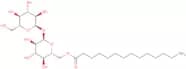
CAS:Trehalose 6-tetradecanoate is a custom synthesis of an oligosaccharide that is modified by methylation, glycosylation, and carbamylation. It is a polysaccharide that has been modified with click chemistry. Trehalose 6-tetradecanoate is a high purity product that can be used in the synthesis of other compounds.
Fórmula:C26H48O12Pureza:Min. 95%Peso molecular:552.65 g/mol2,4-O-Benzylidene-L-xylose
CAS:2,4-O-Benzylidene-L-xylose is a white crystalline powder with a melting point of about 125°C. It is an acetate salt that can be used in the synthesis of many natural products. It has been shown to inhibit HMG-CoA reductase and is used in the treatment of hypercholesterolemia. The reaction mechanism for this compound is not well understood, but it is believed to involve an acid catalyst and an organic solvent. The yield for this compound is low and it requires a long reaction time due to its high reactivity.
Fórmula:C12H14O5Pureza:Min. 95%Peso molecular:238.24 g/molRef: 3D-MB06850
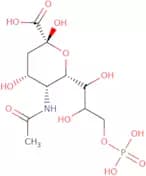
Produto descontinuadoN-Acetylneuraminic acid 9-phosphate
CAS:N-Acetylneuraminic acid 9-phosphate is a sugar phosphate
Fórmula:C11H20NO12PPureza:Min. 95%Peso molecular:389.25 g/molDebranched arabinan, from sugar beet
CAS:Please enquire for more information about Debranched arabinan, from sugar beet including the price, delivery time and more detailed product information at the technical inquiry form on this page
Ref: 3D-YD184506
Produto descontinuadoD-[UL-¹³C6]Galacturonic acid potassium
D-[6-13C]Galacturonic acid potassium salt is a synthetic, water-soluble complex carbohydrate with a molecular weight of 744.2. It is used as a fluorescence probe in magnetic resonance imaging (MRI) and also has applications in the synthesis of oligosaccharides and polysaccharides. D-[6-13C]Galacturonic acid potassium salt is soluble in water and has an average pH of 5.0. This compound is available for custom synthesis with high purity and can be found under CAS number 144561-27-4.
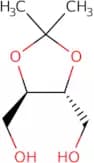
Pureza:Min. 95%(-)-2,3-O-Isopropylidene-D-threitol
CAS:(-)-2,3-O-Isopropylidene-D-threitol is a chiral compound with two stereoisomers. It is a crystalline solid that melts at 71°C and has a population of 50%. (-)-2,3-O-Isopropylidene-D-threitol is an important intermediate for the synthesis of polyethers with chiral centers. The catalytic asymmetric synthesis of (-)-2,3-O-isopropylidene-D-threitol is achieved by alkylation of (+)-2,3-(dimethoxyphosphinyl)propane with isopropanol. This reaction can be used to produce polyethers with chiral centers in high yields and enantioselectivity.
Fórmula:C7H14O4Pureza:Min. 95%Peso molecular:162.18 g/molRef: 3D-MI05357
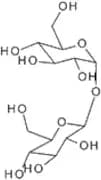
Produto descontinuadoα,β-Trehalose
CAS:α,β-Trehalose is a carbohydrate that is found in many organisms and has been shown to have biochemical properties such as energy metabolism, enzyme activities, and x-ray diffraction data. Trehalose has a phase transition temperature of around 98°C, which makes it an ideal sugar for food preservation. Trehalose can also be used as a sugar substitute with the same sweetness level as sucrose. The chemical stability of trehalose allows it to be used as a preservative in food and beverages. Trehalose has been shown to be nontoxic in animal studies with doses up to 2000 mg/kg body weight. It also has an optimum pH of 7 and is stable at high temperatures.
Fórmula:C12H22O11Pureza:Min. 95 Area-%Cor e Forma:White PowderPeso molecular:342.3 g/molDaunorubicin-d3
Daunorubicin-d3 is a fluorinated, monosaccharide, synthetic, oligosaccharide and complex carbohydrate. Custom synthesis of Daunorubicin-d3 is available with glycosylation, methylation and other modifications. Daunorubicin-d3 has CAS No. 1614-68-8 and purity >99%.
Fórmula:C27H26D3NO10Pureza:Min. 95%Peso molecular:530.54 g/mol5-Thio-N-acetylglucosamine
5-Thio-N-acetylglucosamine is a microtubule inhibitor that binds to o-glcnac, a posttranslational modification of proteins that regulates the morphology and cycling of stem cells. 5-Thio-N-acetylglucosamine has been shown to inhibit the transcriptional activity of o-glcnacase, an enzyme that catalyzes the conversion of o-glcnac to glucosamine. This drug also inhibits the metabolic activity of neural progenitor cells, which may be due to its ability to regulate subpopulations with concomitant expression of markers such as Oct4 and Sox2.
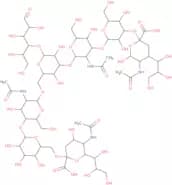
Pureza:Min. 95%Disialyllacto-N-hexaose I
CAS:Disialyllacto-N-hexaose I is a complex carbohydrate that belongs to a class of saccharides called polysaccharides. Disialyllacto-N-hexaose I is synthesized through the methylation and glycosylation of sucrose. It has been modified by Click chemistry with a maleimide group to create an amide bond between the terminal alpha position on the glucose residue and the terminal alpha position on the N-acetylglucosamine residue. This modification can be used for Polysaccharide analysis, such as MALDI TOF MS. Disialyllacto-N-hexaose I has a CAS number of 137636-98-7 and has been shown to have high purity without any impurities or contaminants.
Fórmula:C62H102N4O47Pureza:Min. 95%Peso molecular:1,655.47 g/molRef: 3D-OD64737
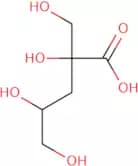
Produto descontinuadoIsosaccharinic acid
CAS:Isosaccharinic acid is a bacterial strain that produces isosaccharinic acid as its main fatty acid. The thermodynamic data for the reaction mechanism of the conversion of glucose to isosaccharinic acid has been determined. Isosaccharinic acid formation is catalyzed by an enzyme called glycosyl-glycerate dehydrogenase, which converts glycerate to 3-hydroxypropanoic acid and then to 3-oxopropanoate before it undergoes decarboxylation and reduction to form isosaccharinic acid. Radionuclides such as TcO4 are used in chemical ionization mass spectrometry for the detection of this compound in samples. Neutral pH, high activation energies, and low binding constants are all factors that affect the stability of this molecule.
Fórmula:C6H12O6Pureza:Min. 95%Peso molecular:180.16 g/molRef: 3D-MI08218
Produto descontinuadoADP-L-glycero-b-D-manno-heptose
ADP-L-glycero-b-D-manno-heptose is a synthetic, fluorinated oligosaccharide that is custom synthesized and modified. It has a high purity level and CAS No., as well as being a complex carbohydrate that can be modified with methylation or click modification to generate desired properties. ADP-L-glycero-b-D-manno-heptose is an Oligosaccharide with a glycosylation and methylation. This compound can be used in the synthesis of saccharides, polysaccharides, or other complex carbohydrates.
Pureza:Min. 95%






![4-O-{[(6-Azidoethoxy)ethoxy]ethyl}-β-D-galactopyranosyl-2-deoxy-α-D-glucopyranose-2,1-oxazoline](/_next/image/?url=https%3A%2Fstatic.cymitquimica.com%2Fproducts%2F3D%2Fthumb-webp%2FOA183929.webp&w=3840&q=75)

![D-[UL-¹³C6]Galacturonic acid potassium](/_next/image/?url=https%3A%2Fstatic.cymitquimica.com%2Fproducts%2F3D%2Fthumb-webp%2FMG170938.webp&w=3840&q=75)