Glicociência
A glicociência é o estudo dos carboidratos e seus derivados, bem como das interações e funções biológicas em que participam. Este campo de pesquisa é crucial para compreender uma ampla variedade de processos biológicos, incluindo o reconhecimento celular, a sinalização, a resposta imune e o desenvolvimento de doenças. A glicociência tem aplicações importantes na biotecnologia, na medicina e no desenvolvimento de novos medicamentos e terapias. Na CymitQuimica, oferecemos uma ampla seleção de produtos de alta qualidade e pureza para pesquisa em glicociência. Nosso catálogo inclui monossacarídeos, oligossacarídeos, polissacarídeos, glicoconjugados e reagentes específicos, projetados para apoiar os pesquisadores em seus estudos sobre a estrutura, função e aplicações dos carboidratos em sistemas biológicos. Esses recursos são destinados a facilitar descobertas científicas e aplicações práticas em diversas áreas das biociências e da medicina.
Subcategorias de "Glicociência"
- Amino açúcares(108 produtos)
- Anticorpos Glico-Relacionados(282 produtos)
- Glicolípidos(46 produtos)
- Glicosaminoglicanos (GAGs)(55 produtos)
- Glicosídeos(419 produtos)
- Monossacáridos(6.624 produtos)
- Oligossacarídeos(3.682 produtos)
- Polissacáridos(503 produtos)
Foram encontrados 11046 produtos de "Glicociência"
Ordenar por
Pureza (%)
0
100
|
0
|
50
|
90
|
95
|
100
Maltosan
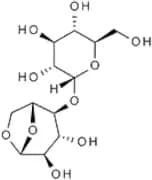
CAS:<p>Anhydro maltose found in the pyrolysis products of cellulose</p>Fórmula:C12H20O10Pureza:Min. 95%Cor e Forma:PowderPeso molecular:324.28 g/mol1L-Epi-2-inosose
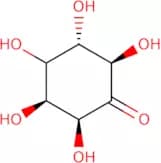
CAS:<p>1-L-Epi-2-inosose is a natural compound that has been found to have broad-spectrum antimicrobial activity. This substance is a product of the hemocyte's enzymatic conversion of L-epinephrine into 1,2,3,4,5,6-hexahydroxyisoquinoline (1L-Epi). 1L-Epi is also synthesized in vitro from epinephrine by the enzyme dehydrogenase. In addition to its antimicrobial activity, 1L-Epi has been shown to be a potent proliferation inhibitor for human cells and to be effective against gram negative bacteria.</p>Fórmula:C6H10O6Pureza:Min. 95%Cor e Forma:PowderPeso molecular:178.14 g/molUlvan - Ulva rotondata-Autumn
CAS:<p>Ulvans are structural polysaccharides present in the cell walls of green algae such as Ulva armoricana, Ulva rotondata, Ulva rigida, Ulva lacterca and Ulva pertusa. They are highly sulphated and contain rhamnose 3-sulphate, xylose, xylose 2-sulphate, glucuronic acid and iduronic acid residues. Ulvan has several potentially valuable functionalities such as gel formation for agricultural and food applications. It has also an anticoagulant, antioxidant, antihyperlipidemic and antitumor activities that are attractive for pharmaceutical applications.<br>The image was kindly provided by Prof Mike Guiry from Cork who runs ‘The Seaweed Site’.</p>Pureza:Min. 95%Dextran 3 - MW 2500 - 4000
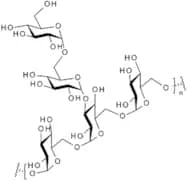
CAS:<p>Dextran is α-(1,6)-linked α-D-glucan produced by fermentation of Leuconostoc mesenteroides via the action of the enzyme dextransucrase on sucrose. The main use for native dextran is as a blood plasma extender in blood transfusions. A complex of iron with dextran, known as iron dextran, is used as a source of iron to baby piglets which are often anaemic at birth.</p>Cor e Forma:White Off-White Powder2-Methylphenyl 4-O-benzyl-a-L-thiorhamnopyranoside
<p>2-Methylphenyl 4-O-benzyl-a-L-thiorhamnopyranoside is a custom synthesis that can be modified to suit the needs of the customer. It is a fluorinated oligosaccharide with a complex carbohydrate structure. The product has been shown to have high purity and will be synthesized according to customer specifications. 2-Methylphenyl 4-O-benzyl-a-L-thiorhamnopyranoside is an oligosaccharide that contains a saccharide and monosaccharide unit, which are linked together by glycosidic bonds. This product is also known as methylated thioretinamide or MTT.</p>Pureza:Min. 95%(2R,3R,4R)-N-Benzyloxycarbonyl-2-hydroxymethyl-3,4-pyrrolidinediol
<p>(2R,3R,4R)-N-Benzyloxycarbonyl-2-hydroxymethyl-3,4-pyrrolidinediol is a custom synthesis of polysaccharide that is modified with methylation and glycosylation. It is a complex carbohydrate that has been synthesized using Click chemistry. The product is fluorinated and has high purity.</p>Pureza:Min. 95%D-Gulose
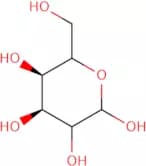
CAS:<p>D-Gulose is a sugar that has been shown to have inhibitory properties on blood glucose levels. It also has insulin-like effects and can be used as an alternative to insulin injections in patients with Type 1 diabetes. D-Gulose is metabolized by the liver into 5-deoxy-D-gluconic acid and then into glucose, which can then be used for cellular energy production. The rate constant for this process was determined in experiments using rat liver slices. D-Gulose may also have potent angiogenic effects, as it increased the proliferation of pluripotent cells and caused significant increases in growth factor β1 expression. D-Gulose may also have potential anti-cancer effects, as it inhibited nitrate reductase activity in tumor cells and decreased xanthine oxidase activity.</p>Fórmula:C6H12O6Pureza:Min. 99 Area-%Cor e Forma:White PowderPeso molecular:180.16 g/mol2-Azidomethyl-2-deoxy-3,4-O-isopropylidene-6-O-tert.butyldimethylsilyl-D-talono-1.5-lactone
2-Azidomethyl-2-deoxy-3,4-O-isopropylidene-6-O-tert.butyldimethylsilyl-D-talono-1.5-lactone is a synthetic compound that can be customized for your specific needs. It has been shown to have high purity and the ability to undergo a variety of modifications, such as fluorination, glycosylation, methylation, and modification. It is also available in a range of sizes and types of carbohydrate, including saccharides and oligosaccharides.Pureza:Min. 95%7,9-Di-O-acetyl-N-glycolyl-8-O-methylneuraminic acid
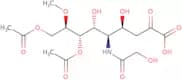
CAS:<p>7,9-Di-O-acetyl-N-glycolyl-8-O-methylneuraminic acid is a synthetic glycolylneuraminic acid analogue that can be used in the treatment of bacterial infections. It is a prodrug that is converted to glycolylneuraminic acid by monoclonal antibody and other enzymes. 7,9-Di-O-acetyl-N-glycolyl-8-O-methylneuraminic acid inhibits the activity of necrosis factor (TNF) by binding to its receptor, thereby preventing TNF from binding to cells and stimulating inflammation. This compound has been shown to be effective against many bacteria including methicillin resistant Staphylococcus aureus (MRSA). Techniques used for the synthesis include high performance liquid chromatography with mass spectrometry detection and cavity ring down spectroscopy.</p>Fórmula:C16H25NO12Pureza:Min. 95%Peso molecular:423.37 g/mol2-Keto-D-glucose
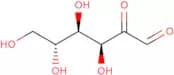
CAS:<p>2-Keto-D-glucose is a substrate molecule that is used in the study of plant physiology, enzyme kinetics, and metabolic regulation. It has been shown to be an important factor in redox potential and the activation of detoxification enzymes. 2-Keto-D-glucose has also been found to be an important factor in energy metabolism, as it can be converted into pyruvate and acetyl CoA. 2-Keto-D-glucose is a common substrate molecule for many enzymes, including glycolytic enzymes, hexokinase, alcohol dehydrogenase, lactate dehydrogenase, and phosphofructokinase. 2-Keto-D-glucose has also been found to play a role in human blood serum biochemistry by acting as a substrate for erythrocyte D glucose transporter protein and glycerol kinase.</p>Fórmula:C6H10O6Pureza:Min. 98 Area-%Cor e Forma:White Beige Yellow PowderPeso molecular:178.14 g/mol2,3,4,6-Tetra-O-benzyl-1-deoxynojirimycin hydrochloric acid salt
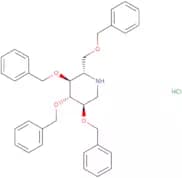
CAS:2,3,4,6-Tetra-O-benzyl-1-deoxynojirimycin hydrochloric acid salt is a synthetic monosaccharide. It was originally synthesized by the methylation of a native oligosaccharide before being subjected to click chemistry. The resulting product is a complex carbohydrate with an aromatic ring in place of the sugar alcohol moiety. 2,3,4,6-Tetra-O-benzyl-1-deoxynojirimycin hydrochloric acid salt has CAS number 72983-76-7 and is soluble in water. This product is also available as a custom synthesis service and can be modified to meet your needs.Fórmula:C34H38ClNO4Pureza:Min. 95 Area-%Cor e Forma:PowderPeso molecular:560.12 g/molBenzyl-2-acetamido-2-deoxy-3,4,6-tri-O-acetyl-a-D-glucopyranoside
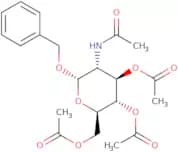
CAS:<p>Benzyl-2-acetamido-2-deoxy-3,4,6-tri-O-acetyl-a-D-glucopyranoside is an acetamido sugar molecule that has been synthesized by the reaction of benzyl alcohol with a glucoside. This compound has been shown to have potential antihistamine and anticancer activities, as well as being a potential building block for the synthesis of nucleosides. The benzyl group in this sugar molecule is vicinal and the hydroxyl groups are anilines. The conformation of this molecule is determined by lysine and arginine residues on the 3' end of the sugar chain. In order to synthesize this compound, anhydrous DMSO was used as a solvent. This chemical's properties were measured using NMR spectroscopy.</p>Pureza:Min. 95%N-Acetyl-D-glucosamine-6-phosphate disodium
CAS:<p>Intracellular form of GlcNAc; substrate for GlcNAc-phosphate deacetylase</p>Fórmula:C8H16NO9P•Na2Pureza:Min. 98 Area-%Cor e Forma:White Off-White PowderPeso molecular:347.17 g/molMan-9 N-Glycan
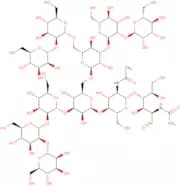
CAS:<p>Man-9 N-glycan is a glycoprotein that is found on the surface of many viruses. It has an oligosaccharide structure, which consists of a mannose and a glucose molecule linked by an alpha-1,3-glycosidic bond. The Man-9 N-glycan can be found in human serum and is involved in lectin binding to cells. It also has antiviral activity and may be used as a model system for studying glycosidic bonds. This glycan can be broken down into smaller components by methyl glycosides or titration calorimetry, which is a technique for determining the molecular weight of substances. The Man-9 N-Glycan binds to toll-like receptor 2 (TLR2) on the surface of human cells, which activates an antibody response.</p>Fórmula:C70H118N2O56Pureza:Min. 95%Cor e Forma:PowderPeso molecular:1,883.67 g/molD-Ribonic acid-1,4-lactone
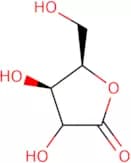
CAS:<p>D-ribono-1,5-lactone is a useful intermediate for the synthesis of bioactive compounds including antivirals.</p>Fórmula:C5H8O5Cor e Forma:White PowderPeso molecular:148.11 g/molHuman milk neutral di- to -tetrasaccharides
This mixture contains some of the lower oligosaccharides found in human milk. There are small amounts of lactose but the bulk of the mixture are tri- and tetrasaccharides. 3-Fucosyllactose, 3'-Sialyllactose, 6'-Sialyllactose, Lacto-N-tetraose, Sialyllacto-N-tetraose b, Sialyllacto-N-tetraose b and Blood Group A tetrasaccharide type V are the major components that have been found in the mixture by chromatography but there may be other minor components not mentioned here.Pureza:Min. 95%Methyl 3-O-Benzyl-N-butyl-2,4-dideoxy-2,4-imino-a-L-ribopyranoside
<p>Methyl 3-O-Benzyl-N-butyl-2,4-dideoxy-2,4-imino-a-L-ribopyranoside is a high purity compound that is custom synthesized to order. It has been fluorinated and modified with methyl groups. Methyl 3-O-Benzyl-N-butyl can be used in glycosylation and click chemistry reactions. This product is a complex carbohydrate that can be used in the synthesis of oligosaccharides and saccharides.</p>Pureza:Min. 95%(2S, 3S, 4R) -2- [(1R) - 1, 2-Dihydroxyethyl] -3, 4- pyrrolidinediol
CAS:(2S, 3S, 4R) -2- [(1R) - 1, 2-Dihydroxyethyl] -3, 4- pyrrolidinediol is a benzyl-containing compound that is used as a glycoside hydrolase inhibitor. It has been shown to be an effective treatment for inflammatory bowel disease. This drug binds to the active site of glycosidases and blocks the hydrolysis of c-glycosides in the intestine. (2S, 3S, 4R) -2- [(1R) - 1, 2-Dihydroxyethyl] -3, 4- pyrrolidinediol also inhibits chloride channels and has been shown to have antiinflammatory properties.Fórmula:C6H13NO4Pureza:Min. 95%Peso molecular:163.17 g/molSBE-β-CD
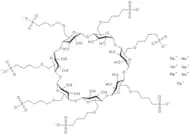
CAS:β-cyclodextrin sulfobutyl ether (SBE-beta-CD) is an excipient compound incorporating a chemically modified cyclodextrin with a structure that optimizes the solubility and stability of active pharmaceuticals and their properties. It is a highly water-soluble anionic cyclodextrin derivative. SBE-beta-CD can easily form non-covalent inclusion complexes with drug molecules and therefore reduce drug toxicity and haemolysis as well as control drug release rate. The complexing properties of beta- dex sulfobutyl ether also make it suitable for masking unpleasant odors and tastes of pharmaceutical products. It is used as an excipient in injection, oral, nasal, and eye medication.Fórmula:C70H119Na7O56S7Pureza:Min. 98%Cor e Forma:White PowderPeso molecular:2,242.05 g/mol1,3,5-Tri-O-benzoyl-2-deoxy-2-bromo-α-L-arabinofuranose
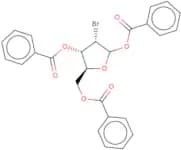
1,3,5-Tri-O-benzoyl-2-deoxy-2-bromo-alpha-L-arabinofuranose is a complex monosaccharide that can be used as a building block in the synthesis of various compounds. It is a derivative of the sugar arabinose, with the addition of benzoyl and bromo groups at specific positions. The compound has potential applications in the fields of organic chemistry and medicinal chemistry and is available for research.Fórmula:C26H21BrO7Pureza:Min. 95%Peso molecular:524.04 g/mol



![(2S, 3S, 4R) -2- [(1R) - 1, 2-Dihydroxyethyl] -3, 4- pyrrolidinediol](/_next/image/?url=https%3A%2Fstatic.cymitquimica.com%2Fproducts%2F3D%2Fthumb-webp%2FMD163930.webp&w=3840&q=75)