Glicociência
A glicociência é o estudo dos carboidratos e seus derivados, bem como das interações e funções biológicas em que participam. Este campo de pesquisa é crucial para compreender uma ampla variedade de processos biológicos, incluindo o reconhecimento celular, a sinalização, a resposta imune e o desenvolvimento de doenças. A glicociência tem aplicações importantes na biotecnologia, na medicina e no desenvolvimento de novos medicamentos e terapias. Na CymitQuimica, oferecemos uma ampla seleção de produtos de alta qualidade e pureza para pesquisa em glicociência. Nosso catálogo inclui monossacarídeos, oligossacarídeos, polissacarídeos, glicoconjugados e reagentes específicos, projetados para apoiar os pesquisadores em seus estudos sobre a estrutura, função e aplicações dos carboidratos em sistemas biológicos. Esses recursos são destinados a facilitar descobertas científicas e aplicações práticas em diversas áreas das biociências e da medicina.
Subcategorias de "Glicociência"
- Amino açúcares(108 produtos)
- Anticorpos Glico-Relacionados(282 produtos)
- Glicolípidos(46 produtos)
- Glicosaminoglicanos (GAGs)(55 produtos)
- Glicosídeos(419 produtos)
- Monossacáridos(6.624 produtos)
- Oligossacarídeos(3.682 produtos)
- Polissacáridos(503 produtos)
Foram encontrados 11046 produtos de "Glicociência"
Ordenar por
Pureza (%)
0
100
|
0
|
50
|
90
|
95
|
100
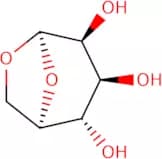
1,6-Anhydro-b-D-mannopyranose
CAS:<p>Organic tracer generated by burning cellulose; used for ageing wines and spirits</p>Fórmula:C6H10O5Pureza:Min. 90 Area-%Cor e Forma:White Off-White PowderPeso molecular:162.14 g/molAmiprilose hydrochloride
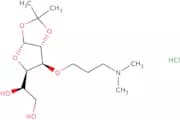
CAS:<p>Amiprilose hydrochloride is a nonsteroidal anti-inflammatory drug (NSAID) that inhibits the production of prostaglandins. It has been shown to have antimicrobial properties against skin cells and has been used as a topical treatment for wounds. Amiprilose may also be effective in treating inflammatory diseases, such as rheumatoid arthritis and ulcerative colitis, by inhibiting the production of IL-2 receptors. This drug is also used as a diagnostic tool in infectious diseases and has been found to be active against various bacteria, including Staphylococcus aureus and Escherichia coli; fungi including Candida albicans, Saccharomyces cerevisiae, and Aspergillus niger; protozoa such as Entamoeba histolytica; and viruses such as herpes simplex virus type 1. Amiprilose can inhibit inflammation by blocking the activity of leukotrienes. It is also</p>Fórmula:C14H27NO6·HClPureza:Min. 95%Cor e Forma:PowderPeso molecular:341.83 g/molBiochanin A b-D-glucuronide
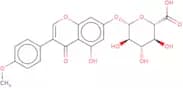
CAS:Biochanin A b-D-glucuronide is a synthetic chemical compound. It is a monosaccharide that is modified by methylation and fluorination. This product has been shown to have antiviral activity against herpes simplex virus type 1, 2, and 3 in vitro and in vivo. Biochanin A b-D-glucuronide also has anti-inflammatory properties, which may be due to its ability to inhibit prostaglandin synthesis.Fórmula:C22H20O11Pureza:Min. 95%Cor e Forma:PowderPeso molecular:460.39 g/mol3,5-O-Isopropylidene-D-lyxonic acid-1,4-lactone
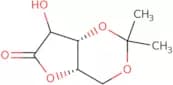
CAS:3,5-O-Isopropylidene-D-lyxonic acid-1,4-lactone is a custom synthesis that has been modified by fluorination and methylation. It is a monosaccharide with CAS No. 1931946-53-0. The product is an Oligosaccharide that is synthesized from saccharides, which are carbohydrates. The product is also glycosylated and contains sugar and complex carbohydrates.Fórmula:C8H12O5Pureza:Min. 95%Peso molecular:188.18 g/molCarboxymethyl-dextran sodium salt - Average MW 70,000
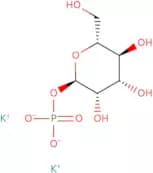
CAS:<p>Sodium carboxymethyl dextran is a white, odourless and tasteless powder, which is freely soluble in water or electrolyte solutions. Applications that have been described for carboxymethyl dextran include carriers of paramagnetic contrast agents, preparation of conjugates of pharmacologically active compounds and carboxymethyl dextrans in biosensors. A number of other uses in cosmetics, agriculture, foods, paints and textiles have been the subject of patent applications.</p>Cor e Forma:Powdera-D-Mannose-1-phosphate dipotassium salt
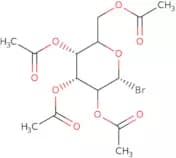
CAS:a-D-Mannose-1-phosphate dipotassium salt (DMDK) is a synthetic oligosaccharide that was designed and synthesized for use as a potential drug in the treatment of cancer. DMDK has been shown to be an inhibitor of protein glycosylation, which may lead to the prevention of tumor formation. It also has anti-inflammatory properties and can inhibit the growth of bacteria by binding to bacterial 16S ribosomal RNA and inhibiting protein synthesis.Fórmula:C6H11K2O9PPureza:Min. 95%Cor e Forma:PowderPeso molecular:336.32 g/molAcetobromo-D-glucose - 2% CaCO3
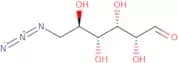
CAS:<p>Intermediate for β-glucosides; potential PET surface modification reagent</p>Fórmula:C14H19BrO9Pureza:Min. 95%Cor e Forma:White PowderPeso molecular:411.2 g/mol6-Azido-6-deoxy-D-glucose
CAS:6-Azido-6-deoxy-D-glucose is a fluorescent compound that can be used as a probe for the visualization of glycosidase activity. The compound is synthesized from D-glucose by reacting it with 6-azidohexyl nitrate and sodium hydroxide in a chemoenzymatic reaction. This compound has been shown to bind to the cell nucleus, which can be observed using microscopy. The uptake of this compound into cells is dependent on the degree of polymerization, with monomers being taken up at a higher rate than oligomers or polymers. 6-Azido-6-deoxy-D-glucose is also an inhibitor of beta-cyclodextrin glycosidase, which prevents the hydrolysis of beta cyclodextrins.Fórmula:C6H11N3O5Pureza:Min. 97 Area-%Cor e Forma:Off-White PowderPeso molecular:205.17 g/molTetraethylene glycol monooctyl ether
CAS:Tetraethylene glycol monooctyl ether (TEGMOOE) is a surfactant and antimicrobial agent. It is a non-ionic surfactant that is used in many industrial applications, including as an emulsifier, dispersing agent, wetting agent, and defoamer. TEGMOOE has been shown to inhibit the multidrug efflux pump in some bacterial cells by binding to the signal peptide. This binding prevents the formation of an antibiotic-inhibitor complex with the enzyme cell wall synthesis that is required for cell wall biosynthesis, inhibiting protein synthesis and cell division. TEGMOOE also has been shown to have antimicrobial properties against tissue culture bacteria such as Staphylococcus aureus and Enterococcus faecalis. TEGMOOE can also be used as a calibration standard for titration calorimetry or flow systems by adding fatty acid to TEGMOOE solutionFórmula:C16H34O5Pureza:Min. 95%Cor e Forma:LiquidPeso molecular:306.44 g/mol(5R, 8S, 9R) -8- [(4R) - 2, 2- Dimethyl- 1, 3- dioxolan- 4- yl] - 9- hydroxy- 2, 2- dimethyl- 1, 3, 7- trioxaspiro[4.4] nonan- 6- on e
(5R, 8S, 9R) -8- [(4R) - 2, 2- Dimethyl- 1, 3- dioxolan- 4- yl] - 9- hydroxy- 2, 2- dimethyl- 1, 3, 7- trioxaspiro[4.4] nonan- 6- on e is a synthetic and fluorinated glycosylation product of an oligosaccharide with a methyl group at the C5 position. It has been shown to have excellent purity and stability in the presence of water.Pureza:Min. 95%Laminarihexaose
CAS:Ex algal/bacterial polysaccharides-value in b1-3 glucanase assays & diagnosticsFórmula:C36H62O31Pureza:Min. 90 Area-%Cor e Forma:White Off-White PowderPeso molecular:990.86 g/molN-Acetyl-2,3-dehydro-2-deoxyneuraminic acid methyl ester
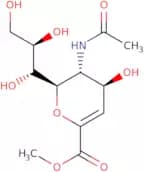
CAS:<p>N-Acetyl-2,3-dehydro-2-deoxyneuraminic acid methyl ester (NAD) is a natural product that is produced by the human body. NAD has been shown to induce apoptosis in cancer cells and modulate gene expression. This compound also plays a role in the development of stem cells, which are important for tissue regeneration. NAD has been shown to have therapeutic effects on paraplegia and angiogenesis. It also has anti-inflammatory properties that may be related to its ability to regulate mesenchymal stem cells.</p>Fórmula:C12H19NO8Pureza:Min. 95%Cor e Forma:PowderPeso molecular:305.29 g/molDodecyl α-D-maltopyranoside
CAS:Dodecyl a-D-maltopyranoside is a solubilized fat that has an optimum pH of 11. It is soluble in chloroform, ethanol, and water. The molecular weight of dodecyl a-D-maltopyranoside is 587.87 g/mol. Dodecyl a-D-maltopyranoside can be used as an absorption marker for lipids in the human liver, wheat germ, and chloroplasts. Dodecyl a-D-maltopyranoside contains two monomers and four subunits. Dodecyl a-D-maltopyranoside can be used to measure the density of lipids in the cell membrane by nmr spectra.Fórmula:C24H46O11Pureza:Min. 95%Cor e Forma:PowderPeso molecular:510.62 g/molLumiracoxib acyl-β-D-glucuronide
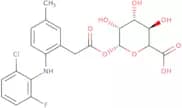
CAS:Produto ControladoLumiracoxib acyl-b-D-glucuronide is a synthetic compound that is a derivative of the nonsteroidal anti-inflammatory drug lumiracoxib. It has been shown to be effective as an inhibitor of inflammation and pain in animal models, with no significant toxic effects on the liver or kidney. Lumiracoxib acyl-b-D-glucuronide is a white powder that can be synthesized by glycosylation and modification of lumiracoxib. This compound is soluble in water and ethanol, but insoluble in ether.Fórmula:C21H21ClFNO8Pureza:Min. 95%Cor e Forma:White To Yellow SolidPeso molecular:469.84 g/molMaltotetraose
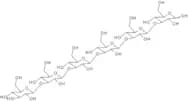
CAS:<p>Maltotetraose is the shortest chain oligosaccharide that can be classified as a maltodextrin. It’s a component of liquid glucose (a commercial sweetener composed of glucose, maltose, maltotriose and maltotetraose), used in bread-making industry.</p>Fórmula:C24H42O21Pureza:Min. 95 Area-%Cor e Forma:White PowderPeso molecular:666.58 g/molLewis X 1-O-n-pentylamine
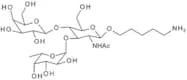
CAS:<p>Lewis X 1-O-n-pentylamine is a methylated saccharide that is used in the synthesis of polysaccharides and oligosaccharides. It has been shown to be an excellent glycosylant for complex carbohydrates, such as glycogen, starch, and cellulose. This product can be custom synthesized according to the customer's specification. The CAS number is 1159604-40-6.</p>Fórmula:C25H46N2O15Pureza:Min. 95%Cor e Forma:White SolidPeso molecular:614.64 g/molMaltononaose
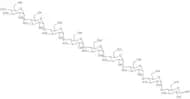
CAS:<p>α 1,4-glucononasaccharide derived from starch by hydrolysis and chromatography</p>Fórmula:C54H92O46Cor e Forma:White PowderPeso molecular:1,477.28 g/molN-Methyl-N-octanoylglucamine
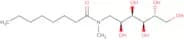
CAS:N-Methyl-N-octanoylglucamine is a chemical compound that inhibits the activity of the enzyme diacylglycerol lipase, which breaks down the lipid diacylglycerol. This leads to an accumulation of diacylglycerols in the cellular membrane and increased permeability of the cell, which results in physiological effects such as increased release of neurotransmitters. N-Methyl-N-octanoylglucamine has been shown to bind to peptides and inhibit their proteolytic degradation by peptidases. It also has been shown to have an effect on monoclonal antibodies with a high affinity for fatty acids. This compound is used for sample preparation prior to analysis by MALDI mass spectrometry.Fórmula:C15H31NO6Pureza:Min. 95 Area-%Cor e Forma:White PowderPeso molecular:321.41 g/mola-D-Mannose-1-phosphate 3-LINKER-FITC
<p>a-D-Mannose-1-phosphate 3-LINKER-FITC is a custom synthesis, modification, and fluorination of the natural a-D-mannose monosaccharide. It is synthesized from a mixture of D-mannitol (1) and pyridine hydrochloride in the presence of triphenylphosphine (2). The methylation of 2,4,6 trichloroacetophenone with sodium methoxide in methanol yields the desired product 3. This product is then reacted with an excess of N-(3-dimethylaminopropyl)-N'-ethylcarbodiimide hydrochloride to yield 4. The reaction between 4 and 5 results in 6 which is then converted to 7 by treatment with diazomethane. 7 is then reacted with 8 to produce 9. The final product 10 is obtained by reacting 9 with three equivalents of N-(7-azab</p>Pureza:Min. 95%(-)-4-epi-Lyoniresinol-3a-O-b-D-glucopyranoside
<p>(-)-4-epi-Lyoniresinol-3a-O-b-D-glucopyranoside is a modification of the natural product, lyoniresinol, which is an Oligosaccharide. It is a Carbohydrate and its structure is complex due to the presence of a number of monosaccharides, including glucose. (-)-4-epi-Lyoniresinol-3a-O-b-D-glucopyranoside can be synthesized by methylating lyoniresinol with methanethiol in the presence of sodium methoxide to yield methyl lyoniresinolate. The methyl group is then removed by heating in boiling water to yield (-)-4-epi -lyoniresinol 3a -O -b -D -glucopyranoside. This compound has been shown to have antimicrobial activity against gram positive bacteria such as Mycob</p>Pureza:Min. 95%



![(5R, 8S, 9R) -8- [(4R) - 2, 2- Dimethyl- 1, 3- dioxolan- 4- yl] - 9- hydroxy- 2, 2- dimethyl- 1, 3…](/_next/image/?url=https%3A%2Fstatic.cymitquimica.com%2Fproducts%2F3D%2Fthumb-webp%2FMD170676.webp&w=3840&q=75)