Glicociência
A glicociência é o estudo dos carboidratos e seus derivados, bem como das interações e funções biológicas em que participam. Este campo de pesquisa é crucial para compreender uma ampla variedade de processos biológicos, incluindo o reconhecimento celular, a sinalização, a resposta imune e o desenvolvimento de doenças. A glicociência tem aplicações importantes na biotecnologia, na medicina e no desenvolvimento de novos medicamentos e terapias. Na CymitQuimica, oferecemos uma ampla seleção de produtos de alta qualidade e pureza para pesquisa em glicociência. Nosso catálogo inclui monossacarídeos, oligossacarídeos, polissacarídeos, glicoconjugados e reagentes específicos, projetados para apoiar os pesquisadores em seus estudos sobre a estrutura, função e aplicações dos carboidratos em sistemas biológicos. Esses recursos são destinados a facilitar descobertas científicas e aplicações práticas em diversas áreas das biociências e da medicina.
Subcategorias de "Glicociência"
- Amino açúcares(108 produtos)
- Anticorpos Glico-Relacionados(282 produtos)
- Glicolípidos(46 produtos)
- Glicosaminoglicanos (GAGs)(55 produtos)
- Glicosídeos(419 produtos)
- Monossacáridos(6.622 produtos)
- Oligossacarídeos(3.682 produtos)
- Polissacáridos(503 produtos)
Foram encontrados 11041 produtos de "Glicociência"
Ordenar por
Pureza (%)
0
100
|
0
|
50
|
90
|
95
|
100
Octyl glucose neopentyl glycol
CAS:<p>Octyl glucose neopentyl glycol is a ubiquitin ligase inhibitor that prevents the ubiquitination and degradation of target proteins. It has been shown to inhibit protein synthesis in bacteria. Octyl glucose neopentyl glycol has been used to study the role of cytosolic proteins in emphysema. It was found that octyl glucose neopentyl glycol inhibits the production of these proteins by preventing the interaction between an ubiquitin-like protein and its substrate, thereby inhibiting protein synthesis. Octyl glucose neopentyl glycol also inhibits cancer cells by blocking fatty acid synthase, which is necessary for cell proliferation. This inhibitor can be used as a structural probe to determine enzyme-substrate interactions, such as those that occur with bacterial strain and protein synthesis. It can also be used to study the structure of proteins by exposing them to light or using inhibitors drugs.</p>Fórmula:C27H52O12Pureza:Min. 98 Area-%Cor e Forma:PowderPeso molecular:568.69 g/molOctadecylthioethyl 4-O-(4-O[6-O-a-D-glucopyranosyl-a-D-glucopyranosyl]-a-D-glucopyranosyl)-b-D-glucopyranoside
CAS:<p>Octadecylthioethyl 4-O-(4-O[6-O-a-D-glucopyranosyl-a-D-glucopyranosyl]-a-D-glucopyranosyl)-b-D-glucopyranoside is a methylated, fluorinated complex carbohydrate that has been custom synthesized. It is an oligosaccharide with a saccharide and monosaccharides. The chemical name for this compound is 2-[2-(2,3,4,6,7,8,9,10,11,12,13) -octadecylthioethyl] -1-[(6Z)-6-[(4Z)-4-[(4E)-4-(3S)-3-[(R)-1-(2S) -2-(2S) -3-(2S) -5(R) -5(R) -5(R) -</p>Fórmula:C44H82O21SPureza:Min. 95%Cor e Forma:SolidPeso molecular:979.18 g/molNonyl 2-acetamido-2-deoxy-b-D-glucopyranoside
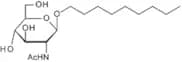
CAS:<p>Nonyl 2-acetamido-2-deoxy-b-D-glucopyranoside is a new type of cycle control method that has been developed for the stabilization of dynamically coordinated systems. It is based on the observation that stable cycles can be generated by coordinating the system with an electrode. The power consumption of this control method is lower than that of other methods, which makes it suitable for applications requiring high efficiency and low power consumption.</p>Fórmula:C17H33NO6Pureza:Min. 95%Peso molecular:347.45 g/molOctyl 4-O-(b-D-galactopyranosyl)-b-D-glucopyranoside
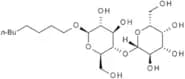
CAS:<p>Octyl 4-O-(b-D-galactopyranosyl)-b-D-glucopyranoside is a galactose derivative of octyl 4-O-(b-D-glucopyranosyl)-b-D-glucopyranoside. It has been used to immobilize the enzyme phospholipase A2 in an exothermic reaction. This product is a white solid that is soluble in water. Octyl 4-O-(b-D-galactopyranosyl)-b-D-glucopyranoside has been shown to be effective against mycobacteria such as Mycobacterium avium complex and Mycobacterium tuberculosis, but not against other bacteria. This product may be useful for the treatment of mycobacterial infections because it exhibits excisional activity and can cleave phospholipid membranes.</p>Fórmula:C20H38O11Pureza:Min. 95%Cor e Forma:PowderPeso molecular:454.51 g/molNonanoyl-D-glucopyranoside
CAS:<p>Nonanoyl-D-glucopyranoside is a custom-synthesized carbohydrate that functions as a glycosylation and fluorination agent. Nonanoyl-D-glucopyranoside can be used to modify oligosaccharides, carbohydrates, or polysaccharides. This product has CAS No. 191039-78-8, is synthesized with high purity, and is available in both monosaccharide and disaccharide forms.</p>Fórmula:C15H28O7Pureza:Min. 95%Peso molecular:320.38 g/molNonyl β-D-glucopyranoside
CAS:<p>Nonyl β-D-glucopyranoside is an alkylglycoside non-ionic mild detergent used for cell lysis and membrane protein isolation. As it is uncharged it is unlikely to cause protein denaturation or refolding issues, allowing for the isolation of intact macromolecular complexes without affecting protein-protein interactions. Nonyl β-D-glucopyranoside is useful for the solubilization and crystallization of many biological membrane proteins and isolation of membrane-bound proteins. It has also been used for enantiomeric separation by capillary electrophoresis. Nonyl β-D-glucopyranoside is also known as B-Nonylglucoside or Nonyl D-glucoside and has an aggregation number of 133. It is dialyzable from membrane protein preparations and has a Critical Micelle Concentration (CMC) of 6.5mM.</p>Fórmula:C15H30O6Pureza:Min. 95%Cor e Forma:PowderPeso molecular:306.4 g/mol4-Aminophenyl β-D-thiogalactopyranoside
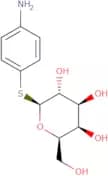
CAS:<p>4-Aminophenyl β-D-thiogalactopyranoside is a custom synthesis of a fluorinated saccharide. It is an oligosaccharide that has been modified with a click modification, which is an atom transfer radical polymerization. The chemical name for 4-aminophenyl β-D-thiogalactopyranoside is 2,5-difluorobenzoyl-(1→4)-4-(4'-aminophenoxy)butyryl-(1→2)-β-D-thiogalactopyranoside. The CAS number for 4-aminophenyl β-D-thiogalactopyranoside is 29558-05-2. This product has high purity and can be used as a substitute for saccharides in the synthesis of polysaccharides or oligosaccharides.</p>Fórmula:C12H17NO5SPureza:Min. 95%Cor e Forma:PowderPeso molecular:287.33 g/molOctyl-b-D-glucuronide methyl ester
<p>Octyl-b-D-glucuronide methyl ester is a synthetic molecule that can be used for a variety of purposes, including modification, fluorination, methylation and monosaccharide synthesis. This product is also available in various concentrations. Click modification, oligosaccharides and polysaccharides are all possible uses for this product. Octyl-b-D-glucuronide methyl ester has been shown to have many applications, such as glycosylation and sugar synthesis. This product has been shown to be useful in the production of complex carbohydrates.</p>Pureza:Min. 95%Octyl b-D-glucopyranoside
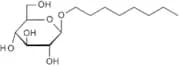
CAS:<p>Octyl beta-D-glucopyranoside (OG), also known as octyl glucoside or caprylyl glucoside, is an alkylglycoside non-ionic detergent that is one of the most commonly used reagents in membrane protein isolation. As it is uncharged, OG is unlikely to cause protein denaturation or refolding issues, allowing for the isolation of intact macromolecular complexes without affecting protein-protein interactions. It forms small, uniformed micelles and has an aggregation number of between 27-100. It is readily dialyzable from membrane protein preparations due to its high Critical Micelle Concentration (CMC) of 18-20 mM. Octyl beta-D-glucopyranoside has similar uses and properties to that of another frequently used surfactant, Octyl beta-D-thioglucopyranoside.</p>Fórmula:C14H28O6Pureza:Min. 98 Area-%Cor e Forma:White PowderPeso molecular:292.37 g/molOctyl b-D-thiogalactopyranoside
CAS:<p>Octyl b-D-thiogalactopyranoside is a methylated derivative of galactose. It is a polysaccharide that is used to modify saccharides and oligosaccharides for research purposes. The product is used in glycosylation reactions and can be custom synthesized to meet specific requirements. Octyl b-D-thiogalactopyranoside has been modified with fluorine, which increases its stability against hydrolysis. The product is also available in high purity, making it ideal for use in synthesis reactions.</p>Fórmula:C14H28O5SCor e Forma:PowderPeso molecular:308.44 g/mol(4R,5S)-4,5-Dihydroxyhexanal
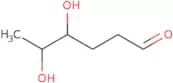
CAS:<p>(4R,5S)-4,5-Dihydroxyhexanal is a mutant of the parent strain Streptomyces lividans. It has been shown to produce glycosylations and inhibitory effects on tumor cells. This compound also has potent antitumor activity and antibacterial activity against Gram-positive bacteria. (4R,5S)-4,5-Dihydroxyhexanal has been shown to inhibit the proliferation of T cells in vitro.</p>Fórmula:C6H12O3Pureza:Min. 95%Peso molecular:132.16 g/mol1-Decanoyl-rac-glycerol
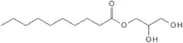
CAS:<p>1-Decanoyl-rac-glycerol is a microbicide that has been shown to have a broad spectrum of activity against viruses and bacteria. It can be used in tissue culture as an antimicrobial agent, and inhibits the growth of human serum, hydroxyl group, and metal hydroxides. 1-Decanoyl-rac-glycerol has also been shown to cause cell lysis in cancer cells, but not normal cells. This drug is lipophilic and easily crosses biological membranes. In vivo models have shown that this compound is nontoxic to humans at doses up to 100 mg/kg body weight. In vitro tests have shown that 1-decanoyl-rac-glycerol does not inhibit the growth of bacteria or fungi at concentrations as high as 500 μg/mL.</p>Fórmula:C13H26O4Pureza:Min. 95%Cor e Forma:PowderPeso molecular:246.34 g/molLactose oleate
CAS:<p>Lactose oleate is a fatty acid ester that can be used as an absorption enhancer. It has been shown to increase the absorption of drugs in both inorganic and organic forms. Lactose oleate can be used in assays to determine the profile and nucleophilic attack of fatty acids. Lactose oleate is lipophilic and biodegradable, making it suitable for use as an edible coating or as a membrane for cell culture. Lactose oleate can also be used as a substrate for immobilization studies, where it is immobilized on silica gel particles. This allows for its use in thermodynamic studies. Lastly, lactose oleate has been shown to have potential anti-inflammatory properties in caco-2 cells.</p>Fórmula:C18H34O2•(C12H22O11)xPureza:Min. 95%Cor e Forma:PowderPeso molecular:624.76 g/mol2-Azido-2,6-dideoxy-3,5-((R)-benzylidene-L-mannofuranose
<p>2-Azido-2,6-dideoxy-3,5-((R)-benzylidene-L-mannofuranose) is a synthetic, fluorinated carbohydrate that can be used to modify saccharides, oligosaccharides, or polysaccharides with click chemistry. This product has been modified by the addition of an azido group at the 2 position and a fluoride atom at the 6 position. The CAS number for this product is 52765-69-0.</p>Pureza:Min. 95%2-Azidoethyl 2,3,4,6-tetra-O-acetyl-b-D-galactopyranoside
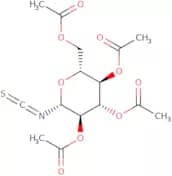
CAS:<p>Epidermal growth factor is a polypeptide that regulates the proliferation and differentiation of cells. It has been shown to have anabolic effects on muscle, connective tissue and bone. Epidermal growth factor binds to the epidermal growth factor receptor (EGFR), which is found in the cell membrane. The binding of the ligand to this receptor induces a conformational change in the receptor, which activates downstream signalling pathways, leading to its biological effects. Epidermal growth factor has been shown to stimulate protein synthesis in skeletal muscle cells by increasing levels of messenger ribonucleic acid (mRNA) encoding for insulin-like growth factor I (IGF-I). This stimulation is mediated by an increase in cAMP concentrations induced by EGFR activation.br>br></p>Fórmula:C16H23N3O10Pureza:Min. 95%Cor e Forma:White PowderPeso molecular:417.37 g/mol2,3,4,6-Tetra-O-acetyl-b-D-glucopyranosyl isothiocyanate
CAS:<p>2,3,4,6-Tetra-O-acetyl-b-D-glucopyranosyl isothiocyanate (TGIT) is a compound that mimics the melanoma antigen. It has been used to identify human pathogens in biological samples and has shown to have an antibody response. TGIT has also been used as a fluorescent probe for nucleic acids in analytical methods and polymerase chain reaction. This chemical can be used as a fluorescence detector in titration calorimetry. TGIT is not acutely toxic, but can cause cell lysis when combined with trifluoroacetic acid.</p>Fórmula:C15H19NO9SPureza:Min. 95%Cor e Forma:White PowderPeso molecular:389.38 g/molD-Glucose - monohydrate
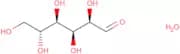
CAS:<p>D-Glucose - monohydrate is a glucose molecule that is found in the blood stream. It is the preferred source of energy for the brain and has been shown to enhance brain function. Glucose is also used to maintain the water balance of cells and tissues, as well as to prevent or treat hypoglycemia. This molecule can be found in many foods, such as honey, corn syrup, molasses, fruits and fruit juices. D-Glucose - monohydrate has antibacterial efficacy against a number of bacteria including staphylococcus aureus, Escherichia coli, Pseudomonas aeruginosa and Bacillus subtilis. It can also inhibit squamous cell carcinoma growth in vivo by preventing the proliferation of cancer cells. D-Glucose - monohydrate is structurally similar to adenosine diphosphate (ADP), which binds to dinucleotide phosphate (DP) enzymes that are involved in energy metabolism</p>Fórmula:C6H12O6·H2OPureza:(%) Min. 95%Cor e Forma:White PowderPeso molecular:198.17 g/mol1,4,6-Tri-O-galloylglucose
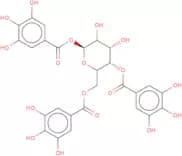
CAS:<p>1,4,6-Tri-O-galloylglucose is a synthetic carbohydrate that has been modified using glycosylation, methylation, and click modification. It is a complex carbohydrate with a high purity of 99.5%, and can be used in many applications including the synthesis of oligosaccharides. 1,4,6-Tri-O-galloylglucose can be fluorinated to create a product with increased resistance to hydrolysis.</p>Fórmula:C27H24O18Pureza:Min. 95%Peso molecular:636.47 g/mol3,4-Di-O-acetyl-1,2-O-isopropylidene-5-O-p-toluenesulfonyl-a-L-sorbopyranose
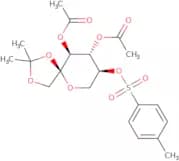
CAS:<p>3,4-Di-O-acetyl-1,2-O-isopropylidene-5-O-p-toluenesulfonyl-a-L-sorbopyranose is a fluorinated glycosylation product with a synthetic route. It is a high purity custom synthesis and can be modified according to customer needs. 3,4-Di-O-acetyl-1,2-O isopropylidene -5 O p toluenesulfonyl A L sorbopyranose has been used in the synthesis of oligosaccharides and saccharides.</p>Fórmula:C20H26O10SPureza:Min. 95%Peso molecular:458.48 g/mol2-Azido-2-deoxy-3,5-di-O-tert-butyldiphenylsilyl-D-ribono-1,4-lactone
<p>2-Azido-2-deoxy-3,5-di-O-tert-butyldiphenylsilyl-D-ribono-1,4-lactone is a high purity custom synthesis sugar with a click modification. The chemical formula for this compound is C20H28N4O14 and its molecular weight is 524.329 g/mol. 2A2D3BTSL has been fluorinated, glycosylated, and methylated. It is an oligosaccharide with 6 monosaccharides and a complex carbohydrate that has a saccharide in the center of it.</p>Pureza:Min. 95%

![Octadecylthioethyl 4-O-(4-O[6-O-a-D-glucopyranosyl-a-D-glucopyranosyl]-a-D-glucopyranosyl)-b-D-glu…](/_next/image/?url=https%3A%2Fstatic.cymitquimica.com%2Fproducts%2F3D%2Fthumb-webp%2FDO05214.webp&w=3840&q=75)