Glicociência
Subcategorias de "Glicociência"
- Amino açúcares(108 produtos)
- Anticorpos Glico-Relacionados(284 produtos)
- Glicolípidos(46 produtos)
- Glicosaminoglicanos (GAGs)(55 produtos)
- Glicosídeos(419 produtos)
- Monossacáridos(6.622 produtos)
- Oligossacarídeos(3.699 produtos)
- Polissacáridos(506 produtos)
Foram encontrados 11035 produtos de "Glicociência"
4'-(D-[UL-13C6]Galactosyl)lactose
CAS:Galactosyllactose attenuated NF-κB inflammatory signaling in human intestinal epithelial cells and in human immature intestine. Thus, galactosyllactoses are strong anti-inflammatory agents in human colostrum and early milk, contributing to innate immune modulation. The potential clinical utility of galactosyllactose warrants investigation.
Fórmula:C6C12H32O16Pureza:Min. 95%Cor e Forma:PowderPeso molecular:510.39 g/molGlobotriaosylceramide
CAS:It is one of the few clusters of differentiation that is not a protein and structurally contains a galactose moiety linked α to lactosylceramide. Defects in the enzyme α-galactosidase lead to the buildup of globotriaosylceramide, causing Fabry's disease. The pharmaceutical drug migalastat enhances the function of α-galactosidase and is used to treat Fabry's. Globotriaosylceramide is also one of the targets of Shiga toxin, which is responsible for pathogenicity of enterohemorrhagic E. coli.Fórmula:C60H113NO18Pureza:Min. 95%Cor e Forma:PowderPeso molecular:1135.79577D-Erythrose 4-phosphate sodium
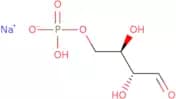
CAS:D-erythrose 4-phosphate sodium (D-EPPS) is a phosphoenolpyruvate analog and an inhibitor of chorismate mutase, which is an enzyme that catalyzes the conversion of D-arabinose 5-phosphate to D-erythrose 4-phosphate. It is used to study the biosynthesis of aromatic amino acids in bacteria. This compound has also been shown to inhibit phosphate uptake by Escherichia coli K12, leading to a decrease in the accumulation of ATP and other nucleotides. D-EPPS binds metal ions and organic acids such as citrate, which influences its thermodynamic stability. Biochemical techniques can be used for profiling D-EPPS in bacterial cells.Fórmula:C4H8NaO7PPureza:(%) Min. 50%Cor e Forma:White PowderPeso molecular:222.07 g/mol1-Deoxynojirimycin hydrochloride
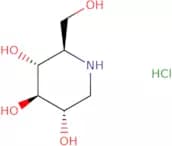
CAS:Glucose analog and potent inhibitor of α-glucosidases of class I and II. It interferes with N-linked glycosylation and oligosaccharide processing. The compound inhibits intestinal α-glucosidase and has protective effects against obesity-induced hepatic injury as well as mitochondrial dysfunction. It also has neuroprotective effects since it reduces senescence-related cognitive impairment, neuroinflammation and amyloid beta deposition in mice.Fórmula:C6H13NO4•HClCor e Forma:PowderPeso molecular:199.63 g/mol2,3,4-Tri-O-acetyl-a-D-xylopyranosyl bromide - Stabilised with 2.5% CaCO3
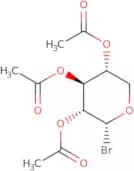
CAS:2,3,4-Tri-O-acetyl-a-D-xylopyranosyl bromide - Stabilised with 2.5% CaCO3 is a chiral compound that is a drug for the treatment of estrogen deficiency in postmenopausal women. It is synthesized from D-xylose and acetone by reductive elimination using an organotin catalyst. The resulting product has a nitro group at the 4 position and can be activated as a priming agent for DNA synthesis. This compound has been shown to be effective in treating intestinal disorders such as ulcerative colitis.
2,3,4-Tri-O-acetyl-a-D-xylopyranosyl bromide - Stabilised with 2.5% CaCO3 has been used to conjugate estrogens with various drugs to create new compounds that are more potent than free estrogens alone. Bioavailability of these conjugates hasFórmula:C11H15BrO7Pureza:(%) Min. 85%Cor e Forma:PowderPeso molecular:339.14 g/molPropargyl a-D-mannopyranoside
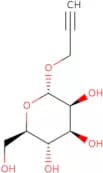
CAS:Propargyl a-D-mannopyranoside is a custom synthesis chemical. It is an intermediate in the synthesis of oligosaccharides and polysaccharides. It is also used as an inhibitor of methylation reactions, which are important in DNA replication. The chemical has been modified with fluorine groups at its 3' position to provide high purity. This modification also allows the synthesis of complex carbohydrates that contain multiple saccharide units. Propargyl a-D-mannopyranoside is synthesized by reacting mannose with propargyl bromide under basic conditions, followed by hydrolysis of the ester group to give propargyl a-D-mannopyranoside.Fórmula:C9H14O6Pureza:One SpotCor e Forma:PowderPeso molecular:218.2 g/molPhenyl 3-O-benzyl-b-D-thioglucopyranoside
CAS:Phenyl 3-O-benzyl-b-D-thioglucopyranoside is a synthetic, fluorinated monosaccharide that has been used as a glycosylation and polysaccharide for various applications. It can be used as a reagent in Click chemistry due to its ability to undergo facile and selective methylation. Phenyl 3-O-benzyl-b-D-thioglucopyranoside is also used in the synthesis of complex carbohydrates and sugar modification.Pureza:Min. 95%Glycyl-lacto-N-fucopentaose VI
Glycyl-lacto-N-fucopentaose VI is a polysaccharide that is synthesized by the enzymatic activity of glycosylase, methylase, and fluorinase. It can be modified with click chemistry to introduce a fluorine atom at the C4 position of the glucose molecule. This modification can be used for the synthesis of oligosaccharides. Glycyl-lacto-N-fucopentaose VI has CAS number 108897-96-5 and is available in high purity and custom synthesis.Fórmula:C34H59N3O25Pureza:Min. 95%Peso molecular:909.84 g/molD-Mannose - F
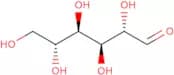
CAS:Abundant and critical component of natural glycans and glycoproteinsFórmula:C6H12O6Pureza:Min. 98 Area-%Cor e Forma:PowderPeso molecular:180.16 g/molFuc-a-1-2-Gal-b-1-3-GalNAc-b-1-4-Gal-b-1-4-Glc-b-ethylazide
Fuc-a-1-2-Gal-b-1-3-GalNAc-b-1-4-Gal-b is a methylated oligosaccharide that binds to the C3 position of NANA (N acetylneuraminic acid) residues. It has been shown to be an effective inhibitor of tumor growth and angiogenesis, which may be due to its ability to inhibit the synthesis of glycoproteins and glycolipids in tumors. Fucogalactose can also be modified with different fluorinated groups, such as 4F or 18F, for use in positron emission tomography imaging. This product is available for custom synthesis and modification.Pureza:Min. 95%1,3-O-Benzylidene-4-O-DMT-D-threitol
1,3-O-Benzylidene-4-O-DMT-D-threitol is an oligosaccharide that is used as a synthetic building block for the synthesis of complex carbohydrates. This compound has been modified to include fluorine and methyl groups. It can be synthesized via a click reaction with 3,4,5,6-tetraiodoacetone. 1,3-O-Benzylidene-4-O-DMT-D-threitol is soluble in water and aqueous solutions and can be used as a carbohydrate marker. The modification of this compound allows it to be detected by electrophoresis or chromatography due to changes in its mobility and charge.Pureza:Min. 95%A2 Glycan, 2-AB labelled
The A2 Glycan is a custom synthesized oligosaccharide that is labelled with 2-AB. It contains the following sugars: Oligosaccharide, sugar, Synthetic, Fluorination, Custom synthesis, Methylation, Monosaccharide, Polysaccharide. The A2 Glycan has a purity of > 99%. CAS No. for this product is not available. Modification includes Click modification and complex carbohydrate.Pureza:Min. 95%N-[2-(4'-Nitrophenyl)-1-cyano-3-butene]-2,3,4,6-tetra-O-pivaloyl-D-glucopyranoside
The product is a methylation, saccharide, Polysaccharide, CAS No., Click modification, Modification, Oligosaccharide, Custom synthesis, Glycosylation and High purity. The product is a fluorination and complex carbohydrate.Fórmula:C36H51N3O11Pureza:Min. 95%Peso molecular:701.8 g/mol2-O-(α-D-Galactopyranosyl)-α-L-fucopyranosyl propylamine
Please enquire for more information about 2-O-(α-D-Galactopyranosyl)-α-L-fucopyranosyl propylamine including the price, delivery time and more detailed product information at the technical inquiry form on this pageFórmula:C15H29NO10Pureza:Min. 95 Area-%Peso molecular:383.39 g/molPhenyl 2,3,4,6-tetra-O-acetyl-b-D-thiogalactopyranoside
CAS:Phenyl 2,3,4,6-tetra-O-acetyl-b-D-thiogalactopyranoside is a sugar that belongs to the class of glycosides. It is a white crystalline powder and has a molecular weight of 459.8. The chemical formula for this compound is C 12 H 18 O 9 . Phenyl 2,3,4,6-tetra-O-acetyl-b-D-thiogalactopyranoside is used in the synthesis of oligosaccharides and polysaccharides. It can be used to modify the structure of saccharides and sugar molecules by methylation or fluorination. This product also has CAS No. 24404-53-3 and can be custom synthesized according to your specifications.Fórmula:C20H24O9SPureza:Min. 95%Cor e Forma:PowderPeso molecular:440.47 g/mol2-O-b-D-Galactosylsucrose
CAS:2-O-b-D-Galactosylsucrose is a synthetic, fluorinated sugar that has been custom synthesized for your needs. It is a complex carbohydrate that has been modified with methylation and click chemistry. 2-O-b-D-Galactosylsucrose is a monosaccharide, polysaccharide, and saccharide that is soluble in water. It can be used as a research tool for glycobiology and glycosylation, or as an ingredient in industrial applications such as food processing and pharmaceuticals.Fórmula:C18H32O16Pureza:Min. 95%Cor e Forma:PowderPeso molecular:504.44 g/mol7-Deoxy-D-glycero-D-gluco-heptitol
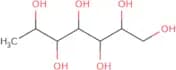
CAS:7-Deoxy-D-glycero-D-gluco-heptitol is a synthetic sugar that can be used as a building block for the synthesis of complex carbohydrates. 7DGDG has shown to be a good substrate for glycosylation and has been modified with fluorine, methyl, and click chemistry. This sugar also shows high reactivity towards saccharide and oligosaccharides. 7DGDG may be useful in the production of polysaccharides or glycosylations.Pureza:Min. 95%Psyllium seed gum
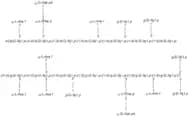
CAS:Psyllium seed gum comes from plants of the Plantago genus and is cultivated mainly in the Mediterranian and in India. Psyllium has been used for many years medical applications and more recently there has been a resurgency of interest because it has been seen as a soluble dietary fibre. The proposed structure is of a backbone of D-xylopyranosyl units linked (1,4) and (1,3) with the 4-linked units bearing side chains. The side chains consist of α-L-arabinofuranosyl units linked (1,3) and (1,2) and β-D-xylopyranosyl units linked (1,3) and (1,2) and the α-D-GalAρ-(1,2)-α-L-Rhaρ aldobiuronic acid units linked (1,2) to the main chain.
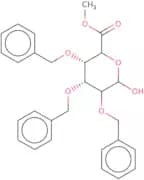
Fórmula:C33H66O2Pureza:Min. 95%Cor e Forma:PowderPeso molecular:494.90 g/mol2,3,4-Tri-O-benzyl-D-glucuronide methyl ester
2,3,4-Tri-O-benzyl-D-glucuronide methyl ester is an organic compound that is structurally classified as a saccharide. It can be used as an intermediate in the synthesis of oligosaccharides and glycosylated proteins. This product has been modified with Click chemistry, which is a method for modifying chemical structures with a simple reaction between two groups. The modification is stable in acidic conditions and can be removed by treatment with base. 2,3,4-Tri-O-benzyl-D-glucuronide methyl ester also contains fluorine atoms that have been introduced during the synthetic process.Fórmula:C28H30O7Pureza:Min. 95%Cor e Forma:White PowderPeso molecular:478.53 g/mol2-Acetamido-3,4,6-tri-O-acetyl-2-deoxy-D-glucohydroximo-1,5-lactone
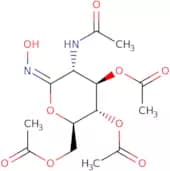
CAS:2-Acetamido-3,4,6-tri-O-acetyl-2-deoxy-D-glucohydroximo-1,5-lactone is a methylated sugar. It is a white to off white powder with a molecular weight of 518. The chemical formula for 2-Acetamido-3,4,6-tri-O-acetyl-2-deoxy--D--glucohydroximo--1,5--lactone is C16H26N2O8 and the structural formula is as follows:br>Fórmula:C14H20N2O9Pureza:Min. 95%Cor e Forma:White PowderPeso molecular:360.32 g/mol
![4'-(D-[UL-13C6]Galactosyl)lactose](/_next/image/?url=https%3A%2Fstatic.cymitquimica.com%2Fproducts%2F3D%2Fthumb-webp%2FOG159775.webp&w=3840&q=75)



![N-[2-(4'-Nitrophenyl)-1-cyano-3-butene]-2,3,4,6-tetra-O-pivaloyl-D-glucopyranoside](/_next/image/?url=https%3A%2Fstatic.cymitquimica.com%2Fproducts%2F3D%2Fthumb-webp%2FMN08500.webp&w=3840&q=75)